
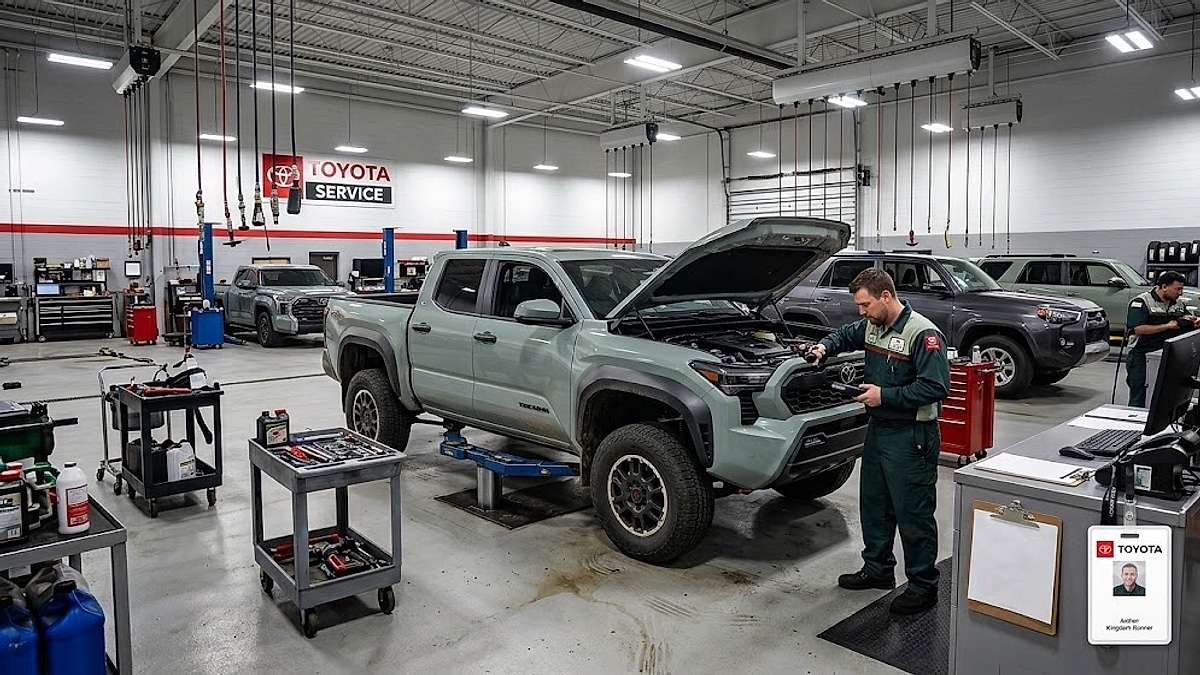

Building directly upon the investigative findings in our Torque News previous reporting, where we exposed how a Southern California dealer marked a heavily contaminated cabin filter as "Green" in “Tacoma 15K Service Reality Check: So Cal Toyota Dealer Marks Clogged Cabin Filter ‘Green’ Despite Severe Contamination” and laid out the recovery strategy in “Toyota Tacoma Routine Maintenance Recovery Plan: Three Critical Checkpoints Service Advisors Consistently Fail to Inspect.”
This third installment uncovers a far more systemic threat to your truck's powertrain. We now turn our focus to the high-stakes world of flat-rate service bays, where digital shortcutting directly risks your factory warranty coverage.
A quiet crisis is unfolding inside dealership service bays across the country, threatening to void factory warranties on the fourth-generation midsize truck platform.
According to ongoing Torque News by Denis Flierl tracking of manufacturing defects, a troubling pattern has emerged where critical powertrain checkpoints are systematically falsified during scheduled service visits.
Dealership service bays operating under extreme flat-rate time constraints are increasingly relying on "pencil-whipping," the practice of marking electronic multi-point inspection sheets as completed without performing the physical labor.
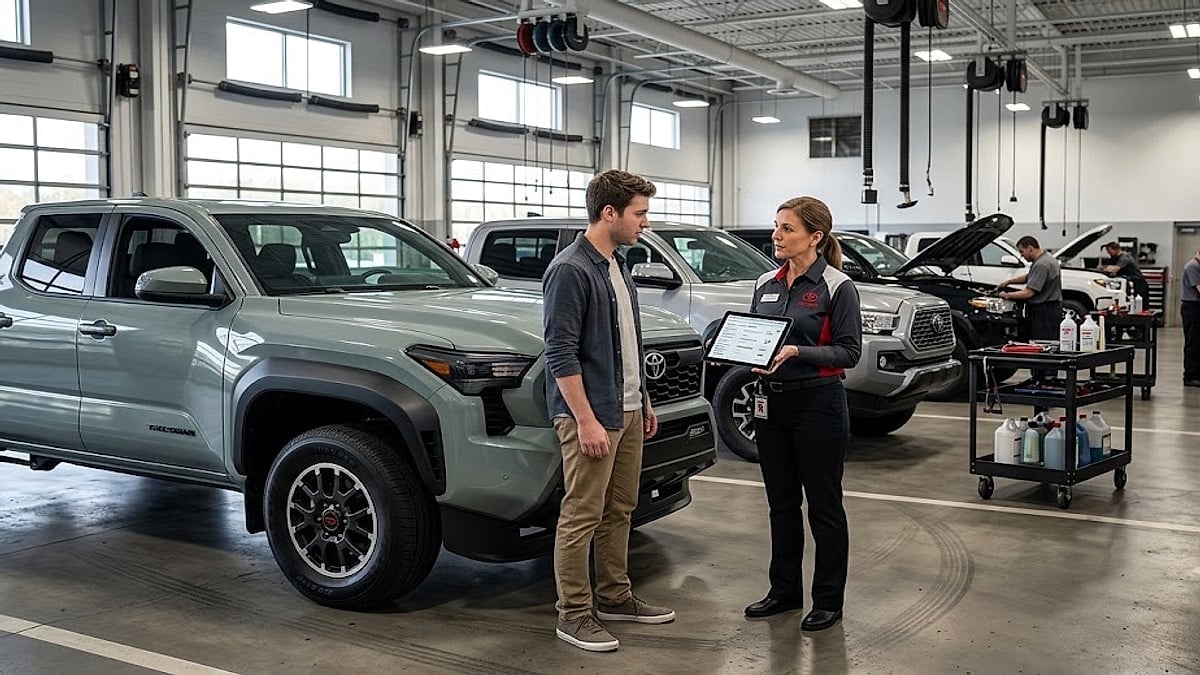
The Hidden Threat to the 4th-Gen Powertrain Warranty
Modern vehicle owners rely heavily on the green checkboxes in their digital multi-point inspections (MPIs) to satisfy the strict maintenance documentation requirements of vehicle manufacturers.
However, a landmark report by the automotive data group Automotive Service Excellence (ASE) indicates that flat-rate, flat-time structures incentivize speed over mechanical precision, leading to a severe drop in data-tracking integrity.
"When diagnostic algorithms and flat-rate times collide, critical safety and fluid level verification protocols are often skipped entirely," notes the comprehensive independent study by automotive industry analyst Automotive Service Excellence (ASE).
Torque News technical analysis by Denis Flierl identifies a critical gap between factory maintenance schedules and real-world component longevity.
While a customer receives a digital printout declaring their truck is in pristine condition, the actual mechanical components may be starved of critical fluids or operating with undetected assembly residue.
This systemic failure leaves truck owners exposed to out-of-pocket expenses when major components fail.
Technical Diagnostic Limbo and Solenoid Failure Realities
In our ongoing coverage of Toyota reliability, Torque News Senior Reporter Denis Flierl has uncovered an unresolved dispute over the exact execution of powertrain fluid verifications.
This administrative gap has severe real-world consequences, particularly for the sensitive hydraulic control units governing the latest multi-speed setups.
The danger of this practice becomes clear when evaluating recent field data compiled by the National Highway Traffic Safety Administration (NHTSA), where formal owner complaints describe sudden transmission slips and harsh shifts occurring within the first 10,000 miles of operation.
According to technical service documentation filed with federal regulators, early production runs are prone to catastrophic gear slippage if micro-solenoids are contaminated by micro-particles or experience low line pressure.
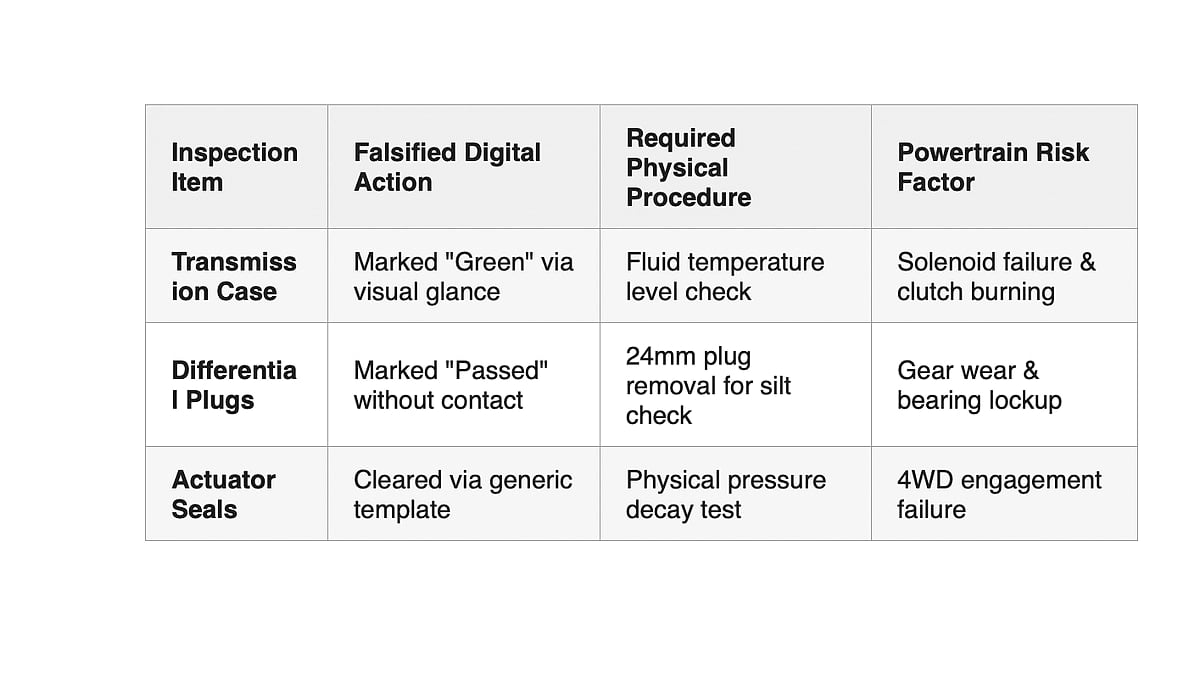
If a technician fails to physically inspect fluid levels and instead falsely clears the digital check sheet, a truck can operate with low fluid levels for months.
When the friction plates eventually burn out, the vehicle history log shows a series of "perfect" inspections, leaving the manufacturer to argue that the damage was caused by owner negligence or unrecorded heavy towing abuse.
Internal Investigations Reveal Deep Service Gaps
This digital deception directly mirrors structural issues previously uncovered in our deep-dive coverage of the platform's early mechanical teething issues.
As documented in our comprehensive analysis, Tacoma Transmissions Are Taking a Dump: 8-Speed Automatic Failures Trigger Nationwide Class Action Lawsuit, a flawed internal-control solenoid design can cause severe gear slippage within the first 10,000 miles when line pressure drops.
Falsifying the digital service documents robs the owner of the physical paper trail required to prove that the dealer checked and maintained these sensitive hydraulic systems before a complete component failure occurred.
Furthermore, this systemic lack of structural accountability matches the dealer service vulnerabilities exposed in our previous investigative tracking initiatives.
As outlined in our foundational investigation, Toyota Dealer Denies 2025 Tacoma Transmission Fix: Kentucky Owner Reports 1st-3rd Gear Jerking at 10,000 Miles, service advisors frequently utilize "cannot replicate" rejections to bypass labor-intensive cold-start diagnostic procedures.
By allowing technicians to check off boxes digitally without picking up a wrench, dealerships are effectively shifting the financial burden of part failures directly onto the truck buyer.
High-Altitude Impacts: The Colorado Extreme-Use Variable
The impact of pencil-whipped inspections escalates dramatically when vehicles are operated in unforgiving geographic environments. In high-altitude regions like the Colorado Rockies, the thin air forces forced-induction setups to run at higher sustained RPMs and increased operating temperatures.
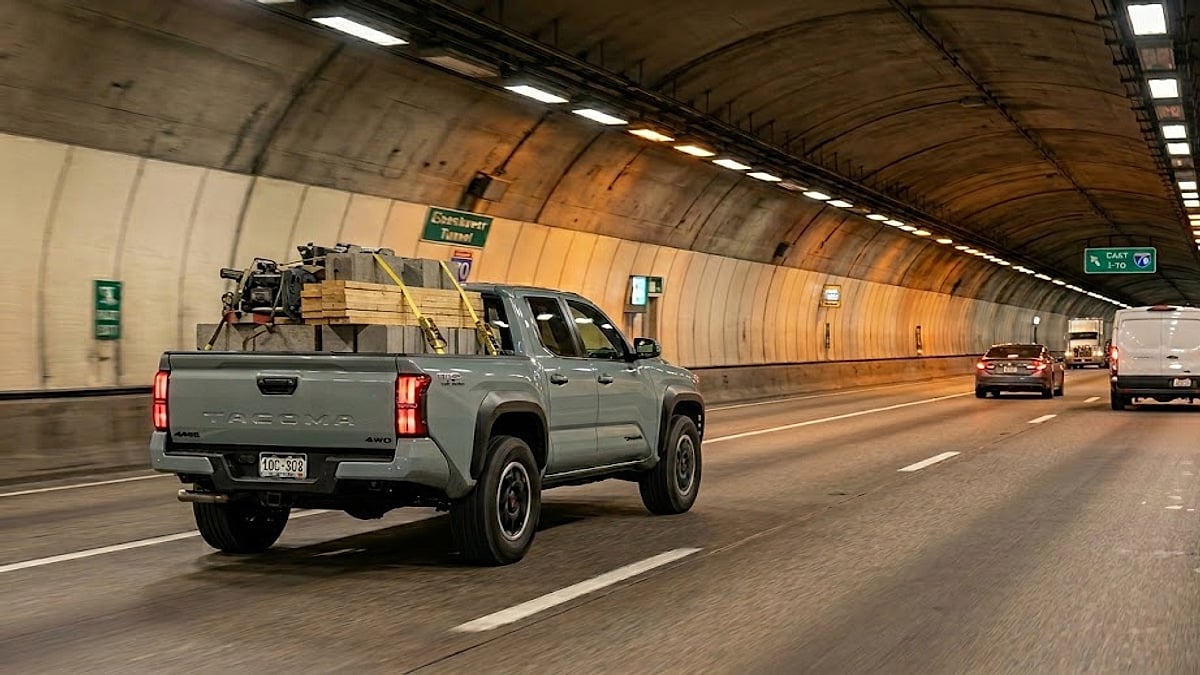
Climbing severe grades like Vail Pass or pulling heavy loads through the Eisenhower Tunnel creates immense thermal stress on differential gears and multi-speed gearboxes. These extreme operating temperatures accelerate fluid degradation, transforming factory lubricants into thin, burnt fluids well before standard service milestones.
When flat-rate technicians working in busy mountain-corridor service bays bypass physical level checks to beat the flat-rate clock, they are leaving high-altitude drivers stranded. A truck operating in these environments requires a precise physical fluid verification, not a digitized guess on an iPad screen.
How Owners Can Bypass the Digital Service Trap
To combat digital inspection fraud, truck owners must alter how they interact with dealership service advisors.
- When dropping off your vehicle, explicitly state that you require the actual fluid-level telemetry values and the physical measurement data recorded on the final repair order, rather than generic color-coded checkboxes.
- Request that the technician save a physical sample of any drained fluid if a differential or gearbox service is being performed, so you can check for metallic debris yourself.
- Maintaining an independent, chronological notebook of every service date, advisor name, and specific mechanic note provides a powerful legal shield if a warranty dispute arises.
- Do not accept a generic printout as proof of mechanical health; force the service department to back up their digital assertions with tangible, verifiable physical evidence.
It's Your Turn: Have you noticed your local dealership's multi-point inspections seem suspiciously fast, or have you been denied a powertrain warranty claim due to "lack of documentation" despite regular dealer visits?
Tell us what you think by leaving a comment in the red Add new comment link below. Share your real-world service experiences and let the community know how your local service department handles digital checklists!
Come back tomorrow, or check our Torque News Home Page for more of Denis Flierl's interesting automotive news articles.
About The Author
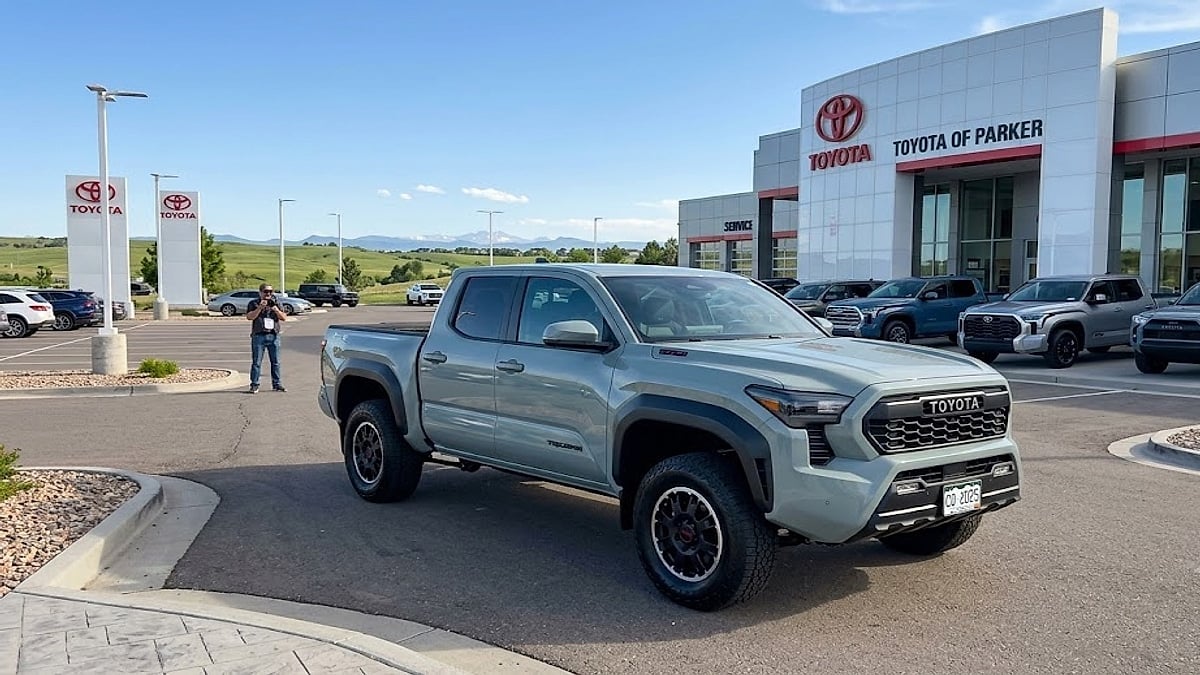
Denis Flierl is a 14-year Senior Reporter at Torque News and a member of the Rocky Mountain Automotive Press (RMAP) with 30+ years of industry experience. Explore his full investigative reporting archives and technical guides at DenisFlierl.com. Based in Parker, Colorado, Denis leverages the Rockies' high-altitude terrain as a rigorous testing ground to provide "boots-on-the-ground" analysis for readers across the Rocky Mountain region, California EV corridors, the Northeast, Texas truck markets, and Midwest agricultural zones. A former professional test driver and consultant for Ford, GM, Ram, Toyota, and Tesla, he delivers data-backed insights on reliability and market shifts. Denis cuts through the noise to provide national audiences with the real-world reporting today’s landscape demands. Connect with Denis: Find him on LinkedIn, X @DenisFlierl, @WorldsCoolestRides, Facebook, and Instagram.
Photo credit: Denis Flierl
Set Torque News as Preferred Source on Google
Follow us today...






Comments
Technicians are not paid for…
Permalink
Technicians are not paid for multipoint inspections at most dealerships. The transmission fluid inspection on these newer overflow plug type transmissions when at normal operating temperature requires use of a specific tool and the dealer likely only has one on hand. Translation is it is unrealistic to expect the technician to check this fluid level during routine service procedures absent an actual complaint considering there could be dozens of these vehicles in a service garage at one time in various states of transmission fluid temperature which is required to be in a specific range to check.
Furthermore there is no scan tool data or measurement showing the fluid level. In an overflow plug transmission the fluid will pour, trickle or there will be no drip from the overflow plug indicating overfilled, correct level or under filled. Customers are impatient and ignorant of service requirements and procedures. Service advisors are inept at explaining service processes to properly set customer expectations especially regarding time requirements. Cars are too damn complicated and techs and equipment in too short numbers for this dream idea of regular transmission fluid level checks you insist should be expected on modern automatic transmissions.
And in the same breathe we…
Permalink
And in the same breathe we get accused of trying to rip customers off.
I've also had service writers change my multi points I've personally filled out, so they don't have to talk to customers.
I bet Dennis had declined…
Permalink
In reply to And in the same breathe we… by Brian (not verified)
I bet Dennis had declined that Trans fluid service due to severe climate conditions and operations when he brings his mountain goating toyota into the dealership. Sounds like Dennis or someone he knows failed to keep clean fluids in there toyota so Dennis decided to write an article about it. Please advise Dennis that fluid maintenance is the key to any component lasting and stop going off the manufacturer replacement guidelines. Remeber boys and girls they don't want your vehicle to last, they want to sell you another one in 5 years.
I was a tech for years. Flat…
Permalink
In reply to And in the same breathe we… by Brian (not verified)
I was a tech for years. Flat rate . I get paid for what I finished. Then an oil change is .2 hrs thats 12 minutes. Then a multi point is free. Now I checked all cars, but I know "pencil whips" who marked all breaks and every filter red to up their hours. One kid sold more ball joints in 8 months than I sold in 5 years, it was a comfortable job for him. The system can work if you pay the guy. But when you get experience you dont get the "good jobs" you get the headaches.
The editor here is…
Permalink
The editor here is manufacturing a crisis that doesn't exist. Oh no, someone marked the cabin filter green when it was dirty. The story you should be writing is why top level techs are turning away from the industry due to all the digital garbage required before you ever even touch a vehicle in for repair.
Just because Dennis has been…
Permalink
Just because Dennis has been "in the feild" for 14 years doesn't mean he knows the industry at a technician level. Dennis expects a technician to inspect all if his fluids at every oil change ? How do you feel about paying for that inspection Dennis? You should know by now being in the feild for 14 years that there is no longer a dip stick on any component except the engine and in some cases not even then. Dennis you sound exactly like the impatient customers that want a 16 hr ticket done before lunch cause you've worked in the industry for 14 years. Don't worry Dennis soon you will have to work on your own vehicle because there won't be any qualified techs left to do it for you. Start saving for that initial 20k in tools buy in.
24 years Toyota tech. 18…
Permalink
24 years Toyota tech. 18 years MDT in North East/New York region. I’m sure you just scratching the surface on this. I’ve seen this scenario smoothed over by discounting a new vehicle sale as opposed to the customer paying for repairs, and everyone is happy. Except the manufacturer never has to look into the root cause of the problem. Sales drives everything.
I find that this article is…
Permalink
I find that this article is a bit harsh. It’s uncommon for techs to check the transmission fluid level and condition on a fairly new and low mileage vehicle. Checking the transmission fluid condition usually is due to malfunction light on and/or abnormal transmission operation behavior, high mileage vehicle and heavy duty operations. It’s ok for customers to request transmission fluid condition check upon a service visit at customer’s cost. The check plug gaskets are one time use, and this will not be done in express maintenance line as vehicle needs to be ‘cold soak’ for the transmission fluid temperature to be within inspection range. Toyota has a ‘repeat concern’ policy when the vehicle is return for the same concern for example, a transmission shifting issue, techs will be force to reach out to technical assist (TAS) and the service managers will keep a sharp eye on these ‘repeat concern’, service advisors and techs will escalate and increase priority as well to prevent lemon laws buy back. If a dirty filter that’s marked green, this is usually a mistake by the techs but not intentional ‘pencil whipping’ as techs get paid for replacing filters. The more techs recommends the more chances to get paid. This doesn’t happen everyday but it happens. Techs are humans too. That’s why dealerships also have a customer retention department.
IF YOU WANT THAT KIND OF…
Permalink
IF YOU WANT THAT KIND OF DETAILS FROM A FREE MPI INSPECTION, THEN IT WILL NO LONGER BE FREE! Blame everything on the tech...got it thanks
This is nothing new and it’s…
Permalink
This is nothing new and it’s definitely not just a Toyota issue. This happens at every flat rate shop and a lot of the time it’s because the technicians do not get paid for the courtesy inspections. Technicians are expected to perform courtesy inspections for free and upsell repairs to try and make up that time.
First off, dealers are not…
Permalink
First off, dealers are not willing to pay techs for these video inspections.
Secondly, modern vehicles are no longer equipped with transmission fluid dipsticks. In order to properly check fluid the transmission has to be at a specific operating temp that takes time to get to. Who's paying the technician for that loss of time?
Also, sometimes these customers come in as waiters for service. People are impatient as it is, do you really think they want to wait around even longer to make sure all these fluids are topped off?
Technicians are getting shafted already with bogus warranty times and now they're expecting them to waste more time with no compensation.
These expectations are getting out of hand.
How many of these flat rate…
Permalink
How many of these flat rate techs actually get paid to perform the "free" inspection itself? How can anyone expect a proper inspection when most techs aren't getting paid for the time it takes to do the inspection? Nobody Is willing to work for free. If the dealer or manufacturer wants these inspections done at no cost to the customer the personnel doing the work need to get paid.
Techs don’t get paid for…
Permalink
Techs don’t get paid for vehicle inspections at most shops. If a tech takes 20 minutes to do a quality bumper to bumper inspection, then he worked for free for those 20 minutes.