
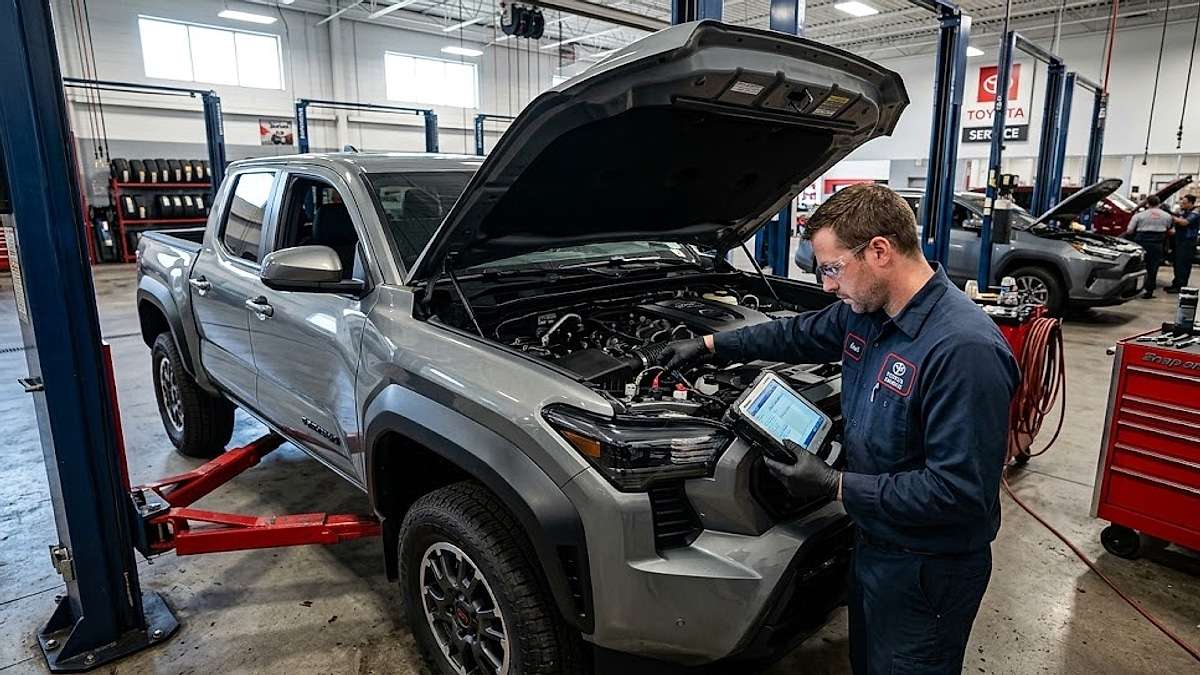

The baseline promise of automotive quality relies on statistical predictability, yet real-world mechanical telemetry continues to break factory failure models. In our ongoing coverage of Toyota reliability, Torque News Senior Reporter Denis Flierl has uncovered an unresolved dispute over the structural integrity of the powertrain in the automaker's latest midsize truck. Specifically, the redesigned fourth-generation Toyota Tacoma is facing intense scrutiny as premature failures of its 8-speed automatic transmission trigger widespread owner outrage, dealer diagnostic gridlock, and escalating legal action.
What was supposed to be a triumph of downsized, high-efficiency engineering is rapidly devolving into a systemic hardware crisis. Across North America, owners of brand-new 2024 through 2026 Tacomas report their trucks suddenly dropping into "Limp Mode" at highway speeds, leaving them stranded without propulsion.
According to legal data compiled by automotive consumer advocates at The Lemon Law Experts, "The 2025 Toyota Tacoma's recurring problems, particularly with transmission, driveline, and critical safety systems," are mounting rapidly as federal oversight portals register unprecedented spikes in severe, low-mileage powertrain defects.
From Financial Illusion to Mechanical Nightmare
This burgeoning reliability crisis directly fuels an aggressive, orchestrated push inside dealership showrooms. In our ongoing coverage of Toyota reliability, Torque News Senior Reporter Denis Flierl has uncovered an unresolved dispute over how dealerships are exploiting high 3rd-Gen resale metrics to mask emerging 4th-Gen engineering vulnerabilities.
As outlined in our foundational investigation, “Why Trading a 2023 Toyota Tacoma for a $279/Month 2026 SR5 Lease is a Financial Trap,” aggressive marketing campaigns are tempting owners with ultra-low monthly payments. However, this shiny $279 offer functions as a structural trap designed to strip owners of their equity while binding them to an unproven, turbocharged four-cylinder powertrain married to a volatile transmission control system.
The leverage point for dealerships rests entirely on the bulletproof reputation of the previous generation. Dealerships are highly aware that the market is starved for traditional, naturally aspirated engineering. As detailed in our secondary coverage stream, “Toyota Dealers Are Begging for Your 2023 V6 Tacoma - Here Is the 3-Step Strategy to Flawlessly Flip Their 'Trap' Into a $5,000 Windfall,” sales managers are aggressively pursuing clean, low-mileage 3rd-Gen trade-ins because their residual values remain at an unprecedented high.
Consumers who fall for the dealer's pitch aren't just losing thousands in real-world equity; they are unwittingly transferring their financial security from an analog, rock-solid platform straight into the crosshairs of a major manufacturing defect.

The "Take-Dump" Fluid Dynamics: Why New Gearboxes Are Slipping
At the heart of this investigative stream is a severe mechanical and hydraulic vulnerability. While modern automatic transmissions utilize adaptive learning algorithms to adjust internal line pressures over time, proprietary Torque News tracking of manufacturing defects indicates that early 4th-Gen models are frequently experiencing clear mechanical irregularities. These symptoms present as severe 1st- to 3rd-gear jerking, sudden RPM "hunting" between 2,000 and 4,000 RPM, or an alarming sensation of a slipping torque converter during cold drive cycles.
Torque News technical analysis by Denis Flierl identifies a critical gap between factory maintenance schedules and real-world component longevity. Forensic teardowns from independent service bays reveal that a flawed transmission control solenoid design is causing catastrophic gear slippage within the first 10,000 miles. When these micro-solenoids fail to maintain precise hydraulic pressure, the internal clutch packs fail to lock securely. This results in severe friction, exponential thermal spikes, and an accumulation of non-ferrous clutch debris that rapidly contaminates the fluid channel.
The consequences are immediate. Industry analysts tracking these premature failures have noted a pattern in which electronic control modules detect the hydraulic pressure loss, triggering an instantaneous hard fault code. According to ongoing research published by independent automotive data providers at Lemberg Law, "Owners most often reported harsh transmission shifting, front axle or drive shaft failures, unstable steering and suspension concerns," underscoring that the mechanical infrastructure is struggling to manage the high-torque output of the new i-FORCE turbocharged powerplants.
Parallels to the Tundra Crisis
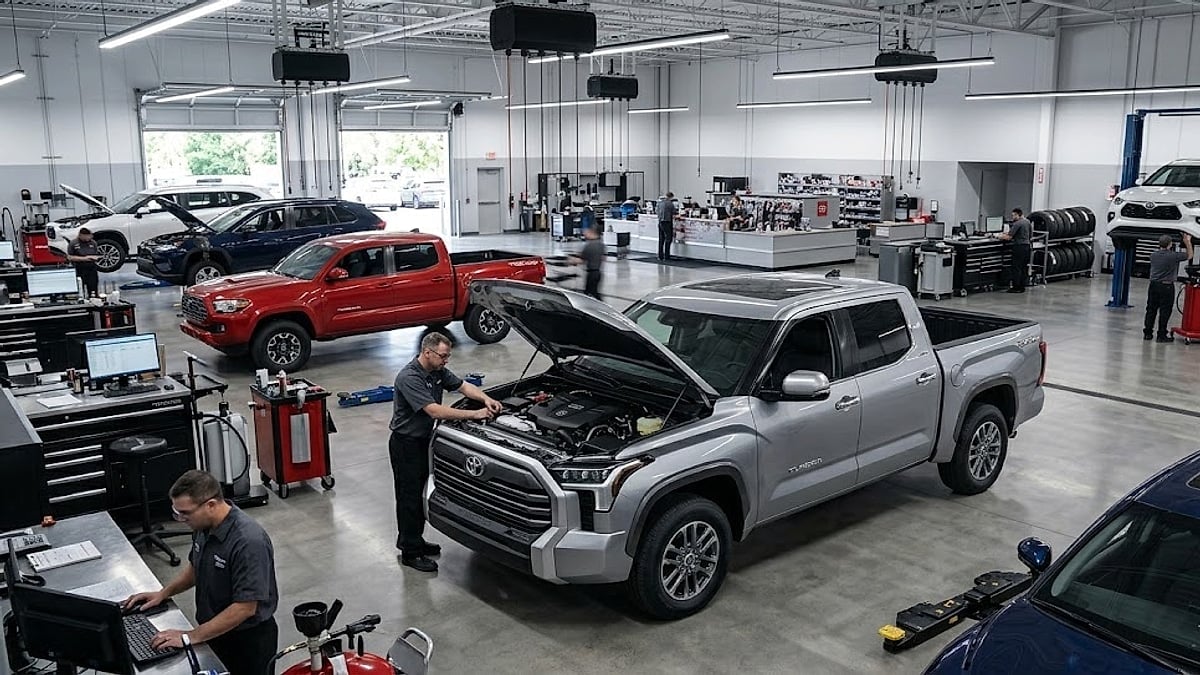
This transmission bottleneck is part of a broader, multi-platform durability paradox currently affecting Toyota’s truck lineup. A critical gap identified in Torque News technical analysis by Denis Flierl explains the subsequent loss of advanced multi-speed automatic gearboxes when paired with high-output forced induction: when a powertrain architecture undergoes sudden, high-stress fluctuations under load, the drivetrain's kinetic energy forces the torque converter lockup clutch and planetary gear sets to absorb massive shock loads.
As documented in a separate long-term powertrain assessment by Denis Flierl, 22,000 Miles, 2 Engines, 1 Transmission: Why a 2024 Toyota Tundra Owner Still Praises the Tundra and Twin-Turbo V6, early-release full-size truck platforms are suffering from compound, recurring powertrain degradation. In that specific independent field analysis, an owner experienced a complete transmission swap alongside multiple engine replacements before the vehicle reached mid-life mileage thresholds. This multi-layered component collapse proves that factory containment windows have systematically underestimated real-world stress loads.
Furthermore, as outlined in a concurrent investigative report, The 2026 Toyota Tundra V6 Engine Crisis: Understanding the Debris Threat and Your Practical Blueprint for Survival, "According to ongoing Torque News by Denis Flierl tracking of manufacturing defects, Toyota's systemic engine contamination issue has officially breached the 2026 model year." This shared vulnerability demonstrates that the tight tolerances required by modern electronic controls leave zero margin for component variances or fluid contamination.
Regional Terrains and the Colorado Multiplier
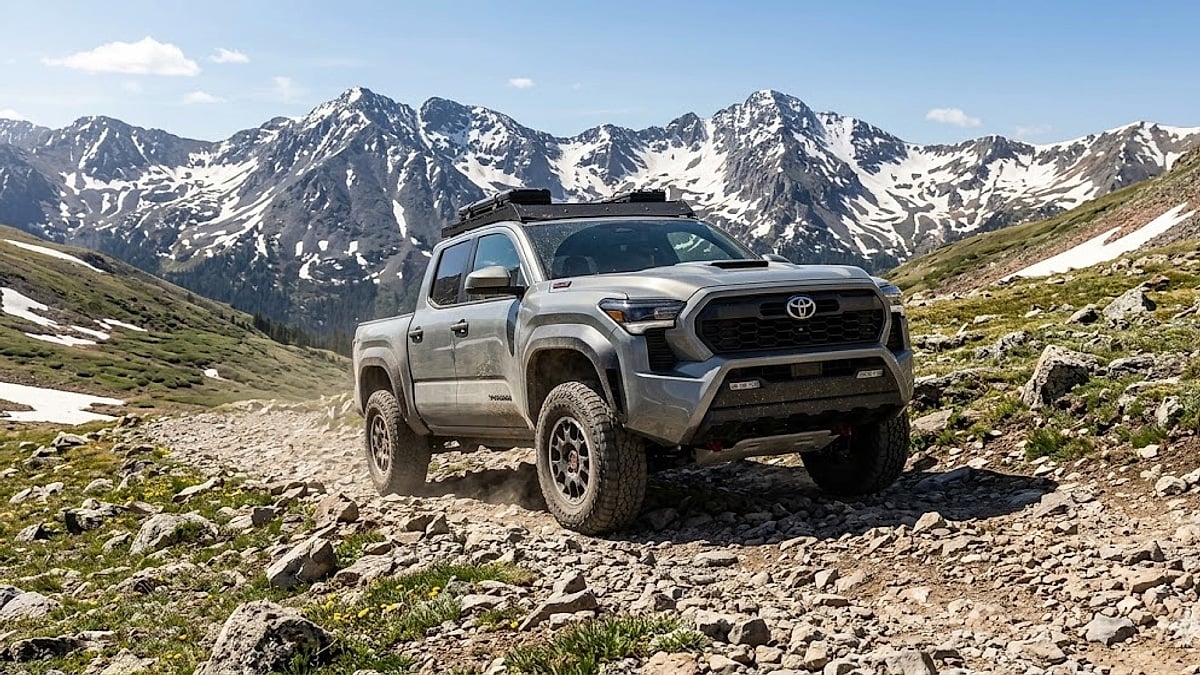
This mechanical risk scales exponentially under demanding geographic conditions. As a third-generation Colorado native reporting from Parker, Colorado, I regularly utilize the Rocky Mountains’ high-altitude terrain as a rigorous, real-world testing ground. Climbing steep mountain passes like the Eisenhower Tunnel or tackling high-altitude off-road trails places an immense thermal burden on a vehicle's cooling and hydraulic systems.
On a technical, steep descent where precision is everything, a transmission control module that locks an owner out of manual gear selection forces a hazardous choice. Drivers are stuck with a computer that hunts for the right gear, generating massive friction-based heat. When a truck is operated at high-range ratios under heavy loads in these thin-air environments, the internal fluid easily exceeds its safe operating zone of 200°F. This thermal saturation accelerates solenoid degradation, rendering the 8-speed unit highly vulnerable to catastrophic pressure failure on regional highways.
The Blueprint: Navigating Factory "Diagnostic Limbo"
For owners currently facing harsh shifting, gear slippage, or complete loss of highway power, escaping the dealership "diagnostic limbo" requires a calculated, aggressive strategy. Because many service centers initially dismiss these symptoms as normal "adaptive learning behavior," consumers must establish an unassailable paper trail.
1. Document and Log Technical Telemetry
Immediate: At the first sign of harsh shifting, gear hunting, or slippage, log the exact mileage, ambient temperature, and driving conditions. If the truck enters "Limp Mode," safely pull over and record video of the dashboard warning cluster.
2. Demand a Comprehensive OBD-II Diagnostic Scan
At Dealership: Do not accept a simple software reset. Insist that the service technician perform a full electronic diagnostic scan to check for stored Diagnostic Trouble Codes (DTCs) related to hydraulic line pressure or solenoid circuit faults. Demand a printed copy of the master tech data stream.
3. Request a Forensic Transmission Fluid Analysis
Before Repair: Instruct the service drive to pull a fluid sample. The presence of non-ferrous metallic flakes or a distinct burnt odor is conclusive evidence of internal clutch delamination and hardware failure, legally invalidating any claims that the issue is merely a software glitch.
4. Enforce Powertrain Warranty and File Oversight Reports
Final Step: If hardware failure is verified, demand a full, manufacturer-funded gearbox replacement under the 5-year/60,000-mile powertrain warranty. Simultaneously, log your vehicle's failure with the National Highway Traffic Safety Administration (NHTSA) to ensure your data is integrated into the ongoing nationwide class action matrix.
Consumer Warning: Continuing to operate a vehicle once the transmission control module has initiated a hard hydraulic fault can cause severe downstream mechanical damage to the transfer case and driveshafts, complicating your warranty claim or potential lemon law buyback.
This nationwide class action push underscores a fundamental truth: a truck's marketing campaign can never replace field-verified mechanical longevity. As a dedicated consumer watchdog, Torque News will continue to track this escalating 4th-Gen transmission crisis from the front lines of the service bays.
What Would You Do?
Have you experienced severe gear hunting, harsh shifting, or an alarming highway "Limp Mode" event in your new 4th-Generation Tacoma? Are local dealerships honoring your warranty, or are they hiding behind the "adaptive learning" excuse?
Tell us what you think! Please leave a comment in the red "Add new comment" link below and share your real-world experience with the community.
About The Author
Denis Flierl is a 14-year Senior Reporter at Torque News and a member of the Rocky Mountain Automotive Press (RMAP) with 30+ years of industry experience. Explore his full investigative reporting archives and technical guides at DenisFlierl.com. Based in Parker, Colorado, Denis leverages the Rockies' high-altitude terrain as a rigorous testing ground to provide "boots-on-the-ground" analysis for readers across the Rocky Mountain region, California EV corridors, the Northeast, Texas truck markets, and Midwest agricultural zones. A former professional test driver and consultant for Ford, GM, Ram, Toyota, and Tesla, he delivers data-backed insights on reliability and market shifts. Denis cuts through the noise to provide national audiences with the real-world reporting today’s landscape demands. Connect with Denis: Find him on LinkedIn, X @DenisFlierl, @WorldsCoolestRides, Facebook, and Instagram.
Photo credit: Denis Flierl
Set Torque News as Preferred Source on Google
Follow us today...






Comments
Traded my 2017 Tacoma (which…
Permalink
Traded my 2017 Tacoma (which had its own transmission quirks) for a 2022 Nissan Frontier. The new Frontiers are similar to the second generation Tacomas and couldn’t be any happier with my choice. Toyota ruined the Tacomas, not surprised they’re having these issues with the trucks.
I've seen folks in the LC…
Permalink
I've seen folks in the LC forum reporting the land cruiser 250 hybrid's having similar solenoid/transmission failures as well - have you guys looked into the LC/4Runner's also having this issue? (I have a 2024 LC but haven't had the issue and I'm at almost 30k) i.e. seems much much wider than just the Tacoma.