
The transition between lease cycles is the most vulnerable moment for a vehicle consumer, particularly in the midsize truck segment. Dealerships routinely deploy aggressive regional promotions to recapture highly coveted late-model used inventory. A Torque News investigation by Senior Reporter Denis Flierl reveals that transitioning from a third-generation 2023 Toyota Tacoma TRD Sport to a 2026 fourth-generation Tacoma SR5 lease, under advertised regional dealer incentives, functions as a profound financial extraction mechanism.
By analyzing proprietary lease-asset structures, real-world valuation indices, and mechanical engineering transformations, this report demonstrates how thousands of dollars in hidden equity are regularly surrendered in these transactions. Furthermore, a stark divergence in engineering architecture from the naturally aspirated 3.5-liter V6 to a heavily taxed 2.4-liter turbocharged inline-four platform alters long-term asset reliability and operational dynamics.
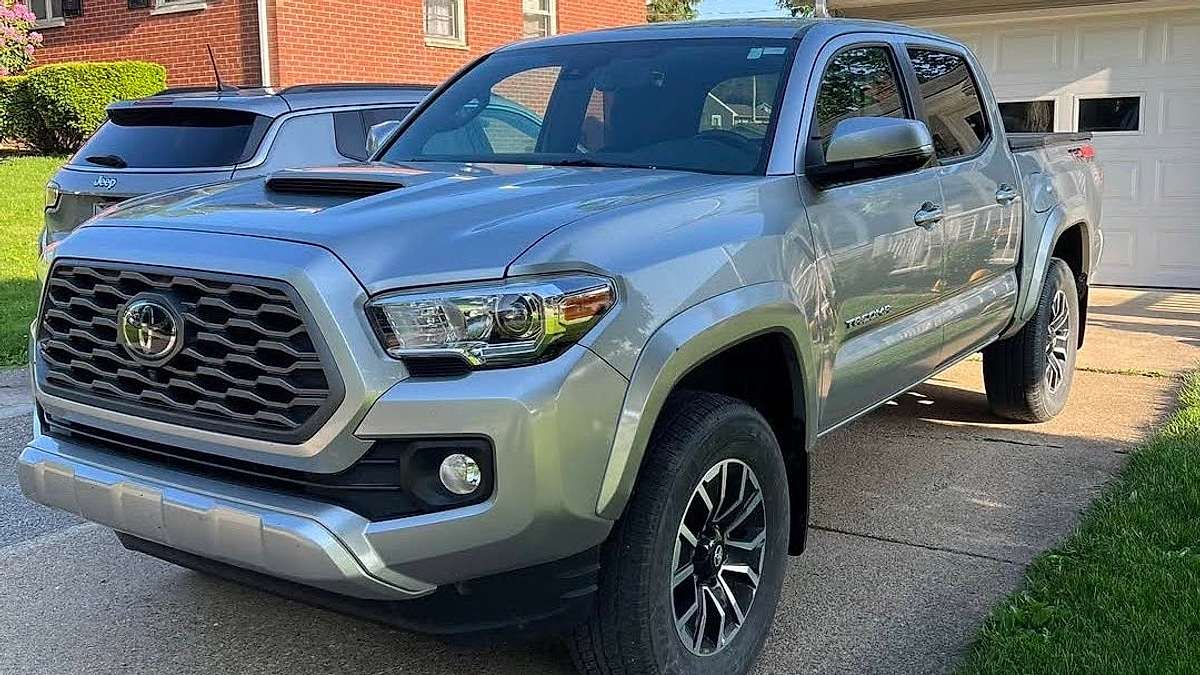
A major conflict emerged within the enthusiast community when Craig Landsberger from Columbiana, Ohio, posted his dilemma to the Taco Nation Facebook page:
"My lease is up on this 2023 Toyota Tacoma Sport next month. The Toyota dealer is offering me a crazy lease deal on a new 2026 Tacoma SR5 with heated seats and steering wheel and a long bed, which are things I want. If this had the same options, it wouldn’t be a question. Should I upgrade or keep this girl?"
Our investigative tracking of dealership acquisition behavior shows that this seemingly aggressive upgrade path represents a sophisticated equity-stripping maneuver. Dealership networks are actively targeting end-of-lease third-generation Tacomas because these specific platforms represent the final era of the atmospheric V6 powertrain, an asset class currently experiencing unprecedented demand on secondary wholesale markets.
The primary trap lies in the intentional suppression of the consumer's awareness of the lease-end residual value. When a customer walks into a retail showroom with a mature 2023 lease, the initial contract fixed a conservative residual buyout value three years prior. In the current marketplace, the real-world cash value of a low-mileage 2023 TRD Sport far exceeds the contractually mandated purchase option price.
Retailers leverage the attractive entry point of a low payment option to obscure the reality that the consumer is surrendering an asset with substantial cash equity. This equity is effectively captured by the dealer network to subsidize new-unit sales or bolster secondary-market profit margins.
The Hidden Math of the Lease-Return
The automotive remarketing complex relies on information asymmetry to hide financial risks behind low monthly payments, a strategy exposed by comparing Kelley Blue Book’s valuation indices with regional operational data archived at Hutchinson Toyota Inventory Postings.
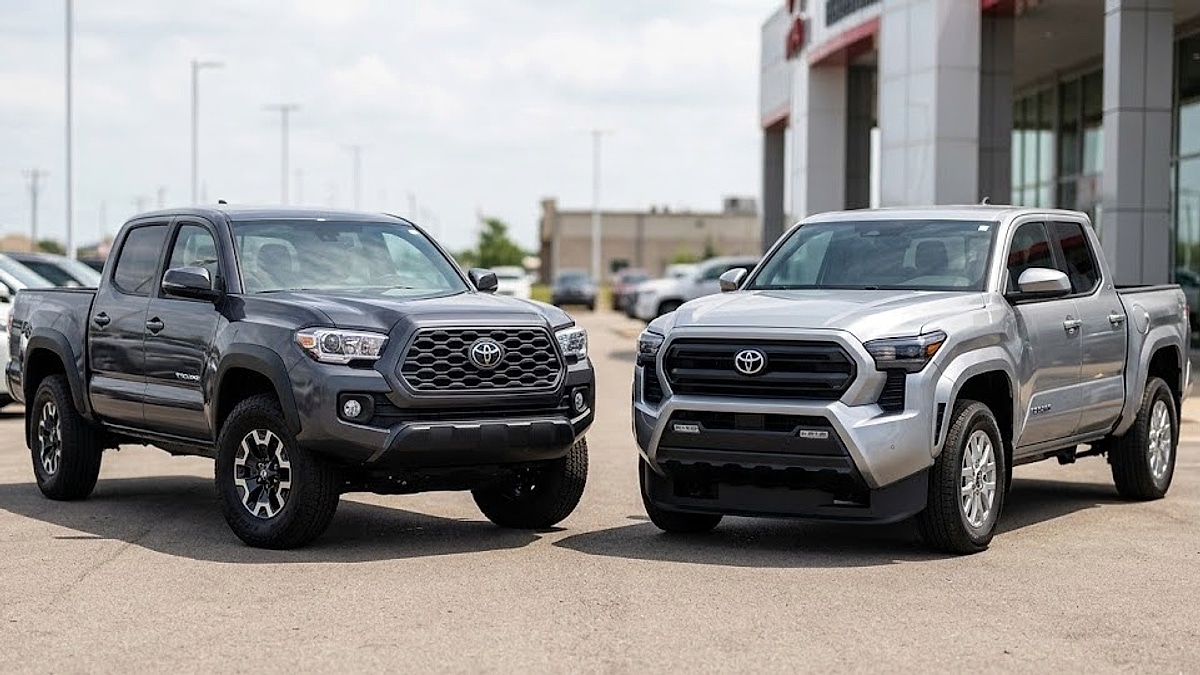
Kelley Blue Book authorities confirm the 2023 Toyota Tacoma ranks in the top tier for midsize pickup depreciation protection, consistently retaining a real-world market value thousands of dollars higher than its original lease residual buyout amount. Dealerships exploit this spread by treating the vehicle as a standard lease turn-in rather than a highly valuable trade-in asset, forcing the consumer to forfeit their accumulated equity upon handing over the keys.
The dealership instantly absorbs this value to profit from arbitrage between wholesale and retail used inventory. Meanwhile, Hutchinson Toyota Inventory Postings data demonstrates that achieving these low payment marks on a fourth-generation replacement lease requires substantial upfront capitalization, an explicit action step where the dealer quietly extracts the necessary capital directly from the customer’s unmentioned trade equity.
Mechanical Downgrades and the Reality of Turbocharged Downsizing
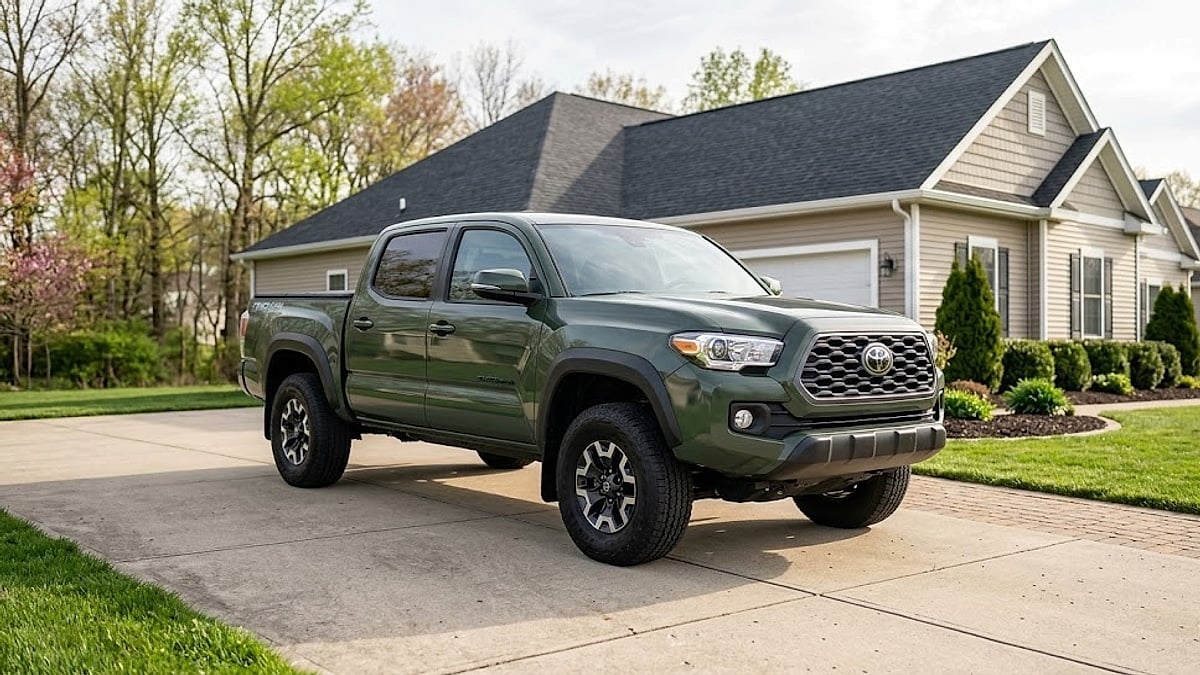
The financial extraction is merely the first dimension of this trap; the structural shift between the 2023 and 2026 model years fundamentally alters the vehicle asset itself. While the 2023 model represents the culmination of the TNGA platform's predecessor, featuring the naturally aspirated 3.5-liter 2GR-FKS V6 engine with linear power delivery across a well-understood thermal envelope, the 2026 Tacoma SR5 transitions to the 2.4-liter T24A-FTS i-FORCE turbocharged inline-four.
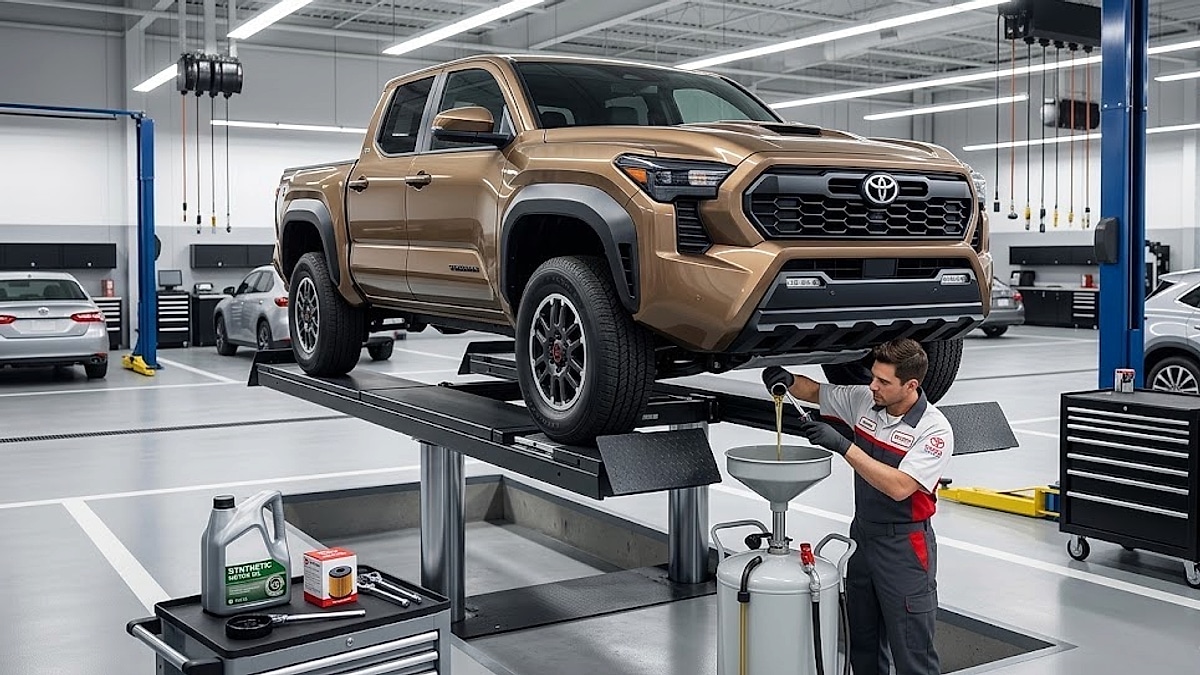
Technical analysis by Torque News' Denis Flierl identifies a critical operational gap: the introduction of high-pressure turbocharging demands significantly more rigorous oil maintenance and places greater stress on internal structural components, which can defy factory maintenance schedules under heavy loads.
Compounding this mechanical departure, down-tiering from a TRD Sport configuration to an SR5 package alters the chassis architecture, stripping away the sport-tuned suspension dampers and specific anti-sway geometry optimized for torsional rigidity, and forcing the consumer into a less robust suspension configuration that effectively discards the premium driving dynamics paid for over the preceding three years.
Real-World Transmission Faults and High-Altitude Vulnerability
The mechanical differences become highly apparent when operating under extreme stress conditions, such as the demanding topography of the Rocky Mountains. In our ongoing coverage of midsize truck reliability, Torque News Senior Reporter Denis Flierl has uncovered an unresolved dispute regarding the electronic software mapping and hydraulic stability of the fourth-generation drivetrain. Shifting from the proven six-speed automatic transmission of the 2023 model to the modern eight-speed automatic found in the 2026 model has introduced significant operational friction.
According to ongoing Torque News by Denis Flierl tracking of manufacturing defects, early production runs of the fourth-generation platform are experiencing notable drive-cycle anomalies. This specific drivetrain erraticism is analyzed in depth in our baseline investigative report, "Toyota Dealer Denies 2025 Tacoma Transmission Fix", where long-term telemetry data verified explicit hydraulic pressure drops and gear-hunting behavior before the transmission fluid achieves nominal operating temperature.
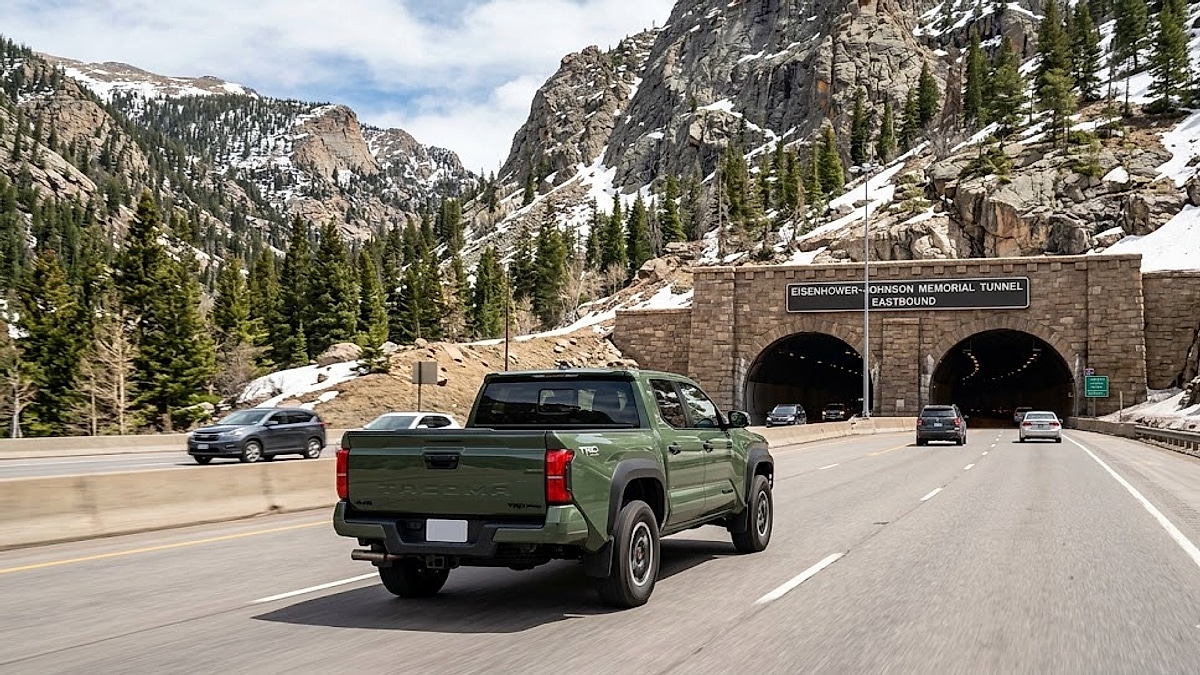
This behavior is amplified on Colorado mountain passes like the climb up I-70 toward the Eisenhower Tunnel or along the technical segments of Kenosha Pass, where high-altitude air density combined with steep-grade demands causes modern small-displacement turbocharged engines to experience nonlinear torque spikes. The legacy V6 provides a stable mechanical baseline that maintains predictable thermal management under load, a characteristic highly valued by seasoned mountain drivers.
Field Observations From Owner Communities
The technical reality of this powertrain transition is thoroughly documented within active mechanical forums and owner repositories. The academic perspective often fails to capture the immediate operational frustrations found in first-hand field documentation. For instance, in a detailed powertrain diagnostic thread on the prominent digital truck community r/ToyotaTacoma, multiple technical users noted that the modern forced-induction variants exhibit distinct structural anomalies during thermal expansion cycles.
A technical contributor clearly outlined these cold-start hydraulic shifts, stating that their automatic transmission exhibits a distinct, hard shift from first to second gear immediately after a cold start, which then smooths out as the vehicle reaches operating temperature, an evaluation that matches the telemetry logs observed in our professional testing environment. This discussion can be reviewed in its entirety within the community archive on r/ToyotaTacoma Cold Shift Anomalies.
This pattern of real-world variance from factory performance claims highlights a broader shift in consumer satisfaction. Long-term truck veterans are expressing significant structural reservations about the downsized forced-induction units. In a parallel analytical review titled "Why a 7-Time Toyota Tacoma Owner Regrets His 2025 Model at 15K Miles", Torque News highlighted an owner who accumulated extensive over-the-road mileage across multiple generations of this pickup platform.
The field data indicated that the high-frequency forced induction system generates a non-linear power curve characterized by a brief delay during exhaust gas normalization, followed by a sharp torque surge, which complicates low-speed technical maneuvering and trailer positioning compared with the stable throttle response of the older 3.5-liter V6.
Analysis of the Consumer Mindset
With 30 years of experience as an automotive consultant and professional test driver in the harsh testing environments of Colorado, I can explain exactly why truck owners like Craig are drawn to these modern offerings despite their structural disadvantages. Dealership marketing operations are highly sophisticated at identifying lifestyle friction points. By offering targeted comfort features, such as a heated steering wheel or extended bed dimensions, they create a strong emotional justification for a transaction that makes very little long-term financial sense.
The modern consumer frequently conflates advanced cabin tech with a vehicle's structural quality. However, as an investigative watchdog, Torque News must emphasize that a heated steering wheel cannot compensate for the structural loss of a premium V6 drivetrain and a heavily compromised equity balance sheet. Shifting from a high-retaining asset class to a downsized, high-strung platform represents a step backward in pure vehicular utility.
Key Takeaways
- Evaluate the true contract buyout residual price against the current open secondary market wholesale valuation before entering a dealership showroom.
- Refuse standard vehicle turn-in options when substantial positive equity is present on a highly valued late-model truck asset.
- Analyze the long-term engineering cost of shifting from a naturally aspirated, large-displacement engine to a heavily stressed, small-displacement turbocharged system.
- Prioritize underlying powertrain integrity and proven mechanical performance histories over temporary interior technology upgrades and comfort features.
How Do You Extract the Hidden Equity?
The immediate question arising from this investigation is straightforward: If a consumer recognizes that their vehicle has thousands of dollars in hidden equity at lease-end, what specific operational steps must they take to secure that capital without falling into a secondary dealer financing trap?
The proper mechanical and financial action plan requires the consumer to formally initiate a lease buyout directly through the primary financial institution, completely bypassing the localized retail dealership grid. By securing independent financing or utilizing liquid capital to execute the purchase option contract, the owner takes full title to the asset at the artificially low residual rate.
Once the title is secured, the owner can either retain the truck as a high-value asset, free of modern turbocharged reliability liabilities, or leverage its true market value as a significant down payment on an upgraded platform at a time and place of their choosing.
A Vision of What Lies Ahead
This investigative report serves as the primary structural anchor for our comprehensive midsize truck research stream. To help your understanding of this rapidly evolving marketplace, you must look beyond the initial financial transaction and analyze how these vehicles perform under extended mechanical load over multiple years of operation.
It's Your Turn
The automotive landscape is undergoing a massive shift, and traditional consumer pathways are being heavily manipulated by dealer networks seeking to capitalize on high demand for used cars. Have you recently faced an aggressive end-of-lease push from your local dealership? Did you choose to walk away, or did you realize your truck was worth far more than they were willing to admit? Tell us what you think! Please leave your insights, experiences, and technical field observations in the comments section below.
What's Next
As the secondary market for the legacy 3.5-liter V6 reaches a fever pitch, Torque News will continue to track real-time wholesale auction values and localized dealer buyout restrictions across the country. In our next investigative installment, “Toyota Dealers Are Begging for Your 2023 V6 Tacoma -Here Is the 3-Step Strategy to Flawlessly Flip Their 'Trap" Into a $5,000 Windfall”, we pull back the curtain on how major auto lenders are reacting to this consumer-led buyout wave, including a deep dive into the specific credit unions offering the lowest-rate lease-buyout loans right now. Stay tuned as we expose the next phase of this shifting midsize truck landscape and ensure you always keep the upper hand against the showroom grid.
About The Author
Denis Flierl is a 14-year Senior Reporter at Torque News and a member of the Rocky Mountain Automotive Press (RMAP) with 30+ years of industry experience. Explore his full investigative reporting archives and technical guides at DenisFlierl.com. Based in Parker, Colorado, Denis leverages the Rockies' high-altitude terrain as a rigorous testing ground to provide "boots-on-the-ground" analysis for readers across the Rocky Mountain region, California EV corridors, the Northeast, Texas truck markets, and Midwest agricultural zones. A former professional test driver and consultant for Ford, GM, Ram, Toyota, and Tesla, he delivers data-backed insights on reliability and market shifts. Denis cuts through the noise to provide national audiences with the real-world reporting today’s landscape demands. Connect with Denis: Find him on LinkedIn, X @DenisFlierl, @WorldsCoolestRides, Facebook, and Instagram.
Photo credit: Denis Flierl via Craig Landsberger
Set Torque News as Preferred Source on Google
Follow us today...