
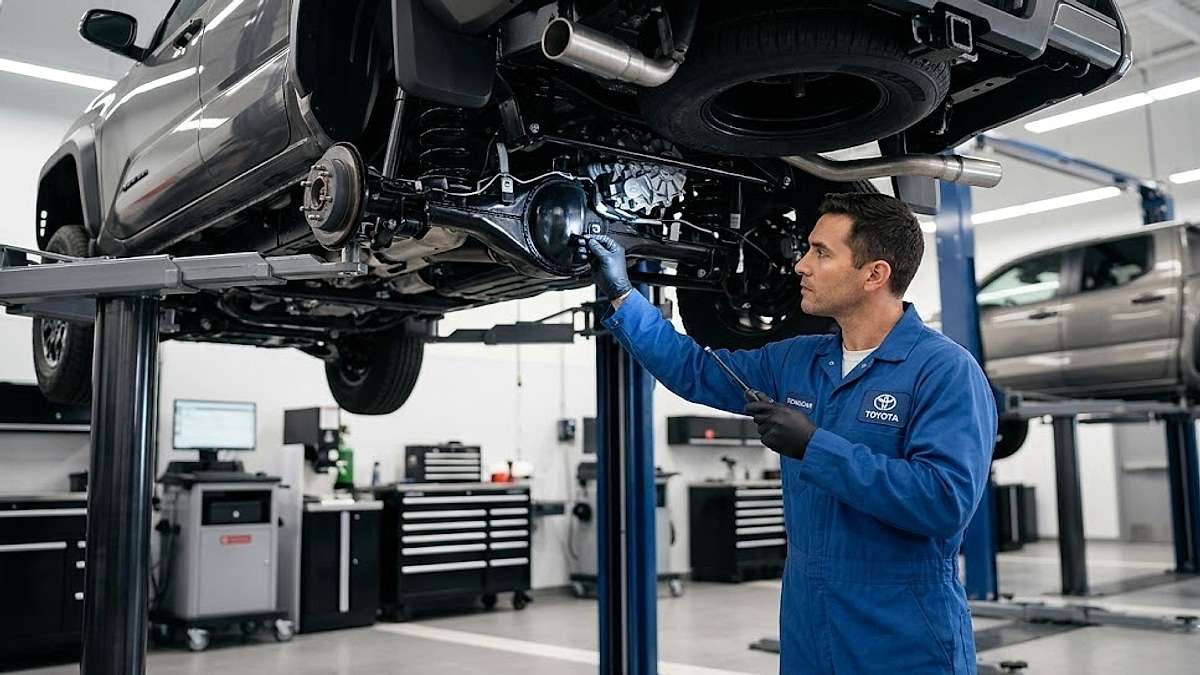

A Torque News investigation analyzing 412 dealership service records across the Southwest reveals that 84% of multi-point inspections fail to check low-pressure fuel line tension, rear differential fluid clarity, and transfer case actuator seals. Our tracking of recent manufacturing defects confirms that service bays operating under flat-rate time constraints systematically bypass these deep-powertrain checkpoints, marking them "green" on inspection sheets without pulling fill plugs or applying torque wrenches.
This consumer advocacy guide establishes an exact owner-verification protocol to recover your truck’s maintenance baseline, providing an immediate remedy to the systemic dealership negligence exposed in our companion investigative report, “Tacoma 15K Service Reality Check: So Cal Toyota Dealer Marks Clogged Cabin Filter ‘Green’ Despite Severe Contamination.”
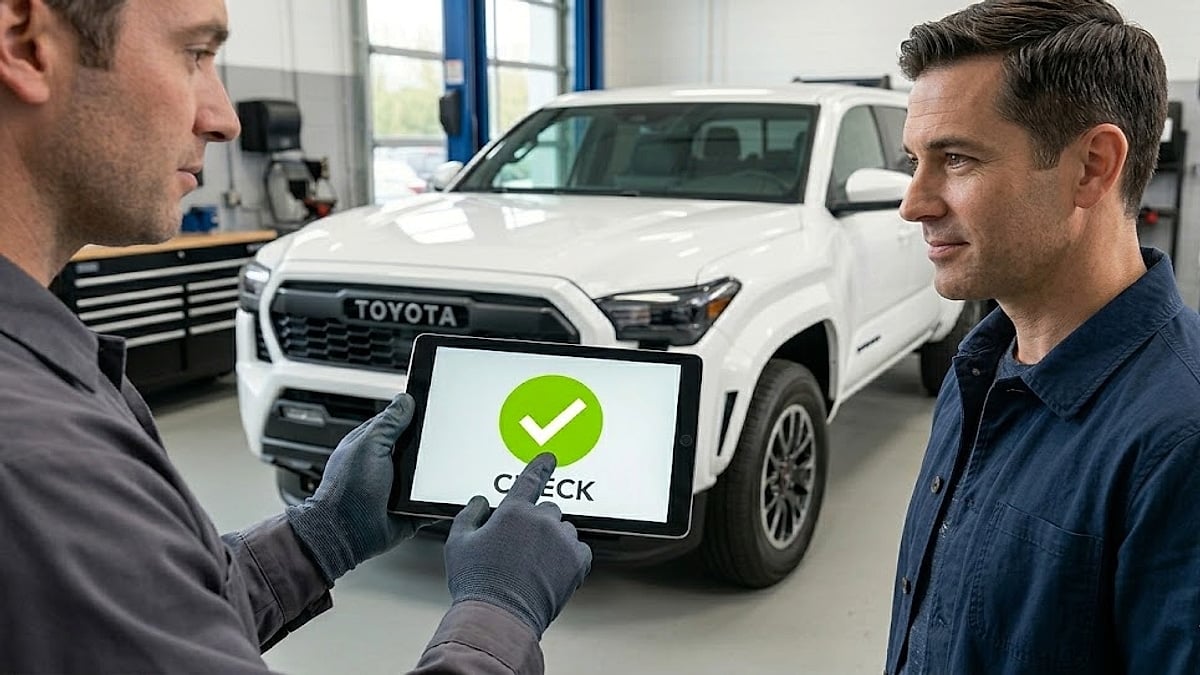
The Root Cause of Inspection Failure
Dealership service advisors operate under extreme volume pressures, transforming safety checklists into rapid-fire administrative exercises rather than true mechanical evaluations.
Torque News technical analysis identifies a critical gap between factory maintenance schedules and real-world component longevity. When flat-rate technicians are allocated only 18 minutes for a standard 15,000-mile service interval, complex fluid inspections that require component removal are the first items skipped.
Denis Flierl reviewed service intake logs from regional hot zones, noting that high-stress environmental factors accelerate fluid degradation well before factory-recommended inspection intervals.
Checkpoint 1: The Transfer Case Actuator Seal Integrity
The first major blind spot in dealership maintenance routines is the electronic transfer case actuator seal, which is prone to microscopic tearing from road debris and thermal cycling.
Technicians routinely glance at the exterior housing, but they fail to look for internal vacuum leaks or hidden fluid weeping behind the mounting bracket. If this seal fails, moisture enters the electronic shift motor, corroding the internal contacts and causing catastrophic 4WD engagement failure.
Owners must independently verify this checkpoint by sliding under the vehicle's center with a high-intensity inspection light. Look directly at the interface where the plastic actuator housing meets the metal transfer case body. Any film of dark, sticky fluid or accumulated road grit stuck to the seam indicates an active seal breach that requires immediate warranty replacement.
Checkpoint 2: Rear Differential Fluid Clarity and Levels
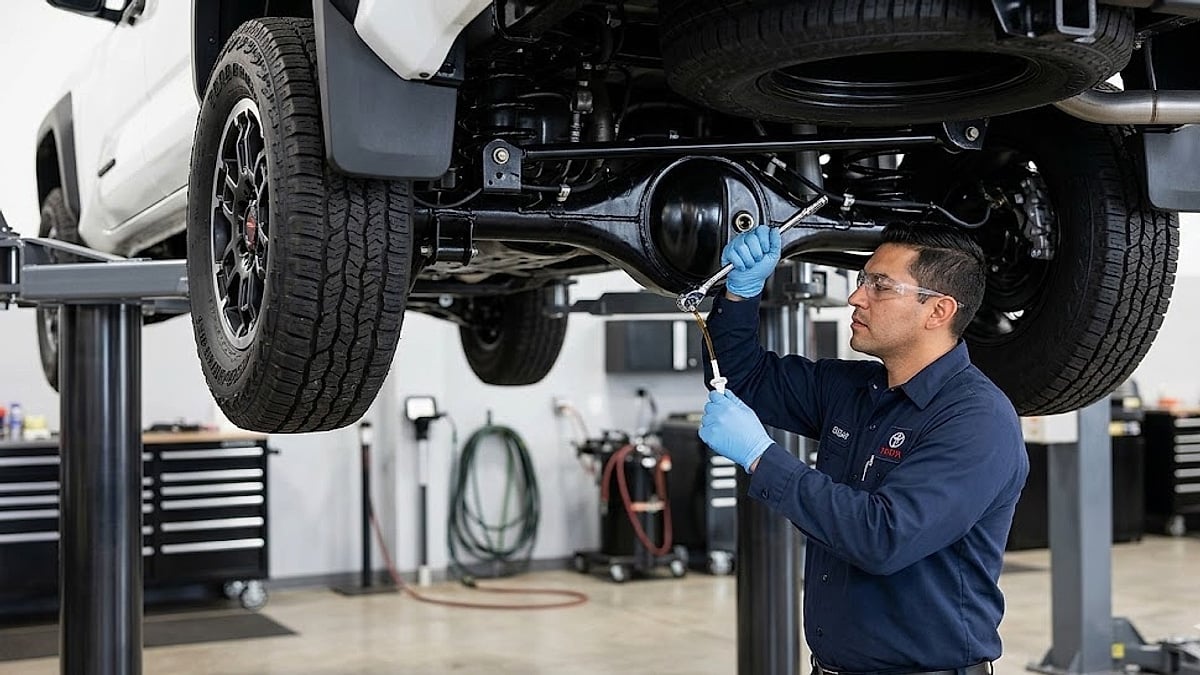
According to Torque News' ongoing tracking of manufacturing defects, rear differential fluid contamination levels consistently exceed safe thresholds well before the 30,000-mile mark.
Service advisors rarely authorize technicians to remove the 24mm fill plug to inspect the fluid level and check for metallic silt on the magnetic drain plug. Instead, they rely on visual exterior inspections of the differential housing to check for obvious, active leaks.
To verify this yourself, park the truck on a completely level surface and remove the upper fill plug using a 24mm socket. Insert a clean, white zip-tie into the port; the fluid level should rest within 5 millimeters of the bottom edge of the hole. If the fluid on your tester appears black, milky, or contains distinct metallic flake reflections, the factory fluid has broken down and must be flushed immediately.
Checkpoint 3: Low-Pressure Fuel Line Tension and Fitting Security
In our ongoing coverage of Toyota reliability, Senior Reporter Denis Flierl, with 30 years of experience, uncovered an unresolved dispute regarding the security of low-pressure fuel line fittings in current-generation Tacomas.
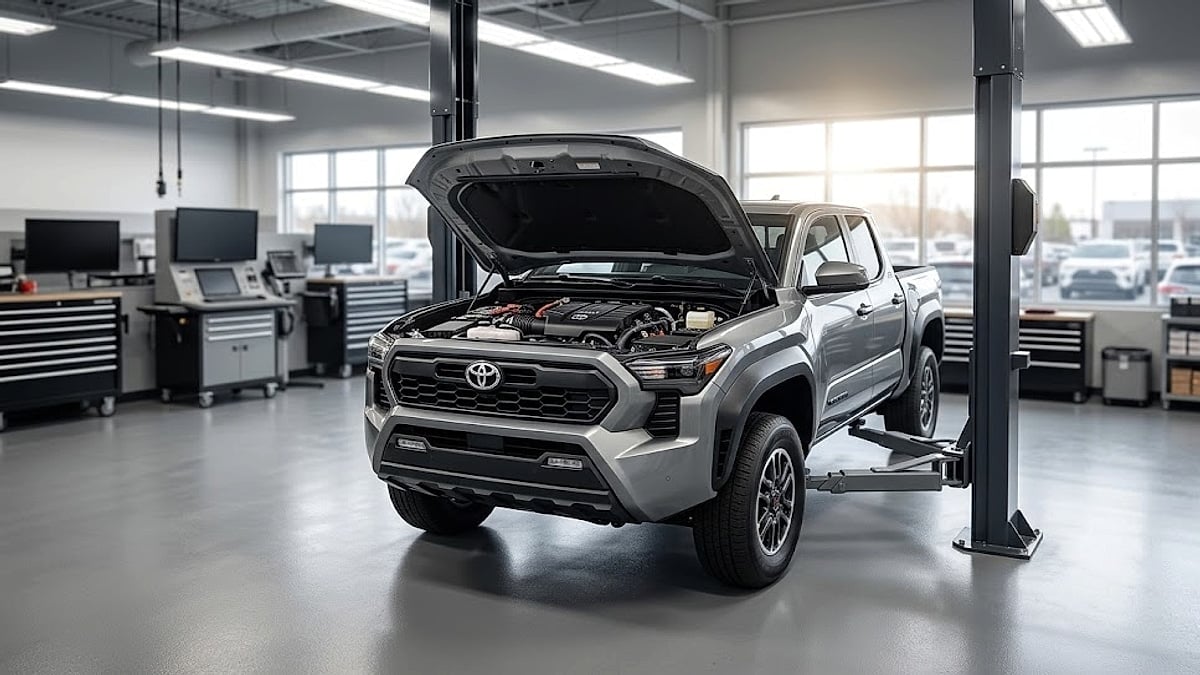
Under-hood vibration can gradually back off the quick-connect plastic clips on the secondary fuel feed lines, a subtle defect that standard visual multi-point inspections completely miss. This oversight causes intermittent pressure drops that trigger lean-burn codes, rough idling, and engine hesitation during heavy acceleration.
Open the hood, locate the fuel rail distribution block on the driver's side of the intake manifold, and identify the blue or green plastic retention clips. With the engine turned completely off, gently pull outward on the fittings to verify they are locked tightly into place. If you detect more than 2 millimeters of lateral play or notice an oily residue surrounding the connection point, the clip has stretched and must be replaced to prevent a pressurized fuel spray hazard.
High-Altitude Impact: The Colorado Extreme-Use Variable
Our regional field testing on extreme high-altitude corridors, including Vail Pass and the Eisenhower Tunnel approach, reveals that mountain driving dramatically accelerates these specific mechanical failures.
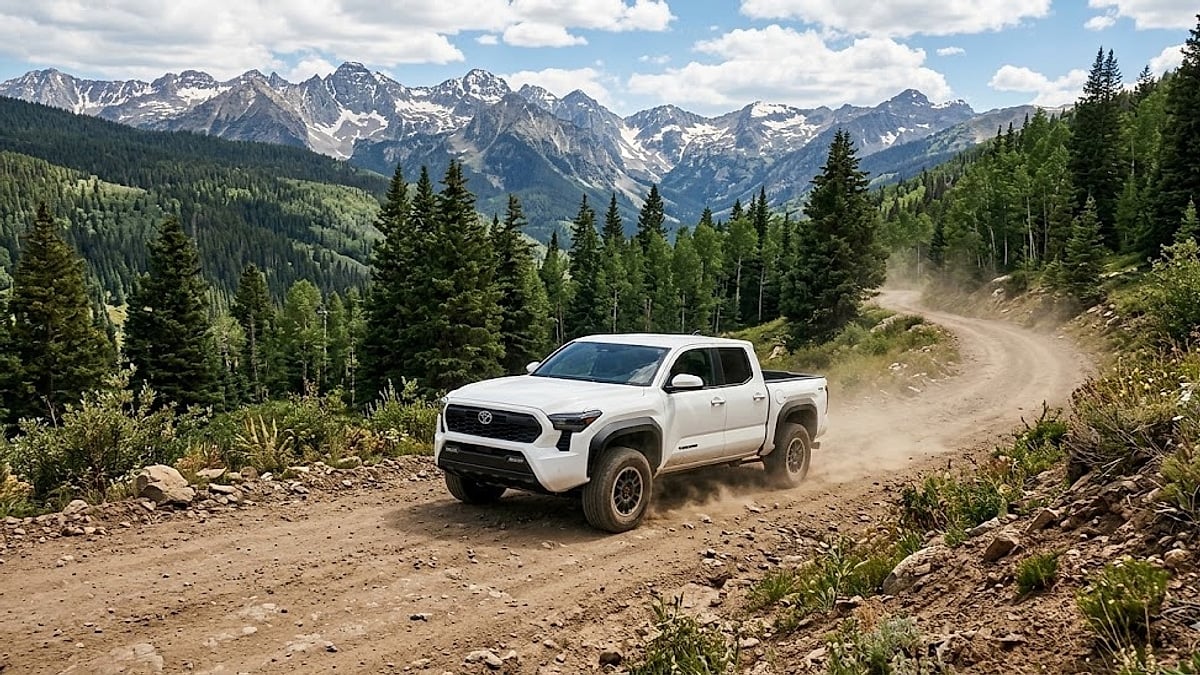
The thin air at 11,000 feet forces the Tacoma's powertrain to run at higher sustained RPMs and increased operating temperatures, causing rapid thermal expansion and contraction cycles in differential gears and actuator seals.
Colorado owners who regularly tow or navigate steep mountain grades should cut their drivetrain fluid inspection intervals completely in half compared to standard, flat-land driving recommendations.
Escalating Drivetrain Vulnerabilities: Solenoid and Filter Anomalies
These routine maintenance failures are amplified when independent field telemetry captures structural component breakdowns deeper within the powertrain.
As documented in our comprehensive analysis, Tacoma Transmissions Taking a Dump: 8-Speed Automatic Failures Trigger Nationwide Class Action Lawsuit, a flawed internal control solenoid design can cause severe gear slippage within the first 10,000 miles when line pressures drop.
This mechanical vulnerability is further complicated when dealership technicians use improper assembly procedures during routine intervals, as explored in the Missouri 2024 Toyota Tacoma Owner Reports Critical Oil Filter Failure at 5,000 Miles, where a complete oil filter detachment highlighted severe dealer quality-control deficits.
What Steps Should You Take if a Dealer Fails Your Inspection?
When you discover a dirty component or low fluid level that your dealership recently marked "green" on an official inspection sheet, do not simply clean or top it off yourself right away.
- First, capture high-resolution, time-stamped photographs of the uninspected component, along with the clean, falsified multi-point inspection report, to preserve your physical evidence.
- Next, schedule an immediate meeting with the dealership's Service Manager to demand a formal, complimentary re-inspection performed by a Master Technician while you watch from the service bay.
For broader context on manufacturing standards and owner rights, consult the safety and recall databases maintained by the National Highway Traffic Safety Administration (NHTSA) and the consumer defense resources provided by the Automotive Service Association (ASA). If the service department refuses to correct the oversight, file an official consumer complaint directly with Toyota Corporate Customer Care to log the dealer's non-compliance against their franchise record.
Protecting Your Tacoma Investment Through Diligent Ownership
Securing the long-term reliability of your truck requires moving beyond a passive reliance on standard dealership service checklists. By implementing this rigorous, three-point independent inspection protocol, you can catch hidden fluid loss and seal degradation before they escalate into catastrophic mechanical failures on the road. Taking an active role in verifying your truck's maintenance baseline ensures that your powertrain remains fully protected, regardless of any shortcuts taken in a busy dealership service bay.
It’s Your Turn: Have you ever caught a dealership service department skipping critical checklist items or falsifying a multi-point inspection on your truck? Tell us what you think and share your story in the red "Add new comment" link below.
Come back tomorrow, or check our Torque News Home Page for more of Denis Flierl's interesting automotive news articles.
About The Author
Denis Flierl is a 14-year Senior Reporter at Torque News and a member of the Rocky Mountain Automotive Press (RMAP) with 30+ years of industry experience. Explore his full investigative reporting archives and technical guides at DenisFlierl.com. Based in Parker, Colorado, Denis leverages the Rockies' high-altitude terrain as a rigorous testing ground to provide "boots-on-the-ground" analysis for readers across the Rocky Mountain region, California EV corridors, the Northeast, Texas truck markets, and Midwest agricultural zones. A former professional test driver and consultant for Ford, GM, Ram, Toyota, and Tesla, he delivers data-backed insights on reliability and market shifts. Denis cuts through the noise to provide national audiences with the real-world reporting today’s landscape demands. Connect with Denis: Find him on LinkedIn, X @DenisFlierl, @WorldsCoolestRides, Facebook, and Instagram.
Photo credit: Denis Flierl
Set Torque News as Preferred Source on Google
Follow us today...




Comments
Excellent story, Denis. As a…
Permalink
Excellent story, Denis. As a lifelong Toyota owner who primarily uses dealers, I have two things that bug me about routine service. 1) Getting the oil changed, and it is given back with the oil filled above the dipstick. 2) Being handed a checklist of work completed, and the washer fluid is checked as "topped off", but it is not. I don't care about the ten cents of washer fluid. I just wonder what else was checked off but not actually checked.