
A Toyota owner posted a screenshot that explains why connected-car subscriptions make so many buyers feel like the goalposts moved after the sale.
The screenshot shows Toyota’s “Music Lover” plan. The pitch is simple: unlimited Integrated Streaming lets the owner browse and play music through existing Apple Music and Amazon Music accounts using the vehicle’s connection. Remote Connect is included. The price is $15 per month. That is the whole problem in one neat white card.
A buyer can spend roughly $50,000 on a Toyota minivan and then stare at a subscription screen asking for $15 a month to keep remote functions bundled with music streaming access that still depends on accounts the owner already pays for separately. The Reddit post called it a trash move. The comments were even less polite.
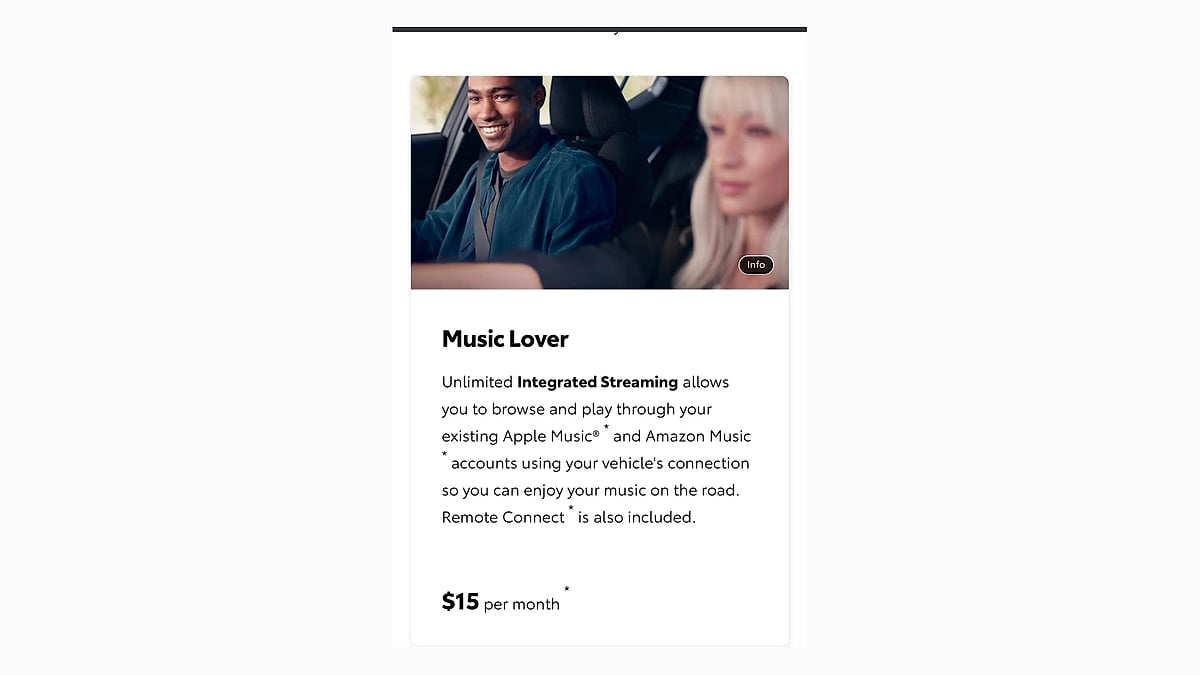
The anger is easy to understand and has happened to other Honda owners before. People are not merely annoyed by the price. They are annoyed by the packaging. Toyota did not put a big red “remote start ransom” label on the screen. It put Remote Connect inside a plan called Music Lover, surrounded by a smiling lifestyle photo and a paragraph about streaming through existing Apple Music and Amazon Music accounts.
That framing makes the screenshot feel worse.
The customer is angry about remote start. Toyota is selling a music plan.
The Screenshot Is The Story
The most important part of the image is the mismatch between the feature name and the reason people are opening the page.
“Music Lover” sounds optional. It sounds like a convenience for someone who wants native streaming without pulling out a phone. That would be much easier to defend. If Toyota wants to charge for in-car data that lets Apple Music or Amazon Music run through the vehicle’s connection, buyers can decide whether that is worth paying for.
Many will say no.
Fine.
The problem is that Remote Connect is included in the same plan. Remote Connect is where the emotional value lives. Remote start. Lock and unlock. Vehicle status. Last parked location. Those are the features people associate with the vehicle itself, especially when they bought a high-trim family vehicle and expected modern convenience to remain available.
The screenshot makes those two worlds collide. Music streaming feels like entertainment. Remote start feels like ownership. Toyota bundled them into the same $15 monthly fee.
A $50,000 Minivan Changes The Customer’s Patience
The Reddit poster said the family paid $50,000 for a minivan and could not use remote start without paying nearly $200 a year. That figure is close enough to the $15 monthly math to explain the outrage. Fifteen dollars a month becomes $180 a year. Add taxes or a longer ownership period and the number starts to feel ridiculous fast. On a cheap car, buyers may shrug at missing features.
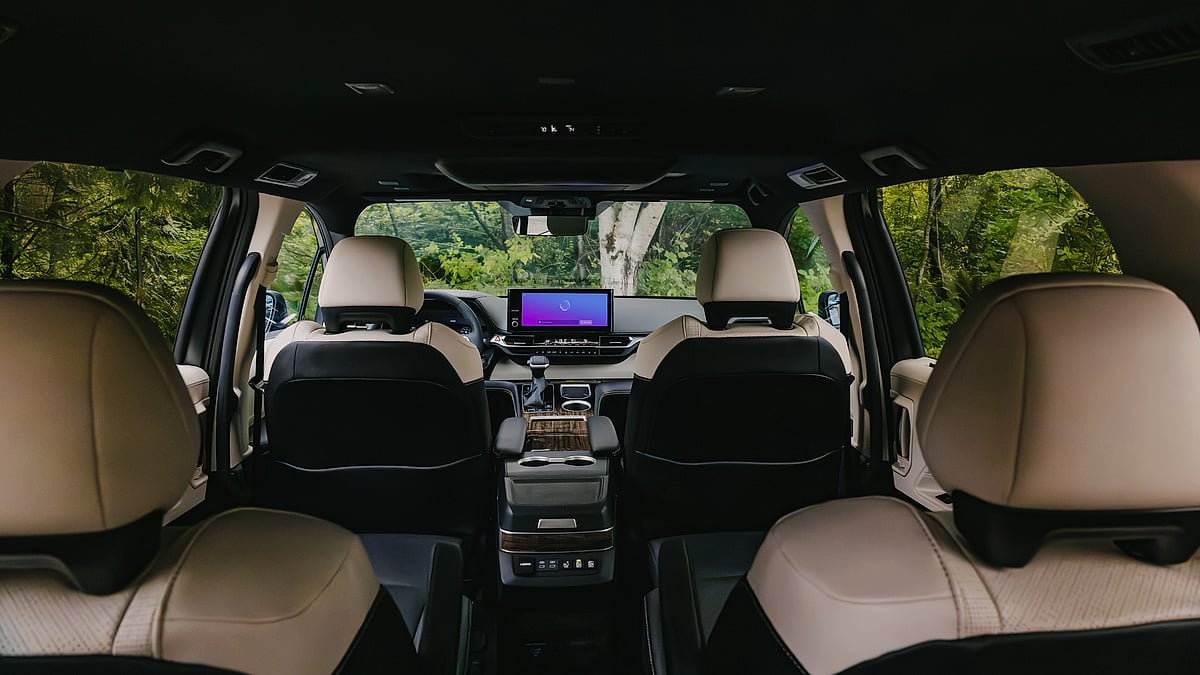
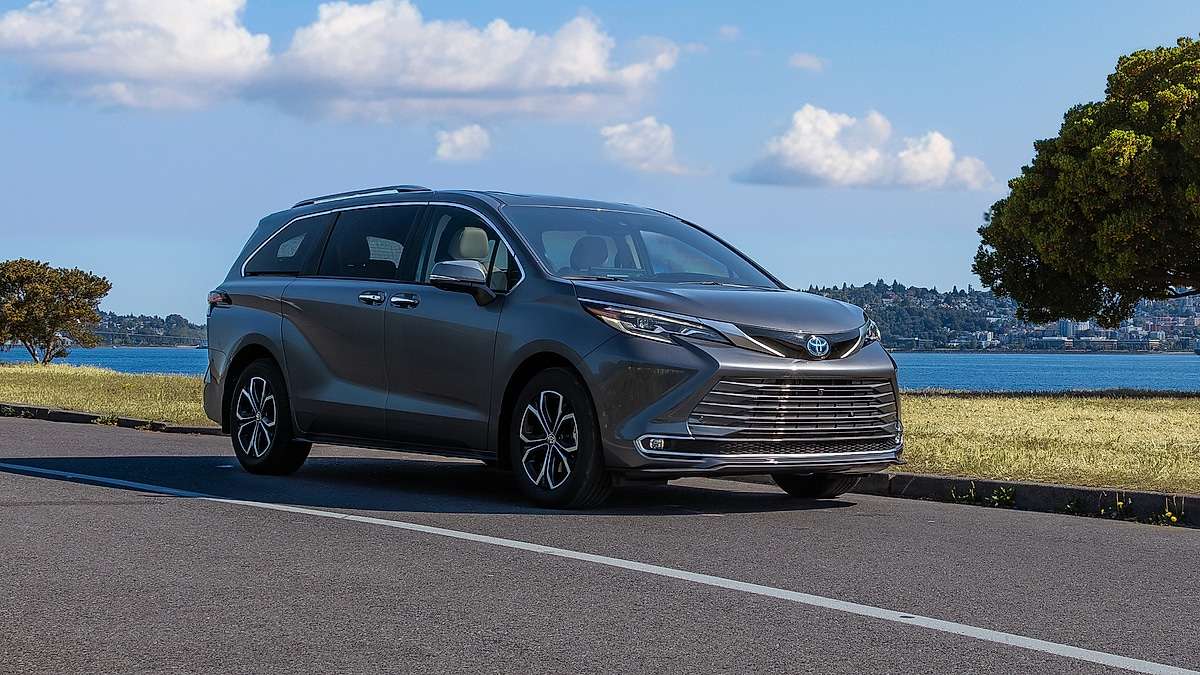
On a Sienna Limited, Woodland Edition, or Platinum, the reaction changes. This is not a bargain-bin commuter with crank windows and steel wheels. The Sienna is a hybrid family hauler that can climb well past $50,000 before taxes, fees, accessories, and dealer realities. Buyers choose it because they want durability, efficiency, space, comfort, and Toyota trust.
Remote start fits the family use case perfectly.
A parent wants to warm or cool the van before loading kids. Someone doing daycare drop-off wants the cabin ready before wrestling with backpacks and car seats. A driver in a hot state wants the air conditioning running before a child touches a scorching buckle. A driver in winter wants the windshield clearing before everyone piles in.
That is practical convenience, not a luxury toy.
So when the app routes that feature through a $15 monthly plan with music branding, the owner feels squeezed after the transaction is already done.
“Use CarPlay” Is Exactly Why The Plan Feels Strange
One commenter cut right to the point: just use CarPlay or Android Auto.
That is why the Music Lover pitch struggles.
The screenshot says the plan lets owners browse and play through existing Apple Music and Amazon Music accounts using the vehicle’s connection. But many Toyota owners already use their phones for music. Their Apple Music subscription already exists. Their Amazon Music account already exists. Their phone already has data. Their vehicle already has a screen. Their cable or wireless connection already handles the experience well enough.
So what is the customer being asked to buy? A cleaner native interface? Maybe.
A vehicle data connection for streaming? Sure.
Remote Connect bundled into the same plan? That is the hook.
The plan name makes Toyota look like it is selling music. The customer sees the bill as payment for remote start. That gap is where resentment grows.
Remote Start Used To Feel Like Hardware
For years, remote start lived in the buyer’s mind as a vehicle feature.
You bought the car. It had a key fob. The fob sent a signal. The engine started. Maybe the range was short. Maybe the sequence was clunky. Maybe the dealer installed it later. Still, the feature felt tied to hardware you owned.
Connected vehicles changed that relationship.
Now remote start can live inside an app, pass through servers, depend on a data connection, require account activation, and sit behind a trial period. Automakers can argue they are maintaining cloud infrastructure, cellular data, app support, security, and connected-service systems. That argument has some truth in it. A remote app is not free for the automaker to operate forever.
The key fob piece is where many Toyota owners lose patience.
Toyota’s own language says Remote Connect can be used through the Toyota app or the key fob if there is an active trial or paid subscription. That means even the familiar fob-based behavior can be tied to the connected-services status on compatible vehicles. For buyers who think of a key fob as local hardware, that feels like a line has been crossed.
The car is in the driveway.
The key is in the owner’s hand.
The monthly plan still controls the feature.
Several Things Toyota Should Fix
- Offer a cheaper Remote Connect-only plan for owners who do not want streaming or cloud navigation.
- Make the key fob remote-start rules clear at purchase, not after the trial expires.
- Stop naming the lowest Remote Connect path “Music Lover” when many buyers are paying for remote vehicle functions.
The Pricing Looks Small Until You Keep The Van
Fifteen dollars a month is designed to sound harmless.
It is a lunch. A streaming service. A few coffees. A number small enough to slide under the emotional radar.
But vehicles are long-term purchases. A family may keep a Sienna for 8, 10, or 12 years. That is the whole Toyota appeal. Reliability and long ownership are part of the bargain.
At $15 a month, the plan becomes $180 a year. Over five years, that is $900. Over ten years, $1,800. That is before any price increase, tax, plan restructuring, or future packaging change. The buyer who thought remote start was part of the vehicle now has to decide whether the convenience is worth a second bill that follows the car for years.
This is where automakers need to be careful.
Subscription math can look attractive on a corporate spreadsheet and poisonous in a driveway.
A buyer may accept subscriptions for services that feel external: satellite radio, in-car Wi-Fi, live traffic, concierge navigation, or streaming data. They get angrier when a subscription controls something that feels built into the machine they already bought.
Remote start falls into that danger zone.
Toyota’s Brand Makes The Backlash Sharper
This complaint would feel different if it came from a luxury startup trying to reinvent every ownership rule.
Toyota has spent decades building a reputation around trust. People buy Toyotas because they expect durability, simplicity, and less drama. The Sienna especially attracts practical buyers. Families. Commuters. Road-trip people. Owners who want the van to work every morning without turning every feature into an account-management exercise.
That is why this screenshot stings.
It does not feel like Toyota.
It feels like the part of the car business people hoped Toyota would resist.
The Reddit comments captured that mood. “Own nothing. Stream everything.” “Pay us $15 a month to play the music you’re already paying $15 a month to stream.” “Don’t buy models that have it.” Those lines are blunt because the frustration is simple. People feel ownership being turned into temporary access.
Toyota can argue that Connected Services add convenience.
Owners are asking why convenience feels like a tollbooth.
The Problem Is Bigger Than Toyota
Toyota is hardly alone.
The entire auto industry has been circling subscription revenue for years. Heated seats, performance upgrades, navigation, remote access, driver-assistance features, connected apps, streaming, camera recording, data packages, hands-free systems, and software-enabled options have all been tested, packaged, renamed, or floated in subscription form by different automakers.
Consumers hate the feeling of buying hardware and then renting permission to use it.
Automakers like recurring revenue.
That conflict is not going away.
Toyota’s mistake here is presentation. The Music Lover plan looks like a soft lifestyle add-on, but the included Remote Connect feature carries the real leverage for many owners. When a buyer opens the screen because remote start stopped working and sees a music-branded card asking for $15 a month, the subscription feels manipulative even if the terms were technically disclosed.
A good subscription should feel like buying a service.
A bad subscription feels like paying to unlock your own dashboard.
The Key Fob Trick Does Not End The Argument
Several commenters mentioned the familiar Toyota key fob remote-start sequence: press lock, press lock again, then press and hold lock until the lights flash and the vehicle starts.
That may work on many vehicles with an active trial or subscription. Some owners swear by it. Some dealers do a poor job explaining it. Some buyers do not know it exists. Some try it and cannot get it to work. The original poster said they tried and planned to test again before daycare.
Even if the fob method works, the larger issue remains.
Toyota says Remote Connect can be used through the app or key fob if the owner has an active trial or paid subscription. So the fob method may avoid opening the app, but it does not necessarily avoid the connected-service requirement after the trial expires.
That is the part owners find maddening.
The key fob is physical. The command feels local. The feature still sits under the subscription umbrella.
Toyota needs to explain this plainly at purchase because discovering it later creates exactly the kind of backlash shown in the Reddit thread.
What The Plan Should Have Been Called
If Toyota wants to charge for Remote Connect, call it Remote Connect.
Do not make the buyer hunt through a Music Lover card to keep remote functions alive. Do not make the lowest practical plan sound like a streaming package when the owner’s real goal is starting the van from the driveway.
A clean plan structure would look better.
Remote Connect: remote start, lock/unlock, status, vehicle location.
Drive Connect: cloud navigation, intelligent assistant, destination help.
Music Streaming: integrated Apple Music and Amazon Music using the vehicle connection.
Premium: all of it.
That structure would still annoy people who believe remote start should be included for the life of the vehicle. But at least the packaging would be honest. The current screen invites a worse reaction because the buyer reads “Music Lover” while thinking “I just want to start my minivan.”
Words matter when money is involved.
The Family-Vehicle Use Case Makes This Feel Worse
This would be annoying on a sports car.
On a minivan, it feels almost targeted at daily family inconvenience.
Remote start is most valuable when life is messy. Kids are late. A baby seat is hot. A toddler is melting down. The windshield is frozen. The grocery pickup is taking longer than expected. The van is parked far from the entrance. The cabin needs heat or air conditioning before everyone climbs in.
That is ordinary Sienna life.
Toyota knows this. The company sells the Sienna on comfort, efficiency, practicality, family usefulness, and peace of mind. Remote access fits that story better than native music streaming ever will.
So the subscription creates an odd emotional response.
The buyer does not feel like Toyota is charging for entertainment.
The buyer feels like Toyota is charging extra for family convenience after collecting family-vehicle money.
There Is A Fair Argument For Paid App Services
The strongest defense for Toyota is that app-based Remote Connect is a live service.
It requires cellular connectivity. It requires servers. It requires app development. It requires security. It requires maintenance. It requires support. If a customer wants to start a vehicle from far away using a phone, receive status updates, locate the vehicle, and manage functions over the air, the automaker can reasonably say that ongoing service has ongoing cost.
That argument gets weaker when the plan is bundled awkwardly and when buyers expected some form of remote start to remain part of the vehicle.
The fix is not difficult.
Separate app-based remote services from local key-fob behavior where possible. Be brutally clear about trial lengths. Offer a low-cost Remote Connect-only plan. Make sure dealers disclose the expiration point. Avoid forcing owners into a music or navigation package they do not want.
Toyota does not have to make every connected service free forever.
It does need to stop making owners feel trapped by bundles.
The Buyer Backlash Is A Warning
One Reddit commenter said the answer is simple: do not buy models that have these subscriptions and watch how quickly automakers change.
That may sound extreme, but consumer behavior is the only language this industry consistently respects.
If buyers keep paying, subscriptions will spread. If buyers refuse, complain, factor it into purchase decisions, and reward automakers that keep core features included, companies will adjust. Automakers are testing where the pain threshold is. Screens like Toyota’s Music Lover card are part of that test.
The backlash is useful because it tells Toyota where the line is.
People may tolerate paying for cellular Wi-Fi.
They may tolerate paying for live navigation.
They may tolerate paying for native integrated streaming.
They hate paying a monthly fee to preserve a remote-start experience they believed came with the vehicle.
That distinction should shape the next version of Toyota Connected Services.
What I Would Do As A Toyota Owner
If I owned the Sienna in this complaint, I would first test the key fob remote-start sequence carefully with the doors locked. I would check whether any active trial is still running in the Toyota app. I would look for every available plan and confirm whether Remote Connect is available only through Music Lover, Go Anywhere, or Premium on that specific VIN.
Then I would decide based on actual use.
If remote start is essential every day, $15 a month may be annoying but useful. If CarPlay or Android Auto handles all music and navigation, Music Lover may feel like the wrong plan, and Go Anywhere may be equally unnecessary unless Toyota bundles Remote Connect into both. If the owner plans to keep the van for years, I would add the subscription cost to the real cost of ownership.
I would also tell the dealer and Toyota corporate exactly why the plan feels bad.
Not because streaming costs money.
Because remote start is being bundled into a subscription structure that feels disconnected from how families use the vehicle.
Toyota Can Still Fix This
Toyota has one of the most loyal customer bases in the industry. It should not spend that loyalty on a $15 screen that makes Sienna owners feel nickel-and-dimed.
The company should offer a Remote Connect-only tier priced lower than the bundled plans. It should clarify key fob remote-start behavior in owner materials and at delivery. It should stop hiding remote vehicle functions inside lifestyle packaging. It should give long-term owners a fair lifetime or multi-year option instead of forcing the same monthly decision forever.
Most important, Toyota should remember why people buy Toyotas.
They want the car to feel dependable. They want the ownership experience to feel clean. They want less nonsense.
This screenshot feels like nonsense.
A family paid serious money for a modern Toyota minivan and ended up staring at a $15 monthly “Music Lover” card to keep Remote Connect. That is how trust gets chipped away. Not in one catastrophic failure. In small screens, small fees, and small moments when the owner realizes the car they bought still has features waiting behind a paywall.
Would You Pay Toyota $15 A Month For Remote Connect?
If you own a Toyota with Remote Connect, did your remote start stop working after the trial ended, and did the key fob method still work? Include model, year, trim, trial length, plan price, and whether you renewed, switched plans, installed aftermarket remote start, or decided to live without it.
Come back tomorrow, or check our Torque News Home Page for more interesting automotive news articles.
About The Author
Noah Washington is an automotive journalist based in Atlanta, Georgia, covering sports cars, luxury vehicles, and performance culture. His reporting focuses on explaining the engineering, design philosophy, and real-world ownership experience behind modern vehicles.
Noah has been immersed in the automotive world since his early teens, attending industry events and following the enthusiast communities that shape how cars are built and driven today. His work blends industry insight with enthusiastic storytelling, helping readers understand not just what a car is, but why it matters.
Noah is also a member of the Southeast Automotive Media Association (SAMA), a professional organization for automotive journalists and industry media in the Southeast.
His coverage regularly explores sports cars, luxury vehicles, and performance-driven segments of the automotive industry, including the evolving culture surrounding Formula Drift and enthusiast builds.
Read more of Noah's work on his author profile page.
You can also follow Noah here:
Set Torque News as Preferred Source on Google
Follow us today...