

A 2017 Toyota Tacoma owner had the third brake light repaired at a Toyota dealership, got the truck back with a "no more leaks" answer, then watched heavy rain prove otherwise. I checked the owner's photos, Toyota's official Tacoma water-leak campaign documents, and the location of the rear cab pressure vent part.
The important part for owners is simple: a fixed center high-mounted stop lamp does not clear the whole rear cab. If water is showing up low behind the rear seat, the diagnosis needs to move lower, too.
What Torque News Checked
- Toyota Limited Service Campaign 21TD03 and T-SB-0055-18, which cover certain 2016-2019 Double Cab Tacoma center high-mounted stop lamp water leaks.
- The submitted rear-cab photos show water low on the rear cab wall near the pressure vent area rather than a clean headliner-only leak pattern.
- Toyota OEM parts listings for quarter panel/pressure vent part 62930-04040, plus owner/forum reports describing rear cab pressure vent leaks behind the rear seat.
The owner, posting in a 2016 through 2023 Toyota Tacoma owners group, said the dealer repaired the third light after two torrential rainstorms. Days later, after another hard rain, water appeared again behind the rear seat.
The part that makes this more useful than a normal complaint is what happened next: local auto repair shops and auto body shops kept sending her to each other.
That is usually a clue.
If a shop sees a normal mechanical repair, it quotes parts and labor. If a body shop sees a normal body leak, it writes a water-intrusion repair. When both shops hesitate, the job may sit in the messy middle: trim has to come out, the leak has to be water-tested, the bed may need to be loosened or moved for exterior access, and someone has to own the result if the carpet pad smells like a wet basement two weeks later.
The Known Tacoma Leak Is Real, But It May Be The Wrong Answer Here
Toyota has already acknowledged one rear-cab leak path on third-generation Tacoma trucks. T-SB-0055-18, issued in 2018, covers some 2016-2018 Tacoma Double Cab models with an LED center high-mount stop lamp. Toyota's bulletin says those trucks may show a water leak into the rear of the cab, with the leak coming from the space between the center high-mount stop lamp and the body.
Then, Toyota expanded the issue into Limited Service Campaign 21TD03 for certain 2016-2019 Double Cab Tacoma trucks. That campaign covered the center high-mounted stop lamp seal, and Toyota's dealer letter said the seal could deteriorate over time and allow water into the cabin.
The campaign documents also show why owners took this seriously: Toyota told dealers to inspect the headliner, install a repair kit or lamp assembly when appropriate, and clean or replace interior components damaged by that water leak when the vehicle qualified. The most interesting number in the Toyota file is not the repair time. It is the scale. Toyota's 21TD03 dealer letter listed about 761,080 covered vehicles. A 2024 Toyota renotification document later listed 306,400 units in operation for that campaign reminder. This was not a tiny forum rumor.
But here is the diagnostic trap: the existence of a known third-brake-light campaign can make every rear-cab leak look like a third-brake-light leak.
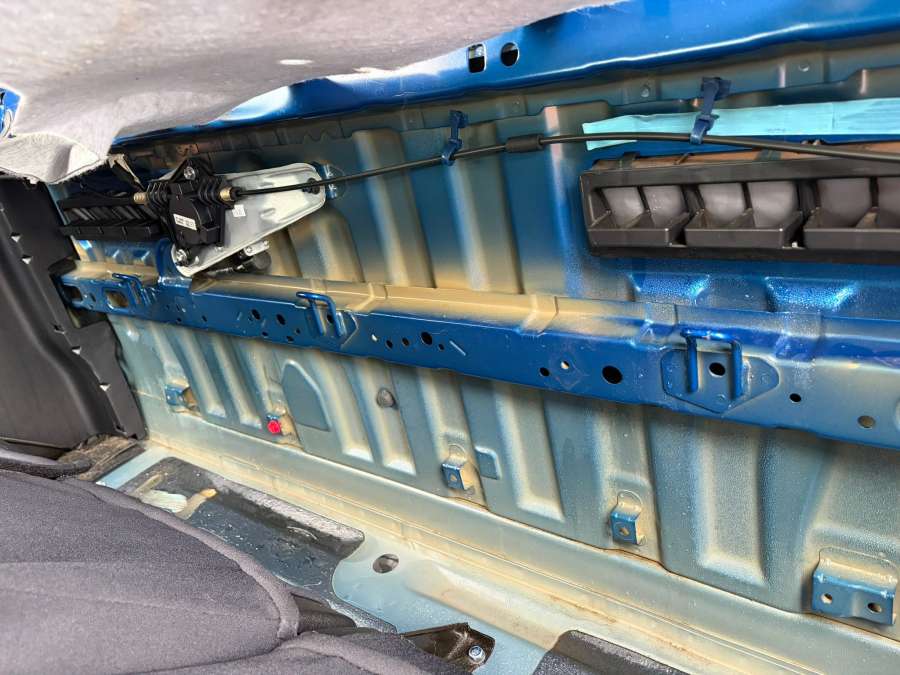
The photos submitted with this owner's case point lower. They show the rear interior trim pulled back, exposed blue body metal, water staining and dampness below the rear cab vent area, and a black vent assembly on the back wall of the cab. That does not automatically prove the pressure vent is the only source. It does prove the owner should not accept another repair order that says only "third brake light repaired" unless the shop has water-tested the lower rear cab area.
That distinction matters because water follows gravity, seams, harnesses, insulation, and trim. A leak that starts high can run down and appear low. A leak that starts low may never stain the headliner at all. If the technician does not isolate the entry point, the owner pays for guesses.
Why The Cab Vent Makes Shops Nervous
The black rectangular part in the owner's photos is the kind of component most drivers never think about until it betrays them. Rear cab pressure vents let air escape the cabin when doors close and when HVAC air is moving through the interior. Without pressure relief, doors can feel harder to shut, and ventilation can act strangely. On trucks, these vents often live on the back wall of the cab, hidden behind trim and near the bed.
Toyota parts listings identify part number 62930-04040 as a quarter panel vent, also described as a pressure vent, vent louver, or duct assembly. In plain English, it is one of those rear cab vents. It is not glamorous. It is not expensive as a part. The pain is access, diagnosis, and cleanup.
This is why the Facebook comment section went straight to bed movement. One commenter said the bed had to be moved to replace the vent. Another said to remove bed bolts, pop the fuel hose loose, and jack the front of the bed enough to reach it. That kind of advice should not be treated as a factory procedure, but it explains why a general repair shop might punt. If the shop has to lift or shift the bed, remove rear interior trim, test the leak, seal body openings, and then address any remaining water odor, it becomes a riskier job than "replace gasket."
My read from the photos: this is not where I would start with another brake-light-only repair. I would start with a controlled water test, the interior already opened, someone watching the back wall with a light, and the truck positioned so water runs across the rear cab/bed gap the way it does during a real storm.
Then I would want the shop to document the first visible entry point.
Not where the water ends up. Where it enters.
The Expired Campaign Changes The Owner's Leverage
The timing is rough. Toyota's 21TD03 campaign documents said the free limited service campaign would be available until April 30, 2025. That date has passed. The owner's truck is a 2017 model, and the campaign was limited by VIN eligibility and by the specific center high-mounted stop lamp condition. So owners should be careful with the word "recall" here.
This is not the same as saying Toyota currently owes every third-gen Tacoma owner a free rear-cab vent repair. The official campaign was for the center high-mounted stop lamp, not every possible water path on the back of the cab.
That said, the campaign is still useful to owners because it shows Toyota's own diagnostic logic. Toyota told dealers to look beyond the lamp itself when water intrusion was present. The dealer letter discusses headliner inspection, damaged interior components, standing water, organic growth, and cases where remediation could become a much larger job. Toyota's warranty table even includes labor paths involving the removal of carpet and jute padding, organic growth remediation, replacement of interior components, and loaner coverage under certain campaign scenarios.
Once water gets inside a truck, the "repair" is no longer only about plugging the hole.
It becomes three jobs:
- Find the entry point.
- Stop the entry point.
- Remove, dry, clean, or replace whatever the water damaged.
Owners get burned when a shop does only step two, or worse, guesses at step two and ignores the other two steps entirely.
The Photos Tell A Better Story Than The Complaint
The owner's words are emotional, and understandably so. She had a dealership repair, saw more water, and then got bounced between shops. But the photos are the reason this story deserves attention.
In the first image, the rear trim is pulled away, and a hand is pressed near the lower rear cab/floor junction. The metal surface appears wet, with droplets and a visible pooled area near the rear seat hardware. That is not the classic "look at the wet headliner" image Tacoma owners associate with the third brake light campaign.
In the second image, the back wall is exposed more clearly. You can see the rear vent assembly on the passenger side and water staining on the metal below. The interior panel is peeled back, and the body structure is visible. Again, the useful detail is location: low and behind the rear seat.
In the third image, water trails appear below the vent area. That is the kind of photo I would want a service advisor to attach to the repair order before any new work begins.
This is also why "take it back to the dealer" is good advice, but incomplete advice. If the first repair order said the third brake light was fixed and the truck still leaks, the owner should not simply ask the dealer to "fix the leak." The better question is narrower:
"Please water-test the rear cab and document whether the leak is from the center high-mounted stop lamp, rear window, cab pressure vent, body seam, or another path. Please attach photos or a video showing the entry point."
That one sentence changes the conversation.
Why This Can Become A Mold Problem Faster Than Owners Expect
Toyota's own campaign documents mention organic growth. That phrase is doing a lot of work. It means Toyota understood that water intrusion can move from annoying to unhealthy and expensive when moisture reaches absorbent materials.
Truck interiors are good at hiding water. The top carpet may feel dry while the padding underneath stays wet. Rear seat trim can conceal damp insulation. A small drip can travel behind a panel and pool where nobody looks until the smell shows up. By then, the repair bill is no longer a gasket or vent.
This is where I would be stubborn as an owner. If water has entered the cab more than once, I would ask whether the carpet and jute padding were lifted or checked. I would ask whether the rear seat area was dried with the trim removed. I would ask whether the shop used a moisture meter or simply touched the visible carpet and called it good.
The owner in this case already has the right instinct. She is trying to identify what the repair job actually is. The answer is: it is a water-intrusion diagnosis and rear-cab sealing job, with possible interior remediation. That may involve a Toyota dealer, a collision/body shop comfortable with water leaks, or a specialty leak-diagnosis shop. A normal quick-service mechanic may not want it. A body shop that does mostly collision work may not want it either.
The wrong shop will replace a part and hope. The right shop will make the leak happen on purpose before promising anything.
The Practical Diagnostic Order
If this were my Tacoma, I would not start by buying every seal in the rear cab. I would start with evidence.
First, pull the rear interior trim enough to see the back wall, vents, seat belt areas, and lower cab seam. The owner has already done some of this work, which helps. Second, dry the area completely so new water trails are obvious. Third, water-test one zone at a time: third brake light, rear window, roof channels, rear cab/bed gap, and pressure vent area. Fourth, use painter's tape, paper towels, or talc/baby powder trails if needed, so the first wet path is easy to see.
That sounds fussy. It is cheaper than guessing.
If the water enters around the center high-mount stop lamp, the Toyota campaign documents and T-SB-0055-18 give the owner a clear vocabulary for the dealer conversation. If the water enters around the pressure vent, the owner needs a different quote: access method, part replacement or resealing plan, bed movement if required, interior drying plan, and water-test confirmation after the repair.
If a shop cannot explain how it will verify the repair, I would keep looking.
What Owners Should Not Assume
Do not assume every third-generation Tacoma has this exact leak. The Facebook commenter who said every owner needs to file a complaint is expressing real frustration, but that is broader than the evidence we have. We have a specific 2017 truck, official Toyota documents for a known 2016-2019 Double Cab center stop lamp leak, and a cross-source pattern of owners discussing rear pressure vent leaks. It is not enough to declare every 2016-2023 Tacoma defective.
Do not assume the dealer lied because the truck leaked again. Water intrusion can have more than one path. A technician may have repaired the brake light correctly and still missed a lower leak. Or the first repair may have failed. Or the water may be entering through a rear window, roof seam, cab vent, or another path.
Do not assume silicone smeared from the inside is a real fix. Pressure vents have moving flaps and a designed airflow function. Sealing the wrong area can create new problems. If a vent assembly or its perimeter seal is leaking, the correct repair should preserve the vent's function while sealing the cab opening.
And please do not let wet padding sit while everyone debates who owns the job. The water does not care whether the invoice comes from service, collision, or glass.
How Owners Should Check For Leaks
Tacoma owners love these trucks because they are supposed to be durable, simple, and easy to keep forever. A hidden water leak attacks that whole promise from the inside. The damage can start as a few drops behind the rear seat and become stained trim, damp padding, odor, corrosion concerns, and a truck nobody wants to sit in after a rainstorm. The useful lesson is not to panic. It is a diagnosis. The third brake light campaign is one known path. The rear cab vent area is another path owners should know to check.
What Owners Should Care About
If your 2016-2023 Tacoma has water behind the rear seat after rain, do three things before authorizing another repair. First, photograph the exact wet area with the trim pulled back if possible. Second, ask the shop to water-test and document the entry point in writing. Third, ask for the repair plan to include interior drying and inspection, not only the seal or part replacement. If your truck is a 2016-2019 Double Cab, also check whether any Toyota campaign history exists for the center high-mounted stop lamp, even though the limited campaign date has passed.
Tacoma owners: if you have found water behind the rear seat, where did your leak actually start - third brake light, rear window, cab pressure vent, roof seam, or something else? Share the model year, cab style, and what finally fixed it.
About The Author
Noah Washington is an automotive journalist based in Atlanta, Georgia, covering sports cars, luxury vehicles, and performance culture. His reporting focuses on explaining the engineering, design philosophy, and real-world ownership experience behind modern vehicles.
Noah has been immersed in the automotive world since his early teens, attending industry events and following the enthusiast communities that shape how cars are built and driven today. His work blends industry insight with enthusiastic storytelling, helping readers understand not just what a car is, but why it matters.
Noah is also a member of the Southeast Automotive Media Association (SAMA), a professional organization for automotive journalists and industry media in the Southeast.
His coverage regularly explores sports cars, luxury vehicles, and performance-driven segments of the automotive industry, including the evolving culture surrounding Formula Drift and enthusiast builds.
Read more of Noah's work on his author profile page.
You can also follow Noah here:
Set Torque News as Preferred Source on Google
Follow us today...





Comments
This article talks about the…
Permalink
This article talks about the gen 3 tacoma, yet they show pictures of a gen 2 tundra.
Yes.
Permalink
In reply to This article talks about the… by Terri Tacoma (not verified)
Yes.