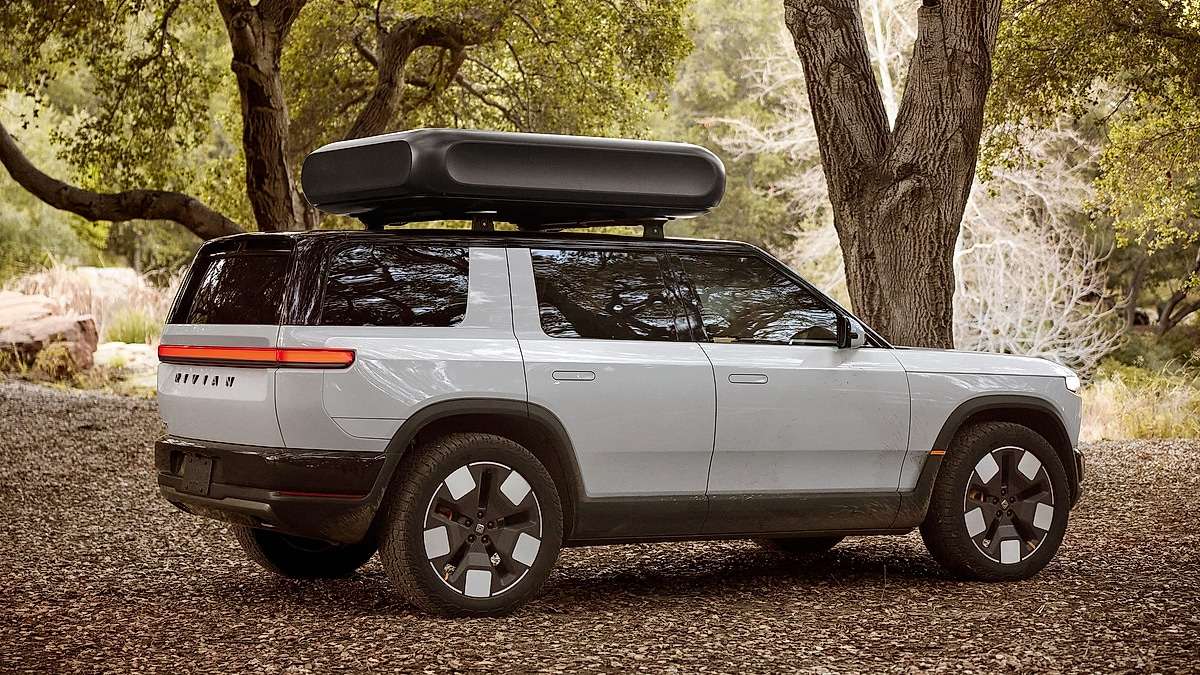

The most important Rivian R2 news from Wassym Bensaid's Reddit AMA was not a single app, privacy answer, or voice-assistant feature. It was Rivian's larger pitch: the R2 should keep improving after delivery because the company owns the software stack deeply enough to keep adding capability.
I checked the AMA, Rivian's official R2 specs, and Rivian's own recap of the event. The buyer consequence is simple: R2 shoppers should not only ask what the SUV has at launch. They should ask which features are ready now, which are promised later, and which depend on the hardware they choose.
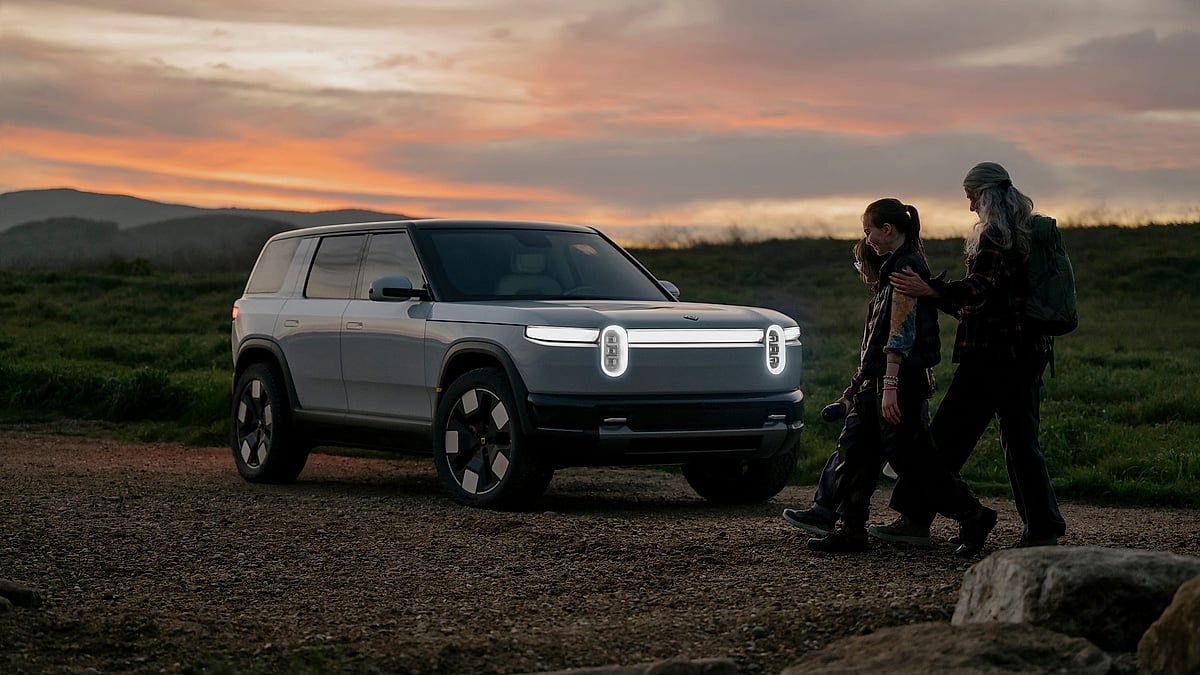
Rivian is asking buyers to think about the 2026/2027 R2 less like a traditional crossover and more like a software platform with wheels, motors, sensors, and storage. That can be a huge advantage if Rivian executes. It can also create frustration if buyers assume every demo, answer, and roadmap feature is arriving on day one.
The AMA did not feel like a normal product Q&A. It felt like an early owner's manual for how Rivian wants R2 customers to think.
What Torque News Checked
- Official Rivian AMA source: Bensaid's r/RivianR2 software AMA, including captured answers on RivianOS 2.0, OTA quality, privacy, audio, V2H/V2L, 12V architecture, navigation, glovebox locking, and AI features.
- Official R2 product facts: Rivian's R2 page and March 2026 R2 recap for pricing, range, trims, NACS charging, 9.6 inches of ground clearance, storage, Autonomy+, 200 sparse TOPS, and charging claims.
- Roadmap versus launch check: Rivian's own language separating at-launch features from later items, including R1 RivianOS timing, PIN glovebox lock, weather radar, whole-home backup hardware, and point-to-point autonomy rollout.
R2 Is Not Just a Smaller R1S
Rivian says the R2 Performance starts at $57,990 and arrives in spring 2026. Premium starts at $53,990 in late 2026. Standard starts at $48,490 in 2027, with a later Standard variant around $45,000 and 275-plus miles of estimated range. Rivian lists the Standard Long Range at 345 miles estimated, the Premium at 330 miles EPA estimated, and the Performance at 330 miles EPA estimated.
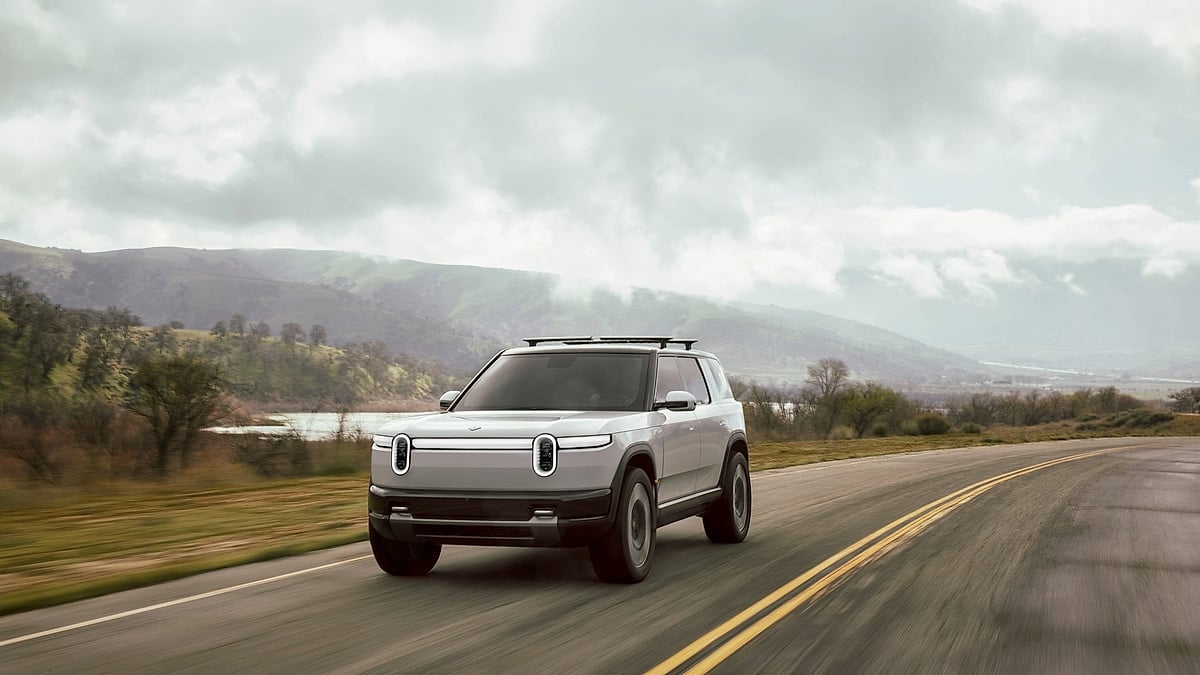
But Bensaid's AMA points to a different story. Rivian wants the R2 to be the beginning of RivianOS 2.0, not just the next body style. He said Rivian's goal is a core operating system that gives owners a unified brand experience even when the hardware differs between platforms. R2 gets RivianOS 2.0 at launch, and R1 vehicles are supposed to get it later this year.
That is important because R2 is not entering a quiet segment. It has to fight Tesla Model Y, Hyundai Ioniq 5, Kia EV5/EV9-style logic depending on market, Chevy Blazer EV, Ford Mustang Mach-E, and a wave of cheaper EVs that will keep improving. Rivian cannot win only by being outdoorsy and charming. It needs software that makes the vehicle feel alive after purchase.
The company knows this. Rivian's own R2 page says the vehicle gets better over time through software updates. In the AMA recap, Bensaid's strongest point was that the R2 a buyer drives home should be the least capable version they ever own.
The Roadmap Is the Product Now
The AMA was full of features that sound useful, but are not all in the same readiness bucket.
Rivian says naming saved locations, navigating to contact addresses, and better navigation personalization are actively being worked on, with hopes to deliver by the end of the year. PIN-based glovebox locking is on the roadmap for later this year. Weather radar integration is being worked on. Whole-home backup is not a simple switch; Rivian says R2 is ready for mobile power through the Rivian Field Outlet, but V2H requires future residential hardware such as a bidirectional charger and metering equipment.
Most automakers bury the roadmap in vague language. Rivian is at least telling owners which items are coming later. The problem is that buyers hear "coming later" differently depending on how badly they want the feature. A reservation holder may hear a promise. A frustrated owner may hear a delay.
This is why I would build an R2 buying checklist around three words: now, later, hardware.
Now means the feature is on the vehicle at delivery. Later means Rivian has discussed or promised a timeline, but owners should not buy solely for it unless they are comfortable waiting. Hardware means the vehicle needs a specific trim, sensor suite, charger, subscription, or home installation to unlock the future feature.
That framework matters more than the usual "should I buy the Launch Package?" debate.
Autonomy Is Where Buyers Need the Most Precision
Rivian's autonomy answers were some of the most exciting and the easiest to misunderstand.
Rivian's R2 page says deliveries include a 60-day trial of Autonomy+. It lists Universal Hands-Free on 3.5 million miles of roads in the U.S. and Canada, plus Lane Change on Command on divided highways. It also makes the expected caution clear: driver-assistance features support the driver; they do not replace attention or control.
In Rivian's AMA recap, James Philbin, Rivian's SVP of Autonomy and AI, described the R2 Performance with Launch Package as one of the most capable autonomy platforms in North America, citing 400 sparse TOPS, 11 cameras, 5 radars, and more than 65MP of imaging. He also said the Launch Package includes Autonomy+ for the lifetime of the vehicle and that more advanced features will roll out over time.
But the AMA also included questions about hardware differences, LiDAR, and whether launch vehicles will eventually hit ceilings versus later hardware. That concern is not paranoia. It is what happens when a vehicle's future value depends on software updates and computing. Buyers are not only choosing paint, wheels, and seats anymore. They may be choosing an upgraded ceiling.
My advice would be blunt: if you care about autonomy, do not shop R2 the way you shop a normal SUV. Ask exactly which autonomy hardware your chosen trim has, whether Autonomy+ is trial, subscription, included, or lifetime, and whether any upcoming features are limited by hardware delivered at purchase.
Rivian's Best Answer Was About Privacy
One of the strongest answers in the AMA was about the privacy handoff between Rivian and Google.
Owners asked whether Google could track a driver or build a shadow profile through navigation and assistant data. Bensaid said Google Maps requires vehicle-specific data, such as location, speed, and route, to provide navigation. But he also said the map-update data is not associated with the personal Google Account, Rivian account, or VIN. For Rivian Assistant, he said AI memory is protected with PIN and profile authentication, stored inside the Rivian ecosystem, and can be turned off in settings.
That answer matters because R2 is leaning hard into AI, maps, assistant features, local compute, and connected services. The more capable the vehicle becomes, the more personal the data gets. Location, home/work patterns, voice requests, contacts, cabin profiles, saved places, garage behavior, and charging habits are not abstract privacy categories. They are a map of someone's life.
If the company wants buyers to trust a vehicle that gets smarter over time, privacy cannot live in a legal PDF nobody reads. It has to be part of the sales pitch.
The Underrated Hardware Answers Were Audio and 12V
The AMA also had two answers that sound nerdy but matter to daily ownership.
First, premium audio. Bensaid said Rivian is applying R1 lessons to R2 and described a force-balanced midwoofer/subwoofer design using opposing drivers to cancel mechanical vibration. Translation: Rivian is trying to avoid wasting speaker energy rattling panels and instead push that energy into actual sound. He also said the audio hardware design is updatable over the air.
That is the kind of small detail that separates "big screen EV" from "well-thought-out EV."
Second, the 12V architecture. An owner asked what Rivian is doing better in R2 to improve 12V battery life. Bensaid said Rivian improved the high-voltage and low-voltage architecture to reduce sleep power draw and increase mini-DC/DC converter capacity, letting small sleep loads be supported by the high-voltage battery and reducing 12V cycling.
That will not sell posters. It may prevent owner headaches.
EV shoppers often focus on range, charging speed, and 0-60. Then they discover that sleep behavior, 12V battery management, app wakeups, sentry-style camera features, and software drains can affect real ownership. If Rivian has truly reduced 12V dependency in R2, that is not a minor engineering footnote. It is a quality-of-life feature.
Why This Matters
The R2 matters because it is Rivian's attempt to turn a beloved but expensive brand into a broader business. The vehicle has the right surface ingredients: NACS access to over 21,000 Tesla Superchargers, 10% to 80% DC fast charging in under 30 minutes under optimal conditions, up to 90.1 cubic feet of storage, 9.6 inches of ground clearance, and a starting price that eventually approaches $45,000.
But Bensaid's AMA shows that Rivian is really asking buyers to buy into architecture.
That architecture includes RivianOS 2.0, local AI compute, assistant memory, privacy design, OTA audio tuning, autonomy growth, improved sleep-power management, and future energy features. If Rivian delivers, R2 could feel unusually fresh three years after purchase. If it misses timelines or gates too much behind trims and subscriptions, owners may feel like they bought a promise.
Both outcomes are possible.
Practical Consequences
If you are reserving or configuring an R2, do not make the decision only on range, price, and delivery timing. Make a feature list with four columns: available at delivery, coming later, requires hardware, and requires subscription or home equipment. Put Autonomy+, V2H, glovebox PIN locking, weather radar, RivianOS 2.0 features, premium audio, and navigation upgrades into the right columns before you choose a trim.
The R2 may become a better vehicle after you buy it. Just make sure the version you pay for on day one already does the things you cannot live without.
If you are considering an R2, would you pay more for launch hardware and lifetime Autonomy+, or wait for a cheaper Standard version if some software features are still on the roadmap?
Comment your thoughts down below.
About The Author
Noah Washington is an automotive journalist based in Atlanta, Georgia, covering sports cars, luxury vehicles, and performance culture. His reporting focuses on explaining the engineering, design philosophy, and real-world ownership experience behind modern vehicles.
Noah has been immersed in the automotive world since his early teens, attending industry events and following the enthusiast communities that shape how cars are built and driven today. His work blends industry insight with enthusiastic storytelling, helping readers understand not just what a car is, but why it matters.
Noah is also a member of the Southeast Automotive Media Association (SAMA), a professional organization for automotive journalists and industry media in the Southeast.
His coverage regularly explores sports cars, luxury vehicles, and performance-driven segments of the automotive industry, including the evolving culture surrounding Formula Drift and enthusiast builds.
Read more of Noah's work on his author profile page.
You can also follow Noah here:
Set Torque News as Preferred Source on Google
Follow us today...