
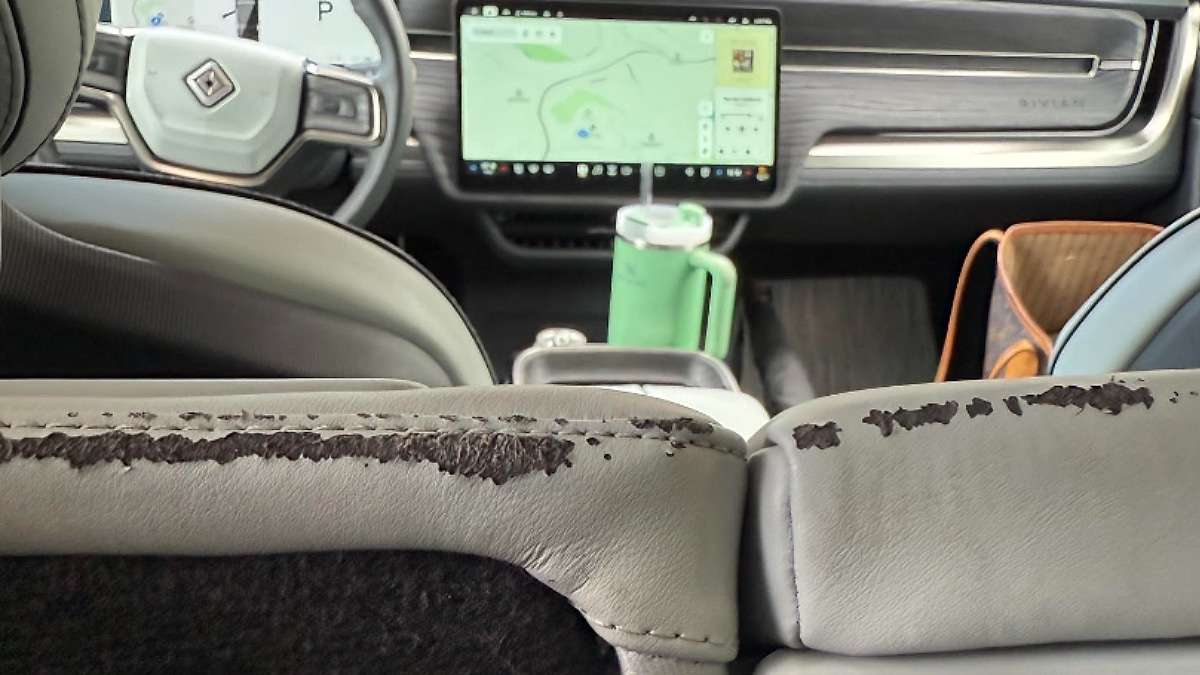

Legal issues surrounding a car are typically difficult to navigate, which is exactly why arbitration exists. Arbitration is intended as a method of resolving disagreements related to vehicles in a more organized and time-efficient manner than the courts, but this can only be successful when both parties commit to participating in the arbitration process.
That’s why Rivian owner Kate Richter says her efforts to resolve issues with her 2023 Rivian R1S ultimately fell short. After reaching out to me to share her experience with Torque News, she outlined a detailed timeline that began with interior issues and later developed into multiple warranty claims made against Rivian. These continued claims later led to an arbitration case that was eventually terminated when the American Arbitration Association (AAA) officially closed her file.
“I originally purchased the vehicle because I believed Rivian was building something special. I wanted to support the company and expected a premium ownership experience. Instead, I found myself documenting a steadily deteriorating vehicle while repeatedly attempting to obtain a remedy under the warranty.”
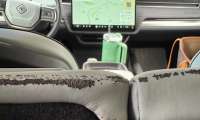
One of the most important aspects of Kate's complaint is that the car was being rented out on Turo. The fact that she took multiple pictures, both before and after each rental, and made sure to date them provides a substantial history of how the interior cabin area had been deteriorating over time.
Now some people alongside Rivian can argue about whether wear, usage, or external factors were part of the damage equation, so the Turo use does leave room to question some of the cosmetic wear. Since she has documented each period via her photographs though, it allows the condition to be tracked over time rather than judged from a few isolated photos.
The Ocean Coast Dream Began to Come Apart
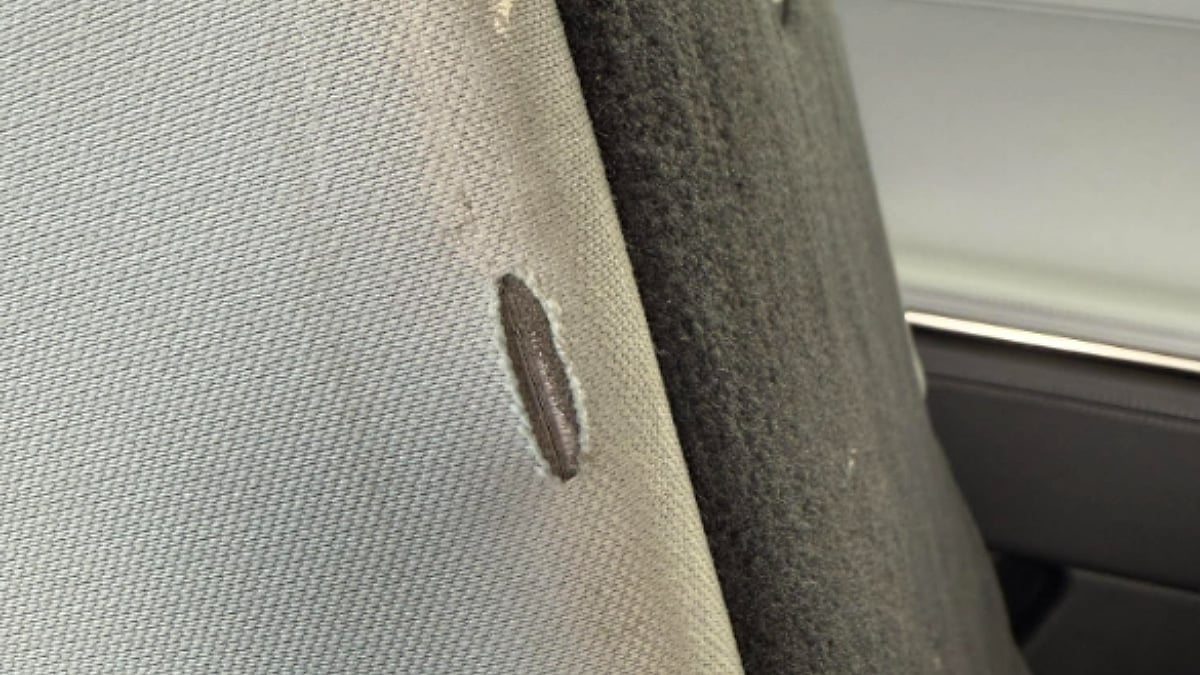
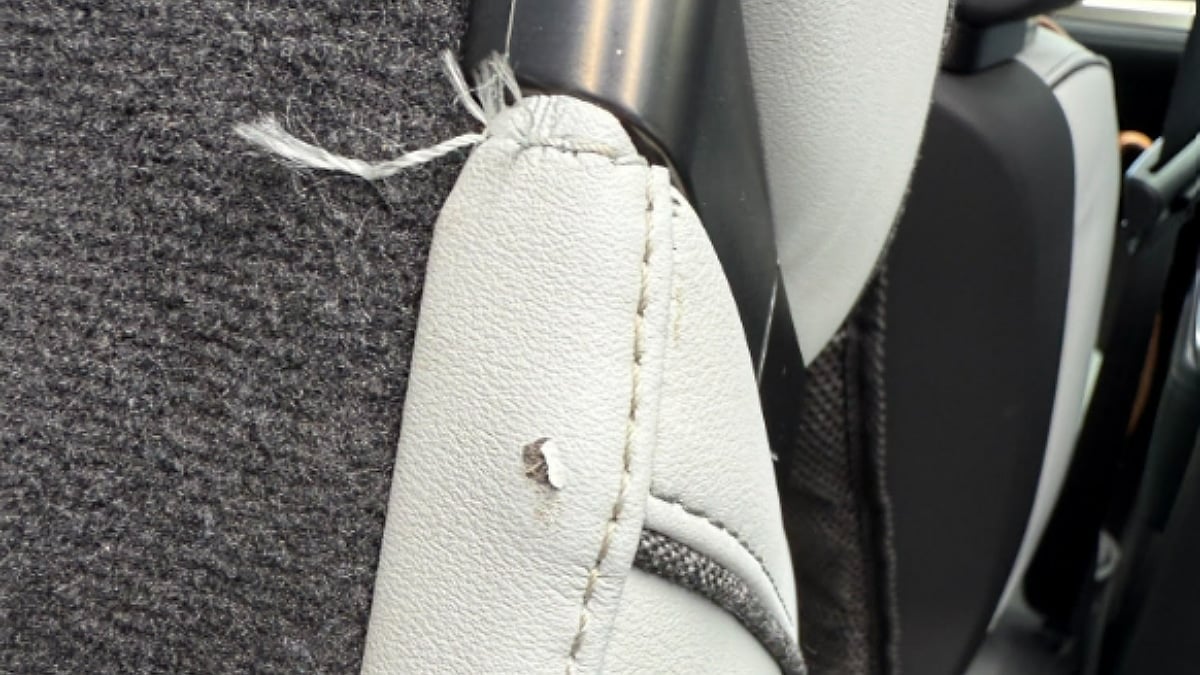
Interior surface failure on this vehicle did not stop at one area either according to Kate. Bubbling, wrinkling, peeling pieces are what began as small cosmetic issues and became a broader pattern of material breakdown well enough to compel her to reach out to Rivian.
“The defects did not occur in a single isolated area. Instead, various portions of the interior began to bubble, peel, separate, wrinkle, and deteriorate.”
That language is important because it shifts the complaint away from one unlucky blemish and toward something Richter believes was systemic within her vehicle’s cabin. She also says that after spending time looking online, there were other similar reports found from Rivian owners discussing bubbling, peeling, wrinkling, delamination, and premature interior wear. On its own, that doesn't prove every case shares the same root cause, but it does help explain why she stopped viewing her R1S as an isolated problem.
The story about these vehicles takes on greater significance in terms of practicality. What consumers are willing to accept in terms of a subpar ownership experience when buying an expensive EV could include a quirky software bug or a service-center delay, but a cabin deteriorating faster than expected is no small concern.
For a company like Rivian which has defined themselves through premium design, user friendly adventure ready vehicles, and luxury with a modern twist, interior durability is not secondary but integral to the product promise.
That's also why this story sits in an interesting place within the broader Rivian ownership picture. In my own earlier reporting on how a 2026 Rivian R1S owner walked away after just 3 months and 10,000 miles because of repeated half-shaft problems, I explored how enthusiastic owners like Kate can reach a point where recurring issues overshadow the excitement of the vehicle itself.
Her story might be different because it focuses more on interior materials, warranty handling, and dispute resolution than on mechanical failure, but the underlying tension feels familiar: the more premium the promise, the harder the disappointment hits when support does not seem to match it.
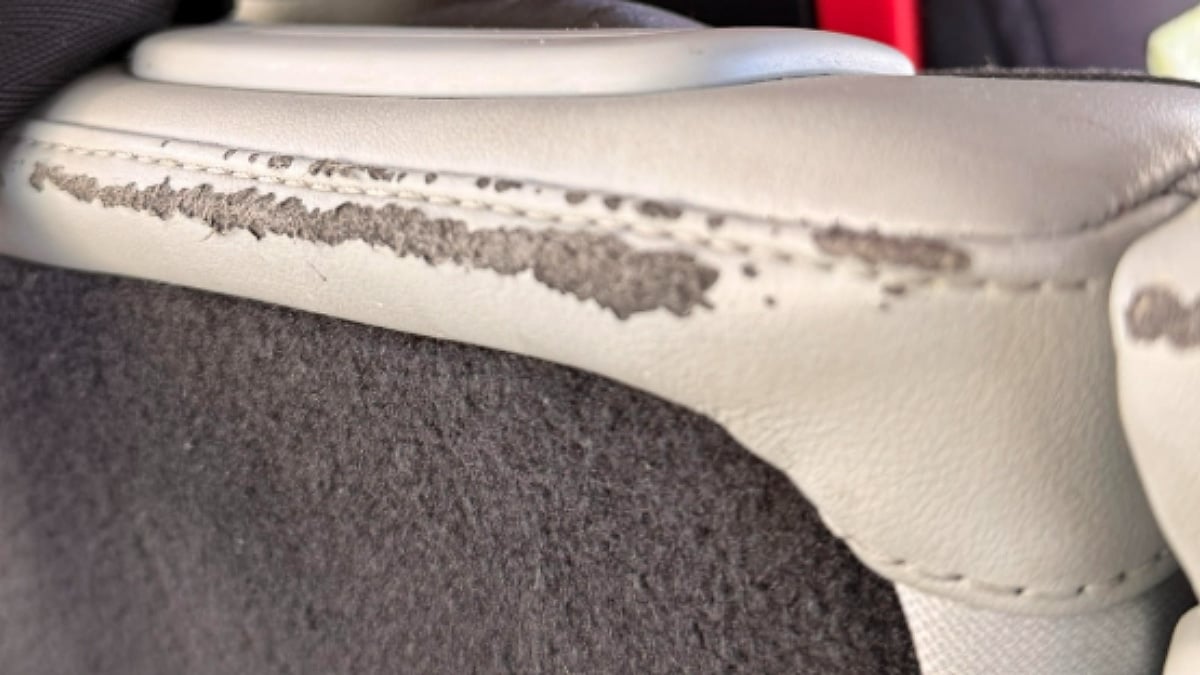
A Turo Timeline Few Can Produce
Like I mentioned before, one of the strongest parts of her account is not actually her argument but the documentation.
“Because the vehicle was operated as a Turo rental, I possess a unique evidentiary record that many consumers simply would not have.”
Most owners only start documenting an issue once it becomes severe enough to frustrate them, so this situation appears different because she can point to a progression over time.
From my perspective, this is what makes the story worth taking seriously. It doesn't automatically prove that every damaged area resulted from a factory defect, and I don't think it would be responsible to make those conclusions because that's ultimately what the arbitration process was meant to determine, but this does mean her complaint is not simply based on memory or a few selectively chosen pictures. The documentation gives her account a level of detail that many owners would struggle to provide even if readers don't necessarily agree with Kate.
Turning Into a Warranty Fight
This is the point where the story stops being merely about cabin materials and starts becoming a consumer-rights issue. As she put it:
“Rather than receiving a meaningful resolution, I experienced delays, inconsistent responses, and a lack of accountability.”
After exhausting the normal support route, she sent Rivian a formal written demand on December 23, 2025 outlining the defects, the claim history, and the relief requested. According to her, Rivian never provided a substantive response to that demand. That allegation becomes central to the rest of the story because it set the stage for arbitration.
At the same time, EV ownership stories show something deeper than a simple repair dispute. When you purchase into a newer brand, you aren't' just purchasing a vehicle. You are purchasing into an entire ecosystem of servicing expectations, software updates, communications from the brand, and trusting the company will back their products when things go wrong. Trust may be able to overcome defects, but it struggles to survive silence.
The Arbitration Becomes the Real Story
After the written demand went nowhere, she turned to the very dispute-resolution process described in Rivian’s own warranty. That's what elevates this story from a frustrating ownership experience into something more unusual.
According to the documentation shared, the matter proceeded far enough for there to be an American Arbitration Association case and for them to issue an invoice. After the invoice sent that was due on April 29, 2026, she then received a letter from AAA dated April 30 stating that AAA had not received the requested fees from the business and, as a result, was declining to administer the case and closing the file.
That distinction is important and it's worth being precise. The document does not prove why the fees were not received nor does it by itself explain whether there was some other reason, but it does show that AAA closed the case after stating it had not received the requested fees from the Rivian.
“When I attempted to invoke the dispute-resolution procedure required by Rivian’s own warranty, Rivian failed to engage.”
That may end up being the sentence we remember most because it gets to the core tension in the story. Arbitration clauses are often written into warranties as the required path for resolving disputes outside traditional court proceedings. If an owner follows that path and the process still stalls out before it really begins, the issue is no longer just the trim, the seats, or the panels. The question now becomes how enforceable those promised remedies really feel in practice.
Rivian’s Reputation Is Still Being Written in Real Time
One important reason to why this story matters is because Rivian still occupies a unique space in the EV market. They're not as well-known or criticized as Tesla, which has a much larger presence in the EV space, nor as heavily established by its history. So for now, each documented experience with an owner of a Rivian will be part of shaping what Rivian represents to owners who might want to buy one in the future.
That cuts both ways because not every Rivian story is negative. In fact, some of the most compelling ownership reports I have covered paint a far more positive picture. In my earlier piece about how after 3 years and 80,000 miles, one Rivian R1T owner still called it one of the best trucks he had ever owned, as long-term satisfaction and real-world usefulness were prominent in his description.
Safety is also another area where Rivian has earned praise from owners despite reliability frustrations elsewhere. We’ve also seen at Torque News where one 2022 Rivian R1T owner walked away without injury after being T-boned on the driver’s side and seeing the truck totaled, which helps explain why some customers still feel strongly about the product even when other parts of the ownership experience become more complicated. That duality is part of what makes Rivian stories so interesting right now. A brand can deliver an excellent vehicle in one category while still frustrating owners in another.
Richter’s case fits directly into that tension. Her story doesn't tell us that every Rivian interior is defective, but it does raise a fair question about what happens when a customer believes a serious problem exists, follows the available channels, and still ends up with a closed arbitration file instead of a resolution.
Key Takeaways
- Document everything early: The biggest advantage Kate has in this dispute is not just an accusation but the fact that she kept records, photos, correspondence, and a timeline before the situation became impossible to ignore.
- Treat the warranty as a process, not a promise: Many drivers assume that having a warranty automatically guarantees a smooth path to a solution. In reality, outcomes often depend on how carefully the claim is documented and whether the process is followed step by step.
- Premium branding raises expectations: When a vehicle is sold as a high-end product, owners naturally expect the materials, support, and communication to match that image. Small problems feel much bigger when the brand has positioned itself as premium.
- One story should not define an entire brand: Richter’s experience is serious and worth examining, but it should be weighed alongside the many Rivian owners who remain satisfied with their trucks and SUVs. The most useful ownership reporting looks at both.
- Service support is part of the vehicle now: In modern EV ownership, customer support, warranty handling, charging access, and communication are all part of the real product. Buyers are no longer judging the machine alone.
What Do You Think?
What do you think of Kate's sitaution? Do you believe Rivian is in the wrong and needs to give a proper solution?
And if you owned a vehicle with a required arbitration process in the warranty, would that make you feel more protected or more cautious about what happens if something goes wrong?
I'd love to hear your thoughts in our comments section below.
About The Author
Aram Krajekian is a young automotive journalist bringing a fresh and analytical perspective to the evolving automotive landscape by reporting on real-world ownership experiences and providing industry analysis. Based in North Carolina, he covers electric vehicles, trucks, and broader automotive trends with a focus on contributing a balanced evaluation. His reporting cuts through brand bias to provide readers with grounded insight into how vehicles perform for everyday drivers beyond marketing narratives.
Aram can be reached on X and LinkedIn for ongoing automotive coverage.
Image Credits
Aram Krajekian via Kate Richter.
Set Torque News as Preferred Source on Google
Follow us today...





Comments
I'd wonder how any brands…
Permalink
I'd wonder how any brands warranty works in regards to the car being used as a sudo-rental. I know auto-insurance and credit card coverage for when you rent a car is not applicable to Turo and those types of rental services.
Gary, very good point. Me…
Permalink
In reply to I'd wonder how any brands… by Gary Halsey (not verified)
Gary, very good point. Me too. That's why I highlighted that part.