
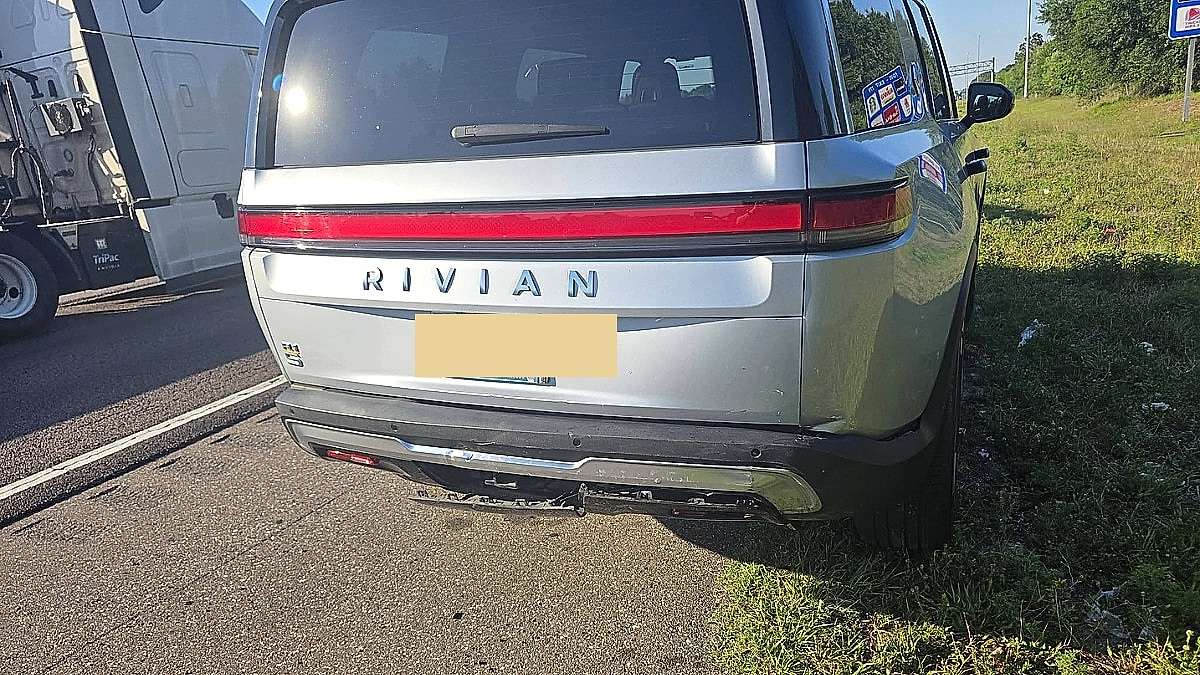

A rear-end collision in heavy traffic usually leaves drivers talking about neck pain and thousands of dollars in damage, but one Rivian owner walked away from a recent crash talking about something entirely different.
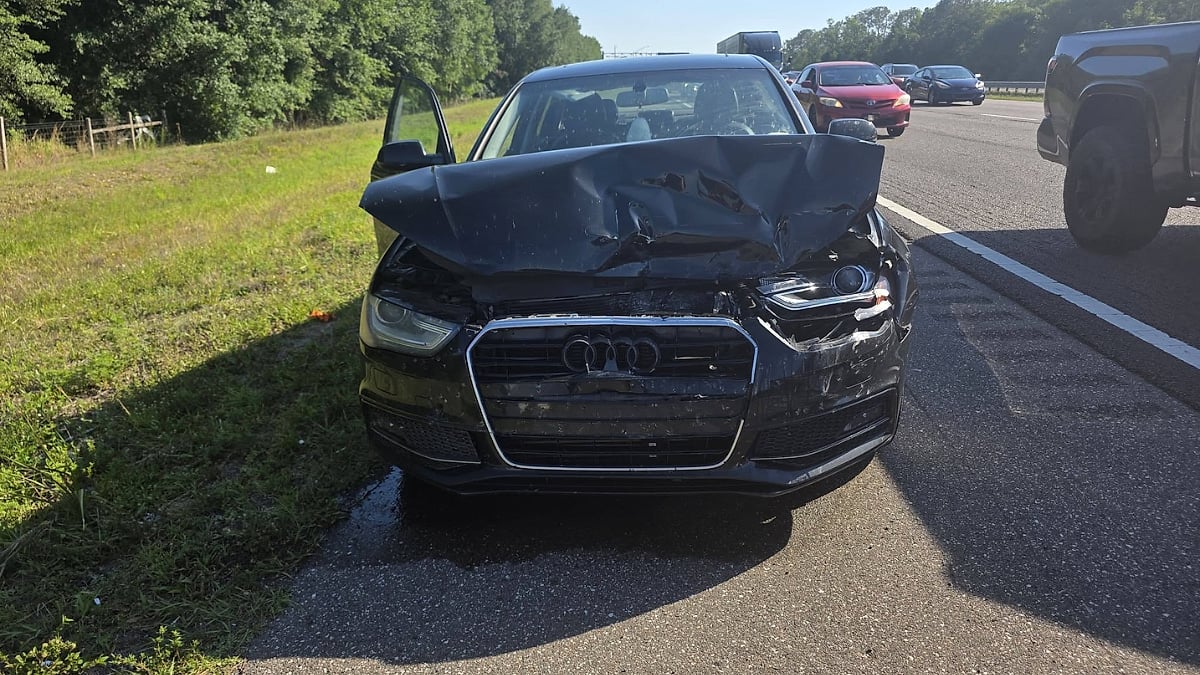
Mike Small recently shared his experience in the “RIVIAN Electric Vehicles Discussion” Facebook group after his Rivian R1S was struck from behind by an Audi A4 while traffic was slowing down. According to Mike, his R1S was nearly stopped when the Audi hit him at an estimated 35 mph. What stood out most to him was how little he actually felt inside the cabin despite the force of the impact.
“My R1S stopped in traffic vs an Audi A4. She was going at least 35 mph and I barely felt it. Thankfully the other driver is fine.”
That short statement quickly sparked discussion among Rivian owners and EV enthusiasts, many of whom pointed toward the R1S’s structural rigidity and safety-focused engineering as major reasons the impact felt less dramatic than expected.
Vehicle Weight and Structure Changes the Experience
One thing that becomes immediately noticeable when reading stories like this is how differently large electric SUVs behave during collisions compared to smaller gasoline-powered sedans. The Rivian R1S is an extremely heavy vehicle, weighing well over 7,000 pounds depending on configuration, while an Audi A4 typically weighs around half that amount.
That difference alone changes crash dynamics substantially. A heavier vehicle generally absorbs impacts differently than a lighter one, especially in rear-end collisions where the struck vehicle has more mass resisting the force. However, weight alone does not tell the whole story.
Modern EV platforms like Rivian’s skateboard architecture also place the battery pack low within the chassis, creating an unusually rigid structure that can help distribute crash forces throughout the vehicle more evenly. Combined with reinforced passenger compartments and advanced crumple zones, the result can be a cabin that feels remarkably composed even during significant impacts.
This is something many owners have started noticing firsthand. I even recently reported on how a 2022 Rivian R1T was totaled after being T-boned on the driver’s side, yet the owner still walked away without injury. This sparked a similar discussion among readers about Rivian’s structural rigidity and occupant protection. Even when owners criticize Rivian for reliability or service frustrations, safety and structural confidence are topics that continue appearing in these discussions.
The Comment That Perfectly Explained What Happened
One of the most insightful responses under Mike’s post came from commenter Andrew Crowell, who explained the situation in a way that many readers may not initially think about.
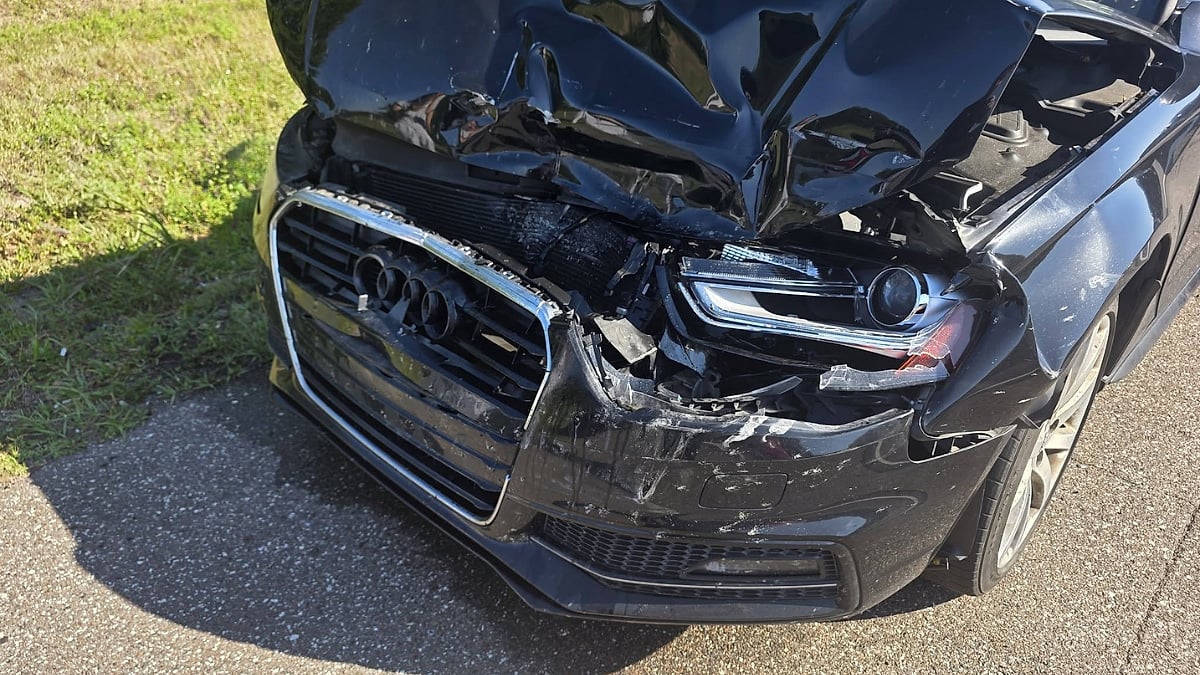
“Crumple zone vs protection zone. The Rivian did its job maintaining integrity to protect 3rd row passengers, and the Audi did its job crumpling to absorb the impact. Unfortunately, there's probably a lot of really expensive hidden damage underneath what you can see.”
Andrew’s point highlights an important reality about modern vehicle safety. Many drivers assume a vehicle that “holds up well” in a crash is automatically less damaged, but that's not always true. In many modern vehicles, especially EVs with complex battery and suspension systems, significant structural or mechanical damage can exist underneath panels that appear visually intact.
That hidden damage can become even more expensive in EVs specifically because of the integrated electronics, sensors, battery shielding, suspension components, and calibration systems involved. Even relatively small accidents can sometimes require extensive repair procedures.
Even then, most owners would likely agree that protecting occupants matters far more than protecting sheet metal.
Rivian’s Safety Reputation Continues Growing
Rivian is still a relatively young automaker compared to legacy brands, but stories like this help shape the company’s reputation among owners. While discussions around Rivian often focus on software, charging, range, or service center delays, safety is quietly becoming one of the brand’s strongest selling points.
The 2026 R1S has performed well in official IIHS crash safety testing for the Rivian R1S, which has helped reinforce Rivian’s growing reputation for safety among buyers. Many owners describe these vehicles as feeling unusually solid on the road, and that sensation becomes even more noticeable during situations like emergency maneuvers or collisions.
Stories like these do not mean the vehicles are invincible, but they do contribute to a broader conversation about how EV design may be changing real-world crash experiences.
At the same time, Rivian’s growing reputation for safety creates an interesting contrast with some of the challenges the company still faces elsewhere. As we’ve analyzed here at Torque News, reliability concerns, service wait times, and parts availability remain recurring discussion points in owner communities.
That balance is important because modern buyers are increasingly weighing multiple factors at once. Some prioritize technology, others prioritize driving feel, and a lot of folks pay attention to charging infrastructure. For families shopping for a three-row SUV though, crash protection and occupant safety remain near the top of the list.
A Reminder About Distracted Driving
Another comment that caught attention under Mike’s post came from Phil Nwafor, who pointed toward a growing issue that continues contributing to accidents everywhere.
“Let me guess… a text that HAD to be read or a short looping vid that HAD to be watched. Glad everyone is safe.”
While nobody knows exactly what caused this specific crash, the video appears to show little to no attempt to slow down before impact, which is why Phil’s broader point about distracted driving resonates with so many readers. Rear-end collisions like this have quietly become one of the biggest safety problems on modern roads.
Many newer vehicles now also include massive infotainment screens, smartphone integrations, social media notifications, and increasingly complex interfaces competing for drivers’ attention. Combine that with phones themselves constantly buzzing in pockets and cupholders, and it becomes easy to understand why rear-end collisions remain so common in stop-and-go traffic.
Ironically, modern safety systems are advancing at the same time driver attention appears to be declining. Automatic emergency braking, lane centering, adaptive cruise control, and collision warning systems are becoming incredibly sophisticated, yet many accidents still happen because someone looked away for only a few seconds.
That's part of what makes stories like Mike’s so important. They are reminders that while engineering can reduce injuries, avoiding the crash entirely should always remain the goal.
The Part Many Buyers Are Starting to Notice About EVs
One of the most interesting shifts happening in the EV market right now is that many buyers are no longer choosing these vehicles solely for environmental reasons or fuel savings. Increasingly, owners are talking about refinement, cabin isolation, ride stability, and overall structural confidence.
This is especially true in larger EVs like the Rivian R1S. The low-mounted battery pack creates a planted driving feel that many drivers say feels more secure than traditional SUVs, and the absence of a large gasoline engine also changes weight distribution significantly. Together, those design differences can create a sensation of stability that becomes very noticeable both during normal driving and during emergency situations.
That doesn't mean gasoline SUVs are unsafe. Far from it actually, as many traditional SUVs from brands like Toyota, Volvo, BMW, and Mercedes-Benz continue performing extremely well in crash testing. It's just that EVs are beginning to reshape expectations around what “solid” feels like on the road too.
This growing confidence is also part of why some long-term owners continue sticking with Rivian despite frustrations elsewhere. Earlier this year, I covered how after 3 years and 80,000 miles, one owner still considered his Rivian R1T one of the best trucks he had ever owned despite acknowledging some imperfections along the way. That kind of owner loyalty usually does not happen unless a vehicle delivers something memorable in everyday use.
Thinking About the Back Seat Changes Everything
Another emotional response under Mike’s post came from Jessie Mack Burns.
“Thank goodness all are ok. Even if there is underlying damage, the great thing is the structure held to protect you. Imagine if you had pets or young ones sitting in the back. Some vehicles crumble under impact. Your Rivian did its job to protect you!”
Jessie’s comment touches on something that often changes how people evaluate vehicles once they become parents or begin regularly carrying family members.
Features like horsepower, acceleration, wheel size, or luxury materials suddenly become less important than knowing a vehicle can protect the people inside it during a worst-case scenario.
That perspective is part of why crash test ratings, structural engineering, and real-world accident stories matter so much to buyers shopping in this segment.
For many families, a large SUV is not simply transportation anymore. It becomes the vehicle carrying children to school, hauling pets during road trips, or transporting loved ones across long distances. Knowing the vehicle can maintain cabin integrity during an impact offers peace of mind that is difficult to measure on a specification sheet.
More SUV Buyers Are Starting To Think Differently About Safety
I think stories like this are interesting because they reveal how much the conversation around modern vehicles is changing. Today, more owners are talking about structural confidence, software integration, driver assistance systems, and how safe they feel transporting their families.
What stands out to me about Rivian specifically is that even owners who criticize the brand for reliability issues or service frustrations often still speak very highly about the vehicles themselves when it comes to driving experience and safety. That says a lot about the engineering foundation Rivian has managed to build in a relatively short amount of time.
I also think real-world stories like Mike’s carry a different kind of weight compared to marketing claims or advertisements. Crash test videos and safety ratings absolutely matter, but hearing an actual owner describe barely feeling a rear-end impact creates a level of emotional understanding that numbers alone cannot fully capture.
At the same time, this story is also a reminder that technology and engineering can only do so much if drivers are distracted. Modern vehicles are becoming safer every year, but avoiding accidents altogether will always matter more than surviving them.
Key Takeaways
- Modern EV structure changes crash dynamics: Large battery packs and reinforced chassis designs can create a more rigid passenger compartment during impacts.
- Hidden damage can still be substantial: Even if a vehicle appears visually fine after a collision, expensive structural or suspension damage may exist underneath.
- Distracted driving remains a major issue: Many rear-end accidents still happen because drivers lose focus for only a few seconds.
- Safety is becoming a bigger purchase factor: More buyers are prioritizing crash protection and structural confidence over traditional luxury features.
- Real-world owner experiences matter: Stories from actual drivers often reveal how vehicles behave outside controlled testing environments.
Your Turn to Share
Have you ever experienced a crash where your vehicle surprised you with how well it protected you during the impact?
And do you think EVs like the Rivian R1S are beginning to change how buyers think about SUV safety and structural strength?
Let us know your thoughts in the comments below.
About The Author
Aram Krajekian is a young automotive journalist bringing a fresh and analytical perspective to the evolving automotive landscape by reporting on real-world ownership experiences and providing industry analysis. Based in North Carolina, he covers electric vehicles, trucks, and broader automotive trends with a focus on contributing a balanced evaluation. His reporting cuts through brand bias to provide readers with grounded insight into how vehicles perform for everyday drivers beyond marketing narratives.
Aram can be reached on X and LinkedIn for ongoing automotive coverage.
Image Credits
The “RIVIAN Electric Vehicles Discussion” Facebook group.
Set Torque News as Preferred Source on Google
Follow us today...



Comments
Rear is always stout and…
Permalink
Rear is always stout and front is crumble zones. Don't have to spend 80k to get a safe vehicle.