
When buying a new car, especially one being marketed as an "adventure ready" high end SUV, there is typically a feeling of self-assurance that all of its components will function properly. Therefore, when you find stories such as Jennifer Costello Mackey's concerning a new Rivian R1S, they can be quite eye-opening, as they are also representative of larger questions regarding reliability and customer expectations.
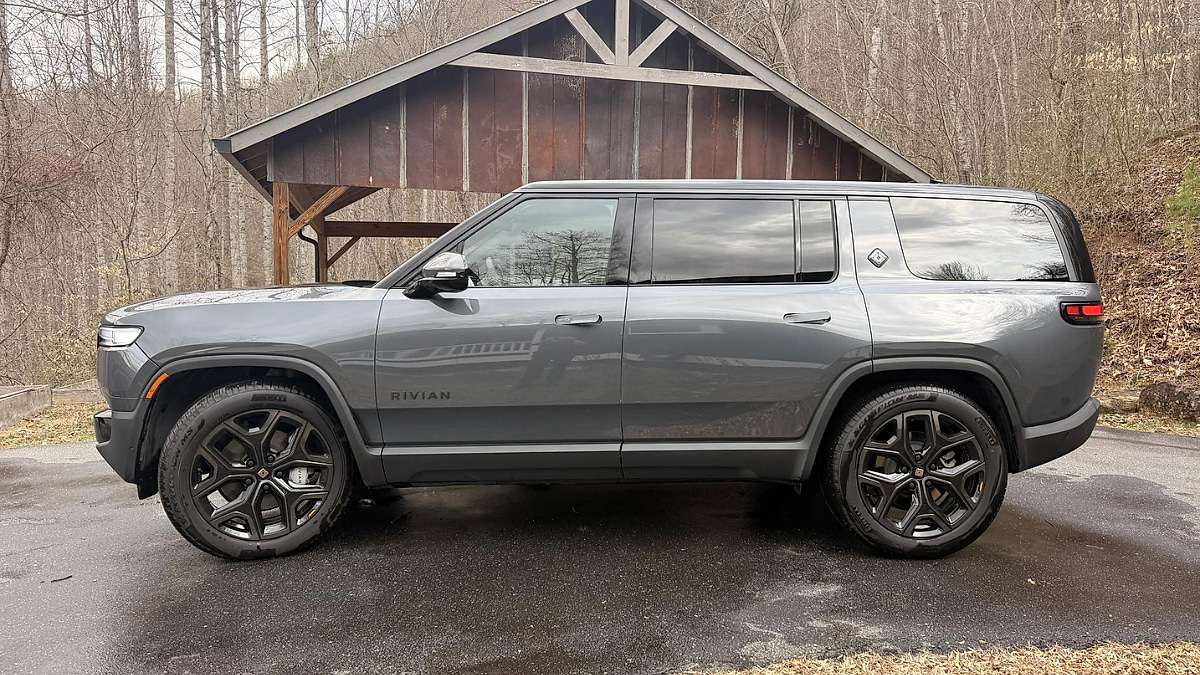
I found Jennifer's story while reading through the "RIVIAN Electric Vehicles Discussion", and her experience went from excitedly looking forward to enjoying her new 2026 Rivian R1S to being frustrated by the numerous issues she experienced during the first 90 days/10,000 miles, requiring four different trips to have her vehicle serviced for problems. These included repeatedly needing to realign her vehicle, twice having to replace both of the front half shafts on each side, and a persistent rattling noise coming from a door. Even though she loved the style/design of her new vehicle along with its overall concept, due to the issues she had with reliability and the service issues, Jennifer decided that it would no longer be worth the cost to continue owning a $100k plus SUV.
Here's how she put it: “Well, yesterday I said goodbye to my 2026 Rivian R1S Dual large pack with the Performance upgrade and darkout package. I owned it for 3 months and 10,000 miles. It had 4 service center visits in 3 months, 2 alignments, 2 new half shafts, and a door rattle issue. The vehicle was not aligned when it was delivered in January.
I’m not here to announce my departure, but I’m just here to give honest feedback for anyone considering purchasing one.
Before purchasing my Rivian, I did my research, read posts in the groups, asked everyone’s feedback, and everyone said there were a few small things about the car but overall, they loved it! I expect small things to happen, especially with EV’s and having owned 4 Teslas. But, somehow, no one ever mentioned to me about this half shaft issue.
My 2 front half shafts went bad in 3 months of owning the vehicle. I bought this car brand new and only drove on roads. No off roading whatsoever. Sure, it’s under warranty, but I saw how multiple people had to get 3-6 replacements of their half shafts. And once it’s out of warranty, you have to pay $1,500 each for them. So you could end up spending up to $6,000 multiple times. Not to mention, most of the year, I live 4 hours from a service center. I can’t keep taking my vehicle monthly to get things fixed and leave it for days.
My thing is, this is a so-called “Adventure Brand” but the half shafts go bad after 3 months of driving in All Purpose mode 99% of the time and only on pavement. Really? What if I decided to take it off road like it’s meant to? How long would the half shafts last then? I know some have had 0 issues with theirs. But I am one of the “lucky” ones.
In all, I think Rivian needs to work on improving their quality, especially when you spend $100k or more on a vehicle. You expect it to be of quality and somewhat dependable, especially brand new at 10k miles.
So if you are considering purchasing one of these, just do your homework is all I have to say. Don’t get me wrong, they’re beautiful vehicles and I would love them overall if they didn’t have so many issues.
Edit: It seems everyone’s here to argue with me, but I am a legit person with legit issues and I just want to make others aware in case they’re having the same thing or if they’re looking to buy one. It’s funny how many people get so defensive like they take it personally or they’re defending that a six figure vehicle should be expected to have these types of problems. It shouldn’t.”

A Critical Component Failing Too Soon
Half shafts are responsible for transferring power from the drivetrain to the wheels, and in high-torque electric vehicles, they deal with constant stress. While wear over time is normal, early failure like this raises concerns about durability under everyday driving conditions.
I think what makes this more notable is that Jennifer didn’t push the vehicle beyond its limits. No off-roading, no extreme use, but just regular driving. That’s what makes this feel less like an isolated fluke and more like something worth paying attention to, especially when other owners have reported multiple replacements.
Safety Still Tells a Different Story About the Vehicle
At the same time, this doesn’t tell the full story of what these vehicles are capable of. In one case, I wrote about a Rivian R1T owner walking away from a serious crash and crediting the vehicle’s structure for protecting them, and it highlights how strong Rivian’s safety engineering can be in real-world situations.
That real-world experience aligns with official crash testing conducted by the Insurance Institute for Highway Safety (IIHS), where the R1S has earned top-tier safety ratings. This reinfoces that while ownership frustrations can exist, occupant protection is not one of its weak points.
Ownership Can Look Completely Different Depending on the Driver
What makes Rivian such an interesting brand right now is how different ownership stories can be. In another article I wrote about a driver who put 80,000 miles on their Rivian R1T and called it one of the best trucks they’ve ever owned, the experience was almost the complete opposite.
There are also owners who genuinely enjoy the day-to-day experience, like in a case where I covered someone loving their pre-owned Rivian R1S despite needing a service visit.
That contrast is what makes Jennifer’s experience valuable. It doesn’t define the brand, but it adds another layer that buyers should understand. I also think it’s important to remember that higher mileage ownership reports can tell us something very different from early ownership complaints, which is why one Rivian R1T owner’s nearly 100,000-mile reflection became such a useful long-term ownership snapshot.

Distance From Service Centers Can Change Everything
One of the most overlooked aspects of owning a newer EV brand is service access. Jennifer mentioned living four hours away from a service center, and that alone can completely change the ownership experience.
That concern showed up again in the comments, starting with Derek James:
“Man, I feel this. I’m dealing with something similar right now and it’s honestly been just as frustrating.
I’ve got a 2024 R1T up in Alaska and while I expected a few quirks, the reality of getting things fixed has been the bigger issue. I’ve had multiple service requests just disappear in the app with no response, and now I’m dealing with a suspension-related fault that’s escalated to the point where the truck isn’t even drivable. The front end has completely lost air and is sitting down on the wheel.
What really gets me isn’t just the failure itself, but it’s the lack of support behind it. I’ve been told I need to transport the truck out of state for repair at my own expense, which is thousands of dollars and not even straightforward from up here. So even though it’s under warranty, there’s no realistic way to actually get it serviced.
Like you said, it’s an “adventure” vehicle, but if something goes wrong, especially away from a service center, it gets complicated fast. I still think they’re amazing trucks when they work, but situations like this definitely change your perspective.”
Derek’s situation reinforces something important. Warranty coverage sounds great on paper, but if accessing service becomes difficult or expensive, the ownership experience can quickly become frustrating.
Darin Jensen followed with a more mixed perspective:
“I have a 2022 R1T which I love except for when I'm hating it. Two major breakdowns which took it from me for over 3 weeks and several smaller things that put it over the edge. I love the idea, but I wouldn't buy another one before 2030 or 2032.”
That kind of comment reflects a broader sentiment we’re starting to see: enthusiasm for the product, but hesitation about long-term reliability and support.
Then there’s the other side of the story. Courtney Rauckman Zapata added:
“Sorry you had bad luck with yours. Sometimes there's just lemons out there. On a brighter note, I've had mine for 3 years and knock on wood I have only been to the service center once. I did have to get rid of the Pirelli tires though because I had more flats than ever in my life. I got Michelin Defenders and not a problem since. I still love her like the day I got her.”
This is where the bigger picture comes into focus. Not every Rivian owner is dealing with repeated failures, and for many, the experience has been smooth and enjoyable.
My Perspective
I think what makes this story stand out isn’t just the mechanical issue itself, but what it reveals about expectations versus reality. When you’re spending over $100,000 on a vehicle that’s marketed as rugged and adventure-ready, there’s an assumption that it will hold up under normal driving conditions without frequent repairs.
At the same time, I also think this reflects where Rivian is in its lifecycle as a company. They’re still building out their service network and refining their vehicles, and while innovation is clearly there, consistency is still catching up. That doesn’t mean the vehicles aren’t impressive. It just means ownership can vary more than what some buyers expect going in.
Key Takeaways for Buyers Considering a Rivian R1S
- Early ownership issues can happen, especially with newer brands still refining their vehicles.
- Service access matters just as much as reliability, particularly if you live far from a service center.
- Experiences vary widely, with some owners reporting excellent long-term satisfaction.
- Looking beyond marketing and into real owner feedback is essential before making a decision.
Share Your Thoughts With Us
Have you ever had a brand-new vehicle that needed repeated repairs early on, and how did that affect your trust in the brand?
And if you own a Rivian, what has your experience been like when it comes to reliability and getting service done?
I'd love to hear your thoughts in our comments below.
About The Author
Aram Krajekian is a young automotive journalist bringing a fresh and analytical perspective to the evolving automotive landscape by reporting on real-world ownership experiences and providing industry analysis. Based in North Carolina, he covers electric vehicles, trucks, and broader automotive trends with a focus on contributing a balanced evaluation. His reporting cuts through brand bias to provide readers with grounded insight into how vehicles perform for everyday drivers beyond marketing narratives.
Aram can be reached on X and LinkedIn for ongoing automotive coverage.
Image Credits
The “RIVIAN Electric Vehicles Discussion” Facebook group and Rivian’s gallery, respectively.
Set Torque News as Preferred Source on Google
Follow us today...