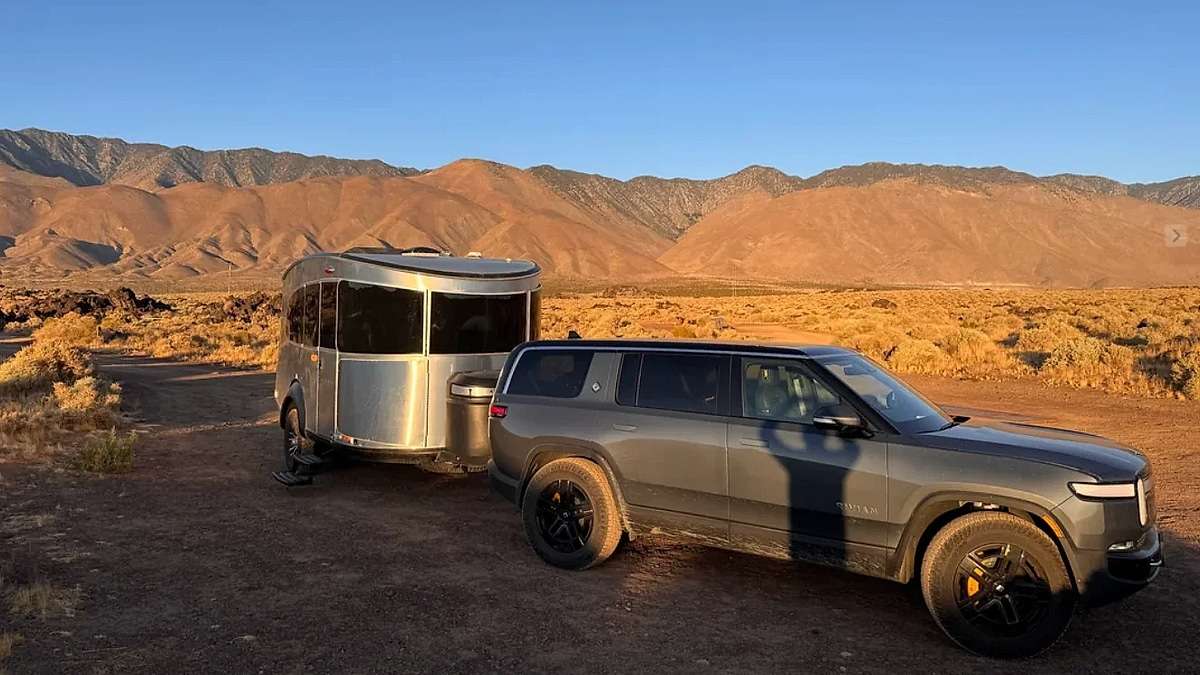

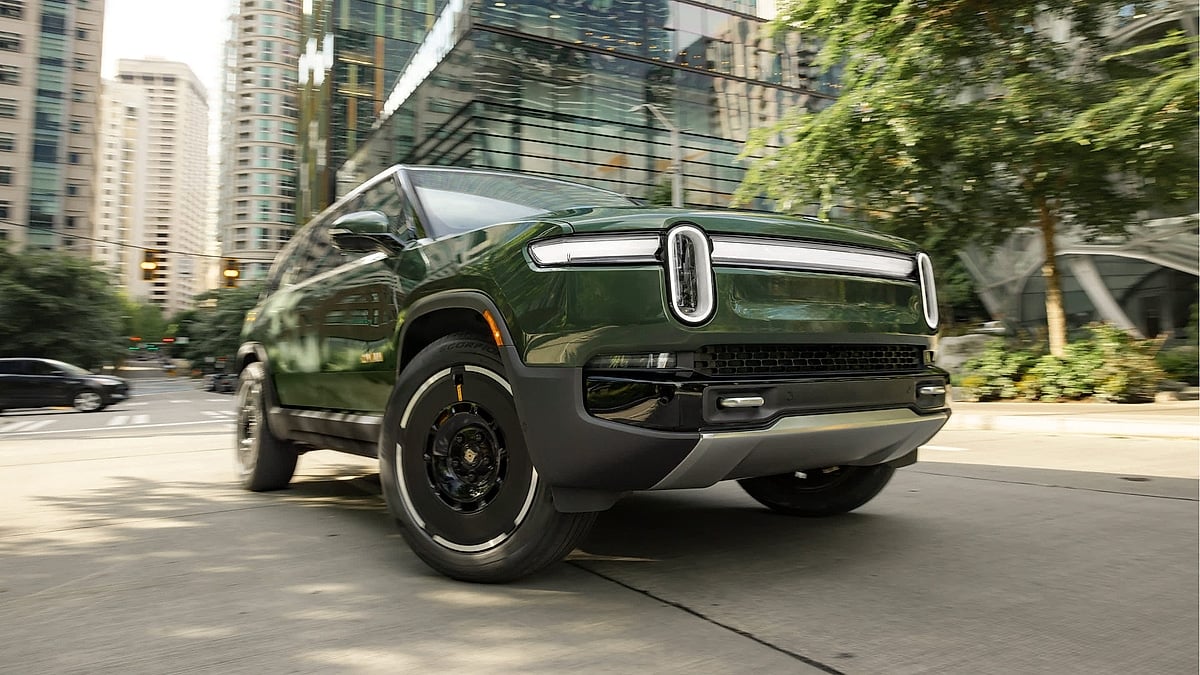
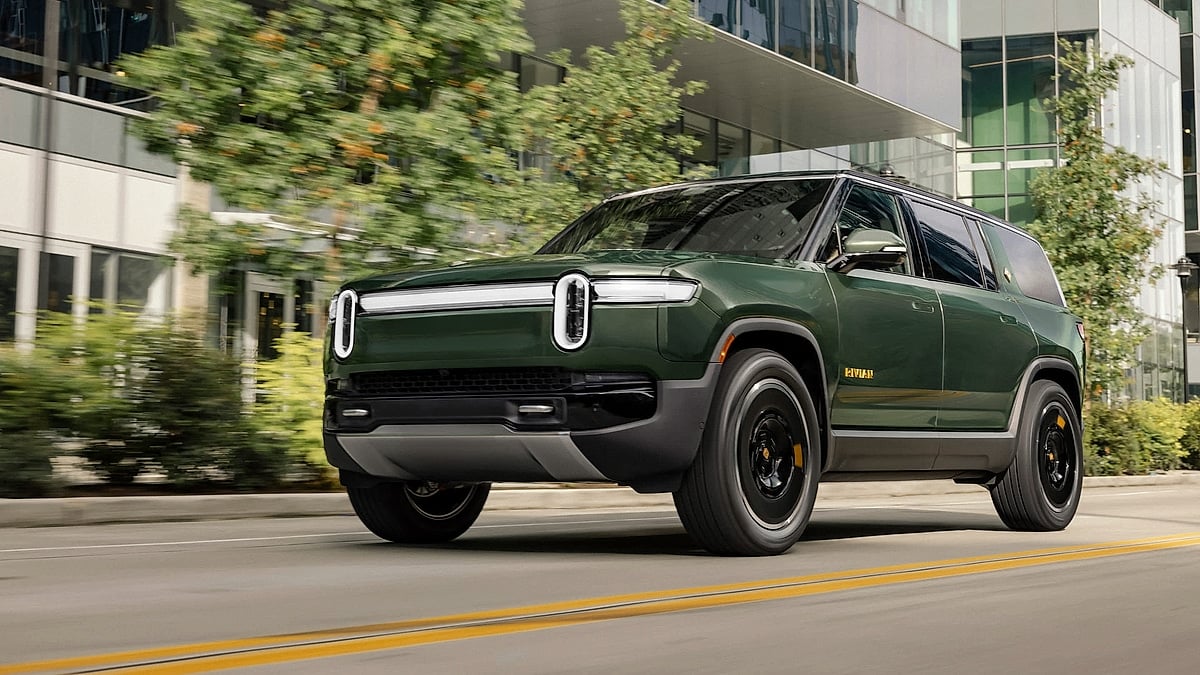
A Rivian R1S owner towed an Airstream Basecamp 20X across a California route that included the Sierra Nevada, Yosemite, Highway 395, wind, climbs, descents, and Rivian Adventure Network stops. Torque News checked the owner's leg-by-leg energy log, Rivian's R1S towing guidance, Airstream's Basecamp specs, and California towing-speed rules. The useful finding is not "EV towing kills range." The useful finding is that this setup turned 140 miles into the planning number that mattered.
That is the kind of number I like because it survives outside the comments section.
The surface story is easy: a Rivian R1S Quad with the Large 130 kWh pack and all-terrain tires towed an Airstream Basecamp 20X that the owner described as about 3,500 pounds dry and roughly 4,000 pounds loaded. The owner said the R1S normally sees about 2 miles per kWh without the trailer. With the Airstream, the itemized trip legs told a more useful story: 938.5 miles, 681.1 kWh used, and a weighted towing average of 1.38 mi/kWh.
That is a 31% hit versus the owner's normal 2 mi/kWh baseline.
The interesting part is that the average is almost the least important number in the whole report.
What Torque News Checked
- Owner data: u/evpotatoe's RivianCamping trip report, including 12 itemized legs, energy use, speed notes, elevation notes, charger observations, and follow-up comments.
- Official references: Rivian's R1S owner's guide for tow rating, trailer profiles, range factors, trailer mode behavior, and regenerative braking; Airstream's Basecamp specs page for model context.
- Reproducible math: Torque News totaled the listed legs at 938.5 miles and 681.1 kWh, then calculated a 1.38 mi/kWh weighted average and a roughly 179-mile theoretical full-pack towing range at that average.
The Average Range Number Is Too Optimistic and Too Pessimistic
On paper, 1.38 mi/kWh against a 130 kWh pack suggests about 179 miles of theoretical range at 100%. That sounds tidy. It also misses the whole point.
One leg from Inyokern to Olancha used 48 kWh over 48 miles, or 1.0 mi/kWh. The owner called it the worst-performing leg, with 1,200 feet of climbing plus wind. At that efficiency, a 130 kWh pack is a 130-mile tow vehicle before any reserve. Another leg, Bridgeport to Manteca over Highway 108, returned 1.92 mi/kWh over 152.5 miles. That same pack at that efficiency looks like a 250-mile tow vehicle.
Same SUV. Same trailer family. Different road.
EV towing conversations often turn into a food fight over range loss, as if a single percentage settles the whole debate. This owner's log shows why that argument gets stale. The towing range did not collapse in a straight line. It breathed with the route. Mountain climbs and wind punished the pack. Long descents gave energy back and made the R1S look almost heroic. The owner even reported gaining about 10% battery at one point while descending.
If I were planning this route, I would not build the day around the 179-mile calculated average. I would build around the owner's own conclusion: mentally marking 140 miles as the minimum range for this R1S/Airstream setup in similar conditions.
That is conservative enough to be useful and specific enough to beat vague advice like "charge more often."
Speed Was the Hidden Advantage
The owner kept mentioning speed, and that matters. California towing rules helped the result more than some readers may realize because vehicles towing trailers are generally held to 55 mph unless otherwise posted. That is not just a legal footnote. For an EV towing a travel trailer, 55 mph can be the difference between a manageable day and a charger-hopping mess.
This is where the Airstream angle gets interesting. The Basecamp 20X is not tiny in the way a teardrop is tiny, but it is shaped far better than a flat-front box. One commenter said they tow a 28-foot Airstream Pottery Barn with an R1S and get about the same efficiency. The owner replied that once the vehicle is punching a hole in the air, the length behind it may not matter as much.
I would not turn that into a universal law from two Reddit comments. Too many variables matter: frontal area, tires, trailer height, hitch setup, crosswinds, load, speed, road surface, and whether the driver is trying to make time. But the pattern fits what experienced towers already know: at highway speed, drag is the bill collector.
Weight matters most when you climb, accelerate, and brake. Shape and speed keep charging you all day.
That is why this trip is more useful than a flat interstate towing test. It had enough elevation to show the bad side, enough downhill to show regen, enough real charging stops to show infrastructure, and enough normal camping logic to reveal what towing an EV actually feels like.
The Rivian Did the Truck Stuff Well
The owner was not trying to dunk on the R1S. The opposite, actually.
They compared the towing experience favorably to a 200-series Toyota Land Cruiser with the 5.7-liter V8. In a follow-up comment, when asked whether they would take the Land Cruiser or the Rivian for the same trip, the owner said they would take the Rivian if they were not in a hurry because it felt more stable and powerful, with the bonus of electric power at a BLM campground.
That tracks with what makes EV towing feel weirdly good when the infrastructure cooperates. Instant torque makes merging less dramatic. Regenerative braking makes descents feel calmer. The low battery mass can make the tow vehicle feel planted. Rivian also says the R1S can tow up to 7,700 pounds with a weight-distributing hitch and 5,000 pounds with a standard hitch, so a roughly 4,000-pound loaded Basecamp sits inside the published capability if the owner has the right hitch setup, tongue weight, payload, and loading.
The owner specifically said they would pick the Rivian if they were not in a hurry. That is the honest sentence. EV towing can be relaxed, quiet, and powerful. It can also turn a loose road trip into a logistics exercise where lunch, bathroom stops, trailer parking, charge speed, and campground power all become part of the route plan.
Charging Was Better Than the Stereotype
The owner said the Highway 395 Rivian Adventure Network chargers were excellent, lightly used, and roomy enough that they usually did not need to unhitch. They also said Tesla adapter access helped, Electrify America felt less broken than it did in 2023, and campgrounds or RV parks with overnight charging were easier to find.
That is the difference between "can an EV tow?" and "can I live with the stops?"
An EV tow vehicle does not need every charger to be perfect. It needs enough chargers in the right places, enough room to approach with a trailer, enough redundancy toward the end of a leg, and enough confidence that the driver is not gambling a family trip on one lonely plug. The owner's advice to spreadsheet the route in advance and make sure two charging stations sit within range toward the end of each leg is exactly the right kind of boring.
Rivian's own software leans in that direction. The R1S owner's guide says trailer profiles track range impact, estimated trailer weight, efficiency, and mileage for up to three trailers. It also says range estimates are based on vehicle configuration and driving history in each drive mode, and it explicitly lists steep hill climbs, high wind, towing, cargo, and speed among range-reducing factors.
The owner's spreadsheet and Rivian's trailer-profile logic are pointing at the same thing: tow planning should be energy planning.
The Feature Gap That Still Bugs Me
The owner's biggest wish-list item was not more horsepower. It was a power export.
They wished the Rivian had 240V plugs or at least a 30-amp trailer plug to run the Airstream's air conditioning, noting that the Ford F-150 Hybrid with Pro Power can do that kind of campsite trick better. The owner said using the Rivian outlet for heavy trailer loads, such as an A/C or a microwave, could trip the breaker, requiring the outlet to be re-enabled on screen.
That is a real miss for a vehicle aimed at people who camp in beautiful places without hookups.
The R1S already makes remote camping feel more civilized because it carries a huge battery and can power small loads. But for trailer owners, "small loads" are not the dream. The dream is showing up at a remote site, keeping the trailer battery happy, running the A/C when needed, and not thinking about it. Rivian's adventure brand makes that feature feel natural, almost obvious.
If Rivian wants to own EV camping, power export should not feel like an afterthought.
Why This Matters
This trip does not prove that every R1S owner should tow an Airstream through the mountains. It proves something more useful: a capable EV tow vehicle still needs a route-specific range floor. For this owner, that floor was about 140 miles. That number accounts for ugly conditions better than an average, and it gives buyers a way to think about real trips instead of arguing over generic range loss.
It also explains why two people can have totally different EV towing opinions and both be telling the truth.
If your route has roomy chargers, legal 55 mph towing speeds, moderate weather, good trailer aero, and camping power at night, an R1S can look like a brilliant tow vehicle. If your route has headwinds, 70 mph traffic pressure, poor charger spacing, no pull-through stalls, and a family that wants to cover 600 miles in a day, the same SUV can feel like the wrong tool.
Practical Consequences
If you are planning to tow with a Rivian R1S, do not start with the full-pack range number. Start with your worst expected leg. For a roughly 4,000-pound Airstream Basecamp-style trailer in mountain terrain, I would use 1.0 to 1.2 mi/kWh as the planning band, not the 1.38 mi/kWh trip average. That means treating 130 to 156 theoretical miles as the real planning window before reserve.
Then build the trip backwards.
Pick chargers before you pick lunch stops. Confirm trailer-friendly access on satellite view. Keep two charging options near the end of important legs. Slow down before blaming the battery. And if a route depends on one charger working perfectly, that is not a route. That is a dare.
If you tow with a Rivian R1T or R1S, what is your real-world mi/kWh with trailer weight, speed, and terrain? Share the numbers, because the useful data is in the bad legs, not the bragging legs.
Comment on how you handled towing with your Rivian down below.
Images by evpotatoe on Reddit
About The Author
Noah Washington is an automotive journalist based in Atlanta, Georgia, covering sports cars, luxury vehicles, and performance culture. His reporting focuses on explaining the engineering, design philosophy, and real-world ownership experience behind modern vehicles.
Noah has been immersed in the automotive world since his early teens, attending industry events and following the enthusiast communities that shape how cars are built and driven today. His work blends industry insight with enthusiastic storytelling, helping readers understand not just what a car is, but why it matters.
Noah is also a member of the Southeast Automotive Media Association (SAMA), a professional organization for automotive journalists and industry media in the Southeast.
His coverage regularly explores sports cars, luxury vehicles, and performance-driven segments of the automotive industry, including the evolving culture surrounding Formula Drift and enthusiast builds.
Read more of Noah's work on his author profile page.
You can also follow Noah here:
Set Torque News as Preferred Source on Google
Follow us today...