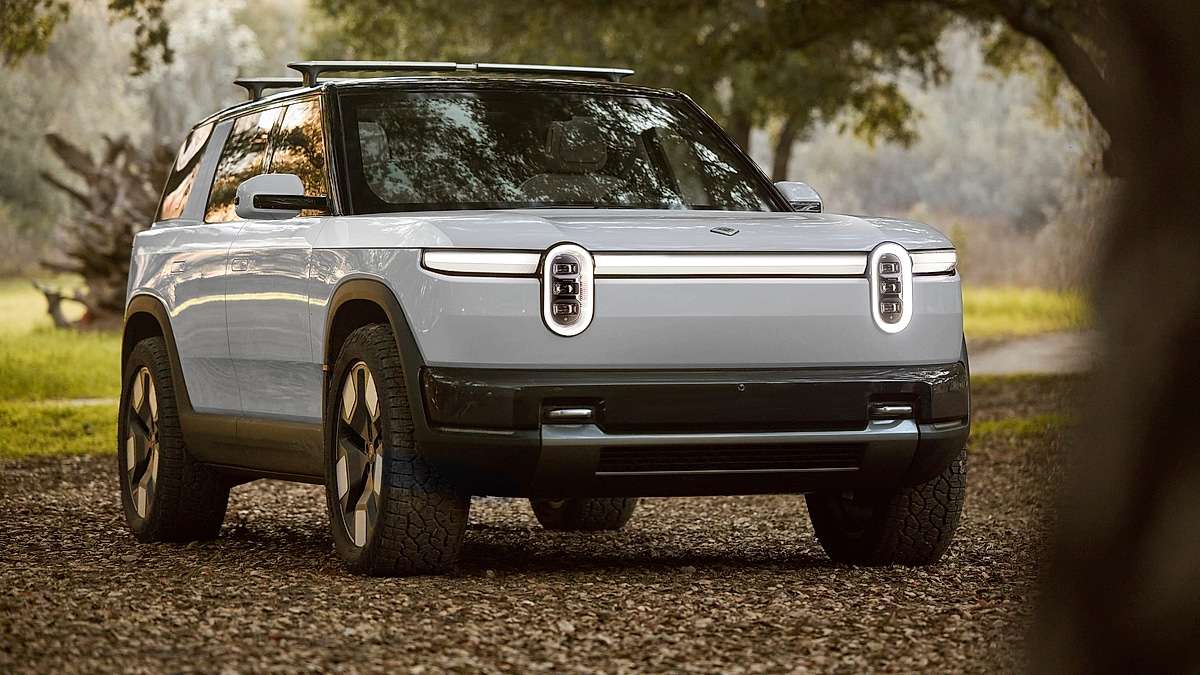

The most underrated Rivian R2 advantage may not be its price, range, size, or 0-60 time. It may be what happens at 11 p.m. in your garage.
I checked Rivian’s R2 specs, R1T/R1S comparison data, charging accessories, service pages, and current recall information. The buyer consequence is simple: the R2 is not just the “affordable Rivian.” For many people, it may be the Rivian that fits normal life better than a used R1T or R1S.
That’s the part I think shoppers are underestimating.
Rivian buyers love big numbers. I get it. The R1T and R1S have the drama: huge torque, serious ground clearance, air suspension, wild acceleration, clever storage, real towing capability, and that expensive adventure-truck charm that makes you want to drive into the woods even if you only needed oat milk.
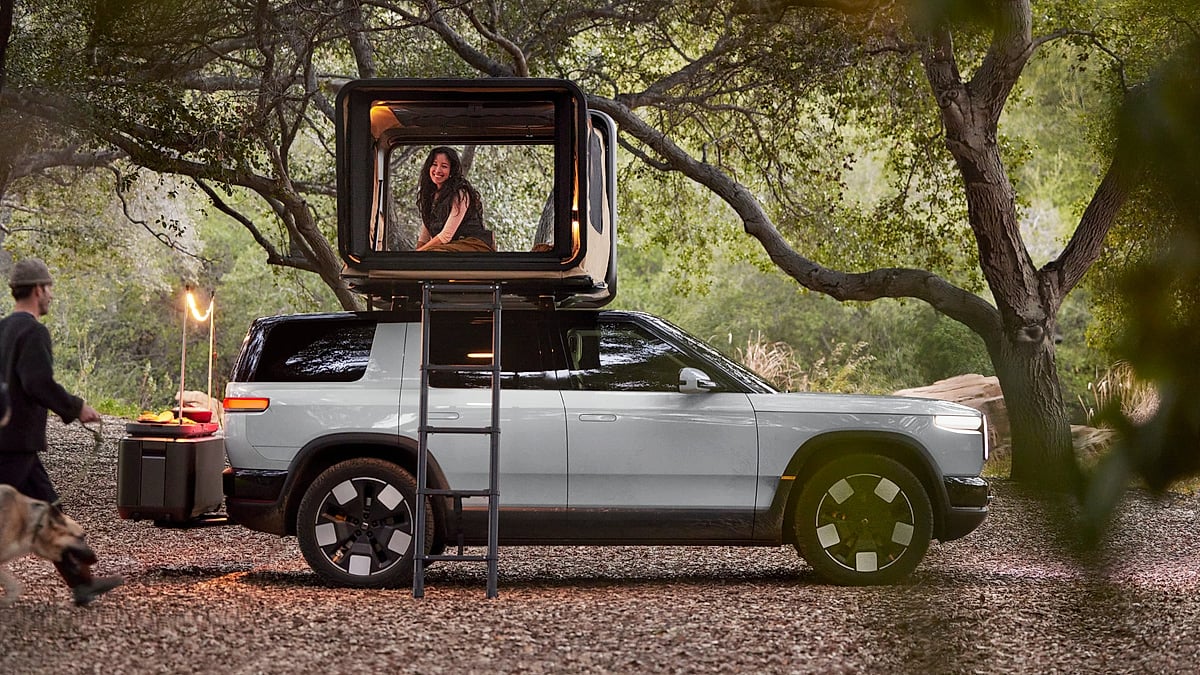
But the R2 changes the question.
It asks whether you really need the biggest Rivian or whether you need the one that is easiest to live with every single day.
What Torque News Checked
- Rivian’s R2 specs, R1T/R1S comparison data, battery/range listings, and charging-accessory pages.
- Rivian service center, mobile service, and recall pages, including current R1T/R1S recall language.
- A reproducible home-charging calculation using Rivian’s stated wall-charger miles-per-hour numbers.
The Home-Charging Math Is The Sleeper Story
Rivian lists its NACS wall charger at 11.5 kW. On that charger, Rivian says R1T and R1S can add up to 25 miles of range per hour. The R2? Up to 38 miles per hour.

That sounds like a small accessory-page detail.
It is not.
Using Rivian’s own numbers, the R2 recovers about 52% more rated miles per charging hour at home than R1T or R1S. A 100-mile daily recovery takes roughly 2 hours and 38 minutes in an R2 at 38 miles per hour. In an R1T or R1S at 25 miles per hour, it takes 4 hours.
That gap matters more than most people think.
If you have a perfect garage setup, a 48-amp circuit, and predictable overnight charging, both work. No drama. But if you share charging time, rely on shorter overnight windows, come home late from a trip, or live somewhere with imperfect electrical access, the R2’s efficiency advantage becomes a daily quality-of-life feature.
This is where I think Rivian’s smaller SUV gets more interesting than the headline specs suggest. A used R1S may look like the smarter buy because it gives you more vehicle for the money. But “more vehicle” also means more battery to refill, more tires to replace, more mass to move, and more complexity to maintain.
Sometimes the smaller Rivian is not the compromise. Sometimes it is the better tool.
R2 Is Not A Mini R1S, And That Is The Point
The R1S is still the family-adventure flagship. It has seven seats, big cargo volume, and up to 14.7 inches of ground clearance in Rivian’s current comparison data. It is the obvious choice if you actually need a third row, serious off-road clearance, or the emotional satisfaction of owning the big Rivian.
Rivian lists the R2 at 185.9 inches long, 66.9 inches tall, with a 115.6-inch wheelbase and 9.6 inches of ground clearance. Compared with the R1S at 200.8 inches long and a 121.1-inch wheelbase, the R2 should be easier to park, easier to place on narrow roads, and less silly for people whose “adventure” is mostly Costco, trailheads, school pickup, and the occasional muddy campsite.
That is not an insult. That is probably the real market.
The R1S gives you 17.6 cubic feet of cargo room with the third row up and 90.7 cubic feet with the second row folded. The R2 gives up the third row, but Rivian lists 28.7 cubic feet behind the rear seats and 79.4 cubic feet with the rear seats folded. For a five-seat SUV, that is not a cute lifestyle prop. That is a useful space.
Here is the blunt version: buy the R1S if you need seven seats or the full adventure hardware. Buy the R2 if you want Rivian character without dragging around extra size you do not use.
Used R1T And R1S Buyers Need A Different Checklist
The used R1 market is going to tempt a lot of R2 shoppers. That is unavoidable. When new R2 pricing bumps against used R1T and R1S listings, people will ask the obvious question: why not buy the bigger Rivian?
Fair question.
My answer: Maybe you should. But do not buy the bigger Rivian because the spec sheet made you feel clever.
Start with service. Rivian says it has service centers by appointment and mobile service coverage for owners in the U.S. and Canada. That is good, but your local reality still matters. Before buying a used R1T or R1S, check how far you are from the nearest service center, what mobile service can handle in your area, and how long appointments are running near you.
Then check recalls by VIN.
Rivian’s current recall page lists a 2022-2026 R1T/R1S seat belt retractor recall, and NHTSA filings also show R1 campaigns tied to safety-critical hardware. That should not scare people away by itself. Newer vehicle platforms have recalls. What matters is whether the specific vehicle you are buying has every campaign completed.
I would also check tire history, wheel size, alignment records, half-shaft or suspension complaints, charging-adapter inventory, and whether the truck has the exact accessories you think it has. A used R1 without the right adapters, spare setup, or service history can turn a good deal into a chore.
And if you are buying an R1T for towing, please do the charger math before you do the tow-rating math. The hard part of EV towing is rarely pulling the trailer. It is planning the charging stops with the trailer attached.
NACS Helps, But It Also Creates An Adapter Era
Starting with model year 2026, Rivian says every R1 vehicle gets a native NACS charge port. R2 is also built around native NACS charging. That is a major ownership upgrade because Tesla Supercharger access matters.
But NACS does not eliminate adapter thinking. It changes it.
Rivian sells a J1772 AC adapter for 2026+ Rivian vehicles with NACS ports, and the product page makes the limitation clear: it is for Level 2 AC charging only, not DC fast charging. That means a buyer should know the difference between three things before delivery day: NACS fast charging, J1772 Level 2 AC charging, and CCS DC fast charging through an adapter.
This sounds nerdy until you are at a hotel, trail town, workplace charger, or older public station and the plug in front of you is not the plug on your vehicle.
My advice: build a small charging kit before you need it. Keep the right AC adapter in the vehicle. Confirm whether your build includes a CCS adapter or whether you need to buy one. Do not wait until a road trip to learn which plug does what.
The R2 Software Bet Needs A Buyer’s Translation
The R2 will attract buyers because it feels like the future of Rivian: smaller, cheaper, NACS-native, software-defined, and more approachable. That is exciting.
It also needs discipline.
Any buyer looking at R2 should divide features into four buckets: available at delivery, coming later, requires hardware, and requires subscription or home equipment. That framework matters for driver assistance, home energy features, connected services, AI features, premium audio, and future software upgrades.
I like Rivian’s software ambition. I also do not think buyers should finance a promise they cannot live without.
If a feature matters to you, ask whether it is active on day one. If it is coming later, ask whether Rivian has given a date. If it requires hardware, make sure your trim has it. If it requires a subscription, price the vehicle as if the subscription exists.
That sounds boring. It is also how you avoid disappointment.
The Phase Rivian is Entering
Rivian is entering a more difficult phase. The early adopters already understood the brand. The R2 has to convince normal buyers who cross-shop Tesla Model Y, Hyundai Ioniq 5, Ford Mustang Mach-E, Chevrolet Blazer EV, used R1S listings, and maybe even gas SUVs.
Those buyers do not only need adventure branding. They need fewer surprises.
That is why the R2’s daily-use math matters. If it charges more efficiently at home, fits more garages, keeps enough Rivian character, and avoids the ownership weight of an R1, it may be the smarter Rivian for people who always liked the brand but never needed the flagship.
How to Choose The Correct Vehicle
If you are choosing between R2, R1T, and R1S, do not start with horsepower. Start with your real week.
Need seven seats, maximum ground clearance, or a truck bed? R1S or R1T still makes sense. Want the least complicated Rivian for commuting, road trips, trailheads, pets, and two-row family duty? R2 deserves serious attention. Shopping used R1 instead? Run the VIN for recalls, confirm service access, check adapter inventory, review tire and suspension history, and calculate how many miles you need to recover overnight.
The best Rivian is not the one with the biggest spec sheet. It is the one that makes the fewest excuses in your driveway.
If you are choosing between a new R2 and a used R1T or R1S, what would decide it for you: price, range, charging, service access, third-row seating, towing, or software features?
About The Author
Noah Washington is an automotive journalist based in Atlanta, Georgia, covering sports cars, luxury vehicles, and performance culture. His reporting focuses on explaining the engineering, design philosophy, and real-world ownership experience behind modern vehicles.
Noah has been immersed in the automotive world since his early teens, attending industry events and following the enthusiast communities that shape how cars are built and driven today. His work blends industry insight with enthusiastic storytelling, helping readers understand not just what a car is, but why it matters.
Noah is also a member of the Southeast Automotive Media Association (SAMA), a professional organization for automotive journalists and industry media in the Southeast.
His coverage regularly explores sports cars, luxury vehicles, and performance-driven segments of the automotive industry, including the evolving culture surrounding Formula Drift and enthusiast builds.
Read more of Noah's work on his author profile page.
You can also follow Noah here:
Set Torque News as Preferred Source on Google
Follow us today...