
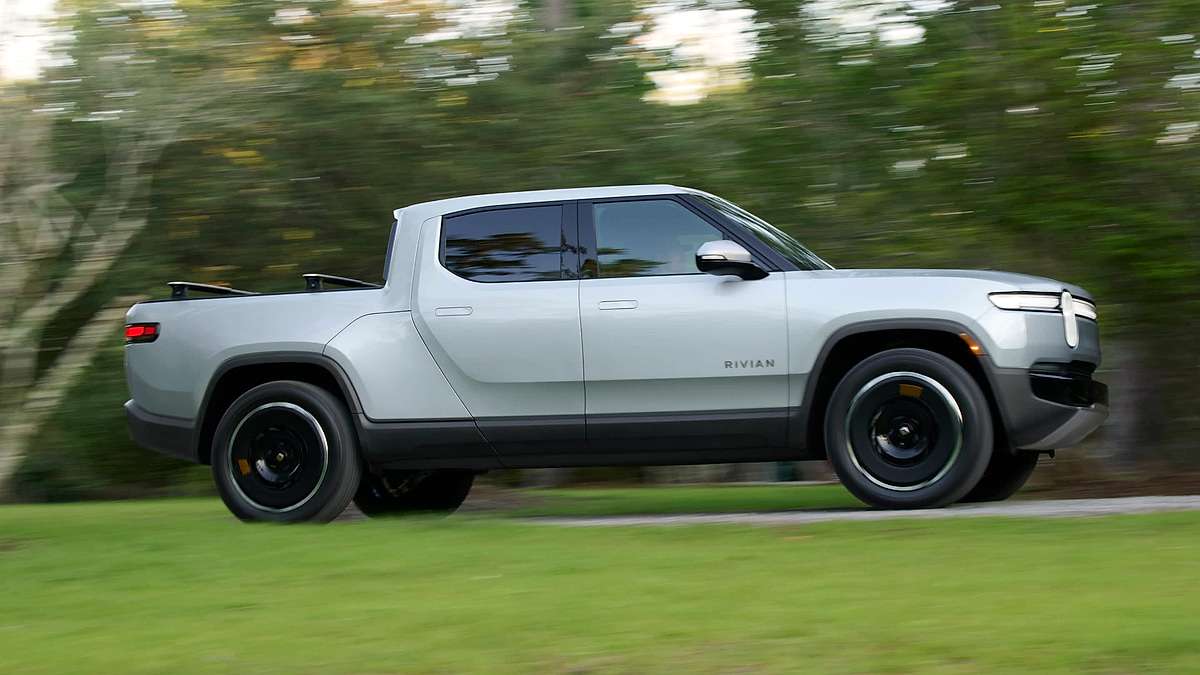

A Rivian R1T owner says he was locked out in a remote area after leaving both his phone and wallet, including the key card, inside the truck. With no cell service at the vehicle, he borrowed a phone, hiked to higher ground, called Rivian, and waited for a locksmith after a remote unlock attempt failed.
That story is easy to dismiss as user error. Plenty of drivers have locked keys in cars for decades.
That raises a practical concern for adventure EVs: what is the backup plan when the phone key, key card, and cell service are all unavailable at once?
What Torque News Checked
Torque News checked the owner’s account against Rivian’s published key guidance, Rivian’s Digital Key rollout, Rivian’s R1T owner guide, and responses from other Rivian owners.
Rivian’s owner's guide explains that the R1T can be locked or unlocked with a key fob, phone key, key card, or key band. It also separates active and passive access. The phone key and key fob can support passive proximity locking and unlocking, while the key card is an active key that must be held against the driver’s door handle.
A key card inside the truck does not help the owner standing outside the truck. Rivian’s guide also warns owners not to leave the vehicle unattended and unlocked with a key fob, key card, key band, or phone key inside. The owner shared the account in a Rivian owners group.
Rivians Digital Key System
Rivian’s newer Digital Key system adds another layer. Rivian says Gen 2 vehicles can use a phone or compatible smartwatch through a digital wallet, with passive entry and NFC backup. Rivian also says owners can access the vehicle with a compatible smartwatch, which is important because it creates a real backcountry workaround: leave the phone behind only if another valid access device stays with the driver.

The comments show why this story matters. Some owners argued that leaving a phone and wallet inside any vehicle is asking for trouble. They are not wrong. Others asked a more useful question: how does an adventure vehicle handle the moments when people hike, bike, swim, camp, or paddle away from the vehicle and do not want to carry a phone or wallet?
That is the real Rivian ownership question.
A Ford truck owner in the discussion pointed to a simple old-school solution: a door keypad. That comment matters because it reframes the issue. The debate is whether convenience has replaced a low-tech fallback that works when the phone, wallet, app, and cell network are unavailable.
Rivian already has several tools that owners should understand before leaving the vehicle in a remote place. Proximity locking can be managed in the vehicle access settings. Camp Courtesy turns off proximity locking or unlocking, along with exterior lights, vehicle sounds, and Gear Guard alarm sound, according to the R1T owner's guide. Digital Key can also be used with compatible watches on supported vehicles.

But those tools only help if the owner sets them up before the problem happens.
That is why the owner’s lockout is more than a cautionary tale. It exposes a planning gap. Rivian sells vehicles built around remote travel, trails, camping, and outdoor independence. In those places, cell service is not guaranteed. If the access plan assumes a connected phone, a reachable support line, and a successful remote unlock, the plan is incomplete.
The practical lesson for Rivian owners is simple. Before hiking, biking, swimming, or camping away from an R1T or R1S, decide which access device stays with the person, not the vehicle. That may be a key card, key band, key fob, compatible smartwatch, or a deliberate setting change, such as disabling proximity locking when appropriate.
The best digital key is the one that still works when the trip stops being convenient.
Rivian owners, what is your backcountry lockout plan? Do you carry the key card, use a watch, bring the fob, disable proximity locking, or hide a backup before hiking, biking, camping, or swimming? Let us know in the comments below.
About The Author
Noah Washington is an automotive journalist based in Atlanta, Georgia, covering sports cars, luxury vehicles, and performance culture. His reporting focuses on explaining the engineering, design philosophy, and real-world ownership experience behind modern vehicles.
Noah has been immersed in the automotive world since his early teens, attending industry events and following the enthusiast communities that shape how cars are built and driven today. His work blends industry insight with enthusiastic storytelling, helping readers understand not just what a car is, but why it matters.
Noah is also a member of the Southeast Automotive Media Association (SAMA), a professional organization for automotive journalists and industry media in the Southeast.
His coverage regularly explores sports cars, luxury vehicles, and performance-driven segments of the automotive industry, including the evolving culture surrounding Formula Drift and enthusiast builds.
Read more of Noah's work on his author profile page.
You can also follow Noah here:
Set Torque News as Preferred Source on Google
Follow us today...




Comments
This is not a “backcountry…
Permalink
This is not a “backcountry risk of digital keys” this is an idiot locking all his keys in his car and walking away. What exactly was he expecting to happen? You can’t do this accidentally. The vehicle won’t automatically lock if you walk away with your phone inside. I’m actually not sure how you would do this. You really have to work to reach this level of stupidity. It is not a rivian planning gap. Rivian gives you all the tools and ways to unlock your vehicle, if you ignore them or fail to set them up then that’s on you.
Fair criticism. The owner…
Permalink
In reply to This is not a “backcountry… by Engineer (not verified)
Fair criticism. The owner clearly made the lockout worse by leaving every access method inside. The useful lesson is still that backcountry redundancy matters. Phone key, card, fob, band, or a hidden backup only helps if one of them stays with the person.
At the end of the day if you…
Permalink
At the end of the day if you have no connectivity it is the same problem we have had with any car for the last 50-60 years. Nothing really special about these being an EV. You locked your keys in your car lol
That is basically true…
Permalink
In reply to At the end of the day if you… by Jeff (not verified)
That is basically true. Locking the key in the vehicle is an old problem. The only modern twist is that people now rely on phones, apps, and remote unlocks, which become much less useful when there is no service.
My 20 year old prius hybrid…
Permalink
My 20 year old prius hybrid does not allow the door to be locked if the smart key is left inside. I just assumed all newer vehivles had this!
That is why this surprised a…
Permalink
In reply to My 20 year old prius hybrid… by Mark (not verified)
That is why this surprised a lot of people. Many older smart-key vehicles make it very hard to lock the key inside. Owners expect newer vehicles to be at least as foolproof, not more complicated.
This happened to my wife as…
Permalink
This happened to my wife as well, in the city with a child locked inside. Rivian in my opinion did not take it seriously. Beware!
That is a much more serious…
Permalink
In reply to This happened to my wife as… by David Shough (not verified)
That is a much more serious version of the problem.
Another ole school method I…
Permalink
Another ole school method I’ve always used a ‘HitchSafe ‘ it’s a small safe that fits in the hollow part of the hitch.
That is probably the most…
Permalink
In reply to Another ole school method I… by Juan (not verified)
That is probably the most practical suggestion here. A HitchSafe or some kind of physical backup is boring, but boring is exactly what works when the phone, app, or signal does not.