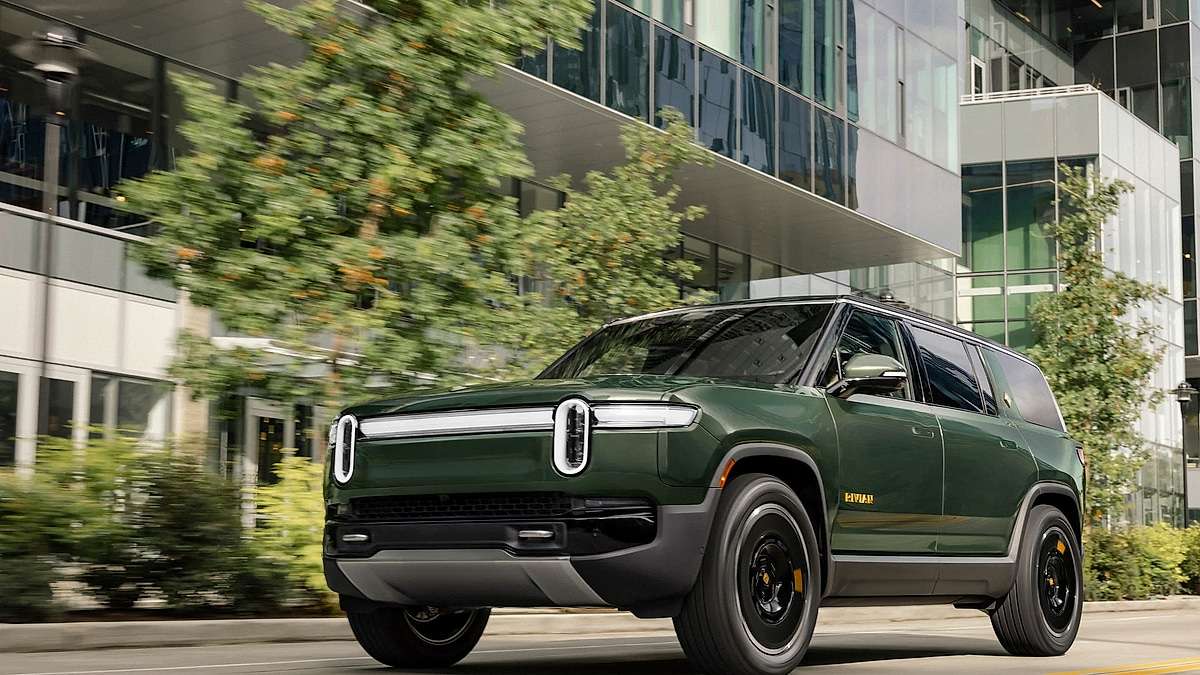

A 2023 Rivian R1S Launch Edition just completed a 1,909-mile road trip across the Southeast, and the total charging cost was only $133. That’s effectively the equivalent of getting 57 MPG in a full-size SUV, which is hard to ignore.
This figure represents a 65% cost reduction compared to what a Mercedes GLE 350 would have incurred over the same distance. The owner's experience directly challenges the prevailing narrative that electric vehicles are impractical for long-distance travel.
This is a data point in a growing trend of EV owners discovering that strategic charging, often free and integrated into existing stops, fundamentally changes the economics and logistics of long-haul driving. The industry's continued focus on raw range numbers often overshadows the practical advantages of opportunistic charging.
“First real road trip in the Rivian and I’ve gotta say… I’m impressed.
For context, this replaced our 2018 Mercedes GLE350 three years ago.
2023 Rivian R1S Launch Edition with 21" Michelin Defender tires and the aero wheel covers removed.
We went:
Wellington, FL → Savannah, GA → Asheville, NC → Atlanta, GA → back to Wellington
A couple of things to note:
• Charged for FREE overnight in Savannah at the hotel
• Charged for FREE again at our Airbnb in Asheville
• Only needed fast chargers during the driving legs
Total trip:
1,909 miles
$133 in charges
Advertising
That’s about:
7.0 cents per mile
With gas at $4/gallon, that’s like getting ~57 MPG in a full-size SUV.
For comparison, the GLE 350 averaged around 20 MPG, which would’ve been:
$382 in gas for the same trip
The range honestly outlasted my bladder a few times
And most importantly, we didn’t spend one minute charging when we weren’t already doing something… eating, sleeping, or taking a bathroom break with the girls.
No going out of the way, no waiting around, no stress!
And waking up each morning with a “full tank” from free charging? Game changer! Really happy Airbnb and VRBO have the option to sort for homes with it.
EV road trips aren’t perfect yet, but they’re a lot closer than people think. I've been constantly thinking about getting one with even more range, honestly, 300+ miles is more than enough.”
The core of this R1s owner's success lies in utilizing destination charging, a strategy often overlooked in the public discourse surrounding EV travel. By securing free overnight charging at a hotel and an Airbnb, Hetzel eliminated the need for dedicated charging stops for a significant portion of his 1,909-mile journey in the Rivian R1S.
Rivian R1S: Long-Distance EV Capability
- The 2023 Rivian R1S Launch Edition, equipped with 21-inch Michelin Defender tires, completed a 1,909-mile road trip for $133 in charging costs. This translates to an equivalent fuel economy of approximately 57 MPG, significantly outperforming a comparable Mercedes GLE 350's 20 MPG.
- Over 65% of the trip's fuel cost was saved compared to a gasoline vehicle, demonstrating substantial economic benefits for EV owners on long journeys. The owner utilized free overnight charging at hotels and Airbnb locations for significant portions of the trip.
- The vehicle's range often exceeded the driver's need for breaks, allowing charging to be seamlessly integrated into meal, sleep, and restroom stops. This eliminates dedicated charging downtime, a key factor in reducing perceived travel inconvenience.
- The ability to sort for homes with EV charging on platforms like Airbnb and VRBO shows a growing trend in hospitality, making destination charging increasingly accessible and convenient for travelers.
This shift in mindset, from seeking out gas stations to leveraging existing downtime for charging, makes a significant difference.

This approach saves money and reclaims time, a commodity far more valuable than the cost of electrons. The industry needs to do a better job of educating consumers on this paradigm shift, rather than letting the narrative be dominated by the occasional fast-charger queue.
Jeff Allen, who rented a Hyundai Kona EV for a month in 2022 and drove 2,000 miles, echoed this sentiment:
In 2022, we rented a Hyundai Kona EV for a month while visiting relatives in NC. I drove 1000 miles round-trip to Philadelphia and back to NC twice, totaling 2000 miles. Each leg of 500 miles I did in one day. Charging on I-81 is no problem. Tripping along interstates in an EV anywhere in the US is no problem. Drove from Seattle down through California on I-5 and across the SW and Texas and up to NC. I tracked the trip with the PlugShare App. There were fast charging stations the whole way, especially through Texas, where Tesla chargers are in the middle of nowhere.
Allen's experience, spanning multiple cross-country routes, confirms that the charging infrastructure along major interstates is robust enough for long-distance EV travel. His observation about Tesla chargers in the "middle of nowhere" in Texas shows a key point: while the network exists, its geographical distribution might still surprise those accustomed to gas stations every few miles. However, the sheer presence of these stations, even in remote areas, means the logistical hurdle is often perceived rather than actual.
The emphasis on not stopping solely for charging is critical here. It’s a subtle but profound difference from internal combustion engine (ICE) vehicles, where refueling is always a dedicated, separate task. The Rivian's range "outlasted my bladder a few times," demonstrating the vehicle's capability and the owner's efficient use of charging time.
Roger Clark, a Rivian R1T owner who drove from the Bay Area to Boulder, CO, further elaborated on this integrated approach to travel:
When I was in college, I used to pride myself on being able to drive six hours from So Cal to the Bay Area without stopping. Now that I’m in my 50s, not only can I not do things like that, but I really shouldn’t be doing it, so my back doesn’t explode on me. A while back, I took my R1T from the Bay Area out to Boulder, CO. My hubs packed my Yeti full of snacks: fruit, cheese, and crackers, etc. I would plug in, find a bathroom, drop the tailgate, and snack for a bit. It was a game-changer. I felt so much healthier on the trip, and those charging stops were just enough to release any pent-up tension in my back, so I arrived feeling good. It’s not the fastest way to get across the country, but I really enjoyed it as a road trip vehicle. Here we are in Green River, UT.
Clark's perspective is particularly insightful, framing charging stops not as an inconvenience but as an opportunity for improved well-being on long journeys. This re-contextualization of travel pauses is a benefit that traditional ICE vehicles cannot offer in the same way. The ability to use these mandatory breaks for charging transforms a chore into a seamless part of the travel experience, leading to a "healthier trip."
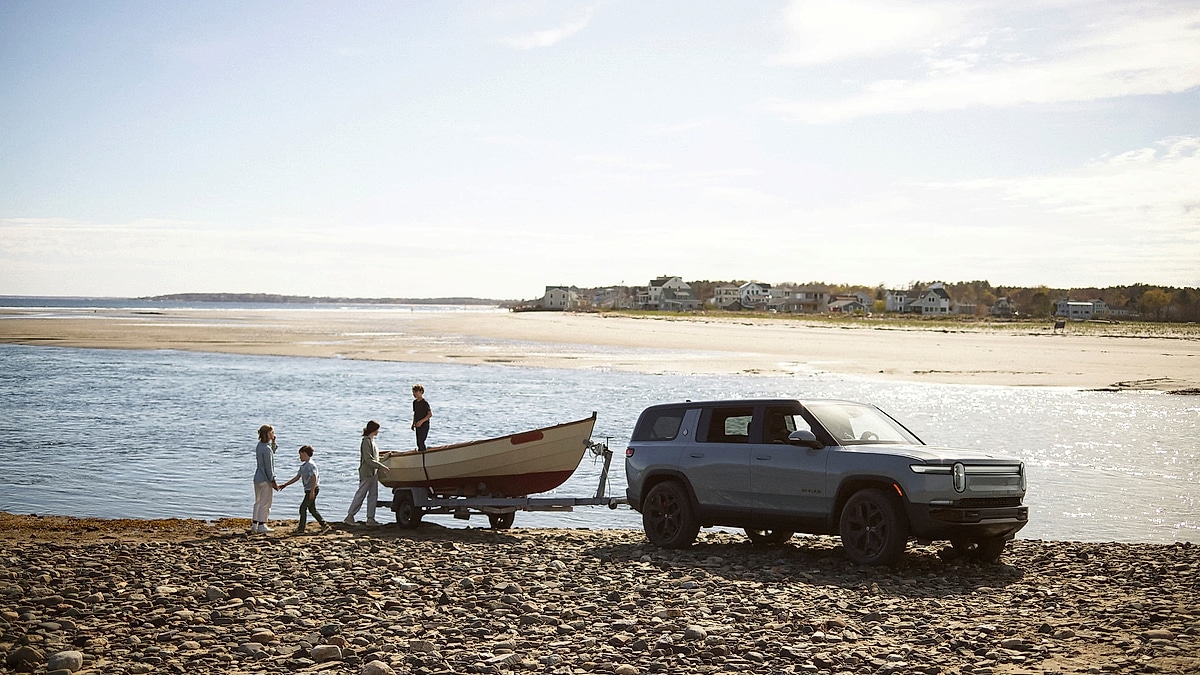
Hetzel's 1,909-mile Rivian R1S journey, costing a mere $133, is not an anomaly. It is a clear demonstration that the economics and logistics of EV road tripping are not only viable but often superior to gasoline-powered alternatives when approached with a modern mindset. Manufacturers and charging networks must continue to integrate charging into existing infrastructure and educate consumers on the benefits of destination charging, rather than letting range anxiety dictate the narrative.
Image Sources: Rivian Media Center
About The Author
Noah Washington is an automotive journalist based in Atlanta, Georgia, covering sports cars, luxury vehicles, and performance culture. His reporting focuses on explaining the engineering, design philosophy, and real-world ownership experience behind modern vehicles.
Noah has been immersed in the automotive world since his early teens, attending industry events and following the enthusiast communities that shape how cars are built and driven today. His work blends industry insight with enthusiastic storytelling, helping readers understand not just what a car is, but why it matters.
Noah is also a member of the Southeast Automotive Media Association (SAMA), a professional organization for automotive journalists and industry media in the Southeast.
His coverage regularly explores sports cars, luxury vehicles, and performance-driven segments of the automotive industry, including the evolving culture surrounding Formula Drift and enthusiast builds.
Read more of Noah's work on his author profile page.
You can also follow Noah here:
Set Torque News as Preferred Source on Google
Follow us today...