
Porsche just fired the loudest silent shot of 2026. At their multi-brand plant in Bratislava, Slovakia, the first production units of the all-electric Cayenne are officially rolling off the line. For a company that has spent the last year dodging financial potholes and navigating a cooling EV market in China, this isn’t just another model launch—it’s a battle for the soul and the balance sheet of the brand.
The Cayenne has historically been Porsche’s cash cow, the vehicle that funded the development of every niche 911 variant we purists drool over. Now, as the brand transitions its most important asset to a "skateboard" chassis, they aren't just changing engines; they’re rewriting their entire survival strategy.
The State of the Shield: Porsche’s Current Landscape
Let’s be candid: Porsche has had a rough go lately. In late 2025, the company reported a staggering 99% drop in operating profit for the first nine months of the year, largely due to realignment costs and the "trough" of their product cycle. They’ve also faced headwinds from US import tariffs and a softening Chinese market that seems to have lost its appetite for Western luxury EVs in favor of high-tech domestic upstarts.
However, 2025 also saw record sales in North America, proving that the brand's desirability remains high where the economy is stable. The Macan EV expansion is already providing a lift, but the Cayenne is the heavy hitter. If Porsche can stick the landing here, the Cayenne EV could be the catalyst that pulls them out of the 2025 slump and restores the double-digit margins investors expect.
Power, Performance, and the Price of Admission
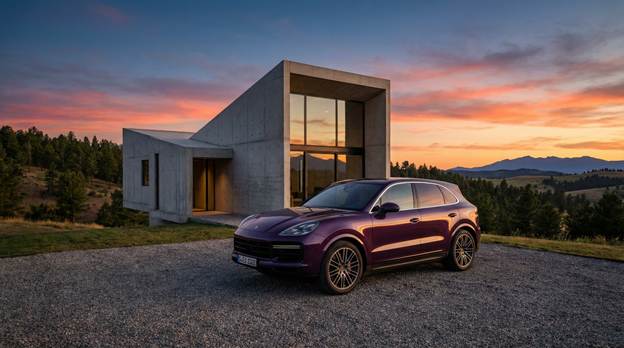
Porsche isn't playing "catch up" with the specs; they are trying to reset the benchmark. Based on early production data, the new Cayenne Electric is a monster.
- The Base Model: Expect a dual-motor setup delivering roughly 435 horsepower and a 0–60 mph time of 4.5 seconds.
- The Turbo Electric: This is the headline-maker. With an output of up to 850 kW (1,156 hp), it is officially the most powerful production Porsche ever built. We are talking about a 0–60 mph sprint in 2.4 seconds.
- The Battery: A massive 113 kWh gross capacity pack that supports a world-leading 400 kW DC fast charging rate. That’s 10% to 80% in about 16 minutes—half the time of most competitors.
- The Price Tag: Quality and power don't come cheap. Base models are expected to start around $109,000, with the Turbo Electric pushing well past $163,000.
The "Resident Model": Quality Control in the Machine Age
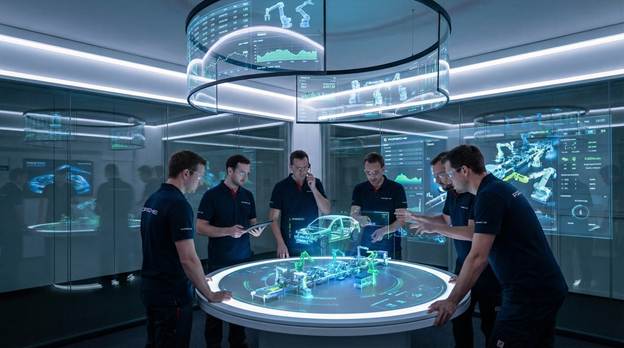
One of the most fascinating aspects of this launch isn't the car itself, but how it’s being built. Porsche is utilizing a highly automated "resident model" at the Bratislava plant.
While the production line is shared between internal combustion (ICE), hybrid, and EV versions to allow for maximum market flexibility, Porsche has stationed a permanent "resident" team of experts from their Weissach R&D center directly on the factory floor. This isn't just a liaison office; it’s a tactical strike team that bridges the gap between design and assembly, catching manufacturing "hiccups" in real-time as the automated systems ramp up.
In a world where early EV adopters are often treated as unpaid beta testers (looking at you, Tesla and Rivian), Porsche is betting that this high-touch/high-tech hybrid oversight will ensure "Porsche Quality" from day one.
The Global Gauntlet: Stacking Up Against the Competition
The Cayenne EV is entering a crowded arena where the rules of engagement have changed.
- China: Competitors like the BYD Yangwang U8 and Lotus Eletre (owned by Geely) are offering tech-laden luxury at aggressive prices. Porsche’s advantage remains its superior chassis dynamics and "Active Ride" suspension, but they are no longer the only "prestige" game in town.
- The US: The Rivian R1S and Tesla Model X offer more seats (7 vs 5) and more "adventure" or "tech-bro" credibility. Porsche is banking on the "driver’s car" ethos to win over those who find the American offerings too soft or too minimalist.
- Europe: Audi (with the Q6/Q8 e-tron) and BMW are the closest rivals, but by pushing the Cayenne Turbo to over 1,100 hp, Porsche is moving the goalposts into "Hyper-SUV" territory.
What Porsche Must Do to Win
To truly fix its prospects, Porsche needs to do more than just build a fast car. They need to:
- Solve the Software: The shift to the new electronic architecture must be seamless. Laggy infotainment or buggy ADAS will kill the premium "vibe" faster than a flat battery.
- Fix China: They must localize their digital services and potentially adjust pricing or trim levels to compete with the rapid innovation cycles of Chinese OEMs.
- Lean into the Hybrid Safety Net: The flexibility of the Bratislava line is their secret weapon. If EV demand continues to wobble, they must be ready to pivot back to hybrids without missing a beat.
Wrapping Up
The launch of the electric Cayenne is a masterclass in risk management. By using the "resident model" to ensure quality and a flexible production line to hedge against market volatility, Porsche is attempting to navigate the "valley of death" that has claimed the margins of so many other legacy automakers.
The Cayenne EV is faster, smarter, and more powerful than anything that has come before it. Whether it’s enough to reclaim Porsche's financial throne depends on whether the world is ready for a $160,000 SUV that can out-accelerate a 911 while charging in the time it takes to grab a latte. My bet? Never bet against the crest.
Disclosure: Images rendered by Artlist.io
Rob Enderle is a technology analyst at Torque News who covers automotive technology and battery developments. You can learn more about Rob on Wikipedia and follow his articles on Forbes, X, and LinkedIn.
Set Torque News as Preferred Source on Google
Follow us today...