
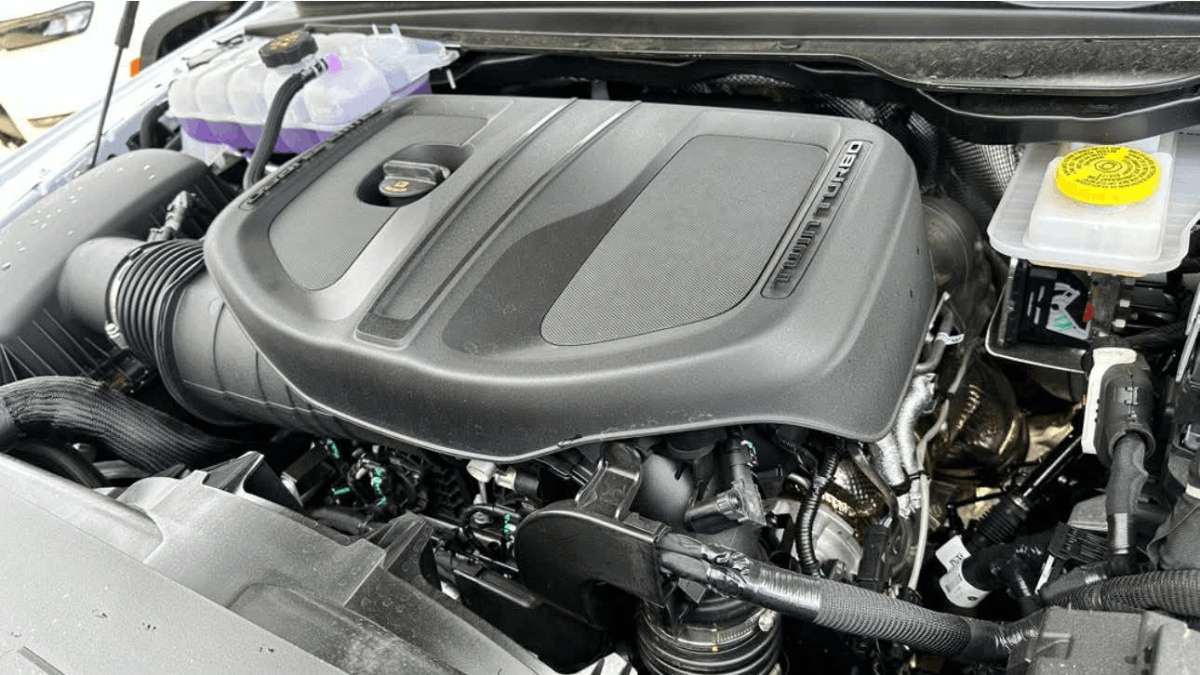

For years, the 5.7‑liter HEMI V8 helped define what many drivers expected from a Ram truck. The sound, the linear power delivery, and the mechanical simplicity became part of the ownership identity for countless enthusiasts. Even as turbocharged engines and electrification began reshaping the broader truck market, the HEMI remained a familiar benchmark. Now that Ram is transitioning to the new twin‑turbocharged Hurricane inline‑six, real ownership stories are beginning to show how longtime V8 drivers are reacting when they finally get behind the wheel.
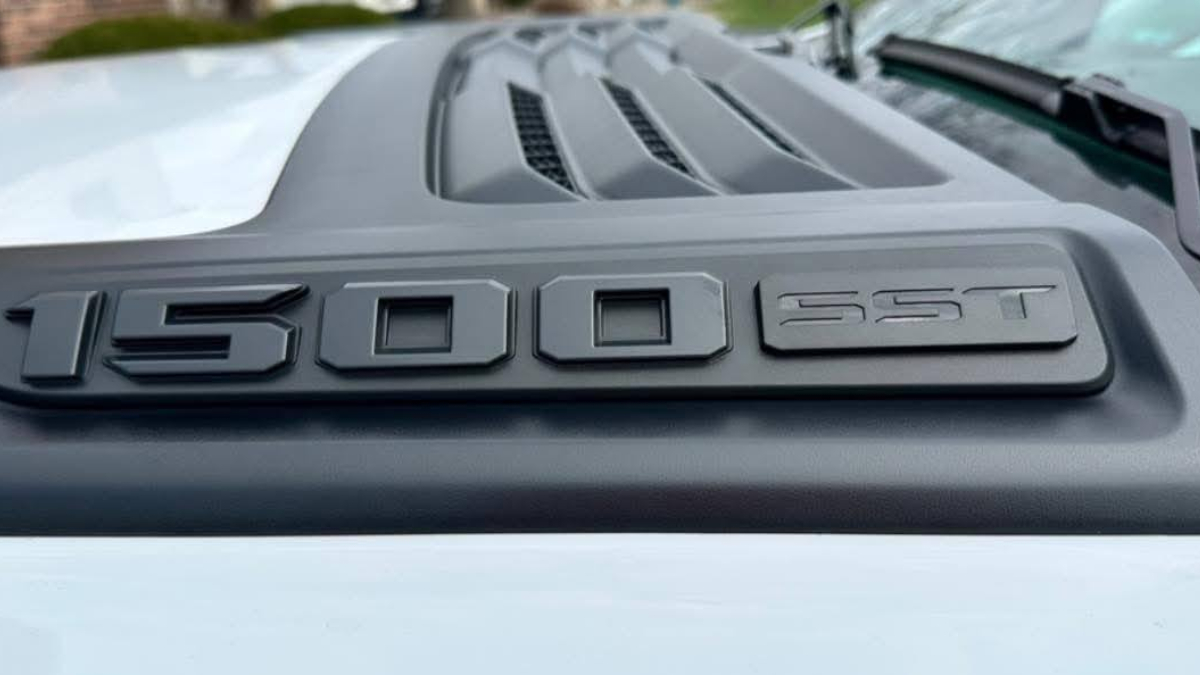
That shift became especially clear to me earlier today while scrolling through discussions in the “Hurricane 3.0 TT Rams” Facebook group, where owners have been sharing honest first impressions of Ram’s new powertrain. One post that stood out came from Logan Wilder, a longtime Ram driver who has owned six different trucks powered by the 5.7‑liter HEMI, including a Hellcat‑equipped TRX. Logan explained that his new truck equipped with the Hurricane SST has surprised him in ways he did not expect, particularly in how it delivers both usable torque and refinement compared to the V8 trucks he had driven for years.
Here’s how he put it: “I’ve had 6, 5.7 HEMI’s, and this new Hurricane’s SST absolutely destroys it. Sure, it’s quiet but after my last car being the Hellcat TRX, I welcome the quiet and smooth operation. It pulls way harder down low, mid and up high in the RPM’s. Don’t get me wrong, I obviously am a fan of V8’s but I know a good engine when I have one. I’m glad the HEMI’s are coming back at least as an option, but zero shot I’d go back to a 5.7 HEMI over the Hurricane SST.”
Why the Hurricane Feels Different From the HEMI
Logan’s experience reflects one of the biggest mechanical differences between the outgoing 5.7‑liter HEMI and the new Hurricane architecture. The Hurricane is a 3.0‑liter twin‑turbo inline‑six designed to build torque much earlier in the RPM range. In everyday driving situations like pulling away from a stoplight or merging onto a highway, many drivers immediately notice that the truck feels more responsive without needing to rev the engine as high.
Instead of waiting for power to build gradually, the turbochargers deliver boost sooner, which can make the truck feel quicker in real‑world driving conditions. For owners who spend most of their time commuting, towing, or navigating traffic, that difference alone can significantly change how the vehicle feels day to day.
The smoother operation Logan described also comes from the inline‑six configuration itself. Inline‑six engines are naturally balanced in their internal motion, which reduces vibration and contributes to a quieter, more refined driving experience during steady cruising. But that smoother feel is only one part of the ownership story. As with any major powertrain shift, early impressions around refinement and performance are still being weighed against questions about how these trucks will hold up as more drivers put serious miles on them.
That broader uncertainty is something I have touched on in other Ram ownership stories too. In one experience I recently wrote about, a 2026 Ram 1500 with just 510 miles ended up back at the dealer due to an eTorque MGU concern. Situations like this do not necessarily represent widespread issues, but they do remind us that even when a new truck feels smoother and more advanced, owners are still paying close attention to whether that refinement comes with any early tradeoffs.
The V8 Loyalty Factor Still Runs Deep
For decades, Ram buyers built strong emotional connections with V8 power. The sound and character of engines like the HEMI often played just as big a role in purchasing decisions as measurable performance figures. That’s why Logan’s perspective is particularly interesting. Someone who has owned six HEMI trucks and experienced the supercharged Hellcat engine in the TRX represents exactly the type of enthusiast who might normally resist a smaller turbocharged engine.
Instead, his reaction suggests that the Hurricane platform may be winning over some traditionalists simply through how it performs in real‑world conditions. When strong low‑RPM torque and smooth acceleration become noticeable during everyday driving, perceptions can begin to shift.
That growing shift in expectations is something I have been noticing more frequently in the ownership stories I cover. In another experience I previously wrote about, a driver described trading a 2025 Toyota Tundra for a Ram 1500 with the 3.0‑liter Hurricane engine and realizing the change reshaped their expectations about modern truck performance. Stories like these are becoming more common as more drivers transition away from naturally aspirated V8 platforms.
Owners Begin Weighing In on the Hurricane Engine
Logan’s post quickly sparked discussion from other Ram owners who shared their own viewpoints about the new engine.
John Bellizzi Jr. highlighted the long history of inline‑six engines, writing, “Inline 6 Cummins are strong, so I knew the Hurricane would be strong also! Inline sixes have been around for a long time!”
His comment reflects a sense of mechanical familiarity. While the Hurricane itself is new, inline‑six engines have powered some of the most respected truck platforms for decades. That legacy gives some buyers confidence that the architecture itself is fundamentally sound.
Another commenter, Randy Gunther, focused on performance potential after making modifications. He wrote, “I could not agree more. I added a cold air intake and tuner and this thing pulls harder than a tractor! Keep the V8, I'll take this quiet beast all day every day!”
Randy’s experience highlights how turbocharged engines often respond strongly to airflow improvements and tuning adjustments. For enthusiasts who enjoy customizing their trucks, that flexibility can make modern turbo platforms especially appealing.
However, not every driver is ready to fully embrace the change.
Fred Hogle offered a more cautious perspective, writing, “Time will tell if they have impressive numbers but I’m so afraid of reliability. The new CEO of the company is making all the right moves, and the new ones come with a great warranty! Nice to have a choice and to see them listening to their customers! Enjoy your ride!”
Fred’s concern reflects one of the most common questions surrounding any new engine platform. Strong early impressions are important, but many truck owners plan to keep their vehicles for years, and that naturally places reliability at the center of the conversation.
Fred’s concern also ties into a broader pattern I have been seeing as more Hurricane trucks reach owners. Even when performance and smoothness are praised, reliability remains part of the conversation. In one situation I wrote about not long ago, a driver described losing dashboard power followed by a check engine light on a relatively new Ram 1500. Experiences like these reinforce why some buyers prefer to watch how new technologies perform over time before fully committing.
Performance Versus Character in Modern Truck Engines
One of the most compelling aspects of Logan's post is that he is clearly aware of both positions on the V8 vs. smaller engine debate. As an advocate for V8 engines, Logan recognizes that his experience with the Hurricane SST has influenced what is important to him when it comes to the day-to-day performance of his vehicle.
This tension between performance efficiency and emotional character is becoming more visible across the automotive industry. Turbocharged engines give you a better acceleration figure than their naturally aspirated counterparts, they run quieter and more smoothly, and they provide a better fuel economy. At the same time, naturally aspirated V8 engines often provide a more visceral driving experience that some enthusiasts find difficult to replace.
As vehicle development continues to be shaped by emissions restrictions and increasing standards for efficiency, manufacturers have turned to the use of smaller turbocharged engines as a way to meet these new standards while still providing enough performance to satisfy many consumers.
My Perspective
As someone who regularly follows these real ownership conversations, I see this as one element of a larger shift in how truck drivers decide on which trucks to purchase. Today's buyers often weigh refinement, efficiency, and the day-to-day usability of their vehicles equally or possibly more-so than they do the tradition and performance aspects. If a new engine design can improve the user-experience of the vehicle for the average owner, they may be willing to reconsider the importance of certain aspects of driving such as "sound" and "tradition".
Simultaneously, Ram's decision to continue offering HEMI engines gives some indication of whether Ram will replace one philosophy with another or give customers the opportunity to choose the type of driving experience they desire. Giving drivers the ability to select the experience that fits their priorities could ultimately define the next phase of the truck market.
Key Takeaways for Ram Buyers Watching the Hurricane Transition
- Stronger low‑RPM torque can transform daily usability: Earlier boost delivery often makes turbocharged trucks feel quicker and more responsive in real traffic conditions.
- Inline‑six refinement is noticeable in long drives: Reduced vibration and smoother cruising can significantly improve comfort for drivers who spend hours behind the wheel.
- Turbo engines can offer greater modification flexibility: Intake upgrades, tuning adjustments, and airflow improvements can unlock noticeable performance gains.
- New platforms naturally bring reliability questions: Observing real ownership experiences over time remains one of the best ways for buyers to form informed opinions.
Join the Conversation
Have you had the chance to drive a Ram truck with the new Hurricane engine yet? And did it change how you feel about turbocharged power replacing traditional V8 performance?
And if you’ve owned multiple HEMI trucks in the past, would smoother driving and stronger low‑RPM pull be enough to convince you to switch? Or is the sound and character of a V8 still something you would hold onto?
Don't hesitate to let me know what you think in our comments below.
About The Author
Aram Krajekian is a young automotive journalist bringing a fresh and analytical perspective to the evolving automotive landscape by reporting on real-world ownership experiences and providing industry analysis. Based in North Carolina, he covers electric vehicles, trucks, and broader automotive trends with a focus on contributing a balanced evaluation. His reporting cuts through brand bias to provide readers with grounded insight into how vehicles perform for everyday drivers beyond marketing narratives.
Aram can be reached on X and LinkedIn for ongoing automotive coverage.
Image sources: The “Hurricane 3.0 TT Rams” Facebook group and Ram’s gallery.
Set Torque News as Preferred Source on Google
Follow us today...







Comments
2017 ram 1500 3.6lt no…
Permalink
2017 ram 1500 3.6lt no problems
Lack of a little pwr but great on gas and cruising.
2023 ram 1500 3.6lt warlock same as above.
Test drove 2026 3.0lt tt lots of pwr.BUT turbos of not been tested
Long enough for longevity. Don't trust turbos to people who don't no how to treat them. Aka average jo blow. Just ask any chev cruise owner with a turbo how they last.
Oil changes
Cool down period
And so on.
I have the ram rho after…
Permalink
In reply to 2017 ram 1500 3.6lt no… by Gord (not verified)
I have the ram rho after previously having the hemi. I like the hurricane so far I do miss the roar of my hemi but also welcome the quiet roar of that Turbo inline 6. It has good punch which I like - I cannot stand the start stop technology - mostly I’m fine with the hurricane but DO worry about long term reliability.
I dont believe the guy,…
Permalink
I dont believe the guy, owning 6 Hemi's in about twenty years, as they came out in 2003. Why? He talks about his Hellcat TRX as being slower than then Hurricane Ram's lol. Or at least that's the intent it seems. I do not own a Ram Hurricane but have seat time and it is no doubt a powerful motor with excellent mid range torque. It just pulls like a freight train. But the 5.7 is no slouch. It isnt like one needs a Ram Hurricane because of the slow speed, or inability to tow heavy loads, etc, of a Ram 1500 5.7 Hemi. The 5.7 engine isnt exactly loud, either. I assume the point is how quiet the Hurricane motor is for the power it delivers. Some people like the sounds of a V8 under accleration, feels like you have a connection to the vehicle. From what Ive read, the Hemi outsells the Hurricane by two to one. I assume most people dont buy a Ram to win the quarter mile against other trucks.
I believe the guy. I bought…
Permalink
In reply to I dont believe the guy,… by Bunk22 (not verified)
I believe the guy. I bought a ram rebel a year ago. I have owned v-8's in both gmc and ford previously. At first the quiet is a little weird, but the hurricane is smoother, faster ,quieter than any v-8 truck ive owned. Gas milage is slightly better, but the rebel has a 3.9 rear end so u cruise at about 2500 rpm's at 75 mph, which is a little high. Overall, I love the truck.
I have had two Hemi powered…
Permalink
I have had two Hemi powered trucks and two SST HO powered trucks. I like the smoothness and power of the six cylinder. I also believe the six has better power when driving in higher elevations and steep mountain grades. I have 10k miles on my 2026 truck and have had zero issues.
I bought my first Ram in…
Permalink
I bought my first Ram in 2016 because I was buried in an F150 and needed rebates to get out. I was not excited. OOPS! Turns out that I love my Ram and gave it to my son. Everyone told me not to buy a 3.0l SST (I'm a consultant to retail auto), turns out...it is a rocket! Both trucks have 3.92's. The 3.0 is smooth, no turbo lag. I've measured 4.79 0 to 60 at 623 ft above sea level. It is as fast as my C5 was (okay, the C5 was at 5k ft). 25k miles and mechanically fine. Infotainment is another story...
I've towed with both and tow…
Permalink
I've towed with both and tow regularly with both and the Hurricane I6 losses to much range when towing over 5000 lbs compared to a E-torque Hemi with the 392 gear setup. To the time of over 100 miles of range loss at 7000 lbs of towing. We have 7 Hurricane I6 in our fleet at work at if I have to tow over 6000lbs I use my personal truck which is a 2024 E torque Hemi with the tow package and 392 gears. So much better than any other towing option available. I mean you may not have that kick when passing like the Turbo but it gets the job done And the extra 100+ miles o can drive without stopping for gas makes the Hemi a better choice in my opinion. They both are pretty equal in ride quality in every other category
Who paid you to lie about…
Permalink
Who paid you to lie about the Hemi vs Hurricane? The only true analogy is that the Hurricane is a piece of crapola compared to the Hemi. There is absolutely no comparison.
I had 2 5.7 engines and…
Permalink
I had 2 5.7 engines and lifters went bad in both I replaced my 4.7 in my 2000dakota at 204,000 felt good on that life. I hope the New Dakota will have this hurricane 6 as an option. I suspect it will launch witn the hurricane 4 but a 500hp Dakota would be epic
Does anyone actually write a…
Permalink
Does anyone actually write a article now.
Its seems EVERY article I read is diner by A.I.
You end uo reading the same thing over and over in 6 paragraphs only worded differently.
Lets try actually using your mind to write a article instead of CHAT BOT.
My god its sickening.
It doesn't just "feel"…
Permalink
It doesn't just "feel" quicker, it is quicker. My wife traded in her 2022 Challenger R/T for a 2026 Ram 1500 Rebel with the S/O Hurricane. I have a well maintained 2019 with the 5.7 HEMI. Both trucks have 3.92 gearing. After driving hers, I asked if she would be willing to have an impromptu race on lightly used stretch of road. We lined them up, both in 2wd, and did a countdown over the phone. I got out a little ahead on the take off, but she quickly caught and passed me so easily, that driver error could not be a factor. That proved to me right there that whenever I decide to trade in mine, it'll be on a Hurricane powered truck, not the HEMI.
In total, I’ve had six ram…
Permalink
In total, I’ve had six ram pick ups, one 4.7 V8, three 5.7 hemi‘s and two Eco diesels. Everything that he described that was good about the hurricane. I six is equally true for the Eco diesel. I don’t know what he’s getting for gas mileage, but I will tell you that both of my Eco diesel one and 2 Wheel Dr. and one that was four-wheel-drive. Both got low-to- mid 20s in town and 30 on the road. I’m still pissed that they stopped using the Eco diesel platform.
Been a GMC truck guy for 30…
Permalink
Been a GMC truck guy for 30 years. I have owened trucks with 305's / 350's / 5.3L's and last one was a 2015HD with a 6.0L. Today I drive a 2026 RAM Rebel with a 3.0L and couldn't be happier. Before purchasing this truck I test drove new GM's with 5.3L's and 6.2L's before test driving the Ram. Once behind the wheel of the RAM and seeing the quality of the interior and the noticeable better proformance of the 3.0L engine I made the switch and have not looked back. This truck tows my 9,000lb trailer better than the 6.0L GM and the best part is without the trailer and in sport mode 0 to 60 in under 5 seconds. Love my new RAM!!!
Own a 1500 I6. Not racing…
Permalink
Own a 1500 I6. Not racing this high center of gravity, slow to stop beast. Don't need that much HP at 3K RPM. Need it at idle, when the truck is trying to hitch up or back out of a tight parking spot at near idle on an incline. It's twitchy. Have to put it in 4WD low to get the gear ratio so it will smooth out. The other problem is high RPM drivetrain components (and torque converter) don't like to stop on a dime so you are always slamming on the brakes and sending things flying to get the tonnage to stop. They need a drivetrain clutch that kicks in in braking to allow you to slow the truck without braking against the whole drivetrain momentum. You will never convince me that the turbo will last past 150k before it needs replacing.
I am a ram lover from way…
Permalink
In reply to Own a 1500 I6. Not racing… by kt (not verified)
I am a ram lover from way back my last one was a 2005 ram 1500 long bed what the 57 hemi The motor runs great I have electrical problem I have not been able to figure out for 4 years I've had it all over the city of Toledo they can't figure it out so I went and bought a 2026 2500 5.7 hemi this thing is so loud in the driver department from the engine tick on the driver side that I want to take a shotgun to myself and blow my brains out from buying it for $80,000 truck if I'm cruising five mile an hour or 25 mph or 50 mph at a cruising speed the thing should just hear her and going down the road so I can hear my radio without cranking it up and a gas mileage let me tell you I get 8.2 mph gallon I got $2,700 miles on this thing and don't want to pull it out of the driveway I can't afford a gas in it at that 8.2 nothing either that's just driving the truck and two-wheel drive and not put my foot in it I haven't even put my foot in it yet but I think that's a little ridiculous this noise the more I hear the more I think about it talk to people they got a problem with them and I've been a Dodge man my whole life I got a 2005 ram that's in my backyard I gave my son my 2001 Dodge ram and he still drives that $200,000 miles on it My daughter she's got a minivan Chrysler minivan and my wife drives it was a V8 in it and they all get better gas mouth and they're all quieter and I haven't been in a terrible yet to see what they sound like if anybody can tell me why the noise are so bad and the gas mileage is so bad please let me know and reply them this comment thank you
I personally don't trust any…
Permalink
In reply to Own a 1500 I6. Not racing… by kt (not verified)
I personally don't trust any gas vehicle that needs a turbo charger to get hp. I will always prefer naturally aspirated hours power. Look at does. Coyote is an amazing engine eco boost are ok but 11 thousand when the turbos fail. And without turbos it's gutless as this I 6 will be. I don't mind adding turbos to already strong motors. But will never agree with turbos as a standard on motors that will barely pull 200 hp without them.
Ford went through the same…
Permalink
Ford went through the same growing pains with the 3.5 Ecoboost. They had had issues selling a turbo v6 over a v8, they had reliability issues, they had the diehards who resist, they had the people who crave the v8 sound. But now it is hard to find a f150 with a v8 because the turbo v6 generally does it better and has largely taken over. Any new technology/power train will have issues that need to be worked out, and needs time to change the public perception, but it will take over because it is better in most ways.
This is pure propaganda bs,…
Permalink
This is pure propaganda bs, if the new platform were of any quality they wouldn't already be bringing back the hemi. It's tried, true, proven, and reasonably reliable, I say that only because reliability doesn't mean what it did 15 20 years ago ... it's nearly impossible for any platform to be bulketbproof now considering the electrical systems control is unbelievable. That said the hemi works...
This is pure propaganda bs,…
Permalink
This is pure propaganda bs, if the new platform were of any quality they wouldn't already be bringing back the hemi. It's tried, true, proven, and reasonably reliable, I say that only because reliability doesn't mean what it did 15 20 years ago ... it's nearly impossible for any platform to be bulketbproof now considering the electrical systems control is unbelievable. That said the hemi works...
I can't seem to get away…
Permalink
I can't seem to get away from my Hemi 5.7 I love this truck it has 250 thousand miles on it for a 2003 1500 it passed smog and still can out run any Chevy any day believe me when I say this I've drove Chevys all my life until my brand new Duramax 6.6 blew up so I switched to Dodge am im glad I did im going to consider what you have said and thank you for your input..please feel free to reach out to me 805 720 1458 my ph# again thank you for your honesty
I can tell you don't keep up…
Permalink
I can tell you don't keep up with current events as Trump is doing away with a lot of the EPA and CAFE restrictions. Also..the moment you mentioned Facebook...this article lost most of its credibility. Sorry.
I have been a Dodge loyalist…
Permalink
I have been a Dodge loyalist for quite some time. I have owned 2 Scat Pack Challengers, 300S, Ram Rebel, Hemi Jeep Laredo LTD, and just traded a built Explorer ST for an RHO. Was immediately impressed with the performance and truck design. Was torn by the RHO/TRX comparison but the quiet torque over the crazy whine was an easy decision. Don’t get me wrong….every single car since the 70’s, I have increased the air flow and exhaust on every vehicle I have owned. That would be with the exception of cars while stationed in Germany and whoopty family cars.
My performance vehicles had to have that signature 5.0, 5.7, 6.4 roar to get the visceral effect. The turbo performance was a much different sensation. The early turbo lag on my WRX vs my M240ix was night and day. However, my RHO pulls hard immediately on demand. Getting used to the quiet is going to be the challenge. A CAI, tune and BOV is on next weeks schedule, after of course the steps (being 5’9” with a GF 5’2”) and tonneau cover. Have definitely decided against the Down Pipe and Cat Back. Beginning to enjoy the quiet, and I know my neighbors appreciate it too. I look forward to an optimistic Hurricane experience with my RHO in the coming years.
I love the new engine but I…
Permalink
I love the new engine but I don't love the fact that the gas mileage is no better than the V8 and after running the truck for a few months my gas bill has gone up significantly as it requires premium. As I use the truck for work I would say the V8 is the better option for me.
I’m a driver for a major…
Permalink
I’m a driver for a major automotive rental company and I drive these trucks daily and I have been impressed by the power and smoothness of the 6 cylinder engine and how quiet it is. I love the sound of the V8 engine but I have to admit I would rather drive the 6 cylinder as a daily driver over the V8 plus the 6 cylinder gets better fuel economy than the V8
Those who are confused about…
Permalink
Those who are confused about a straight-six's ability to produce more low-end torque than a V8 have never driven a VW Golf or Jetta equipped with the older 1.9L TDI diesel engine. Butt-loads of torque from off-idle to mid-range. Dump clutch and floor throttle, grab next highest gear as fast as you can shift; DON'T REV! Before your mind can register, you are already at highway speed. Plus you get 50 MPG! To achieve this level of performance and mileage, important that injector pump timing is set properly.
I've owned 5 trucks with the…
Permalink
I've owned 5 trucks with the 5.7 engine in them. I just test drove a truck identical to mine with the inline 6 Hurrican and I was very impressed with the driveability and ease of acceleration. I will own one of these trucks. It was an effortless drive and I am really impressed with it. Don't get me wrong. I will miss the sound of that Hemi V8 but I'm sure that I'll get over that. It seems to be a really comfortable and quiet setup. I'm holding off for now to see what issues may develop with the new power plant if any.
I'm sure the engine is fine,…
Permalink
I'm sure the engine is fine, or even good,but the electrical nightmares would be enough to keep me away from the newest Ram trucks. I have a 2017 Ram 1500 5.7 QC 4x4 and previously had an 05 which I traded in with 135,000 miles with the same engine. I will likely move to a 3/4 ton anyways due to frequent towing. Current truck handles my 33ft 6,500 lbs empty trailer fine, but a 3/4 would be even better and gives me room if I go heavier. Loaded I'm probably up to 8,000 lbs.
I needed to rent a pickup…
Permalink
I needed to rent a pickup for a 2500 mile weekend trip. I drive an F350 with the HO 6.7, so I am familiar with the output of a turbo’s engine and love it. I ended up with a new (3500 mile) Ram 1500 with the hurricane engine. I have only read about them and never had any experience driving one. This little engine is a very impressive piece of machinery. Great mileage, impressive performance and power. I had an early 5.7 hemi 1500, was never really impressed with it so didn’t expect much. Man, was I wrong. Quiet, smooth and powerful. The only eyebrow raising aspect is the power delivery can be like a light switch…instant on, maybe when you don’t expect it. Seemed to be situational, but be prepared. Like an old 2 stroke dirt bike.
So true, the power band for…
Permalink
In reply to I needed to rent a pickup… by Nate Marsh (not verified)
So true, the power band for this truck is all over the spectrum for performance, work, and pleasure. A two stroke comparison is close, but this engine even has low end wicked torque.
This 3.0l twin turbo is a…
Permalink
This 3.0l twin turbo is a paradigm shift from all V8 engines, not just Ram 5.7s. If the 3.0l Hurricane was put in a 2500 or 3500 Ram adapted to a better weight rated transmission with more oil capacity and cooling, you would never go back to a diesel or 5.7 V8. The shift is that significant. Look 3 cylinder small displacement diesels turbo charged in skid steers, more powerful and lighter engine, more capacity for work related weight use.
This engine will redefine what a work truck engine should be.
Turbo tech requires looking at oil more carefully for lubrication and cooling turbos for longevity.