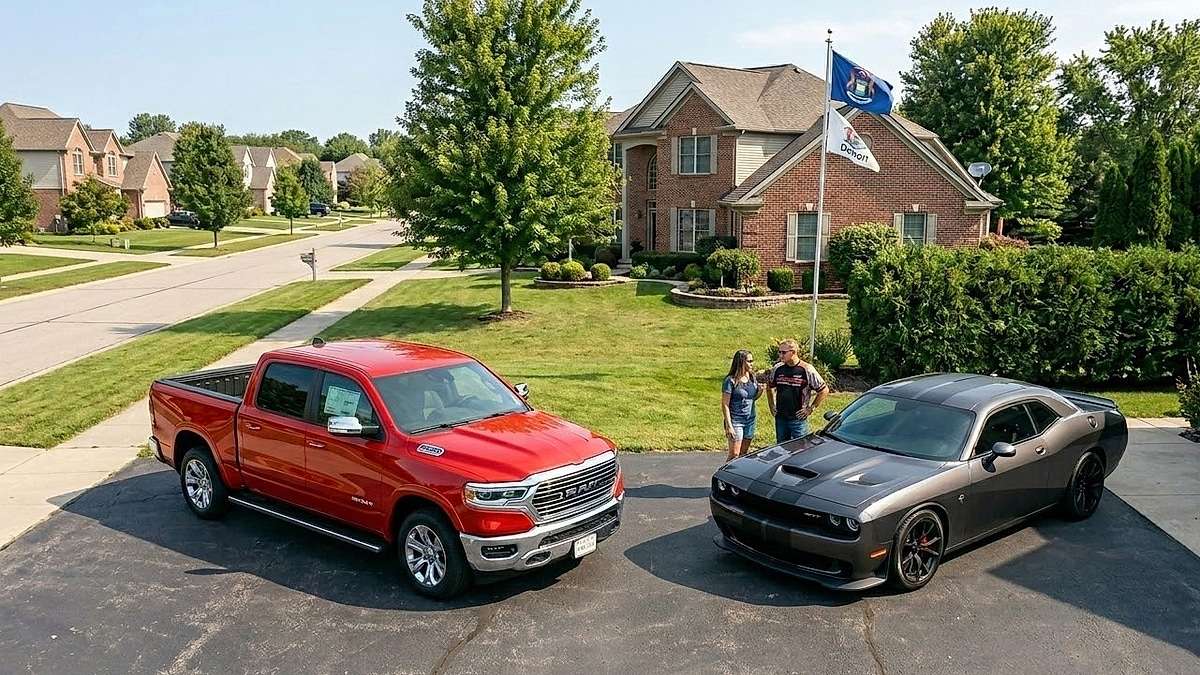

As a senior reporter with 30 years of automotive experience, I have closely monitored vehicle pricing trends, and what is happening now in the full-size truck market is unprecedented. In March 2026, the biggest story isn't just that MSRPs are soaring toward $100,000 for luxury pickups like the new 2026 Ram 1500; it is the shocking reality that these vehicles now cost significantly more than their historical performance counterparts, like the iconic Hellcat Challenger.
My investigation confirms this "price inversion" through the verified, first-hand purchase of a Michigan owner who found that a mid-tier Laramie trim, even with a hefty "five-figure" discount, was more expensive than his new top-tier sports car purchase just a decade ago. This comprehensive report answers who is paying these prices, how they are navigating a broken pricing model, and why the market has reached this unsustainable peak. I deliver an analysis for buyers, community technical feedback, and a stark assessment of the true cost of truck ownership today.
I've spent three decades embedded in this industry, chasing down the stories that actually matter to you, the consumer. We need to talk about truck prices right now. Forget the glossy brochures and the 84-month low-interest financing; the real story is what's happening right now in the driveway, and it's insane.
I've got proof from the front lines in Michigan. Shane Delorantis, a member of the 6th Gen Ram 1500 enthusiast Facebook community who is both a seasoned performance car owner and a recent truck buyer, just laid it out perfectly, providing critical firsthand data for us today. Shane Delorantis isn't just griping about "high prices."
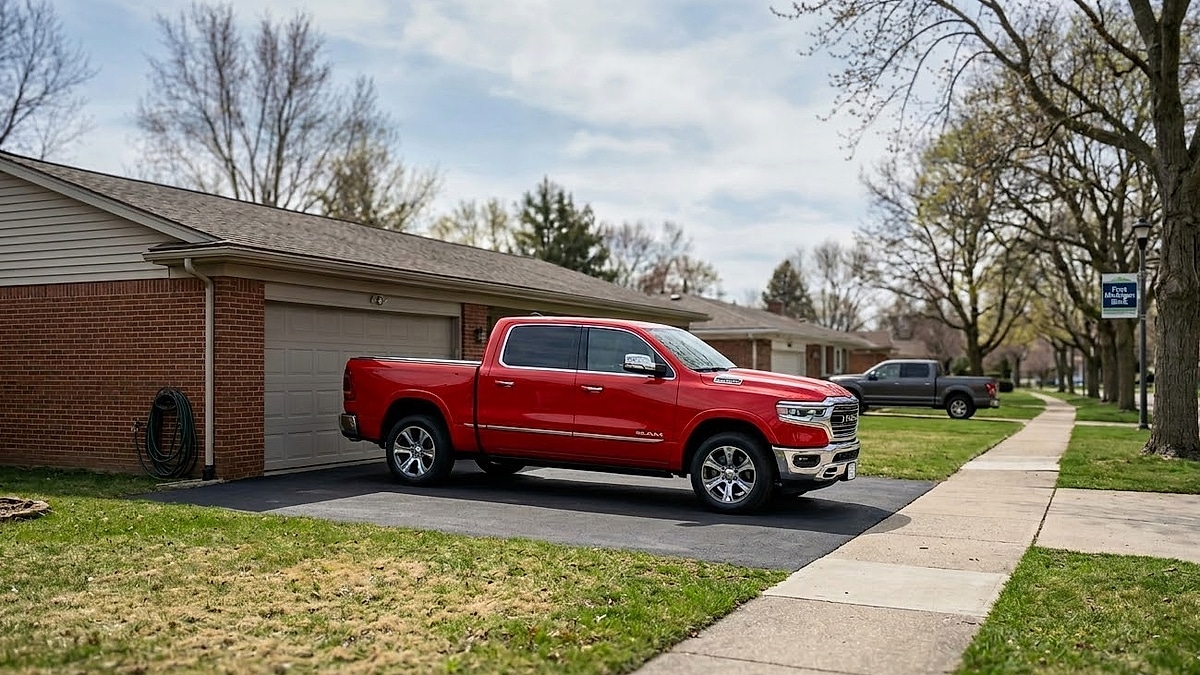
Shane mentioned an important data point. His loaded Laramie carried an MSRP of about $80,000. He was able to get it for roughly $65,000 Out-The-Door (OTD). This $15,000 discount, which seems like a "win," is critical information. It confirms what I have seen: dealerships must offer massive rebates to move this new inventory. But, as Shane points out, that is a problem, not a solution. The entire MSRP system is broken if it relies on a consistent $15,000 reduction to make the sale logical.
“I literally paid less for my Hellcat Challenger new 11 years ago than I did for my 2026 RAM Laramie. Back then, loaded RAMs were in the $50s out the door—less than a $64k Hellcat or a $60k Corvette. Now, trucks cost $25k more than an entry-level Vette. My Laramie had an $80k MSRP; I got it for $65k OTD only because of heavy discounts. These trucks are awesome, but they aren't sports cars and shouldn't be priced like them. Without $15k–$20k discounts, these prices are just nuts.” — Shane Delorantis, Michigan
He’s a guy who knows what real performance and real value look like, and his latest vehicle transaction has completely upended my 30-year understanding of automotive cost hierarchy. I’ve seen some market shifts in my time, but never a situation where a mid-tier work truck (even a loaded one like a Laramie) commands a higher entry price than a new top-tier supercar did not so long ago. This "price inversion" is the single most important metric facing truck buyers this spring.
As I recently noted in my Value Analysis of the 2026 Ram 1500, while these trucks offer library-quiet cabins and massive tech, you have to ask if those features are worth the $800 to $1,000 monthly payment. My research into why buyers are rejecting new engine specs to secure the last of the Hemi V8s further proves that many veteran owners are prioritizing a 20-year track record of durability over the high-tech, high-cost future.
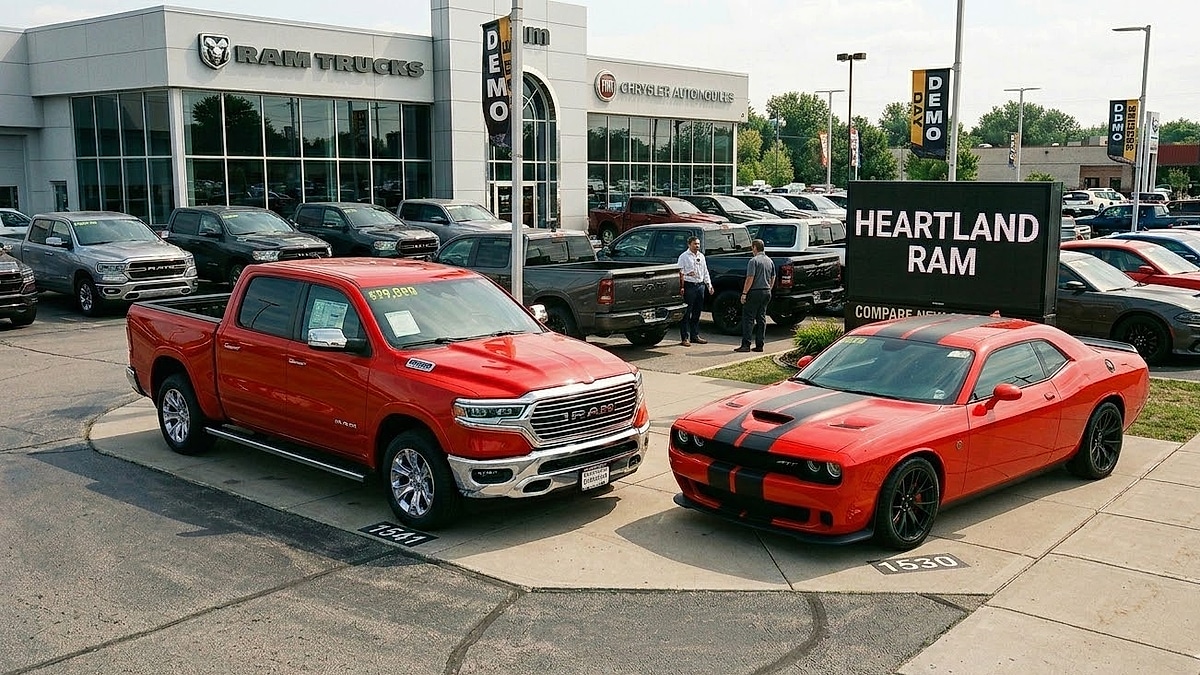
Think about that. Eleven years ago, a supercharged Hellcat, the pinnacle of American muscle, was cheaper new than a loaded Laramie is today. What we’re witnessing isn't just inflation; it's a fundamental restructuring of what a truck is worth in this market.
My Take: Who This Truck Market is Actually Built For
The core question we must address is: Who is buying these trucks now? From my decades-long vantage point, the answer has shifted. It’s no longer just the rancher, the builder, or the plumber. These prices, pushing past $80,000 MSRP for standard Laramie trims, are designed for the luxury buyer who uses a truck as a status symbol rather than a tool.
From My View: How This Pricing Got So Ridiculous
The main question I am always asked is: Why are these trucks so expensive? Recent data from CarEdge’s 2026 market analysis reveals a startling reality: truck prices are rising 40% faster than blue-collar wages, with the average truck now costing an entire year's salary for the people most likely to buy them. Furthermore, GlobalData’s latest market forecast suggests that higher vehicle prices and slower economic growth are holding back stronger performance in 2026, as manufacturers prioritize their most profitable, highest-trim units over entry-level models.
What’s happening is a multi-year strategy by manufacturers to juice their margins by stuffing every possible electronic bell and whistle into the highest trims.
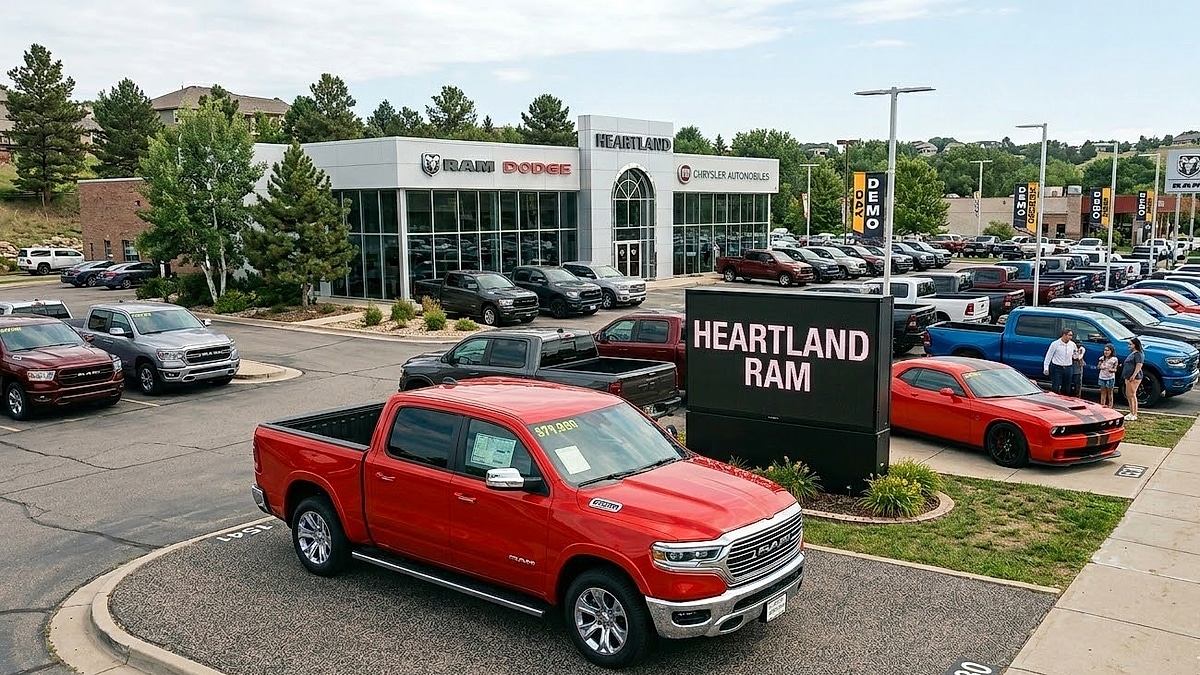
What You Need To Know
I want to make sure you have the most direct actionable information possible. Focus on these five core concepts:
- MSRP is a Fictional Anchor: Never pay a nickel over MSRP. Shane’s experience finding a $15k discount is the new baseline.
- Total Cost of Ownership is Staggering: Your insurance and registration are likely calculated on the $80k MSRP, not your $65k OTD price.
- Truck Utility has Hit its Pricing Apex: $80,000 is the logical ceiling for a half-ton gas truck. We are seeing a critical rejection of the six-figure pickup.
- The Electronics Trap: High margins come from tech that is expensive to fix out of warranty.
- The Price Inversion Signal: The fact that a sports car from 10 years ago was cheaper than a mid-range truck today is the definitive sign of a broken market.
Field Observations from Owner Communities
This isn't just an isolated case. In a recent technical discussion on r/Silverado, one owner noted they negotiated $14,000 off MSRP for a 2026 RST, proving that "the deals are out there, you just gotta find 'em," while another user on r/ram_trucks lamented that "60k for a bighorn is not remotely ok," highlighting the massive divide between sticker price and consumer reality.
Key Takeaways for Truck Buyers
- MSRP is a Fictional Anchor: Never, ever pay a nickel over MSRP on a 2026 Ram. And frankly, do not settle for just $5,000 or $7,000 off. Shane’s experience, finding a $15k discount, is the new baseline for a savvy deal. If a dealer won't start there, you must walk to the next one. They need you to buy far more than you need this truck at that price.
- Total Cost of Ownership is Now Staggering: That $15k discount does not cover everything. Understand this: your insurance premium will likely be calculated on the full $80k MSRP. Your vehicle registration fees (especially in ad-valorem tax states like Michigan or South Carolina) will be high. And a mid-tier Ram is not a supercar; do not expect supercar-level resale value. Your real, out-of-pocket costs after purchase are significantly higher than they were even three years ago.
- Truck Utility has Hit its Pricing Apex: In 30 years, I've seen value ebb and flow, but this $80,000 Laramie mark is, in my professional opinion, the logical ceiling for a half-ton gas truck. We have seen a growing consumer rejection of the six-figure pickup truck, indicating that the pricing strategy has reached a breaking point. This aligns with my own analysis of market demand shifting toward smaller, more value-focused pickup options.
- Beware of the Electronics Trap: The complexity built into these luxury trims, like the large Uconnect screens and the multi-function tailgates, is fantastic until they break outside of warranty. These are not simple powertrain repairs; they are complex diagnostic nightmares with astronomical parts costs. From a field service standpoint, you are effectively driving around a luxury SUV with a bed, and it carries the repair profile of a luxury vehicle.
- The "Price Inversion" will be a Market Signal: Shane's comparison is the definitive story of 2026. The fact that a high-end sports car from 10 years ago was cheaper than a mid-range truck today isn't just noise. This signal will likely accelerate the current trend of performance car prices leveling off or even decreasing, while trucks begin to correct heavily toward lower transaction prices. The 2026 RAM, at $80k, will likely be a high-water mark we look back on as the moment the market broke.
This Is Not a Drill
What Shane in Michigan provided isn’t just a forum post; it’s a critical data point for truck buyers in 2026. We are no longer paying for utility. We are paying a premium for luxury features and future R&D. If you must buy, use Shane's example as your minimum negotiation baseline.
How About You?
How does Shane's experience compare to your latest full-size truck purchase? Do you agree that a regular Ram 1500 should top out at around $65,000? Please leave a comment in the red "Add new comment" link below. Let’s keep this conversation going.
About The Author
Denis Flierl is a 14-year Senior Reporter at Torque News and a member of the Rocky Mountain Automotive Press (RMAP) with 30+ years of industry experience. Based in Parker, Colorado, Denis leverages the Rockies' high-altitude terrain as a rigorous testing ground to provide "boots-on-the-ground" analysis for readers across the Rocky Mountain region, California EV corridors, the Northeast, Texas truck markets, and Midwest agricultural zones. A former professional test driver and consultant for Ford, GM, Ram, Toyota, and Tesla, he delivers data-backed insights on reliability and market shifts. Denis cuts through the noise to provide national audiences with the real-world reporting today’s landscape demands. Connect with Denis: Find him on LinkedIn, X @DenisFlierl, @WorldsCoolestRides, Facebook, and Instagram.
Photo credit: Denis Flierl
Set Torque News as Preferred Source on Google
Follow us today...