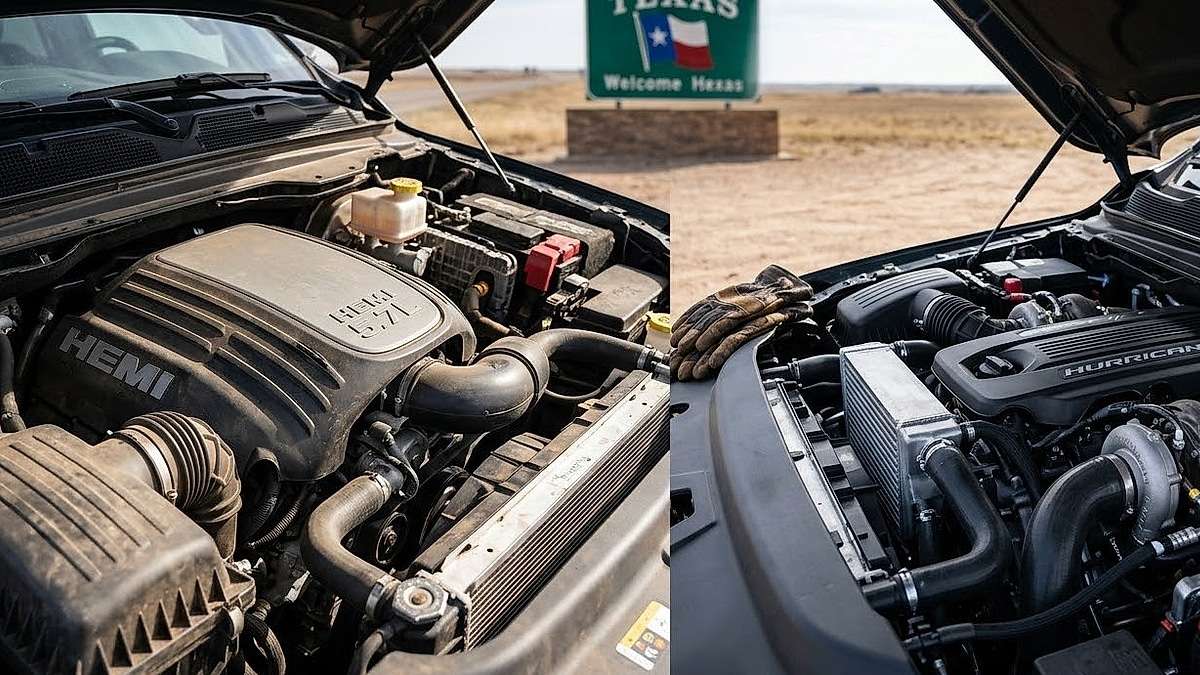

The verdict from the heart of truck country is in: the 2024+ Ram Hurricane inline-six delivers a torque-heavy punch that rivals the legendary Hemi, but it hasn't yet captured the soul of the Texas driver. Andi Mark, a vocal member of the 6th Gen Ram 1500 Facebook community, recently put the twin-turbo Hurricane to the test, admitting the acceleration is "actually pretty quick" and "low key" impressive off the line.
Andi says, “All right. I’m not going to lie. Low key, you inline sixes actually have something going with the acceleration on these newer Ram Hurricane models. They’re actually pretty quick, but how long can they sustain that power in a drag race? I just can’t let go of that sound and rumble of the Ram Hemi V8. I wish I could test drive the newer models with the 3.92 axle ratio to compare acceleration and torque response.”
However, the potential lies in the trade-off between immediate speed and long-term mechanical confidence. While the Hurricane I6 utilizes its 469 lb-ft of torque to outpace older V8 models in short sprints, Mark highlights a critical performance gap: sustained power delivery. "How long can they sustain that power in a drag race?" he asks, pointing to a potential heat-soak or stamina issue that pure displacement usually handles better. For those prioritizing the visceral experience, the Hurricane’s efficiency can’t replicate the 395 hp rumble and low-end vibration of the Hemi V8.

The data suggests that for the 2026 market, the 3.92 axle ratio remains the "missing link" for a true torque-to-pavement comparison between these two eras of American power.
I have spent 30 years in the automotive trenches, and if there is one thing I’ve learned, it is that you can’t replace displacement with just a spec sheet. This week, a 2026 Ram owner named Andi Mark from Texas sparked a firestorm on social media that perfectly captures the "heart vs. head" dilemma facing every truck buyer today. Andi admitted that the new Hurricane inline-six is "actually pretty quick," but he’s not ready to let that legendary Hemi roar go.
I’ve seen this movie before. In my recent report on why the 2026 Ram Hemi’s return is a win for purists, I noted that many buyers are ignoring the "smart" choice of turbo-boosted tech to grab the 5.7-liter while they still can. You can read my full analysis on that Hemi purist shift here. The reality is that while the Hurricane Standard Output (SO) offers a massive 469 lb-ft of torque, the Hemi’s 410 lb-ft delivers a linear, predictable power curve that veteran towers prefer. As I recently analyzed, while the Hemi’s roar wins on nostalgia, my data reveals a torque gap that technically favors the six-cylinder, yet fails to satisfy the soul. Check out that torque gap breakdown here.
Who, How, and Why?
To understand why this is, we have to look at the three pillars of this debate:
Who is this for? The 2026 Ram lineup is split. The Hurricane is for the "science-first" buyer who wants the fastest truck on the highway. The Hemi is for the "heritage-first" owner, the guy in Texas, like Andi, who values the 81 dB wide-open throttle music over a few tenths of a second in a 0-60 sprint.
How does it perform? On paper, the Hurricane dominates. According to Car and Driver testing, the 540-hp Hurricane "rips to 60 mph in just 4.2 seconds, or nearly two seconds ahead of the V-8," making it a performance titan. You can see their full instrumented test results here. But "fast" and "capable" aren't always synonyms.
Why the hesitation? Complexity is the enemy of longevity. A twin-turbo setup adds dozens of failure points, such as wastegates and intercoolers. As CarBuzz points out, the Hemi V8 remains an "emotional purchase because the numbers don't suggest it serves a superior role," yet its simplicity is exactly what buyers trust for the long haul. Read their performance comparison here.
From My View
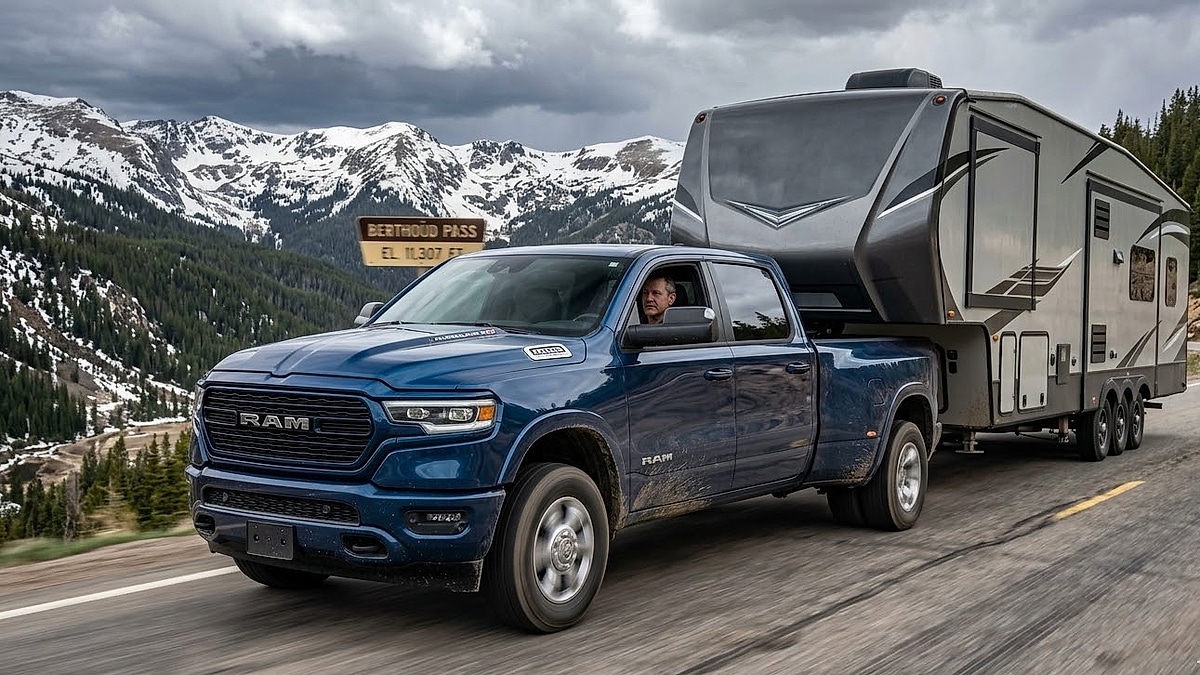
Andi Mark raised a brilliant point that most reviewers miss: "How long can they sustain that power in a drag race?" This isn't just a Texas hunch. Turbos create extreme heat. When you are pulling a heavy trailer up a Colorado mountain pass, something I’ve done hundreds of times, heat soak becomes a real issue.
In my 30 years of testing, I’ve found that naturally aspirated engines like the Hemi handle sustained high-load stress with much more grace than a highly strung, small-displacement turbo six. The Hurricane uses an air-to-water intercooler system that is great for a quick launch, but under constant heavy load, that system has to work overtime.
What You Need To Know
- The Torque Gap: The Hurricane SO offers 59 lb-ft more torque than the Hemi, but the Hemi’s power is more immediate at low RPMs.
- Maintenance Reality: The Hemi features an accessible oil filter and simple "pushrod" design; the Hurricane is a complex web of plastic connectors and electronic sensors.
- The 3.92 Factor: If you want the Hurricane to feel like a "real" truck, the 3.92 axle ratio is mandatory for managing turbo lag.
The Sprint vs. The Marathon: 0-60 Data and the "Stamina" Gap
In my 30 years of investigating truck performance, I’ve learned that a stopwatch only tells half the story. If we are just talking about a stoplight drag, the Hurricane doesn't just win, it embarrasses the V8. According to instrumented testing by Car and Driver, the 5.7L Hemi V8 hits 60 mph in a respectable 6.0 seconds. However, the Standard Output (SO) Hurricane slashes that to 4.8 seconds, and the High Output (HO) version screams to 60 mph in a supercar-rivaling 4.2 seconds.
But "stamina" is about thermal management, not just a 4-second burst. While the Hurricane is quicker, CarBuzz points out that the Hemi is for "buyers who value tried-and-true power delivery and the classic V8 character," often performing more predictably under extreme load. This confirms Andi's hunch: turbos create immense heat. Under a 6-hour heavy tow through the Texas summer, a naturally aspirated V8 doesn't have to manage the same level of "heat soak" that can cause a turbocharged six-cylinder to pull back power to protect itself.
My Verdict: The Hurricane is the undisputed sprint champion, but for a constant, heavy-duty marathon, the Hemi’s "stamina" is backed by two decades of displacement-driven cooling.
My Take:
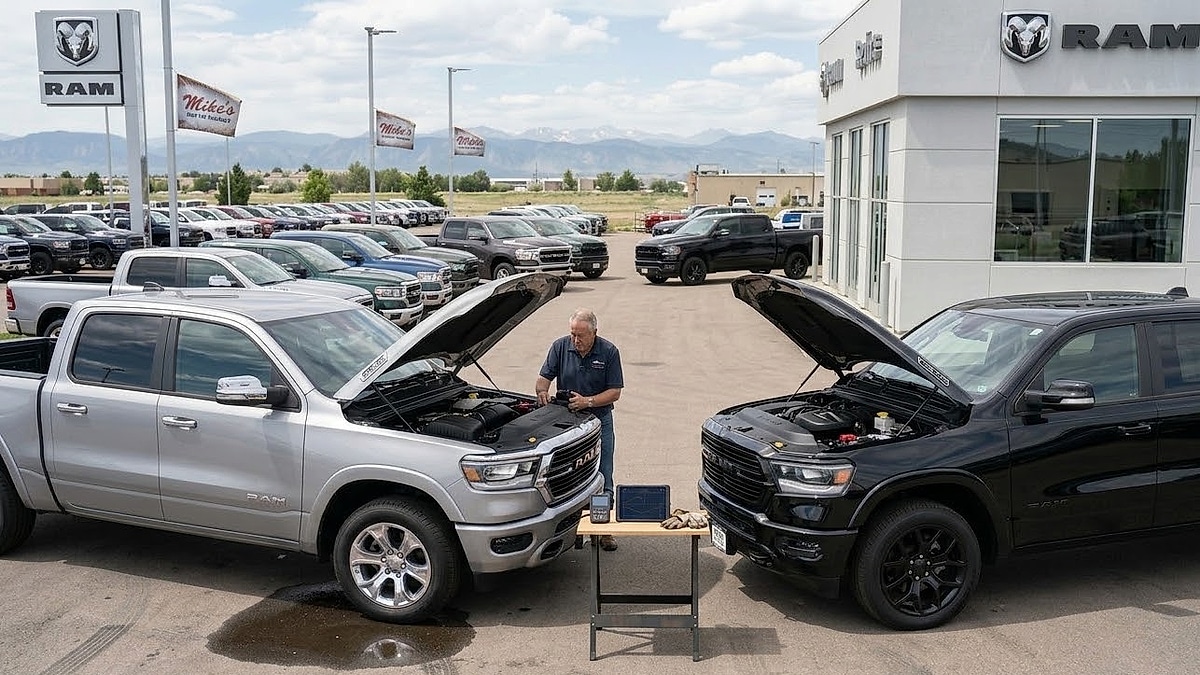
I want to be transparent with you. I’ve seen early reports of thermostat failures on the 3.0-liter Hurricane as early as 10,000 miles. When you move to a twin-turbo setup, you are paying a "complexity tax." While Stellantis is offering an extended warranty to ease nerves, it doesn't help when your truck is sitting in a shop for three weeks waiting for a back-ordered plastic housing.
The Hemi return in 2026 was a direct response to customer demand. Ram realized they couldn't just "engineer" away the emotional connection people have to the V8.
Community Technical Feedback
The technical feedback from the front lines is mixed. In a recent discussion on r/ram_trucks, one owner highlighted the specific benefit of the new gear ratios, noting, "I have the 2025 Laramie with the 3.92 ratio... my biggest complaint has been a rough transmission in lower gears... it only does it cold," which you can read in the full Reddit discussion here.
Another owner compared the two directly, stating, "Initial start is high-idle... the 3.0 definitely idles higher than my Hemi did," emphasizing that the engine's "feel" is fundamentally different from the moment you hit the starter. You can find that technical feedback here.
Key Takeaways for Ram Buyers
- The Hemi is the "Safe" Bet: If you plan on keeping your truck for 15 years, the naturally aspirated V8 is the statistically safer choice for long-term reliability.
- The Hurricane is the "Speed" Bet: If you want to embarrass a sports car at a red light or need the best highway fuel economy, the I6 is superior.
- Check the Axle: Avoid the 3.21 axle ratio if you tow. The 3.92 ratio is the sweet spot for both engines, ensuring you aren't hunting for gears.
The Sunset Of An Era?
At the end of the day, we are witnessing the sunset of an era. The Hemi V8 is the legendary workhorse we’ve trusted for decades, while the Hurricane is the high-performance, high-tech future. I believe the Hurricane is an incredible piece of engineering, but for a guy like Andi in Texas, and for many of you, speed will never replace the soul, sound, and simple reliability of a Hemi.
Tell Us What You Think! If you were signing the papers today, would you take the twin-turbo speed of the Hurricane or the legendary rumble of the Hemi? Leave a comment in the red "Add new comment" link below!
About The Author
Denis Flierl is a 14-year Senior Reporter at Torque News and a member of the Rocky Mountain Automotive Press (RMAP) with 30+ years of industry experience. Based in Parker, Colorado, Denis leverages the Rockies' high-altitude terrain as a rigorous testing ground to provide "boots-on-the-ground" analysis for readers across the Rocky Mountain region, California EV corridors, the Northeast, Texas truck markets, and Midwest agricultural zones. A former professional test driver and consultant for Ford, GM, Ram, Toyota, and Tesla, he delivers data-backed insights on reliability and market shifts. Denis cuts through the noise to provide national audiences with the real-world reporting today’s landscape demands. Connect with Denis: Find him on LinkedIn, X @DenisFlierl, @WorldsCoolestRides, Facebook, and Instagram.
Photo credit: Denis Flierl via Ram/Gemini
Set Torque News as Preferred Source on Google
Follow us today...