
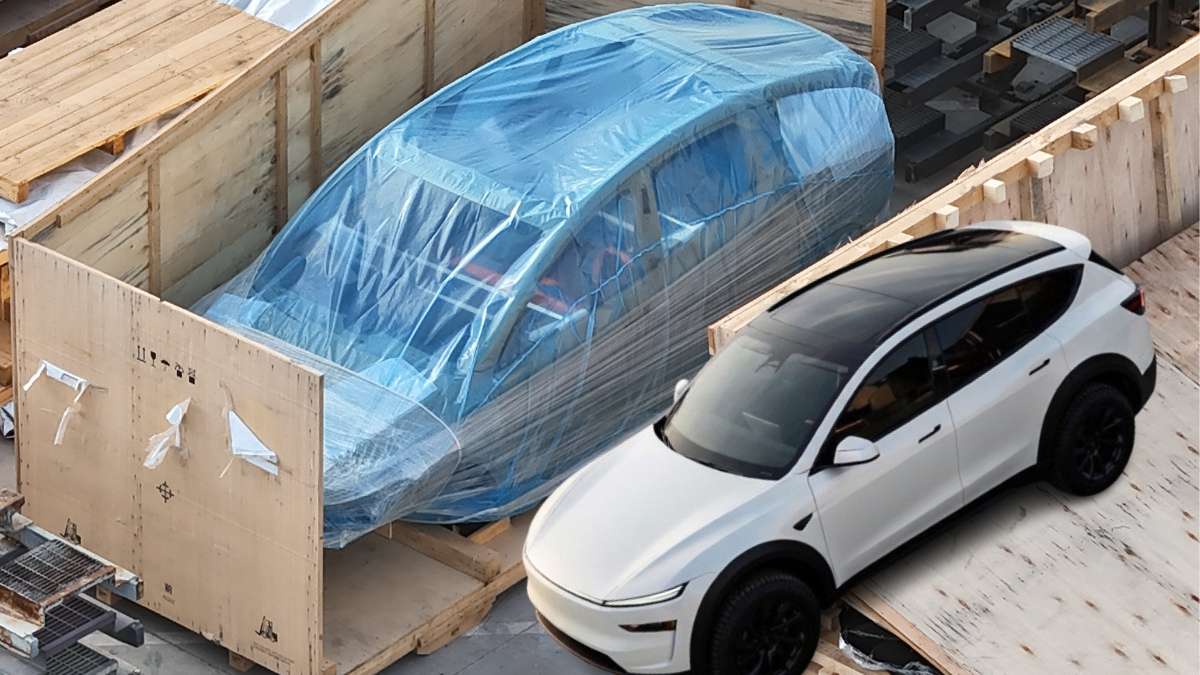

- Tesla's SUV lineup leaves American families with no real midsize option between the compact Model Y and the discontinued Model X.
- The Model Y L spotted at Giga Texas could directly challenge the Toyota Highlander, BMW X5, and Jeep Grand Cherokee on American soil.
- Elon Musk has hinted at a late 2026 U.S. debut that could reshape how millions of families shop for their next SUV.
After 15 years of covering this industry, watching lineups grow, shrink, shift, and surprise, the single most glaring hole in Tesla's current model range is not a sports car, not a van, and not some futuristic robotaxi. It is a proper, honest-to-goodness midsize SUV. The kind of vehicle that millions of American families rely on every single day to haul kids, groceries, camping gear, and dogs from one end of the country to the other. Tesla has been missing that vehicle for years, and right now, the evidence suggests the Model Y L might be the answer that finally fills it. If it does, the ripple effects across the midsize SUV segment could be genuinely enormous.
Torque News already wrote about the elongated body that showed up inside Giga Texas wrapped in blue plastic in what could be the Model Y L, and the reaction from readers was immediate and passionate. People care about this. They care because the problem is real and it has been sitting there for years, hiding in plain sight. And the very fact that Elon Musk once responded with just "Ok" to a woman asking about larger Tesla vehicles for big families tells you everything. He knows the gap exists. The question has always been whether Tesla would actually do something about it, or let rivals fill it. Look at my latest article voicing an opinion that this may be the time for a true Tesla SUV.
Why Tesla's SUV Lineup Has Left Millions of American Families Without a Real Option
Here is the pressing problem, stated plainly. Tesla's current SUV lineup has exactly two options for families. The Model Y, which is a genuinely excellent compact crossover that straddles the line between compact and midsize, and the Model X, which is a luxury SUV starting north of $80,000 with those silly Falcon Wing doors and a price tag that keeps most families from even considering it. And now, the Model X is being discontinued this year. So Tesla is about to have one SUV option for the entire family market, a compact crossover, period.
Think about that for a second. You walk into a Toyota dealership today and you can choose from the RAV4, the Venza, the Highlander, the Sequoia, and the 4Runner, all serving different family sizes, budgets, and lifestyles. You walk into a Tesla showroom, and your family SUV choices are the Model Y or the Cybertruck. That is the whole menu. Now, the Cybertruck is a fascinating, polarizing, and genuinely capable vehicle in its own right, but it is not a family SUV replacement. It is a large, stainless steel, bed-equipped truck that happens to seat five. Plenty of people love it, and our coverage of why one buyer chose a Cybertruck over both the GMC Sierra EV and the Ford F-150 Lightning because of Tesla's unmatched ecosystem makes clear that the Tesla ecosystem is powerful and sticky. But you are not putting three car seats in a Cybertruck and calling it a family hauler. Not comfortably, anyway.
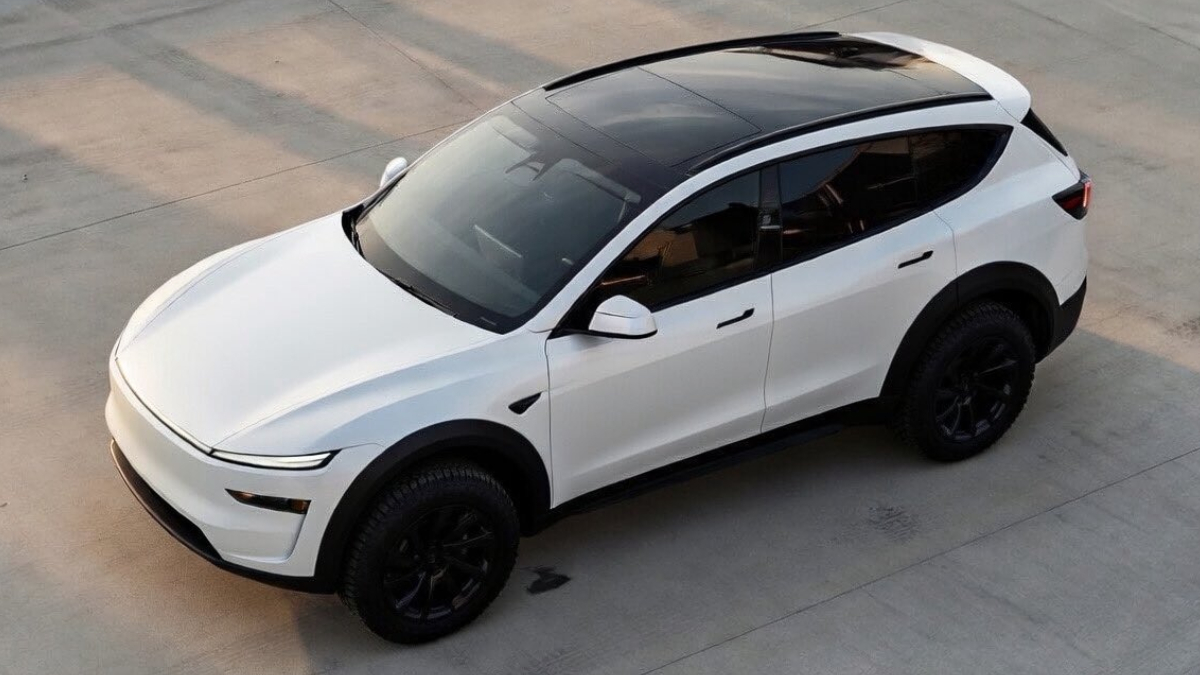
This is exactly why a significant number of buyers who would otherwise prefer a Tesla SUV have ended up in a Cybertruck. Not because they wanted a truck. Because there was no suitable Tesla SUV alternative for them. That is a marketing and product strategy failure, plain and simple, and it has been going on far too long.
The Model Y L Could Be a Larger and More Capable Threat to RAV4, BMW X5, and Grand Cherokee Than Anyone Realizes
Now here is where this opinion gets interesting, and I want you to stay with me, because the size argument matters more than most people realize. The standard Model Y is already a bit of an unusual case in the crossover world, because it is technically classified as a compact SUV but physically, it already edges out the Toyota RAV4 in length, width, and cargo space. The Model Y has a longer wheelbase than the RAV4, which contributes to more interior legroom and a smoother ride, and it edges out the RAV4 in most measurable dimensions, making it feel more like a midsize SUV despite competing in the compact segment. Torque News
So what happens when you add seven more inches to that already larger-than-expected footprint? You are no longer in the compact segment at all. You are sitting squarely in midsize territory, competing directly against the Toyota Highlander, the Kia Telluride, the BMW X5, the Jeep Grand Cherokee, and every other midsize SUV that millions of American families drive today. That is a massive market. The Toyota Highlander alone sells hundreds of thousands of units every single year in the United States. The Grand Cherokee and the X5 each command enormous loyalty from buyers who upgrade from smaller crossovers as their families grow.
And here is the part that nobody seems to be talking about loudly enough. When the Model Y L arrives at a price point somewhere in the mid-to-upper $50,000 range, it is going to be a direct, legitimate, and fully electric alternative to a loaded Highlander, a mid-level X5, or a top-spec Grand Cherokee. Not a fantasy comparison. A real one. A side-by-side-in-the-showroom-parking-lot comparison. Think about what the Model Y L brings to that fight. The Tesla Supercharger network, which remains the best public charging infrastructure in the country by a significant margin. Full Self-Driving capability. Over-the-air software updates that improve the car after you buy it. A 423-mile WLTP range estimate. Captain's chairs in the middle row. Proper third-row seating. And up to 89.6 cubic feet of cargo space when the seats fold down.
Now tell me that is not a genuine, serious, 100-percent threat to the midsize SUV segment. Because I have been watching this industry for 15 years and I am telling you it absolutely is. Our analysis of why the Tesla Model Y is still the world's best-selling EV and what keeps it on top against intensifying global competition shows clearly that the Model Y platform has the brand strength, the infrastructure support, and the real-world ownership reputation to compete at a higher class than it currently occupies. Stretching that platform into the Model Y L is not a stretch, no pun intended. It is a logical, overdue evolution.
The Real Problem Tesla Needs to Solve: Pricing, Positioning, and the Highlander Buyer's Mindset
Let me talk about a problem that does not get enough attention in these conversations. It is not just about whether Tesla can build the Model Y L. It is about whether Tesla can price and position it in a way that genuinely convinces a Toyota Highlander owner, or a Jeep Grand Cherokee owner, to make the switch to electric.
This is a real challenge and I want to be honest about it. We have covered this before in our exploration of whether Tesla's "affordable" branding on the Model 3 and Model Y actually convinces mainstream buyers to go electric, and the verdict was nuanced. The word "affordable" means very different things to different buyers. A Toyota Highlander XSE starts around $43,000. A Grand Cherokee with a reasonable options package sits around $48,000 to $55,000. A BMW X5 can climb to $70,000 or more quickly. A Model Y L landing around $54,000 to $58,000 is not outrageous for that comparison group, but it is not automatically a slam dunk either.
The solution here is straightforward in theory, even if it requires real discipline in execution. Tesla needs to price the Model Y L aggressively relative to its midsize competition, not just its own lineup. The standard Model Y at $44,000 to $50,000 competes with the RAV4 and the CR-V. The Model Y L needs to compete with the Highlander and the Palisade, and it needs to make a compelling economic argument over a five-year ownership window. When you factor in lower fuel costs, far lower maintenance expenses, and federal tax credits where applicable, the math genuinely favors the Tesla in most cases. That story needs to be told clearly and repeatedly.
And here is something else worth considering. The families who are most likely to trade their Toyota Highlanders for a Model Y L are exactly the families who have probably already watched their neighbors drive Model Ys for three or four years and come away impressed. There are real stories of families who went from never having owned an electric vehicle to becoming all-EV households after just one test drive in a Tesla, going home the same weekend and ordering a Model Y. That kind of word-of-mouth is exactly the pipeline that could feed Model Y L sales in a major way. The product experience sells itself once people sit inside it.
Our deep exploration of why the Tesla Model Y's existing third-row seat works well for families of four in real daily use revealed something important. Even with the limitations of the standard Model Y's compact third row, families found it genuinely useful for their kids. One family called it a "clubhouse" back there. Now imagine that same family getting into a Model Y L, with a proper third row offering real adult legroom, captain's chairs in the middle row for easy access, and nearly 90 cubic feet of cargo when everything folds down. That is not an incremental improvement. That is a category jump.
Why the Toyota Highlander, BMW X5, and Grand Cherokee Owners Should Be Watching Tesla Very Carefully Right Now
Let me put on my 15 years of automotive journalism experience here and give you a direct assessment. The midsize three-row SUV segment is one of the most lucrative and loyalty-driven categories in the American auto market. Families buy these vehicles, drive them for five to eight years, and then buy another one just like it. The switch cost is psychologically high because the family has organized its entire life around that vehicle. Carpool schedules, road trip packing routines, car seat configurations, all of it is built around that vehicle.
This is why it took hybrids so long to crack this segment in a meaningful way. And it is exactly why, when something does crack it, the shift can be dramatic and fast. The Toyota Sienna's move to hybrid-only was a bold decision, and it worked spectacularly. If Tesla arrives in this segment with a Model Y L that genuinely delivers on its promises, priced competitively and backed by the Supercharger network and FSD capability, the disruption potential is real.
At the Bangkok International Motor Show in March 2026, reviewers who spent time with the Tesla Model Y L noted that Tesla has stretched the Model Y into a family-focused shape while staying true to its design roots, and with Tesla discontinuing the Model X this year, the timing feels right for the Model Y L to enter the U.S. lineup as the brand's only three-row SUV. That observation, from the team at TopElectricSUV, perfectly captures where the market stands right now. The window is open. The demand is there. The competitive case is strong. What remains is Tesla's willingness to move.
Now, there is one concern I hear from readers and from fellow journalists that deserves a straight answer. Some people worry that the Model Y L, if it comes to the U.S. at all, will be positioned as a premium offering rather than a genuine Highlander competitor on price. That would be a strategic mistake in my opinion. The unloved middle ground in electric SUVs, the space between a $45,000 Model Y and an $80,000 Model X, is exactly where the Model Y L needs to live. Not as a luxury product. As a family workhorse with premium technology. There is a big difference, and getting that positioning right is as important as getting the vehicle right.
Our coverage comparing the Tesla Model Y Long Range against comparable hybrid SUVs like the Toyota RAV4 Prime showed that even in a segment where Toyota's reliability reputation gives it a real advantage, the Model Y's lower operating costs and charging infrastructure made a compelling case over a five-year ownership window. Extend that comparison to the midsize segment, with the Model Y L as the EV contender versus the Highlander Hybrid or Grand Cherokee 4xe, and the economic argument gets even stronger because midsize buyers drive more miles and pay more for fuel.
There is also the ecosystem argument, and this is one I feel strongly about after watching Tesla owners interact with their vehicles in ways that no traditional automaker has matched. For a growing segment of buyers, the seamless, integrated, and hassle-free nature of the Tesla ecosystem is more valuable than traditional vehicle features. The practical takeaway is that if the ownership experience is a constant source of friction, it will ultimately be outdone by a more streamlined alternative. That dynamic, which we explored in the context of Cybertruck buyers choosing Tesla's ecosystem over more traditional truck features, applies even more powerfully to family SUV buyers who are making five-year, daily-life commitments to a vehicle platform.
And here is the competitive landscape reality check. The Kia EV9 is excellent but expensive. The Hyundai Ioniq 9 is impressive but also premium-priced. The Rivian R1S is adventure-focused and wonderful but starts at a price that puts it out of reach for the average Highlander buyer. Our look at how Rivian's adventure-focused EVs are quietly gaining momentum even in Tesla-heavy markets showed a growing appetite for non-Tesla EV options. But none of those alternatives hit the specific combination of pricing, range, technology, and charging infrastructure that a Model Y L at the right price point could deliver.
The moral of all of this, and I mean this genuinely, is a lesson that goes beyond buying a car. The best decisions in life, whether you are a car company planning a lineup or a family choosing a vehicle, come from honestly assessing what is actually needed, not just what is convenient or familiar. Tesla has the technology, the factory capacity at Giga Texas, and the platform to build exactly the vehicle that millions of American families need. The families considering their next SUV purchase have every reason to pause, do their homework, and seriously evaluate whether a Model Y L, if and when it arrives in the U.S., deserves a place on their shopping list alongside the Highlander and the Grand Cherokee they have been loyally buying for decades. Be the person who gathers real information and makes a thoughtful, forward-looking decision. Not just the one who buys what they bought last time out of habit.
The gap in Tesla's lineup has been real for years. The solution is taking shape, possibly right now on the floor of a body shop in Austin, Texas. The midsize SUV market should be paying close attention, because when Tesla enters a segment with the right product at the right price, things tend to change fast.
Now I want to hear directly from you, and please share your real experience in the comments section below:
If Tesla brings the Model Y L to the United States at a price competitive with the Toyota Highlander and Jeep Grand Cherokee, would you seriously consider trading in your current midsize SUV for it, and what would be the single biggest factor that either convinces you or stops you from making that switch to electric?
And for those of you who have looked at the Tesla lineup and walked away to buy a Highlander, a Palisade, a Grand Cherokee, or another three-row SUV instead, what was missing from Tesla's offerings that sent you in the other direction, and would the Model Y L change your mind?
Drop your experience and your honest opinion in the comments below. That is where the real conversation happens, and your voice genuinely matters in shaping how this industry serves families like yours.
Images by Joe Tegtmeyer and Tesla Model Y L rendering.
Article updated on Wednesday, March 25, 2026 - 10:33 PM EDT.
About The Author
Armen Hareyan is the founder and Editor-in-Chief of Torque News and an automotive journalist with over 15 years of experience writing car reviews and industry news. Now based in the Charlotte region (Indian Land, SC, he founded Torque News in 2010, which since then has been publishing expert news and analysis about the automotive industry. He can be reached at Torque News on X, Linkedin, Facebook, and Youtube. Armen holds three Masters Degrees, including an MBA, and has become one of the known voices in the industry, specializing in the landscape of electric vehicles and real-world stories of actual car owners. Armen focuses on providing readers with transparent, data-backed analysis bridging the gap of complex engineering and car buyer practicality. Armen frequently participates in automotive events throughout the United States, national and local car reveals and personally test-drives new vehicles every week. Armen has also been published as an automotive expert in publications like the Transit Tomorrow, discussing how will autonomous vehicles reshape the supply chain, and emerging technologies in vehicle maintenanc
Set Torque News as Preferred Source on Google
Follow us today...


Comments
Could this bet the next…
Permalink
Could this bet the next Tesla Model X?
One difference with EVs. Big…
Permalink
One difference with EVs. Big SUVs get 1/3rd the gas mileage of the Prius. That costs money but refueling time is tolerable because they have giant gas tanks and you spend as much time driving to the gas station as pumping.
Needing 2x-the energy as a model 3 (As the F150 lightning does) doubles charge sessions. The battery is so big that you can no longer get by on level 1 or low-powered Level 2, and fast charging sessions take longer than a meal. That can be an issue. But yes, people still want it. And towing is still off the table. The larger vehicles seem to be going to REX but I am not sure Tesla would do a REX.
I thought Tesla was going to…
Permalink
I thought Tesla was going to be my brand… loved my model Y. Then he did the salute, my equity evaporated an my insurance premiums climbed and climbed until I was priced out of insurance, swapped for a Mustang Mach-E… affordable to insure. Until Tesla insurance prices fall, I’m out.
I shopped for an EV SUV 4…
Permalink
I shopped for an EV SUV 4 years ago. The "Y" was too low to the ground, not a true SUV. The same for the poorly badged Mach-e. I settled on the VW ID4. Great car with poor electronics.
A true Tesla SUV would be great!
Wasn’t that the purpose of…
Permalink
Wasn’t that the purpose of the Model X?