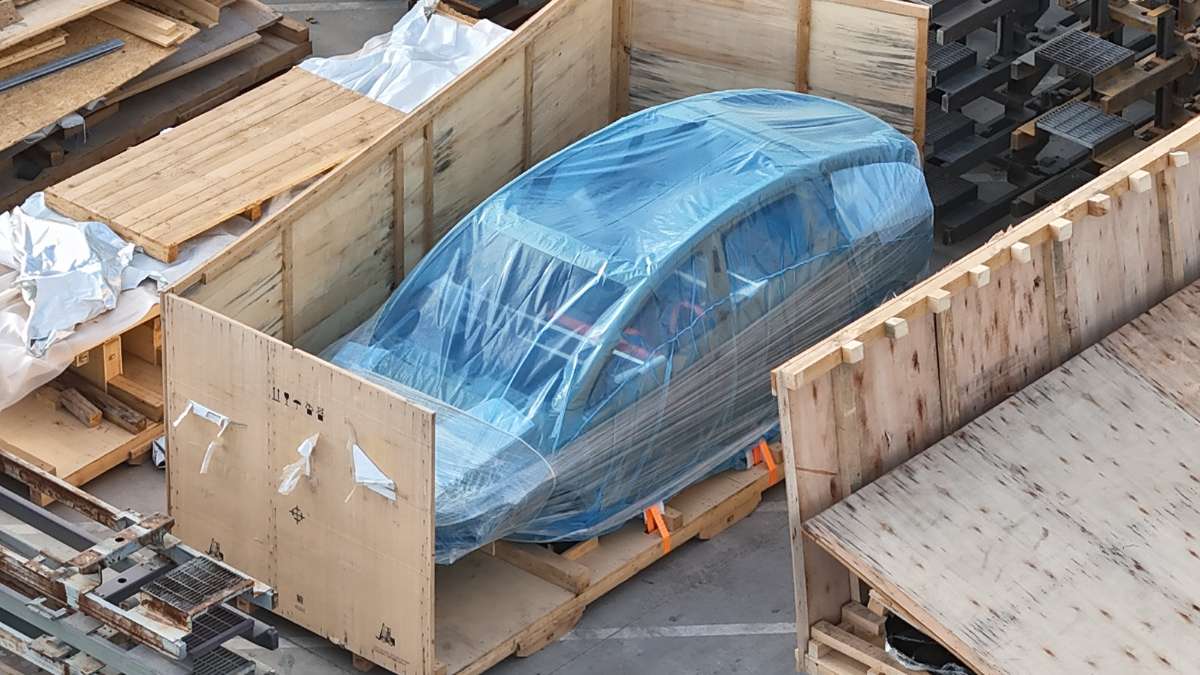

On March 23, 2026, Joe Tegtmeyer, the retired Air Force pilot and Tesla enthusiast who has been flying his drones over Giga Texas in Austin almost three times a week for years, posted something that stopped the internet cold. His overhead images showed a large vehicle body, wrapped in blue plastic, resting inside a wooden shipping crate amid fabrication pallets at the Giga Texas body shop. And it did not look like any standard Model Y anybody had seen before. It looked longer. Noticeably longer. And that, my friends, is where the story gets very interesting.
Now, I've been watching Giga Texas since its earliest days, and our coverage of how Tesla Giga Texas first started production has always been a reminder of just how much this Austin facility has transformed Tesla's manufacturing game. Back then, Joe Tegtmeyer was the guy giving us our first real peek inside those walls. Here in 2026, he's doing it again, only this time the stakes for American families could be much, much bigger. And if you've been following our analysis of Tesla's bold move with the six-seat Model Y L and its strategic pivot toward family-oriented models, you already know this story has been building for months.
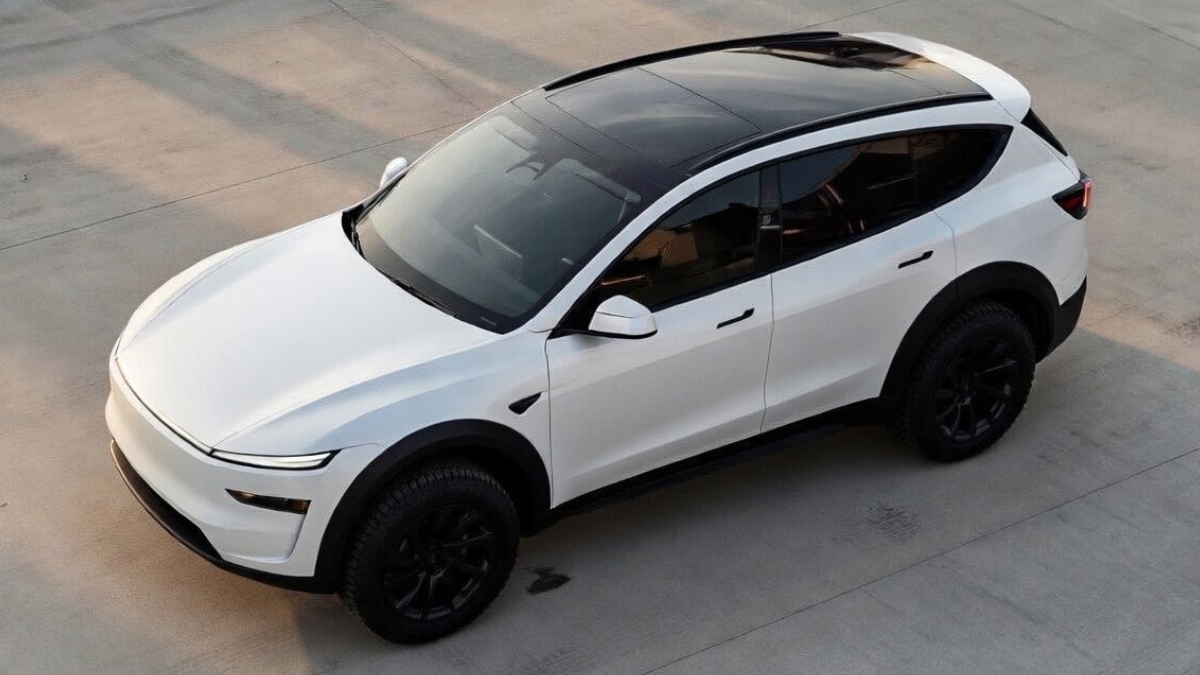
So what exactly did Tegtmeyer spot? The vehicle body in those images appears to match the Model Y L, Tesla's elongated variant that launched in China back in August 2025. The Model Y L adds seven inches to the standard model's overall length, opens up a 2-2-2 seating layout with proper captain's chairs in the middle row, offers up to 89.6 cubic feet of cargo space, and boasts a 423-mile WLTP range. In China, it's been a success story, a bright spot for Tesla in one of the world's most fiercely competitive EV markets. But now, one of those bodies appears to have been shipped from GigaShanghai directly to Austin, Texas. If that's true, and there's good reason to believe it is, then everything just changed for American families looking for an affordable three-row electric SUV.
The Model Y L is Tesla's first true attempt at a family-focused lifestyle SUV, featuring a wheelbase stretched 150mm and a body roughly 7 inches longer overall, which allows for a 2-2-2 seating layout providing meaningful legroom for the third row and easy access via second-row captain's chairs. Now, you might be thinking, wait, hasn't the Model Y always had a third-row option? Yes, it has, and we've covered it extensively. We even spoke to a real family about exactly why the Tesla Model Y's third-row seat is ideal for parents of four who need to fit the whole crew in one green vehicle. But here's the honest truth, and any tall adult who has tried to sit in that existing third row knows it. The standard Model Y's rear seats are tiny. They work for kids, they're passable in a pinch, but nobody would call them comfortable for grown adults on a road trip.
Why the Model Y L's Seven Extra Inches Change Everything for American Families
The Model Y L is a different electric vehicle entirely. That 7-inch stretch is not a cosmetic gesture. It fundamentally redesigns what the vehicle can do for a family. And this is not some far-off China-only story anymore. The blue-wrapped body at Giga Texas suggests Tesla is actively studying, and possibly preparing for, U.S. production of this exact vehicle.
Now, let me be fair here, because some observers remain skeptical. Not everyone looking at Tegtmeyer's images agrees that what's sitting in that crate is definitively a Model Y L. The distance, the wrapping, and the perspective can all distort things. Tesla, as is absolutely typical for them, has made no comment whatsoever on any plans to produce the Model Y L in North America. That's not surprising. Tesla almost never pre-announces anything until the car is rolling off the line.
But here's what we do know. In August 2025, Elon Musk said Model Y L production in the U.S. would not start until the end of 2026, and added there was also a possibility it might not happen at all, as Tesla focuses on autonomous vehicles. That statement disappointed a lot of people, myself included. A true, spacious, properly designed three-row EV at a price that doesn't require a second mortgage seemed like exactly what American families had been waiting for. And then, things shifted earlier this year when Tesla announced the Model X would join the Model S in discontinuation. With Model X production winding down in June, the pressure to bring a premium three-row option stateside has intensified considerably.
Think about what that means for Tesla customers. The Model X was always the brand's answer for families who wanted space and luxury together. It was expensive, it was quirky with those Falcon Wing doors, and over time, its sales quietly declined. Our reporting on why the Model Y remains the world's best-selling EV even as global competition intensifies makes clear that the Model Y platform is where Tesla's real momentum lives. Extending that platform into a genuine three-row family hauler makes complete logical sense, and the evidence at Giga Texas suggests Tesla may be moving faster on this than anyone expected.
Tesla's Three-Row EV Gap and the Pressure to Bring Model Y L to the U.S. Market
Prominent Tesla watchers, including Sawyer Merritt and Farzad, have both weighed in, reading the Tegtmeyer images as a strong signal that U.S. production preparation is underway. The shape of the crated frame features a sloping roofline and an elongated body, and these specific dimensions have led many observers to believe the crate contains the Model Y L, the extended wheelbase version designed to comfortably fit six or seven passengers.
Advertising
Well this is interesting at Giga Texas today … what do YOU think this is? 🤔😎 pic.twitter.com/U9pLvqbf7L
— Joe Tegtmeyer 🚀 🤠🛸😎 (@JoeTegtmeyer) March 23, 2026
I want to take a moment here and talk about something that doesn't always get discussed in the usual rush to report specs and production timelines. The question of what American families actually need from an EV. We've covered the real-world ownership experience in depth. One owner drove his Tesla Model Y 19,000 miles in a single year and documented exactly what daily family life with the car really costs, from electricity bills to supercharger stops. The third row on the standard Model Y worked for his kids on short trips, but he was clear: for longer journeys with a full family, you needed more space. The Model Y L, with its proper captain's chairs and genuine third-row room, could be the answer those owners have been waiting for.
Model Y L Pricing, Rivals, and Why Tesla's Supercharger Network Is the Real Advantage
The pricing conversation is also fascinating. In China, the Model Y L launched at the equivalent of roughly $49,300, placing it well above the standard Model Y but well below what a Model X cost. For the U.S. market, we've already explored whether Tesla's "affordable" labels on the Model 3 and Model Y actually convince mainstream family buyers to make the jump to electric. The verdict was nuanced. A Model Y L priced competitively as a three-row family EV, somewhere in the mid-to-upper $50,000 range, could genuinely fill a gap that no other American automaker has cleanly addressed. Rivals like the Rivian R3, the Kia EV9, and the Volvo EX90 all play in three-row EV territory, but none carry the Tesla brand recognition, Supercharger network access, or the software ecosystem that Tesla owners already depend on.
Side-by-side comparisons shared in replies to Tegtmeyer's post highlight key differences between the spotted frame and a standard Model Y: the rear door appears to extend farther over the wheel arch, and the rear glass seems to run all the way to the spoiler, both traits consistent with the longer wheelbase design. This is not just community speculation. These are detailed visual comparisons made by people who stare at Model Y bodies for a living, and the match is compelling.
Autoevolution, one of the leading automotive publications tracking this story, reported that with the Model X production winding down in June, Tesla must be in a rush to start Model Y L production in the U.S., noting that the drone images caught by Tegtmeyer "looked a lot like the Model Y L" during a recent Giga Texas flyby.
Speaking of Giga Texas, it's worth remembering just how extraordinary that factory's production ramp has been. We've tracked how Tesla ramped Giga Texas to an annualized production rate of 250,000 Model Ys per year, moving from a standing start to a quarter million vehicles per year at a pace that stunned the industry. That factory has the physical capacity and the engineering talent to add a new body variant. The question was always timing and demand signals. What Tegtmeyer's images suggest is that the timing signals may now be pointing toward sooner than most people thought.
Here's my honest take, shaped by 15 years of watching this industry shift under my feet. Tesla rarely ships a reference body to a factory unless there's a reason. You don't crate something up from Shanghai, ship it across the ocean, wrap it in protective plastic, and park it in the body shop at Giga Texas just to look at it. That body is there because somebody at Tesla is measuring it, testing it against existing tooling, and figuring out what it takes to build it at scale in Austin. That's how car companies work. That's how Tesla works. And if you've been following how Giga Texas got the green light to begin refreshed Model Y production back in 2022, you know that once Tesla starts moving in this direction, things happen fast.
Now, I want to offer you a broader thought here, a kind of moral to this story that goes beyond horsepower figures and seating configurations. In the automotive world, and really in life, the things that matter most often show up quietly, wrapped in blue plastic, sitting in a corner before anyone makes a formal announcement. The lesson for all of us, whether you're buying a car or making any big decision, is to watch what people and organizations actually do, not just what they say. Elon Musk said the Model Y L might not come to the U.S. The facts on the ground in Austin are beginning to tell a different story. Pay attention to actions. They almost always speak louder. Being a sharp, informed consumer, someone who reads the signals and doesn't just wait for a press release, is one of the best gifts you can give yourself in any market, automotive or otherwise.
What the Model Y L could mean for U.S. families is genuinely exciting. A proper 2-2-2 seating layout, real legroom in every row, up to 89.6 cubic feet of cargo, over 400 miles of range in WLTP testing, and the full Tesla software and Supercharger experience. That's a vehicle that could genuinely challenge the Toyota Sienna and Kia Carnival crowd for the family road-trip dollar, all while running on electrons. If you want to see how far the existing Model Y has already come in meeting family needs, our deep-dive into why owners prefer the Tesla Model Y over the Model 3 when it comes to space, cargo, and everyday family practicality is worth your time before you make any purchase decision.
The bottom line is this: something really interesting is happening at Giga Texas, and it has a very specific shape. That shape is seven inches longer than anything currently rolling off the Austin production line. The Tesla community is watching. Analysts are watching. American families looking for a three-row EV that doesn't cost $80,000 should be watching too. And thanks to a retired Air Force pilot with a drone and a habit of waking up before sunrise, we may be getting our first real look at the future of Tesla's family vehicle lineup in the United States.
Stay tuned. This story is far from over.
Now I'd love to hear from you directly in the comments section below. Two questions to get the conversation going:
If Tesla officially announces the Model Y L for the U.S. market in late 2026, would you consider it as your family's next vehicle, and what specific feature, whether it's the captain's chairs, the extended range, or the cargo space, matters most to you personally?
And for those of you currently driving a three-row SUV or minivan, what has been your real-world experience with the third-row seat comfort on longer road trips, and do you feel an electric three-row vehicle like the Model Y L could realistically replace what you're driving today?
Drop your thoughts, your experiences, and your honest opinions in the comments below. That's where the real conversation happens.
Images by Joe Tegtmeyer and Teslatalk rendering.
About The Author
Armen Hareyan is the founder and Editor-in-Chief of Torque News and an automotive journalist with over 15 years of experience writing car reviews and industry news. Now based in the Charlotte region (Indian Land, SC, he founded Torque News in 2010, which since then has been publishing expert news and analysis about the automotive industry. He can be reached at Torque News on X, Linkedin, Facebook, and Youtube. Armen holds three Masters Degrees, including an MBA, and has become one of the known voices in the industry, specializing in the landscape of electric vehicles and real-world stories of actual car owners. Armen focuses on providing readers with transparent, data-backed analysis bridging the gap of complex engineering and car buyer practicality. Armen frequently participates in automotive events throughout the United States, national and local car reveals and personally test-drives new vehicles every week. Armen has also been published as an automotive expert in publications like the Transit Tomorrow, discussing how will autonomous vehicles reshape the supply chain, and emerging technologies in vehicle maintenance.
Set Torque News as Preferred Source on Google
Follow us today...