
Today, Torque News is looking at a massive announcement coming straight out of Tesla that marks the absolute end of an era for the electric vehicle world.
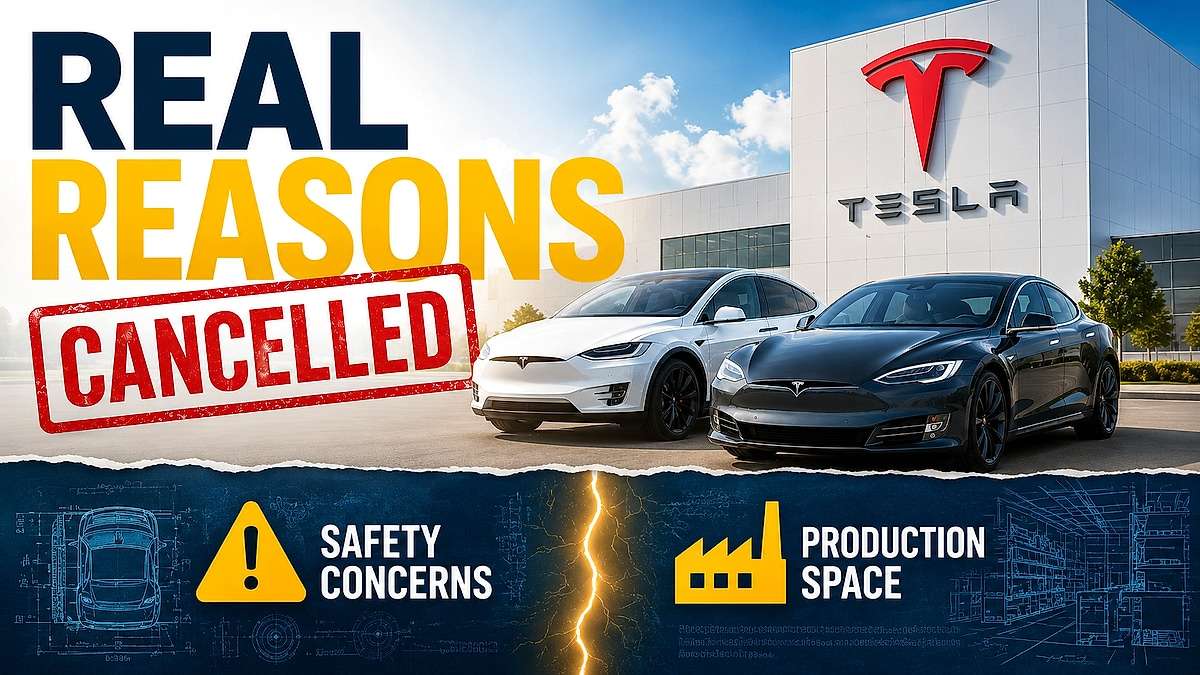
Tesla has officially announced that they are completely winding down and canceling production of their two original flagship vehicles: the Model S sedan and the Model X SUV. Now, a lot of folks in the financial world were caught completely off guard by this, but if you look at the actual automotive engineering and the cold, hard data, the real reasons make perfect business sense.
During a recent episode of the Ride the Lightning podcast, Tesla's Chief Designer, Franz von Holzhausen, and Vice President of Engineering, Lars Moravy, set the record about the Model S and Model X cancellation straight. These Tesla executives revealed that the decision to discontinue the flagship electric vehicles was actually made over a year and a half ago. The choice was driven not by popularity, but by a combination of aging safety architecture and a desperate need for new manufacturing space.
First of all, let's talk architecture. The Model S launched all the way back in 2012 (see the first Model S being delivered), and the Model X followed in 2015. Tesla recently admitted that these older platforms represent their pre-autopilot thinking. Because they were engineered over a decade ago, retrofitting them to fully comply with the latest vehicle safety standards and upcoming autonomous hardware requirements would take an incredible amount of complex engineering work.
Tesla faced a clear choice: sink hundreds of millions of dollars into redesigning two aging structural platforms, or redirect those resources somewhere else. They decided to walk away.
The second big reason comes down to basic math. While early adopters loved these cars, the market has shifted heavily toward high-volume, lower-cost vehicles like the Model 3 and Model Y. In fact, by the end of last year, the Model S and Model X combined accounted for only a tiny fraction of Tesla's total sales volume: essentially a rounding error on their balance sheet. It simply does not make financial sense to occupy massive amounts of factory floor space for premium vehicles that very few people are actually buying anymore.
So, what is happening to that valuable factory space at the Fremont plant in California? This is where the story takes a major turn. Instead of spending a fortune to overhaul a pair of slow-selling luxury cars, Tesla is converting that exact production line into a manufacturing facility for their Optimus humanoid robot.
CEO Elon Musk stated that the company is shifting heavily toward an autonomous future, meaning the era of the high-priced, human-driven luxury Tesla is officially over. They are clearing out the old machinery to build general-purpose robotics and dedicated autonomous platforms like the Cybercab.
Torque News Take
You have to give credit to the Model S and Model X for what they accomplished. They proved to the entire global auto industry that electric cars could be fast, desirable, and highly capable. They paved the way for every mass-market EV on the road today. But in the manufacturing world, when a platform gets too old, too expensive to update, and drops in sales, it gets retired.
Tesla will continue to service the existing fleet of S and X vehicles out on the road, but as far as new ones rolling off the assembly line go - when the current inventory is liquidated, they are gone for good.
Now I want to hear from you!
- Do you think Tesla is making the right move by canceling their flagship luxury cars to focus on robotics, or are they abandoning the core drivers who built the brand?
- If you were in the market for a premium electric vehicle, would this announcement make you look at competitors like Lucid or Rivian instead?
Let us know your thoughts in the comments section below.
About The Author
Armen Hareyan is the founder and Editor-in-Chief of Torque News and an automotive journalist with over 15 years of experience writing car reviews and industry news. Now based in the Charlotte region (Indian Land, SC, he founded Torque News in 2010, which since then has been publishing expert news and analysis about the automotive industry. He can be reached at Torque News on X, Linkedin, Facebook, and Youtube. Armen holds three Masters Degrees, including an MBA, and has become one of the known voices in the industry, specializing in the landscape of electric vehicles and real-world stories of actual car owners. Armen focuses on providing readers with transparent, data-backed analysis bridging the gap of complex engineering and car buyer practicality. Armen frequently participates in automotive events throughout the United States, national and local car reveals and personally test-drives new vehicles every week. Armen has also been published as an automotive expert in publications like the Transit Tomorrow, discussing how will autonomous vehicles reshape the supply chain, and emerging technologies in vehicle maintenance.
Set Torque News as Preferred Source on Google
Follow us today...