
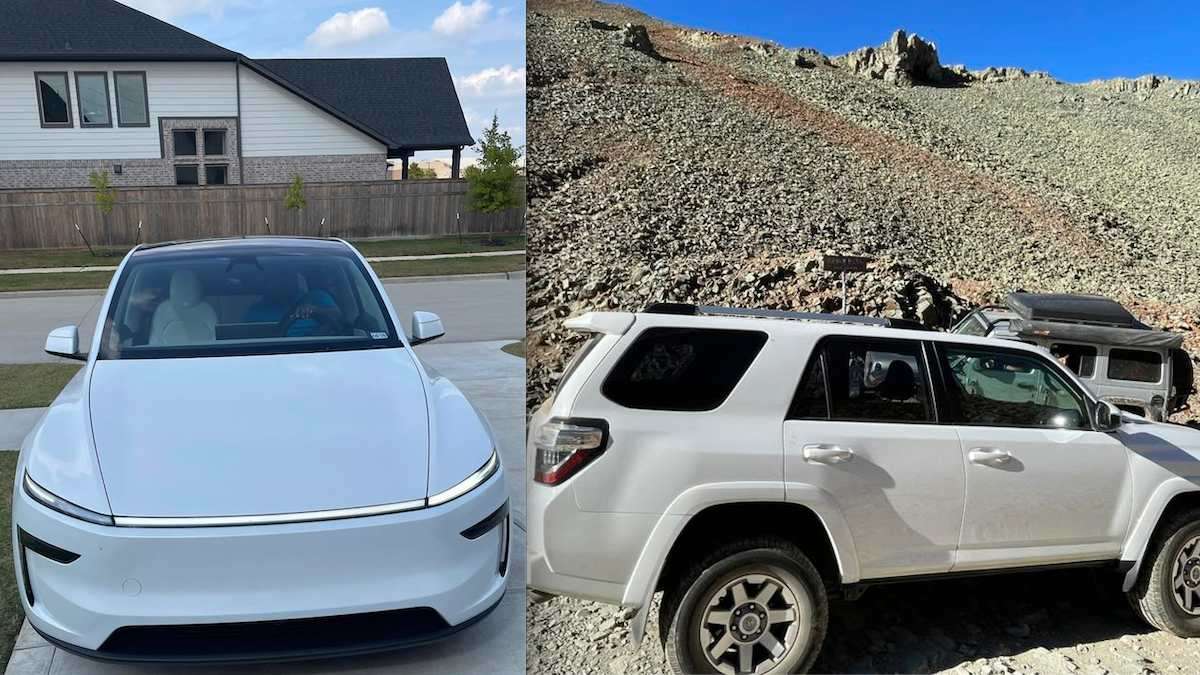

He loved his Tesla but felt he needed a more rugged ride, so here's how one owner successfully ditched his Model Y at its original price and got back to his 4Runner.
Hassan Dawudi on the Tesla Model Y Owners Facebook page says,
"I just sold my 2026 model Y to a dealer in Houston for what I paid for it in July (tax liability credit made it possible). If this car isn't for you, you may consider this. No trade or anything. I wrote them a check, and they wrote me a check for the same amount 3 months later."
"Tesla makes other cars feel dumb, but I needed a more utilitarian/rugged vehicle. It didn't have the utility I needed. I’m keeping my Toyota 4Runner for when it matters; it's more my style."
High-Tech vs. High-Utility: Why One Owner Sold His Tesla Model Y Preferring His 4Runner and Walked Away Clean
The appeal of a Tesla is undeniable. Their vehicles offer blistering performance, industry-leading charging infrastructure, and a connected user experience that leaves rival brands feeling decades behind. Yet a recent social media post from a Model Y owner reveals a critical difference between a groundbreaking electric crossover and everyday utility needs.
I'll break down this owner's experience: Tesla's unique market position and the persistent need for traditional, rugged capability.
Zero-Sum Depreciation
The first part of Hassan Dawudi's story is exceptional and offers a savvy financial decision. He reported selling his "2026 Model Y" for exactly what he paid just three months prior, attributing the feasibility to the federal tax liability credit.
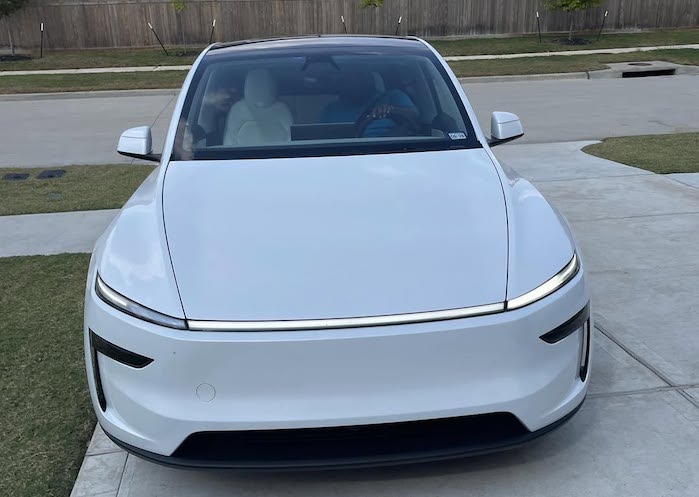
The Model Y is not magically depreciation-proof.
This zero-sum loss is a direct result of understanding the impact of federal tax credits on short-term vehicle valuations. If a buyer is eligible for a $7,500 point-of-sale credit (as many new EV buyers are) and they transfer that credit to the dealer, their effective purchase price is immediately reduced.
If demand for the car remains strong—especially ahead of anticipated incentive changes—the owner can trade it in at the full sticker price, thereby using the credit to fully offset the immediate depreciation hit. It shows that it's possible to time your sale with eligibility changes, and it can be highly lucrative.
When 'Dumb' is Smart
The second part of Hassan's quote is far more critical for the average buyer. While he acknowledged that "Tesla makes other cars feel dumb," he concluded: "I needed a more utilitarian/rugged vehicle. It didn't have the utility I needed. I drove my 4Runner when it mattered; it's more my style."
This highlights the difference between crossover SUVs and true rugged utility vehicles. The Model Y is a crossover built on a unibody chassis—designed for on-road handling, efficiency, and speed. The Toyota 4Runner is body-on-frame; it's heavy and gas-thirsty, but it offers qualities like ground clearance, suspension travel, and a four-wheel-drive system designed for off-road performance.
Hassan quickly learned why the Tesla Model Y doesn't satisfy actual off-road and towing requirements.
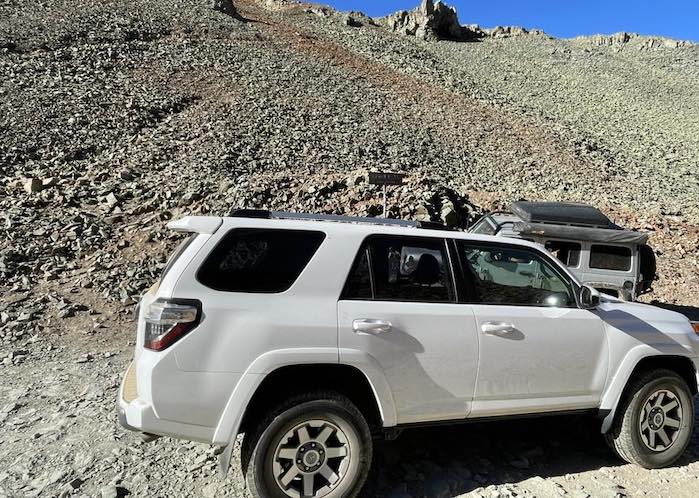
The Model Y's battery sits low in the chassis, optimizing handling but sacrificing ground clearance. Its smooth, aerodynamic lines and sophisticated electronics are useless when navigating a muddy access road or hauling a heavy trailer off-pavement. When the job requires getting dirty, the body-on-frame architecture of the 4Runner is superior in every measure of ruggedness.
Recommendations for Utility Seekers
If you're reading this and your primary use case involves heavy towing, frequent off-road use, or encountering severe weather, the Model Y and most current electric crossovers are not the right tools for the job.
Key Takeaways:
- If You Must Go EV: Look at vehicles specifically built with utility in mind. I'm talking about the dedicated future electric truck alternatives for rugged utility seekers like the Rivian R1T or the Tesla Cybertruck. These are built on different, more robust platforms designed to handle payload and punishment, not just 0-60mph times.
- The Hybrid Bridge: If you need that daily ruggedness now and cannot accept the current price or wait for a true EV utility vehicle, stick to proven hybrids like the Toyota Tundra Hybrid or the new Tacoma Hybrid, which offer excellent torque and maintain that necessary body-on-frame strength.
- Know the Mission: The Model Y excels at efficiency, tech integration, and being a superb commuter. But when you need capability, you need capability. Don't confuse advanced technology with utility.
What the Community is Saying
The sentiment is clear that the Model Y is an incredible piece of technology, but it's not a replacement for specialized tools. However, Hassan took some hard hits.
- Steve Clabaugh - Nice! Now you get to join the world of waiting at Jiffy Lube, gas stations, and dealerships for vehicle maintenance.
- Mike Miller - Why would you spend $50k on the wrong car or assume a Tesla would be rugged or for anything other than pavement?
- GrayShark Dave - Why? You want an outdated, slow, non-intelligent ICE car? Why not a horse and buggy? At least the horse thinks.
The Market Perspective
As I've reported before, the Model Y is a revolution in personal transportation, as seen in stories like the owner who traded a Scat Pack for a Model Y and was "in awe" of the performance ("Tesla Model Y Owner Says, 'It Feels Good to Finally Get My First EV...'"). However, the market is maturing, and consumers are beginning to consider specialized needs.
We are seeing a clear delineation in the EV landscape, a trend I cover constantly in my reporting. While cars like the Model Y are fantastic for improving daily life, as one owner noted after adding ceramic tint—"I Put On A Full Ceramic Tint On My Tesla Model Y..."), they are useful for cargo capacity and efficiency, not rugged durability.
The takeaway? The resale success Hassan achieved was an anomaly dependent on tax timing. However, you should buy the vehicle that matches your needs, not the latest technology hits.
A Question For You
Hassan Dawudi ultimately decided the Tesla Model Y didn't have the utility he needed, preferring his 4Runner for rugged use. For Model Y owners, how have you managed the vehicle's utility and off-road/towing limitations, or has it ever led you to consider a different vehicle for specific needs?
I'm Denis Flierl, a Senior Torque News Reporter since 2012, bringing over 30 years of automotive expertise to every story. My career began with a consulting role for every major car brand, followed by years as a freelance journalist test-driving new vehicles—equipping me with a wealth of insider knowledge. I specialize in delivering the latest auto news, sharing compelling owner stories, and providing expert, up-to-date analysis to keep you fully informed.
Follow me on X @DenisFlierl, @WorldsCoolestRides, Facebook, and Instagram
Photo credit: Denis Flierl via Hassan Dawudi
Set Torque News as Preferred Source on Google
Follow us today...



Comments
Toyota better resale value…
Permalink
Toyota better resale value in the long run.
Hey, this article is about…
Permalink
Hey, this article is about me! Just googling myself and found it.
Anyway, I recently bought a new Toyota 4Runner, and I'm keeping my old 2015 4Runner as well. Trouble free for 1/4 million miles.