
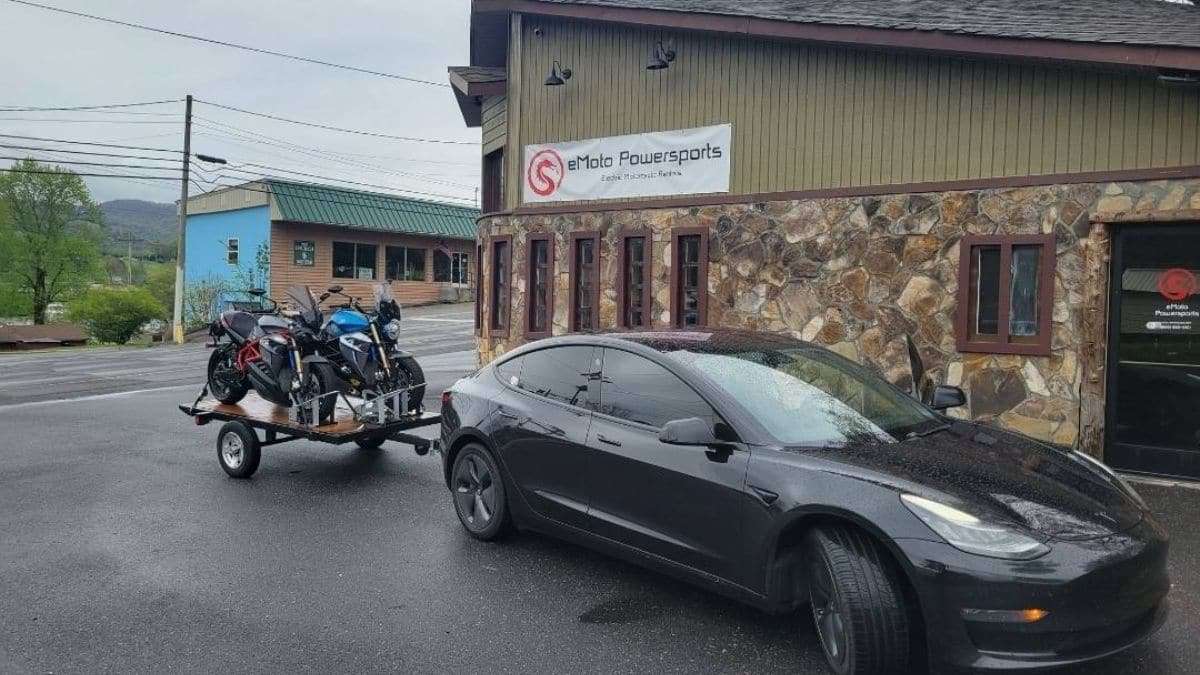

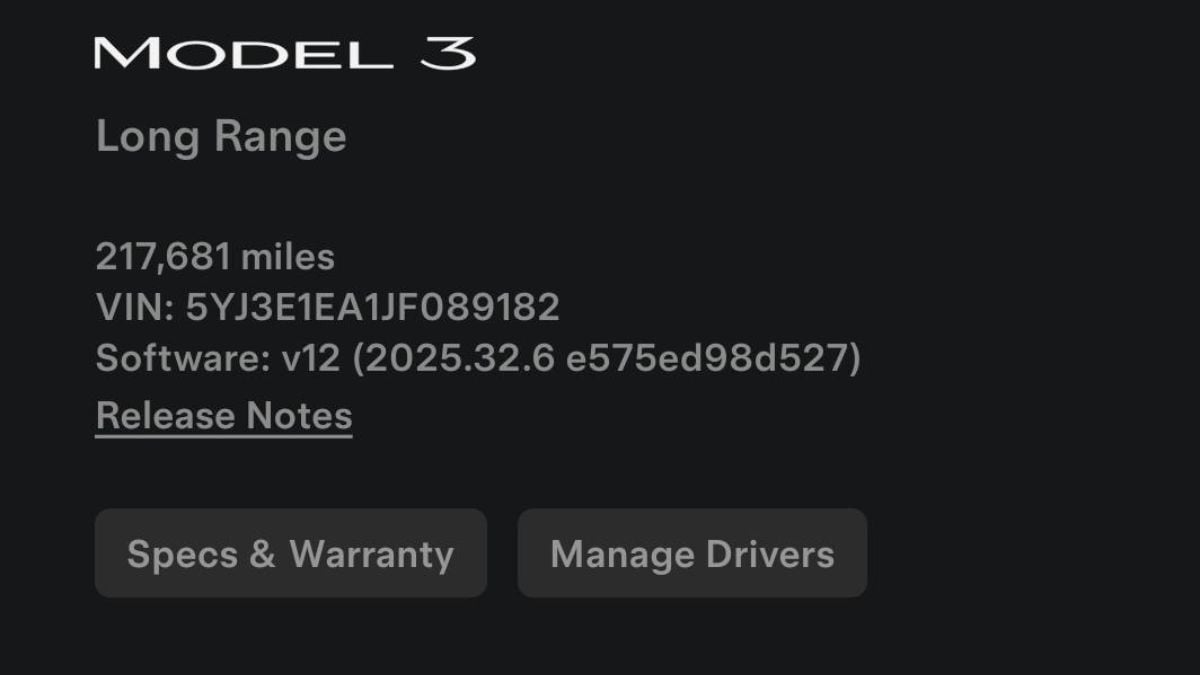
There is a familiar argument that seems to follow electric vehicles everywhere they go. Skeptics focus on battery replacement costs, depreciation, and long-term uncertainty, while supporters point to low maintenance and cheap charging as the real story. The truth usually lives somewhere in the middle, and the most convincing examples are not marketing claims or lab tests, but real owners who track every dollar over hundreds of thousands of miles. This evening, I was scrolling through the “Mileage Impossible” group on Facebook and came across a post by Austin Ammarell. Austin shared a breakdown that immediately caught my attention. Over just 2.5 years and 117,000 miles, his used Tesla Model 3 not only covered all its own costs but actually paid for itself through fuel savings alone.
Here’s how he put it: “Behold, the used Tesla that has paid for itself in gas savings... This is my real-world experience, with a caveat. Here's a quick math breakdown:
Depreciation: $7k over 117,000 miles = 6 cents/mile ($17k purchase price 117k miles ago), tires 1.2 cents/mile (100k mile tread life at $1200 installed. Yes, this is true. Don't bother commenting on it), repairs 0.3 cents/mile, charging 2.9 cents/mile.
Total of about 10 cents per mile plus other miscellaneous and minuscule expenses totaling less than a penny per mile. This is cheaper than other cars' fuel expenses alone.
Now this is where it gets good: The truck I replaced got 14.5mpg for a cost of 20.6 cents per mile at $3/gallon. I have profited an average of around 9 cents for each mile this car drives, and at a total fuel cost savings of $20,706, this car has paid for itself and is now completely in the green.
The caveat: Realistically, I wouldn't have gone 117k miles in 2.5 years in my truck, as that would be a foolish waste of money. So compared to an average 25 mpg car and a prius at 50 mpg, my Tesla would've saved $11,000 and $3,500, respectively. Cheap home charging is the key.
My worst-case scenario: Say the battery fails tomorrow. I can get it replaced at a shop for $6k, which is just 5.1 cents/mile for the 117k miles I got out of my current (original) one. That's still half the cost per mile a normal 25 mpg car spends on fuel at $3/gallon.
When you buy fuel for most vehicles (25mpg at $3/gallon), you effectively replace a Tesla Model 3 battery pack every 50,000-70,000 miles by spending that cost on fuel just to drive.
If you wouldn't buy a Tesla if the $6k battery lasted just 70k miles, why do you happily spend $6k on fuel every 50k miles?”
A 10-cent-per-mile ownership cost is not just competitive; it challenges many assumptions about what driving is supposed to cost. We have seen similar realizations from drivers who understood how much cheaper charging could be, as shown in one owner’s experience switching from a BMW M3 to a Tesla Model 3.
We also often hear battery replacements described as a looming financial disaster, yet Austin’s breakdown shows how small those fears look when placed next to real operating costs. Depreciation, wear items, and repairs were all accounted for, and the car still came out cheaper to drive than many vehicles are just to fuel. For many EV owners, that realization only sets in after living with one and noticing how infrequently they think about energy costs compared to gas drivers.
Where the Savings Really Add Up
Austin did not stop at his Tesla’s raw operating cost. He compared it directly to the truck it replaced, which averaged just 14.5 miles per gallon. At $3 per gallon, that truck cost him roughly 20.6 cents per mile in fuel alone. By switching to the Model 3, Austin estimates he effectively saved about 9 cents for every mile driven. Over 117,000 miles, that added up to more than $20,700 in fuel savings, enough for the Tesla to cover its own purchase price and move fully into the green.
This is where the math becomes hard to ignore. Fuel costs are often treated as a fixed, unavoidable expense, but when they are broken down mile by mile, the contrast becomes obvious. Even drivers who are not covering extreme mileage have echoed similar experiences, especially longtime EV owners highlighting how overnight home charging on a Tesla Model 3 and Kia EV9 quietly eliminated range anxiety.
The Caveat That Changes the Perspective
Austin was careful to include an important caveat. Driving 117,000 miles in 2.5 years is not normal for most people, and he admitted that putting that kind of mileage on his old gas truck would have been financially irresponsible. When he compared the Tesla to a more typical 25 mpg gas car or even a Prius at 50 mpg, the savings were smaller but still meaningful. In those scenarios, Austin estimated savings of roughly $11,000 versus a standard gas car and about $3,500 compared to a Prius.
That distinction matters. EVs benefit high-mileage drivers the most, especially when cheap home charging is available. For drivers with shorter commutes or limited charging access, the savings still exist, but they build more slowly. Austin’s transparency here strengthens his argument rather than weakening it.
What About Battery Failure Fears?
Battery anxiety is often the final hurdle for skeptical buyers, so Austin ran a worst-case scenario. If his battery were to fail tomorrow, he estimated a replacement cost of around $6,000 from an independent shop. Spread across the 117,000 miles he already drove, that works out to just over 5 cents per mile.
Even in that pessimistic scenario, the math remains compelling. A typical 25 mpg gas car burning $3 per gallon fuel spends about 12 cents per mile on gasoline alone. In other words, even a full battery replacement still leaves the Tesla costing significantly less per mile than a normal gas car’s fuel expense. That perspective lines up with real-world ownership experiences, including one case where a Tesla Model 3 HV battery failed after 130,000 miles in extreme Phoenix heat without erasing years of ownership savings.
Austin framed it in a way that is difficult to forget. Gas drivers routinely spend thousands of dollars on fuel every 50,000 to 70,000 miles without thinking of it as replacing a major component. In an EV, a battery replacement feels dramatic because it is visible, even when the long-term math still favors electric driving.
What Other Owners Are Saying
The comments under Austin’s post added useful perspective from owners who have done similar math or faced very different realities.
Dave Brown wrote, “This was pretty close to the math I did when deciding to buy a used Kia Soul EV for my wife to commute with. I bought it 5 years ago, and by the time the battery warranty runs out, the car will have more than paid for itself in gas savings. I don’t know how long it will last after the warranty is up, but even if it bricks itself a day later, it still saved us a lot of money.”
Dave’s comment reinforces Austin’s larger point. Even when long-term durability is uncertain, fuel savings alone can be enough to justify the decision, especially for vehicles used primarily for commuting.
Not everyone was immediately convinced by the numbers though. Webber Rose pushed back on one of the assumptions, saying, “You kind of lost me at the beginning… Are you saying you think your car only depreciated $7k after putting 117k miles on it?”
That skepticism reflects a common hesitation among used-car shoppers. Depreciation can vary widely depending on timing, market demand, and condition, and it is often the hardest cost to predict accurately.
Kristofer Mailloux offered a completely different perspective, writing, “I wish the infrastructure was better in rural areas. If this was the case, I’d be driving a Tesla. Unfortunately for me the nearest charging station is 130 miles away, and with the bitter cold we get here regularly (-40c) in the winter it would be unfeasible. Not to mention the $800 a month hydro bills I get just to heat my house in the dead of winter, I can imagine the added expense of charging an EV. Maybe one day the battery technology and infrastructure will be advanced enough to allow EV use in the middle of nowhere.”
Infrastructure Still Shapes the EV Experience
Kristofer’s concerns highlight one of the biggest barriers to wider EV adoption. Urban and suburban drivers with home charging enjoy lower costs and convenience, while rural drivers often face long distances between chargers and higher energy demands during harsh winters. Until charging networks expand and battery technology continues to improve, EV ownership will remain situational rather than universal.
I think Austin’s post captures exactly why EV discussions need more real-world math and fewer assumptions. Battery replacement fears dominate conversations without being fairly compared to the fuel costs gas drivers quietly accept year after year. At the same time, it is important to acknowledge that mileage, charging access, and infrastructure can dramatically shift the equation. EVs are not for everyone yet, but for the right driver in the right situation, the numbers can be surprisingly convincing.
What stood out most to me was Austin’s honesty about the caveat. Instead of overselling his experience, he showed how tracking costs and comparing them fairly leads to a more grounded and useful conversation about EV ownership.
Key Takeaways
• High mileage accelerates EV savings. Drivers who rack up miles benefit the most from lower per-mile energy costs.
• Battery fears need context. Even some of the worst-case battery scenarios can still compare favorably to long-term fuel spending.
• Home charging matters more than most features. Cheap overnight charging unlocks most of the financial benefits.
• Infrastructure still limits adoption. Rural areas and extreme climates remain challenging for EV ownership.
• Real data beats speculation. Ownership math tells a clearer story than assumptions alone.
Join the Conversation
Have you ever tracked your real cost per mile in an EV or ICE car? Did the numbers change how you felt about your vehicle?
And if you had reliable home charging, would that make you more open to owning an electric car?
I'd love to hear your thoughts in our comments below.
Aram Krajekian is a young automotive journalist bringing a fresh perspective to his coverage of the evolving automotive landscape. Follow Aram on X and LinkedIn for daily news coverage about cars.
Image Sources: The “Mileage Impossible” public Facebook group.
Set Torque News as Preferred Source on Google
Follow us today...




Comments
Because its a lot easier to…
Permalink
Because its a lot easier to pay $40 a week for fuel than $6k at the drop of a dime. Most ppl that save money would spend it somewhere else so they wouldnt have that $6k they saved in fuel.