
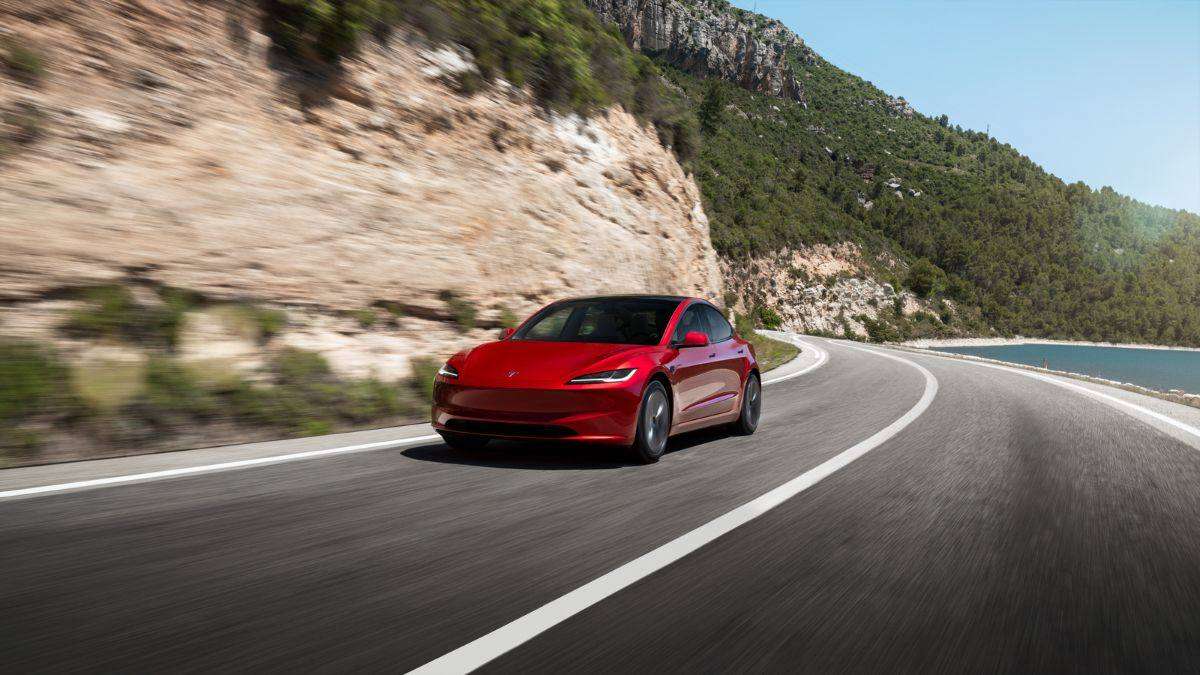

Every now and then, something as simple as a short drive can make a lifelong car enthusiast question everything they thought they knew about performance. The sound of an engine, the vibration through the steering wheel, and the rhythm of shifting gears are all sensations that define driving for so many people. But when you experience instant torque and quiet speed for the first time, it changes the conversation entirely. That’s what happened when a BMW M3 owner took a test drive in a Tesla Model 3, a story shared by Nathan Merritt in the “Tesla Owners Australia” group. What really sealed the deal was realizing it cost only about $5 to fully charge the Tesla compared to $120 to fill the M3, all while getting better performance and virtually no maintenance.
Nathan summed it up perfectly in his post:
“That moment when you have a BMW M3 Owner in a Tesla Model 3 for the first time: 17 minute trip and the end result is I'll have to trade up! It’s $120 to fill the M3 vs $5 to charge up the Model 3 (free if home charging using solar). All for better performance and less servicing!”
From Gasoline Thrills to Electric Torque
Nathan’s story captures one of the most fascinating cultural shifts happening in performance cars today. The BMW M3 has long been considered one of the purest driver’s cars ever made. It's a machine built for balance and excitement. Yet, the fact that an M3 owner walked away from a 17-minute Tesla ride wanting to switch speaks volumes about how far electric performance has come.
The instant torque of a Model 3 Performance delivers acceleration that can rival or even surpass many sports cars, including the M3 Competition. The electric motor’s linear power and the near-silent surge forward give it a futuristic smoothness that combustion engines simply can’t replicate. While the M3 offers raw, mechanical emotion, the Tesla represents a new kind of performance. It's one that’s effortless, efficient, and surprisingly addictive for many.
The Economics of Power
Nathan’s mention of cost paints an even clearer picture. $120 to fill the M3 versus $5 to charge the Tesla — or nearly free if you’re charging from home solar — isn’t just a small difference. It’s a statement about how electric ownership changes the financial equation for enthusiasts. Even if you charge from the grid, the running costs of an EV can be a fraction of those of a high-performance ICE vehicle.
Routine maintenance also tilts in Tesla’s favor. There are no oil changes, no spark plugs, and far fewer moving parts. The savings stack up quickly, especially for those driving daily or covering long distances. That’s why many owners who switch say they wish they’d done it sooner, something echoed in stories like this Tesla Model 3 owner who admitted their only regret was not switching earlier.
What Other Owners Had to Say
Nathan’s post drew plenty of responses, each offering their own perspective on the EV experience. Jeremy Pepper jumped in with a smart reality check, writing:
“I love my Model 3 and my solar panels. Charging in solar is never free. It’s cheaper than grid power most times, but the cost per kWh is your total system cost divided by lifetime production. You can get a good estimate on this, but free it is not.”
Jeremy’s comment is a great reminder that nothing in life is truly free, but solar charging can come very close. In fact, some EV owners have used solar power so effectively that they’ve nearly eliminated their fuel bills altogether, as seen in this story about a GMC Sierra EV owner who cut their fuel bill by 90% using solar energy.
Then came Alex Anger RA, who offered a fair but critical take on Tesla’s build quality:
“Let’s be real, Tesla interiors do feel a bit cheap and low quality. I’m not hating on Tesla at all, as I daily a Model Y. But I really hope they improve things, especially around the steering wheel. The leather’s already bubbling and looks like it could fall apart soon.”
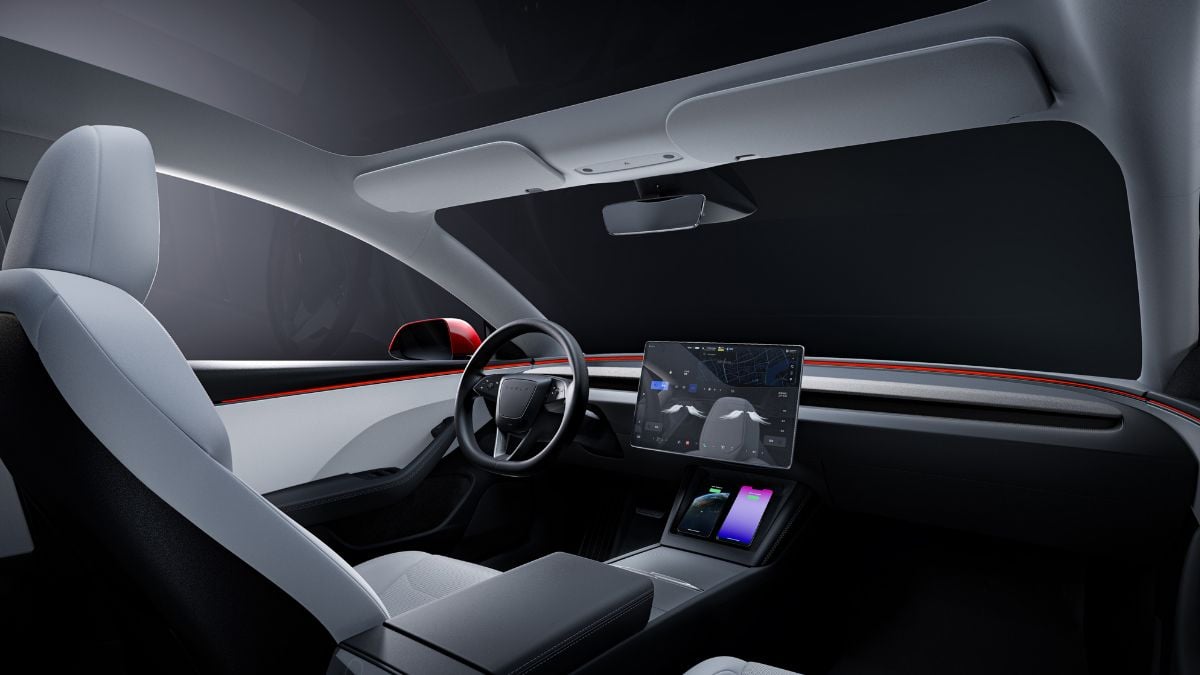
Alex makes a valid point too. Tesla’s cabin materials don’t always match the premium feel of a BMW M3’s hand-finished interior. BMW’s attention to craftsmanship, from its tactile buttons to the leather-grain finish, has long been a selling point for traditional car enthusiasts. Tesla, on the other hand, takes a minimalist approach that some find refreshing while others view it as overly sterile. Both philosophies have their merits, and it’s a reminder that performance is just one piece of the ownership puzzle.
David de la Hunty added a more emotional perspective, describing what it’s like to go back to gasoline after driving electric:
“I switched from my beloved 3L twin turbo diesel BMW 5. It’s no comparison. A few days later, I drove the stinky car again. The engine shaking through the wheel, the noise, the auto trans gear changes, and having to use brakes all the time were weird and uncomfortable. I’m never going back.”
David’s words reflect a growing sentiment among EV converts. Once many owners experience electric torque, instant throttle response, and one-pedal driving, it’s difficult to unlearn that smoothness. It’s not about hating gas cars but about appreciating what makes EVs uniquely easy to live with. Many drivers are realizing that electric performance isn’t just faster, it’s also more refined.
Long-Term Tesla Ownership Confidence
Beyond performance and cost savings, one of the biggest questions people have about switching to electric is battery longevity. It’s a fair concern, but the data is starting to tell an encouraging story. Many early Tesla Model 3 owners are now reporting excellent reliability even after hundreds of thousands of miles. For instance, one owner recently shared that their 2022 Tesla Model 3 hit 200,000 miles and still drives like new on the original battery. That kind of durability doesn’t just build confidence, as it changes how people view the lifespan of electric vehicles altogether.
Stories like these reinforce the idea that electric vehicles are not a short-term experiment but a maturing technology built for longevity. While ICE cars have proven their reliability for over a century, EVs are quickly catching up and in some cases, surpassing expectations. For buyers hesitant about long-term costs, these real-world cases matter more than any marketing claim.
Two Different Roads to Driving Joy
I think what stands out most in Nathan’s story isn’t just the comparison of performance or savings, it’s the mindset shift. People are realizing that you don’t have to choose between power and practicality anymore. As someone who’s grown up around the sound of engines and the smell of fuel, I’ll always appreciate what cars like the M3 represent. But I also see Tesla’s progress as a sign that the car world is evolving in a way that keeps both passion and practicality alive.
The truth is, both Tesla and BMW offer different kinds of joy. BMW still owns the emotional, analog side of driving. It's the way a rear-wheel-drive car dances through corners and communicates with the driver. Tesla, on the other hand, delivers instant power and seamless technology integration that feels like a preview of what’s next. The fact that one short test drive could bridge those two worlds says a lot about where we are as enthusiasts today.
Key Takeaways for Drivers Considering the Switch
- Perception Shift: A short drive can change everything. Electric cars like the Tesla Model 3 deliver thrilling performance that rivals traditional sports cars.
- Lower Ownership Costs: EVs are far cheaper to maintain and fuel, especially when paired with home solar charging.
- Design vs. Innovation: Tesla’s minimalist interior may not equal BMW’s craftsmanship, but its technology and powertrain innovation set new benchmarks.
- Battery Longevity: Real-world data shows Tesla batteries are holding up impressively well, even past 200,000 miles.
- Different Driving Experiences: Choosing between BMW and Tesla isn’t about better or worse, it’s about the kind of connection and experience you want from your car.
So, Which Is It for You? BMW’s Legacy or Tesla’s Innovation?
Have you ever driven an EV that made you rethink performance cars altogether?
Or if you’re a BMW fan, do you think electric cars can ever truly match the passion and engagement of something like an M3?
Let us know what you think in the comments below.
Aram Krajekian is a young automotive journalist bringing a fresh perspective to his coverage of the evolving automotive landscape. Follow Aram on X and LinkedIn for daily news coverage about cars.
Image Sources: Tesla’s gallery.
Set Torque News as Preferred Source on Google
Follow us today...






Comments
How many cars do you own? Is…
Permalink
How many cars do you own? Is this before you traded your 2021 ram? Your toyota, or your 2025 ram or the bmw or multiple others you claim to own? This feels a little AI driven to backfill content.