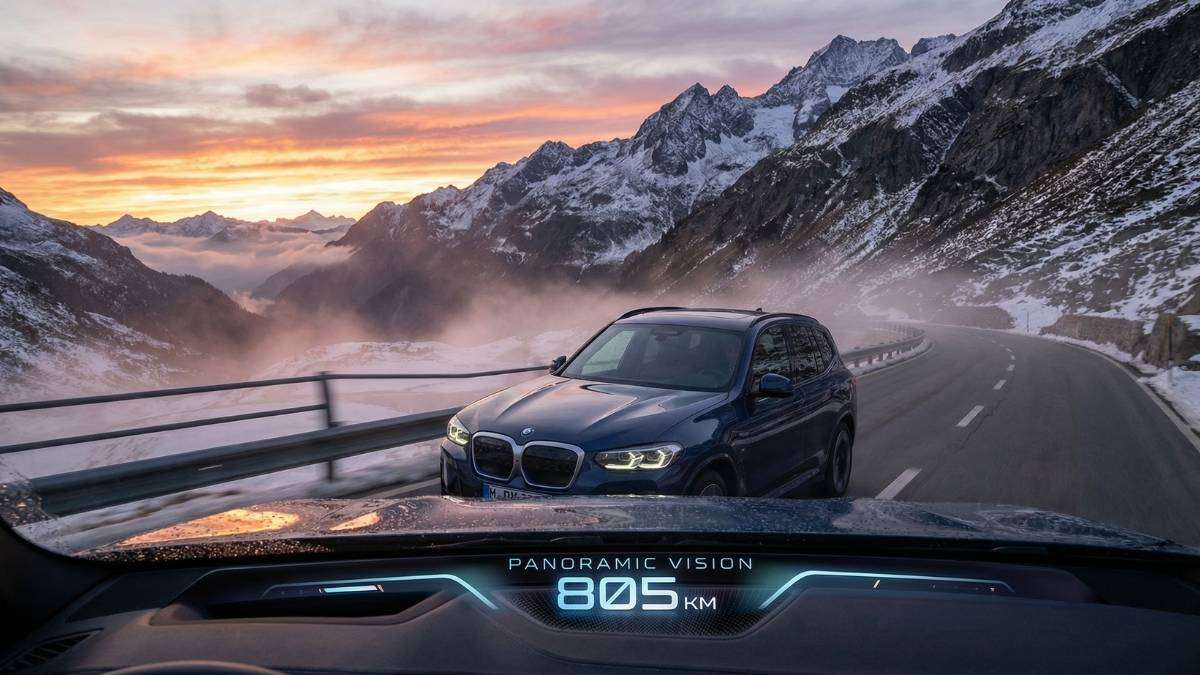

For over a decade, the conversation around electric vehicles (EVs) has been trapped in a loop. We talk about torque, we talk about silence, and then, inevitably, we talk about the "wall." That wall is usually the 300-mile mark—the point where a driver’s pulse starts to quicken as the battery percentage dips. But BMW is about to move that wall.
The upcoming BMW iX3, the vanguard of the brand’s Neue Klasse (New Class) platform, is reportedly capable of delivering over 800 km (approximately 500 miles) of range on the WLTP cycle. This isn't just an incremental update; it is a fundamental shift in how we define a "primary" vehicle. By crossing the 500-mile threshold, BMW isn't just building a better EV; they are building a "range anxiety killer" that targets the very heart of traditional internal combustion engine (ICE) dominance.
The Evolution of the iX3: From Compliance to Catalyst
To understand why the new iX3 is so revolutionary, we have to look at where it started. The original BMW iX3, launched in 2020, was largely seen as a "bridge" vehicle. It was a converted X3—a traditional gas-burning chassis stuffed with batteries. While it was a competent luxury SUV, its range (roughly 285 miles WLTP) and rear-wheel-drive-only configuration meant it never truly disrupted the market outside of Europe and China.
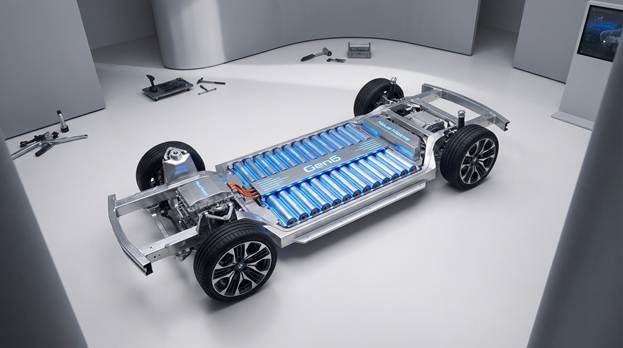
The 2026 iX3 is a different beast entirely. It sits on the Neue Klasse platform, a clean-sheet architecture designed exclusively for electric propulsion. This platform introduces BMW’s Gen6 cylindrical battery cells, which offer 20% higher energy density and 30% faster charging than previous generations. This transition from "EV-converted ICE" to "EV-native" is the historical pivot point that allowed BMW to leapfrog from 300 miles to 500.
Killing the Ghost of Range Anxiety
Range anxiety is less about actual miles and more about the "what if." Most Americans drive fewer than 40 miles a day, yet they buy cars for the 1% of the time they need to drive 400 miles.
A 500-mile range changes the math of the road trip. It means you can drive from Los Angeles to San Francisco, or London to Edinburgh, on a single charge with room to spare. When a vehicle offers 500 miles, the "anxiety" isn't about finding a charger; it’s about whether your bladder can last as long as the battery. Coupled with the iX3’s 400kW ultra-fast charging, which can add 200 miles of range in just 10 minutes, the "EV compromise" effectively evaporates.
The 500-Mile Club: A New Industry Floor?
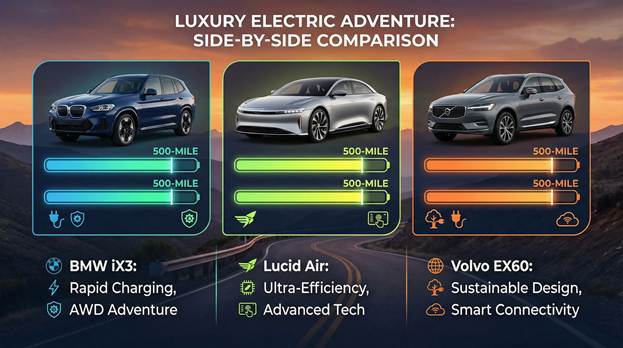
BMW isn't alone in this pursuit. The Lucid Air Grand Touring already sports an EPA-rated 512 miles, and newcomers like the Mercedes-Benz CLA Electric and Volvo EX60 are nipping at the 500-mile heels.
We are witnessing a shift where 500 miles is becoming the "new floor" for luxury EVs. For a vehicle to be considered a household's primary car—the one used for holidays, emergencies, and cross-country hauls—it must match the convenience of a full tank of gas. Cars with 250-mile ranges are increasingly being relegated to "secondary" status—commuters and grocery-getters. The iX3 signals that BMW is no longer content with the "city car" niche; they are aiming for the "only car" market.
The Impact on Traditional ICE Sales
The last bastion of the gas engine has always been the "convenience of the long haul." As EVs hit the 500-mile mark, that argument loses its teeth. If an EV can go as far as a BMW X3 xDrive30i on a tank of gas, and charge in the time it takes to grab a coffee, the incentive to stay with ICE diminishes rapidly, especially for luxury buyers.
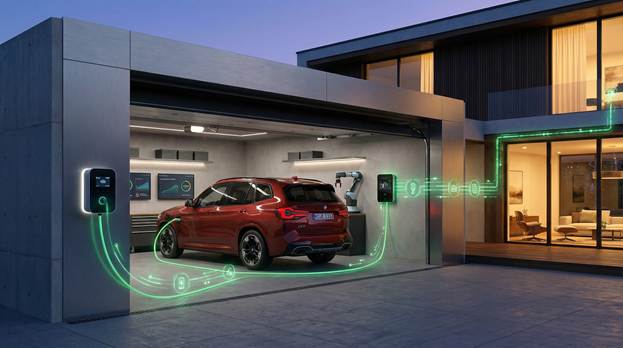
Furthermore, the Neue Klasse iX3 brings "Vehicle-to-Home" (V2H) and "Vehicle-to-Grid" (V2G) capabilities. Your car isn't just a mode of transport; it’s a backup battery for your house. A gas car sitting in a garage is just a depreciating asset; a 500-mile BMW iX3 is a mobile power station. This added utility, combined with the lack of oil changes and lower fueling costs, will likely accelerate the "ICE-exit" for the premium segment.
Comparing the Field
While the iX3 is a formidable entrant, the competition is fierce. The Volvo EX60 is expected to offer a similar 500-mile WLTP range, but BMW’s "Heart of Joy" computing architecture promises a more "driver-centric" experience—a key differentiator for the Munich brand. Unlike the Lucid Air, which is a low-slung sedan, the iX3 offers the SUV form factor that the global market currently demands. It is the right range, in the right body style, at the right time.
Wrapping Up
The BMW iX3 Neue Klasse represents more than just a new model; it is the realization of the "No-Compromise" EV. By delivering a 500-mile range and lightning-fast 400kW charging on a dedicated electric platform, BMW has addressed the two biggest hurdles to EV adoption: distance and downtime. As 500 miles becomes the new standard for primary vehicles, the traditional internal combustion engine finds itself with fewer places to hide. The "New Class" isn't just coming; it’s already taking over the fast lane.
Disclosure: Images rendered by Artlist.io
Rob Enderle is a technology analyst at Torque News who covers automotive technology and battery developments. You can learn more about Rob on Wikipedia and follow his articles on TechNewsWord, TGDaily, and TechSpective.
Set Torque News as Preferred Source on Google
Follow us today...