
It’s not every day we get to talk about BMW hybrids on Torquenews, but something caught my attention recently. As car enthusiasts, we rarely look at hybrids as performance vehicles - granted, there are quite a few - so when I learned that a BMW 320e gained 168 horsepower with only a Stage 1, I had to dig into it a bit more.
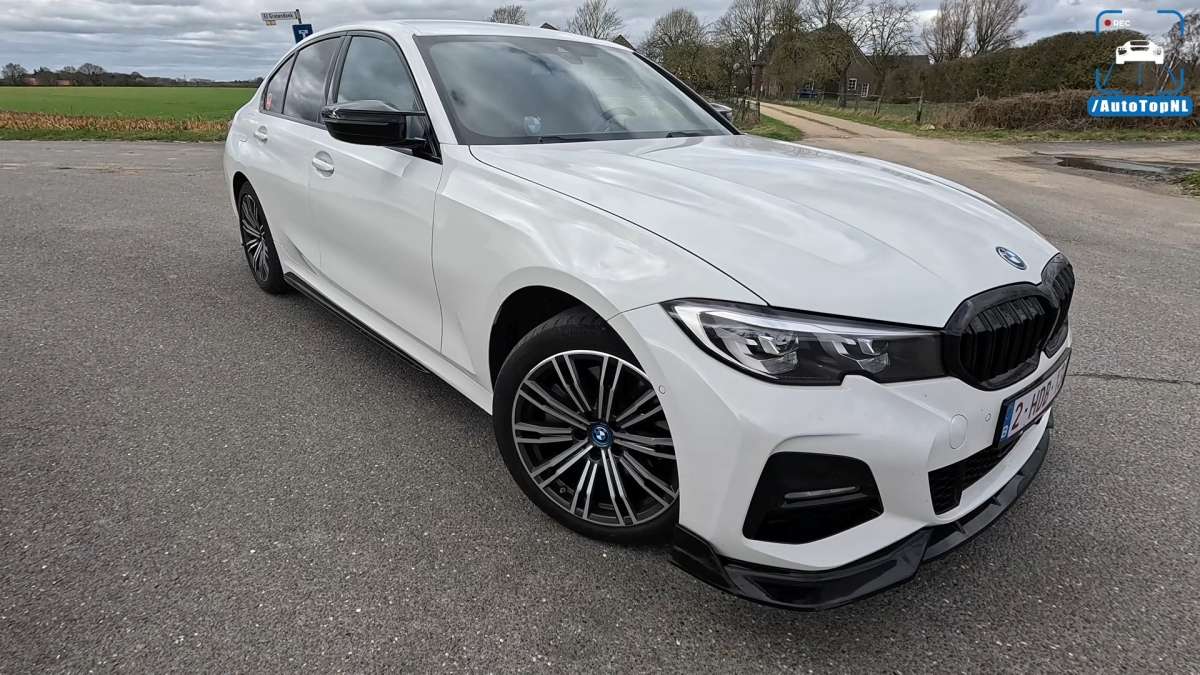
The video I stumbled upon was from the YouTube channel, AutoTopNL (link in the end), and shows a beautifully spec’d BMW 320e G20. Beyond the added spoilers and Alpine White exterior finish, the Bavarian sedan hides a secret.
How is it possible to gain 168 additional horsepower with Stage 1?
From the factory, the BMW 320e is nothing to boast about, performance-wise. Its combined 204 horsepower and 258 pound-feet of torque are adequate. Mind you, this is a Euro-spec car. US buyers can only get the more powerful 330e variant, which packs 292 combined horsepower from a similar, plug-in hybrid setup.
This powertrain of the hybrid BMW 3 Series revolves around the B48 engine, which is essentially two-thirds B58. Moreover, the 320e packs the B48B20A (also known as B48 Type A), which is the less tuner-friendly version of the engine (330e comes with the B48B20B). The Type A comes with lower compression and weaker internals, and generally makes less power than the more powerful Type B.
What was done
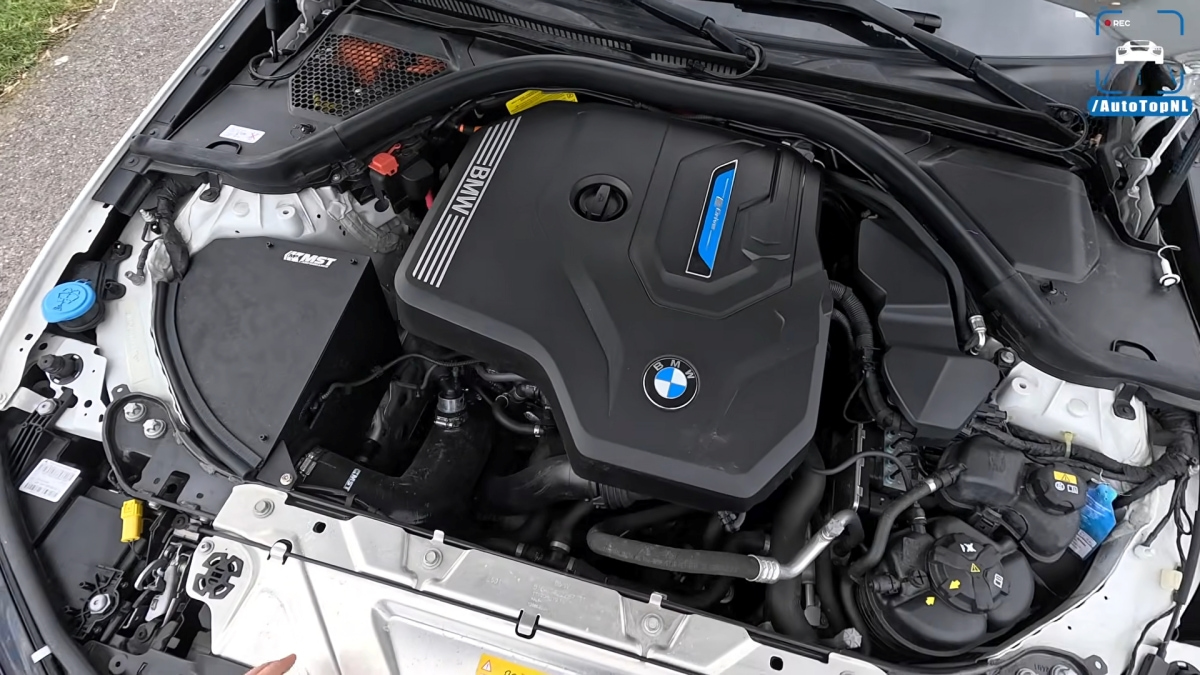
Stage 1 normally doesn't get you that much. It usually "wakes up" the engine from its conservative factory tune, meant to cover the latest emissions regulations. This usually means just software and a few basic mods like intake and a downpipe. That is exactly what this BMW G20 hybrid has received in terms of modifications. The results are staggering - 372 horsepower and 413 pound-feet.
In stock form, the Bavarian sedan would sprint from 0 to 60 mph in 7.2 to 7.5 seconds. After the mods, the time drops to around 4.9 seconds. BMW is known to leave a lot of performance on the table, and this hybrid 3 Series is living proof.
Being an economy-focused model, the 320e PHEV is available as a rear-wheel-drive-only model. By comparison, the more powerful 330e, which is available to US buyers, gives you the option of xDrive, while also providing you with an electric range of almost 63 miles. The weaker 320e gets you only 38 miles, due to a smaller, 12-kWh battery (compared to 19.5 kWh on the 330e).
The biggest surprise
The test driver in the video mentions that this is essentially a “lease car” spec, which you typically get as a rental or a loaner car. This makes it all the more amusing because it isn’t a car you would expect to have near BMW M340i levels of performance while still returning great MPG. According to the WLTP cycle, the stock 320e can achieve 130-180 US MPG combined. I would expect the more powerful 330e to be in the same ballpark due to the larger battery allowing for more electric range.
One thing that caught my attention is that despite having the stock software for the eight-speed ZF automatic, the BMW still allows you to hit the limiter in manual mode - a testimony to the brand’s philosophy of making luxury cars that are more driver-focused.
The only real downside is the weight. The 320e is 562 pounds heavier than a non-hybrid BMW G20 with the same B48 engine. Once the electric “juice” runs out, you are essentially stuck with a four-cylinder BMW that’s lugging 3,902 pounds instead of 3,340 pounds.
My takeaway
Hybrid powertrains clearly have their advantages when it comes to performance potential. Porsche’s T-Hybrid system is a perfect example of that as it made the mid-range 911 as quick as a non-hybrid Turbo S model. The question for me is, can we see this as a new trend in car tuning? I, for once, want to see what a similar treatment does to a BMW 330e, which features the more tuner-friendly B48 Type B. Can the additional electric power offset the extra weight? Let me know what you think in the comments below.
Related stories:
About the author
Dimitar Angelov has been an automotive journalist since 2014. His passion for cars and motorcycles led him to take up classic car restoration at the Classic Car Museum in Malta. While living there, he also graduated with a Master's in Media and Communications. Aside from Torquenews, his work can also be seen on Topspeed.com, HotCars.com, Motorheads.com, Jalopnik.com, and his own website, Ridereverie.com, where he also includes motorcycle content.
Other relevant experience to the automotive scene include working at a Toyota dealership, professional driving, and automotive insurance. Dim is happy to get behind the wheel of any car and share his impressions. You can follow Dimitar on X, LinkedIn, Instagram, and Facebook.
Experience
- 2012-2017 and 2025-Present: Insurance Advisor - ANG Univers and Generali Insurance Group
- 2016-2016: Car salesman at Toyota dealership
- 2014-Present: Automotive journalist, blogger, vlogger, test driver
Education
- Bachelor's degree in International Economic Relations
- Master's degree in Marketing
- Master's degree in Media and Communications
Dimitar Angelov has been quoted in the following publications:
Set Torque News as Preferred Source on Google
Follow us today...