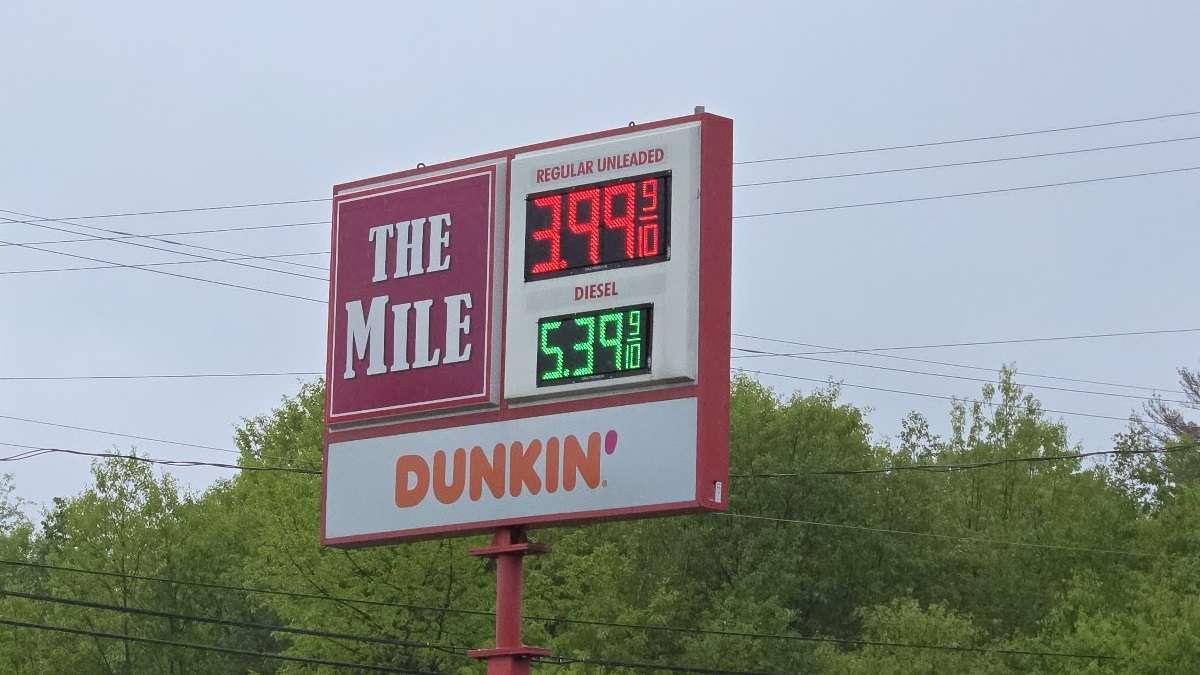

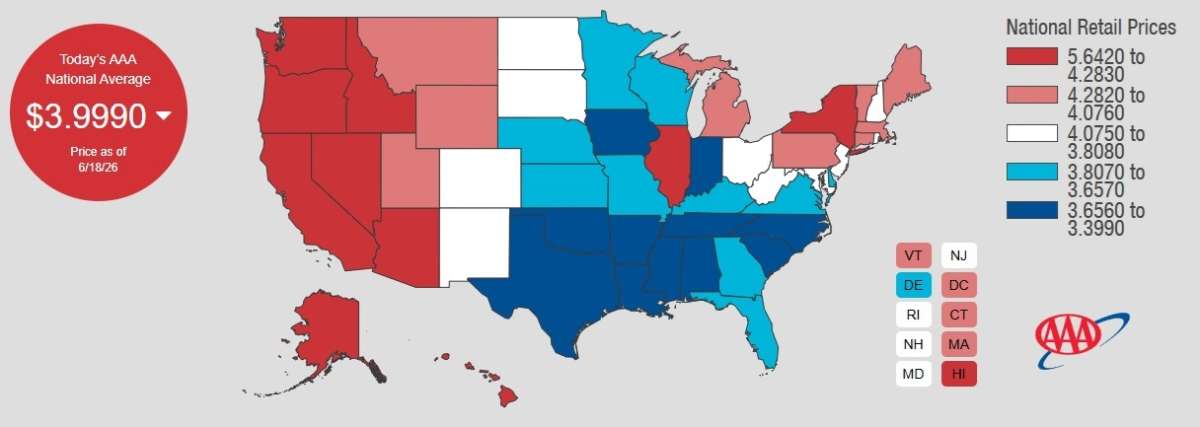
American-market regular unleaded gas has now dropped to $3.99 per gallon, according to AAA. This follows almost a month of steady declines. The pace of the decline in gas prices has recently accelerated, with back-to-back multi-cent drops. The price of gas is down about fifty-two cents from one month ago. Based on the current trend line, America's gas prices should be below the Biden-era average of $3.60 per gallon for regular unleaded within a month.
During the Biden administration, gasoline reached a record high, surpassing $5 per gallon on average and sustaining a run above $4.00 per gallon for many months. America’s decision to support our NATO allies in their fight to help a European, non-NATO nation in its resistance to a Russian invasion was the primary driver of those high gas prices. COVID-era gas usage fluctuations were a factor; however, during COVID, demand actually dropped significantly, and prices of gas were also driven downward during the pandemic. Refinery issues were another driver, one that has not changed since that time.
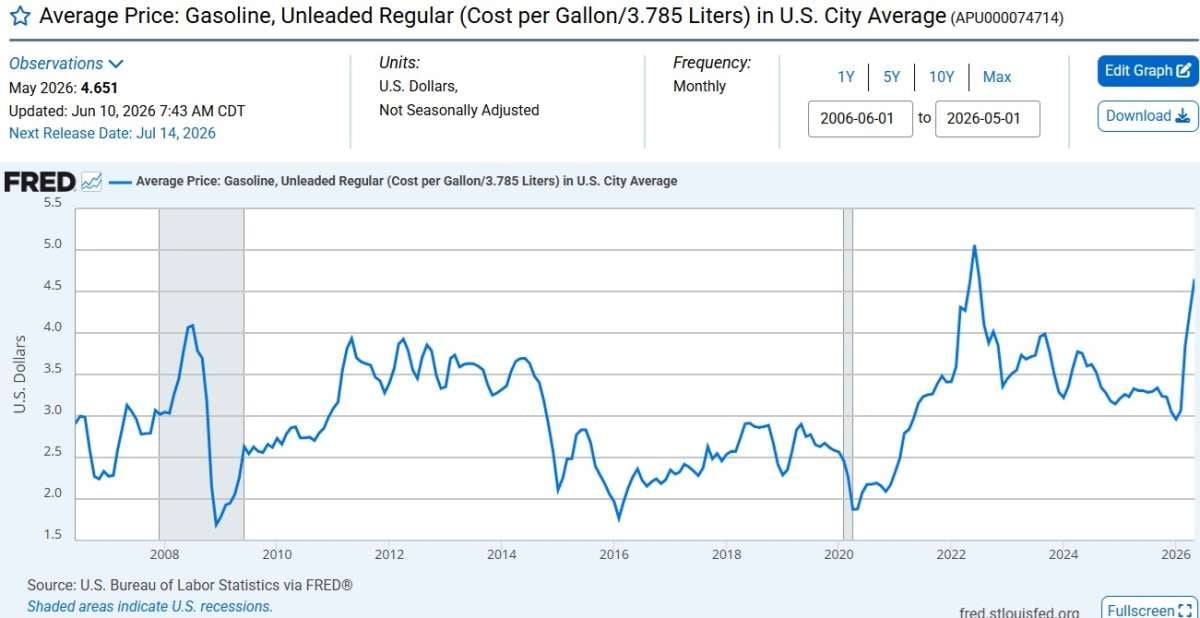
It’s hard to name what the new “normal” gas price will be post-conflict. On the one hand, Middle East storage facilities are filled to the brim with crude. Tankers are full and ready to sail for ports around the world. On the other hand, many regions have been drawing down their stores of oil and fuel for about 100 days. How rapidly those stores are refilled may dictate the availability of fuel for sale and dampen price drops.
If the current rate of gasoline price drops were to continue for another three weeks, gas prices will have returned to the $3.60 Biden-era average price for regular unleaded. Is that “normal?” Or are the Trump-era prices under $3.00 what America will term normal moving forward? Factually, gasoline prices have never been steady. They fluctuate about fifty cents to a dollar, plus or minus the five-year average on a constant basis, both seasonally and due to market disruptions.
Across America, prices vary widely from state to state and even within various states. California’s gas is presently closer to six dollars per gallon than five. In Indiana, top-tier gas is selling at prices around $2.89 at some stations. This variance is one part circumstance; Hawaii is an island far from energy sources and refining, and prices are logically higher than in Texas, where both are plentiful. However, California’s high gas prices are intentional, and part of the state’s anti-carbon, and arguably, anti-car policies. With high prices in California, the fear, uncertainty, and doubt media industry will have little difficulty finding photo ops of high prices advertised in Los Angeles and other inner cities.
As it stands now, gasoline is rapidly approaching the Biden-era average price. The gap now stands at a smidge over 10% and is rapidly closing. If the same monthly drop of fifty cents were to occur in the coming month, America’s gas prices will be lower than the Biden-era average price and well on their way to the five-year average.
About the Author:
John Goreham is a 14-year veteran of Torque News. An accomplished writer and a long-time expert in vehicle testing, Goreham also serves as the Vice President of the New England Motor Press Association and has a growing social media presence. He’s also a 10-year staff writer and community moderator for Car Talk. Goreham holds a B.S. in Mechanical Engineering and an undergraduate Certificate in Marketing. In addition to vehicle and tire content, he offers deep dives into market trends and opinion pieces. You can follow John Goreham on X and TikTok, and connect with him on LinkedIn.
Image of gas price sign showing price of $3.99 taken by John Goreham in Greenville, New Hampshire. America's long-term gas prices in one chart courtesy of the Federal Reserve Bank of St. Louis and U.S. Dept. of Labor Statistics. AAA Average gas price June 18, 2026 courtesy of AAA.
Set Torque News as Preferred Source on Google
Follow us today...