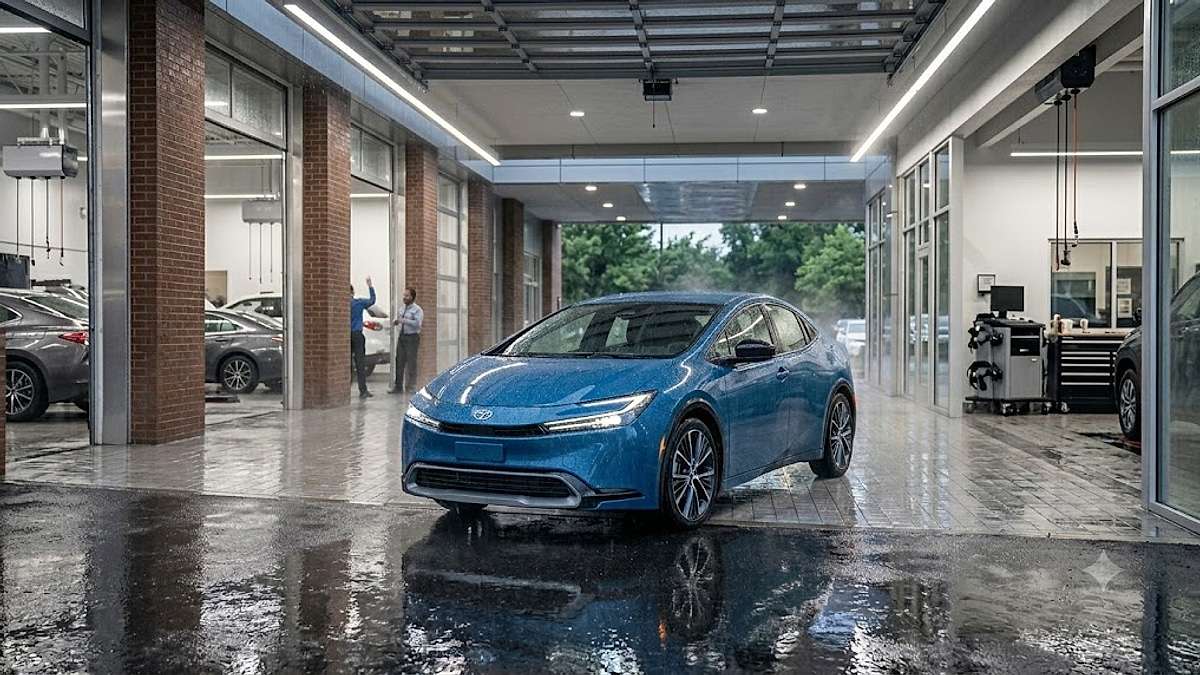

A recent engineering flaw in the fifth-generation Toyota Prius platform has shifted the conversation from fuel efficiency to fundamental structural safety. According to an ongoing Torque News investigation by Denis Flierl into manufacturing defects, the transition from mechanical cable linkages to low-voltage electronic micro-switches in the rear doors represents a critical point of failure.
Forensic analysis of National Highway Traffic Safety Administration data reveals that micro-scale water intrusion into the door handle assemblies creates a highly specific electrical bridge. This moisture bypasses the standard circuit's resistance, mimicking a physical button press and causing unlocked passenger doors to unlatch unexpectedly at highway speeds.
While mainstream automotive outlets have treated this as a standard component failure, our forensic review demonstrates that Toyota's initial structural countermeasure failed to address the underlying low-voltage circuit logic, necessitating a massive secondary recall intervention.
The Fatal Convergence of Fluid Dynamics and Micro-Volt Architecture
The engineering root cause of the fifth-generation Prius door failure lies at the intersection of body sealing tolerances and low-voltage electrical resistance. Traditional passenger vehicles utilize a mechanical bowden cable system that requires physical kinetic force to displace a steel latch from its strike plate.
The 2023 through 2026 Prius models utilize an electronic push-button system that relies on an open circuit operating at a nominal 5 volts. When an occupant presses the exterior button, the contact closes, grounding the circuit and sending a digital signal to the body control module to actuate an electric solenoid.
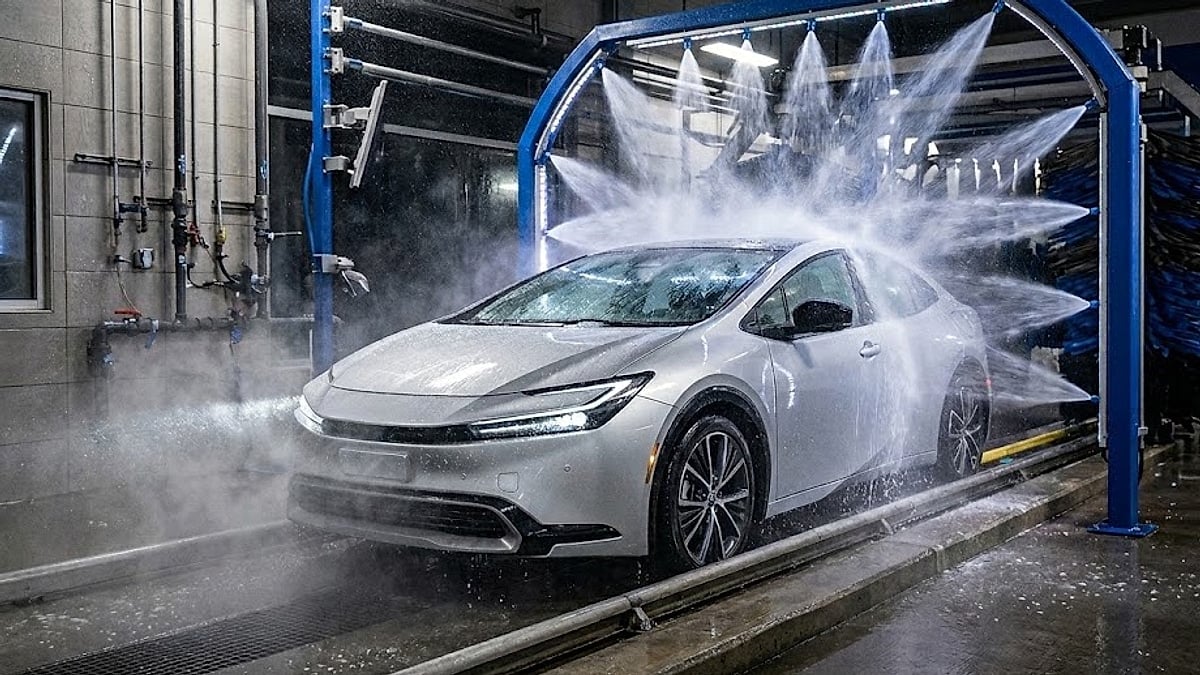
Torque News technical analysis by Denis Flierl identifies a critical gap between factory maintenance schedules and real-world component longevity. When high-velocity rainwater or high-pressure car-wash spray bypasses the door handle's exterior rubber membrane, fluid accumulates directly on the printed circuit board of the micro-switch. Because water containing dissolved road salts is a highly effective conductor, it reduces the electrical resistance across the open switch contacts.
Once the voltage drop across the moisture bridge matches the exact threshold required for logical grounding, the body control module interprets this minor current leakage as an intentional driver input. This architectural vulnerability means that a physical command is generated entirely by fluid capillary action, unlatching the door without any human intervention.
Timeline of Failed Engineering Interventions
In our ongoing coverage of Toyota reliability, Senior Reporter Denis Flierl, with three decades of experience, has uncovered an unresolved dispute over how long the manufacturer knew about the underlying circuit sensitivity before implementing a comprehensive structural fix. The initial field reports surfaced during intense coastal storms, when owners observed their rear doors swinging outward under aerodynamic pressure.
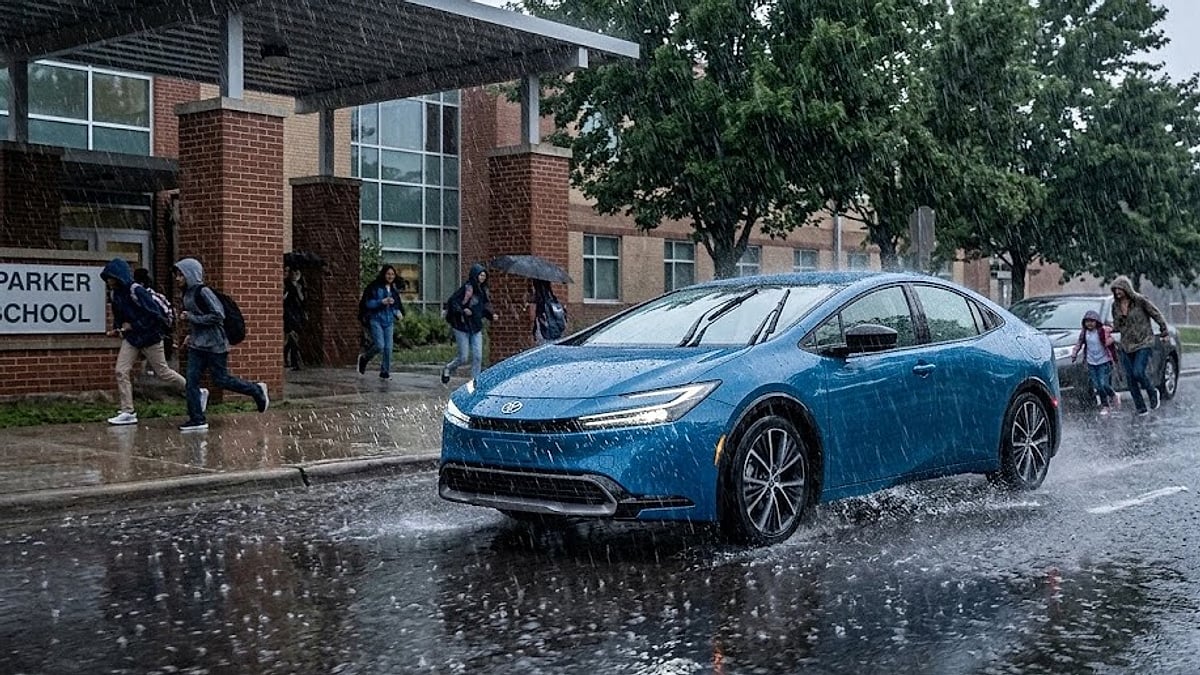
"I was driving my daughter to school in a torrential downpour when the right rear door just popped open on its own," shared a verified fifth-generation Prius owner on a dedicated Facebook hybrid technical forum. "The dashboard started buzzing like crazy, and if she hadn't been buckled into the center seat, the air pressure from the semi-truck next to us could have pulled her toward the edge.”
According to the official safety recall report published by the National Highway Traffic Safety Administration, designated as NHTSA Campaign Number 26V049000, the scope of this defect encompasses approximately 141,286 units across the United States. This filing explicitly details how moisture intrusion into the electronic rear door switches creates a direct short circuit, creating an imminent risk of localized electronic failure while the vehicle is in motion.
The structural severity of this defect is further substantiated by documentation from Transport Canada, which confirms that vehicles previously repaired under the initial 2024 campaign continue to experience the same short-circuit vulnerabilities in severe weather conditions. This regulatory admission proves that merely replacing the external rubber gasket was an insufficient remedy for a deeply rooted electrical logic flaw.
High Altitude Implications and Colorado Testing Insights
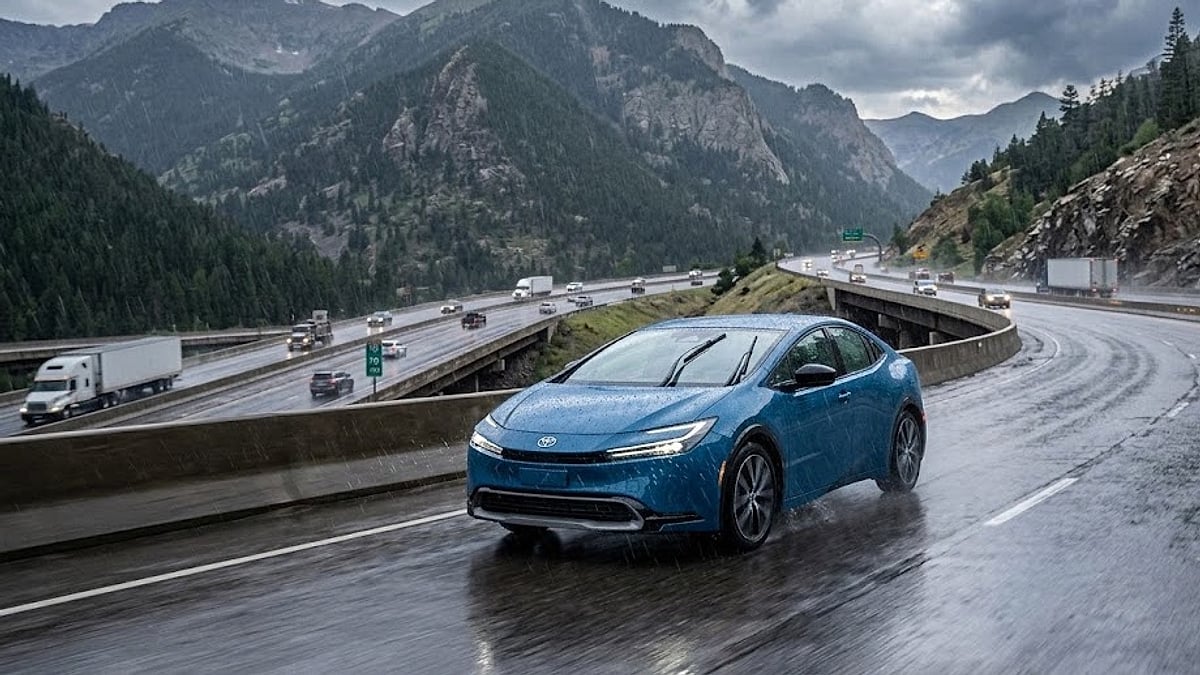
In our continuous coverage of hybrid reliability, Denis Flierl has uncovered an unresolved dispute regarding how extreme thermal cycling accelerates this sealing failure. Operating a fifth-generation Prius in the high-altitude environments of the Colorado Rockies introduces distinct environmental pressures that compound the vehicle's manufacturing vulnerabilities.
During boots-on-the-ground testing at the high elevations through the I-70 corridor, atmospheric pressure differentials significantly affect body panel seals. When a vehicle transitions rapidly from freezing mountain air into a high-pressure automated washing bay in the foothills, the abrupt thermodynamic shift creates a localized vacuum inside the door panel assemblies.
This thermal contraction draws trapped moisture past the outer weatherstripping and forces it directly into the micro-switch housing. For a detailed breakdown of how high-altitude thermal loads impact hybrid fluid dynamics and electrical integrity, see the technical analysis on Torque News. This regional stress profile explains why mountain-district vehicles exhibit accelerated switch degradation compared with those operated in stable arid climates.
Field Observations from Owner Communities
The technical reality of this low-voltage instability is echoed throughout independent mechanical diagnostic forums across the internet. In a recent technical discussion on r/PriusPrime, several owners noted that the unlatching sequence often occurred right after a heavy rainstorm or an intensive detailing session.
Based on my 30 years of experience, this aligns with how sensitive modern low-voltage control modules are to minor drops in resistance along their signaling paths, as discussed in the full discussion on the r/PriusPrime Community Board.
Another owner highlighted the vulnerability of the electronic design compared to traditional mechanical linkages, noting that the absence of a physical safety backup on the exterior handle means that when the circuit shorts, the system loses all logical override capabilities, as noted in this Reddit Technical Thread.
The 2026 Circuit Modification Strategy
The permanent remedy developed by Toyota engineers for the January 2026 recall represents a complete departure from their original 2024 sealing strategy. Rather than attempting to create a completely waterproof barrier around the micro-switch, the new field modification alters the physical architecture of the wire harness assembly.
Technicians are tasked with installing an inline resistor network that changes the voltage threshold required to trigger the latch solenoid. By increasing the baseline resistance, a minor short circuit caused by a water film can no longer reduce the voltage to a level low enough to meet the logic parameters of the body control module. For contextual insight into how modern hybrid components can create unexpected financial vulnerabilities as they age past factory coverage parameters, refer to the longevity breakdown on Torque News.
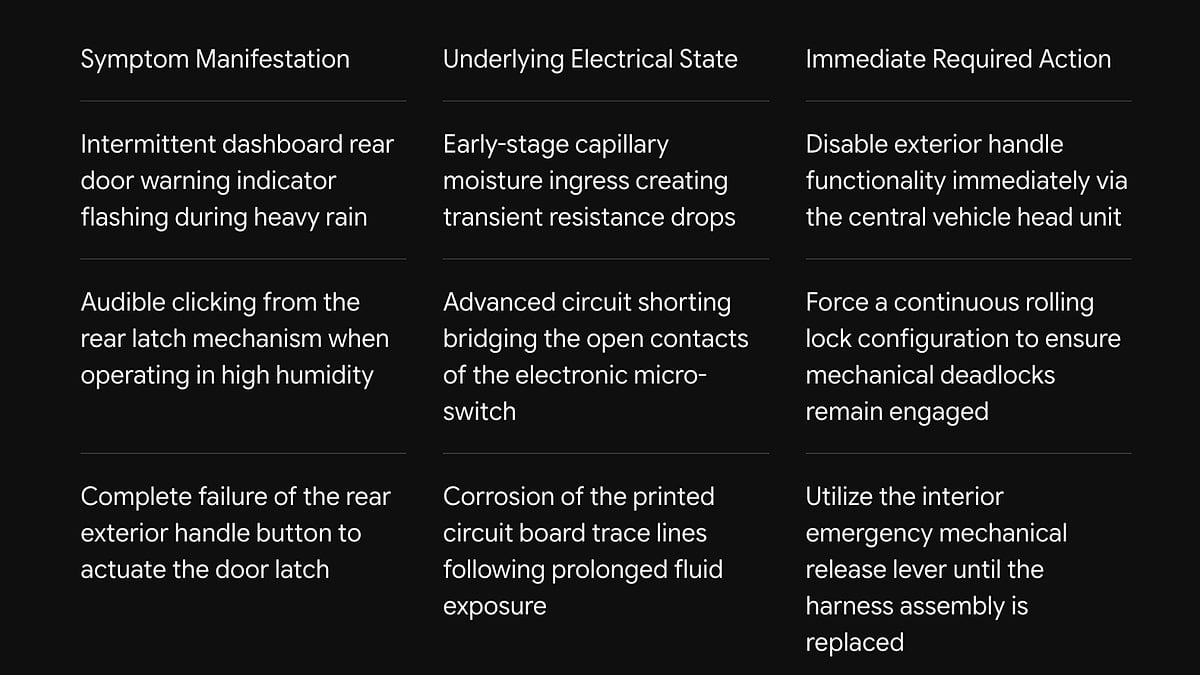
Proactive Mechanical Diagnostic Matrix
Key Takeaways
- Trace the failure mechanism directly to microscale fluid intrusion, thereby lowering the electrical resistance across an open 5-volt circuit path.
- Acknowledge that Toyota's early production updates failed because they focused on external sealing rather than modifying internal electrical logic.
- Confirm that over 141,000 fifth-generation Prius vehicles require hardware modifications to prevent unwanted door openings at speed.
- Utilize built-in software parameters to reduce safety exposure until your local dealership receives the necessary physical recall components.
What Is The Next Logical Question?
The immediate question facing owners is whether enabling the automatic rolling door locks fully protects occupants from an unexpected door opening while traveling at high speeds. The answer is yes, but only because of a secondary mechanical safety feature. When the vehicle is in motion, and the speed-sensing locks are active, the mechanical locking pin physically blocks the interior latch plate from moving, even if the exterior switch sends a valid electrical unlatch command to the body control module.
However, the system remains highly vulnerable the exact moment the vehicle slows to a stop or transitions into park, as the software automatically disengages the mechanical lock, allowing a shorted switch to immediately throw the door open.
Technical Mitigation Protocol For Affected Owners
If you are waiting for backordered parts at your local service center, enter the vehicle settings menu via your central infotainment screen and navigation stack. Locate the vehicle customization submenu, select door lock settings, and ensure that the auto-unlock feature is completely decoupled from the shifting mechanism.
Configure the system to unlock only when the physical interior driver-side door handle is pulled, preventing the rear doors from releasing unprompted at traffic lights. Additionally, completely avoid high-pressure undercarriage or side-profile car wash bays until your vehicle has undergone the formal circuit wiring harness update at an authorized dealer.
How About You? Have you experienced erratic door locks or unprompted latch clicking after driving through a severe storm or taking your vehicle through a car wash? Leave a comment in the red Add new comment link below and share your diagnostic experience with our technical tracking group.
Future Investigative Outlook
Our next investigative installment will shift focus directly to the consumer and dealership logistics side of this safety crisis. We will uncover why thousands of hybrid owners are facing extensive parts delays and service bay gridlock as they try to secure these critical circuit modifications.
Our upcoming report, Toyota Service Bays Overwhelmed By Prius Recall Demands Leaving Owners Stranded With Unsafe Latches, will expose the widening gap between corporate recall announcements and real-world parts availability at dealerships. We will provide an actionable blueprint detailing how to navigate service delays, secure alternative transportation, and leverage corporate accommodation programs.
Come back tomorrow, or check my Torque News Home Page for more of Denis Flierl's interesting automotive news articles.
About The Author
Denis Flierl is a 14-year Senior Reporter at Torque News and a member of the Rocky Mountain Automotive Press (RMAP) with 30+ years of industry experience. Explore his full investigative reporting archives and technical guides at DenisFlierl.com. Based in Parker, Colorado, Denis leverages the Rockies' high-altitude terrain as a rigorous testing ground to provide "boots-on-the-ground" analysis for readers across the Rocky Mountain region, California EV corridors, the Northeast, Texas truck markets, and Midwest agricultural zones. A former professional test driver and consultant for Ford, GM, Ram, Toyota, and Tesla, he delivers data-backed insights on reliability and market shifts. Denis cuts through the noise to provide national audiences with the real-world reporting today’s landscape demands. Connect with Denis: Find him on LinkedIn, X @DenisFlierl, @WorldsCoolestRides, Facebook, and Instagram.
Photo credit: Denis Flierl
Set Torque News as Preferred Source on Google
Follow us today...