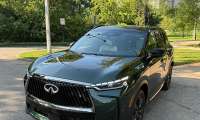

Spend ten minutes in any owner forum or vehicle club, and you will find the same complaint repeated like a chorus. The tires that came on the car wore out too fast. They are no darn good in the rain or the snow. Owners trade stories about replacing a set at 30,000 miles, sometimes much sooner, and they walk away certain they got shortchanged. Worst of all, they often vow never to buy that brand of tire ever again. I have heard it for years in social media clubs across nearly every brand I test, so I finally sat down with a tire company engineer to ask the question directly. Why do so many of us dislike our original equipment tires?
The answer was simpler than I expected, and it reframed the whole argument. The factory tire was never chosen to last or to perform well in snow or rain. It was chosen to do a very specific set of jobs, and longevity and grip sit near the bottom of that list.
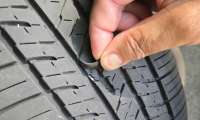
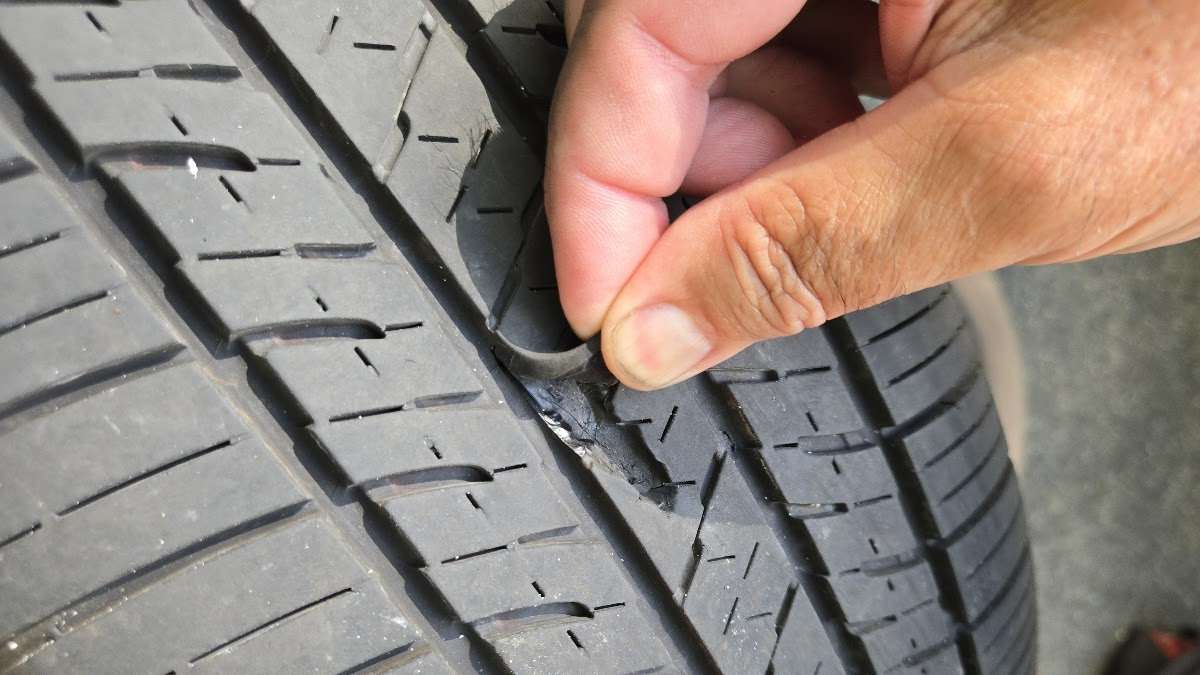
We own a 2024 Venza (hybrid) Limited that we love. It's basically a RAV4 with a sexier body. For the record, we hated the OEM tires that came with it, and our reason is justified. After just 12,000 miles of use, the tires literally fell apart. They became unbalanced for some reason, and when we investigated, we discovered that entire blocks of the tread had come loose, and many were simply gone. The tire was unsafe after what is less than a year of use for most drivers. That’s our tire at the top of the page image.
Let’s examine some comments under an example post we found today in the Facebook 2021-2024 Toyota Venza Hybrid Club, of which I am a longstanding member. We didn’t make the post. Another member did. It said: “At what mileage did you replace your tires?” The answers were shocking:
E.G.F. - “13,000....wanted to get rid of the noisy, rough ride. Replaced with Parelli Scorpion AS3. Amazing difference.”
K.C. - “12,000, had a lot of road noise and started getting vibrations. Went with the Michelin CrossClimate 2.
J.R. - “5,000. Couldn’t stand the (OEM tires)”
S.B. - “20,000 miles.”
C.M.W. - “28,000 miles.”
Some owners report much better tire life. However, the common theme across such posts is that many owners experience rapid wear and poor performance, and they often switch tires shortly after buying the vehicle. This is a tremendous waste. Many of those OEM tires end up either in a landfill or, worse, in the environment, and even when recycled, the energy consumed to make, transport, and recycle them is all wasted. Not to mention the money.
As a longtime tire tester, I’m fortunate to meet many “factory engineers” at tire launches and sometimes at media group events. It was at such an event that I recently met with an engineer who designs tires and has done so for quite some time. This engineer, by education and vocation, is now a tire brand manager responsible for many aspects of the business. What I heard validated many of my assumptions but also shed light on who is to blame for this wasteful practice.
Let’s start with how the tires end up so lousy, and why the tire brand makes no difference. When automakers are planning a new model or updating one, they create a request for proposal document that they offer to tire makers. The tire makers are invited to bid on the requested tire. The automakers have a lot of insider language they use, but it translates to a set of priorities. For nearly every vehicle, except sports cars and serious off-roaders, the priority list reads this way:
1.Best possible fuel economy
2.Quiet ride
3.Cost
What is listed as priorities after these first three is still important, but if your first three priorities are NOT long life and great grip in all weather, don’t count on those attributes being very good.
The most important thing to understand is that no single tire can be all things. A great tire with long life, high durability, and great grip in nearly all circumstances cannot be the least expensive. In fact, it may cost twice or three times as much as an “acceptable” tire. Also, certain attributes are at odds with one another. For example, off-road tires have amazing durability and can sling mud out of their tread blocks. For owners of Jeeps, Broncos, and Tacomas, those two things are extremely important. However, fuel economy and noise are directly at odds with the tread and compound design that make those tires so popular with enthusiasts. The enthusiasts don't care. They shell out big bucks for the tires they want, pay the gas premium, and tolerate the highway hum because, to them, the fun begins where the pavement ends.
Let’s now play the devil’s advocate and challenge an imaginary new car owner. Shall we ask if the owner would have paid $500 more for the vehicle if the tires were “better?” Next, what if the vehicle had 1 or 2 MPG lower fuel economy? Finally, what if the vehicle was noisy on the test drive? Some owners may have said, “Sure, because I understand I am getting a better tire.” Others might think you are crazy, since the cost of ownership is always on any new vehicle shopper’s top priorities list, and few people want a new car that is noisy.
Some automakers do, in fact, allow the shopper to choose which tires they will drive home on. It’s very rare, but one example is the Ford Bronco Sport Badlands. When I purchased mine new, there was an option to pay extra, and the tires fitted would be Falken WildPeak A/T3W all-terrain tires. I love these tires! On the dirt roads I travel, they are superb. They are definitely not as quiet as a touring tire. And my fuel economy is not great. But I use that vehicle in specific scenarios. Because I am off-pavement in it almost every time I drive it in Central New Hampshire, I am that weirdo who wants an expensive, inefficient, relatively loud tire. I was glad to have the option to drive it home on the tires I knew I needed and wanted. Sadly, with most new vehicles, you get what's on the vehicle, and your only option is to strip them off and pay $1,200 to $1,900 for a completely new set.
So what should owners take from this? The lesson is not that automakers or tire makers are cheating you. The lesson is that your first set of tires reflects the automaker's goals and government fuel economy mandates, not your preferences. Once the original set wears out, the next decision is entirely up to you. If long tread life is what you value, you can buy a tire engineered for exactly that. The Goodyear Assurance MaxLife2 is a great example of a tire that fits that bill. If quiet comfort or maximum economy matters more, you can chase that instead. Perhaps a Michelin Primacy for low noise, or an Energy Saver A/S for the best fuel economy. Be prepared to pay a premium for any of those very highly-rated tires.
The upshot of this is that you should not necessarily blackball any specific tire brand if you don't like the set of tires your rig came with new. That brand may have a great tire model you would love, but it may not be sold at the same price or use the same compound. We hope that knowing what the factory was trying to solve turns your frustration into awareness. Your original tires did the job they were ordered to do. Your next set can be a tire that serves your needs. At least until California outlaws it.
John Goreham is a 14-year veteran of Torque News. An accomplished writer and a long-time expert in vehicle testing, Goreham also serves as the Vice President of the New England Motor Press Association and has a growing social media presence. He’s also a 10-year staff writer and community moderator for Car Talk. Goreham holds a B.S. in Mechanical Engineering and an undergraduate Certificate in Marketing. In addition to vehicle and tire content, he offers deep dives into market trends and opinion pieces. You can follow John Goreham on X and TikTok, and connect with him on LinkedIn.
Set Torque News as Preferred Source on Google
Follow us today...