
In my ongoing investigative series on midsize truck reliability, I recently exposed how Toyota Tacoma Transmission And Driveline Deficiencies Surface Via Internal Dealership Diagnostic Data, leaving service bays at a standstill. I followed that up by breaking down how Toyota Tacoma Owners Facing Extended Repair Backlogs Hold Significant Leverage Under State Lemon Laws, giving drivers a concrete blueprint to fight back against months-long repair delays. Today, we are digging past the broken metal to uncover the hidden catalyst behind this entire powertrain drama.
The Hidden Catalyst Inside Your Truck's Brain
There is a major missing piece in the Tacoma transmission story that the mainstream automotive media has completely overlooked. Everyone is blaming the physical pressure solenoids for the violent shifting and "Limp Mode" drops, but with my 30 years of auto experience under my belt, I knew there had to be a deeper root cause.
The real culprit is a hidden, hyper-aggressive factory software map programmed into the Transmission Control Module (TCM). This software is designed to force the truck into higher gears almost instantly, keeping the 2.4-liter i-FORCE turbocharged engine in an incredibly low RPM band.
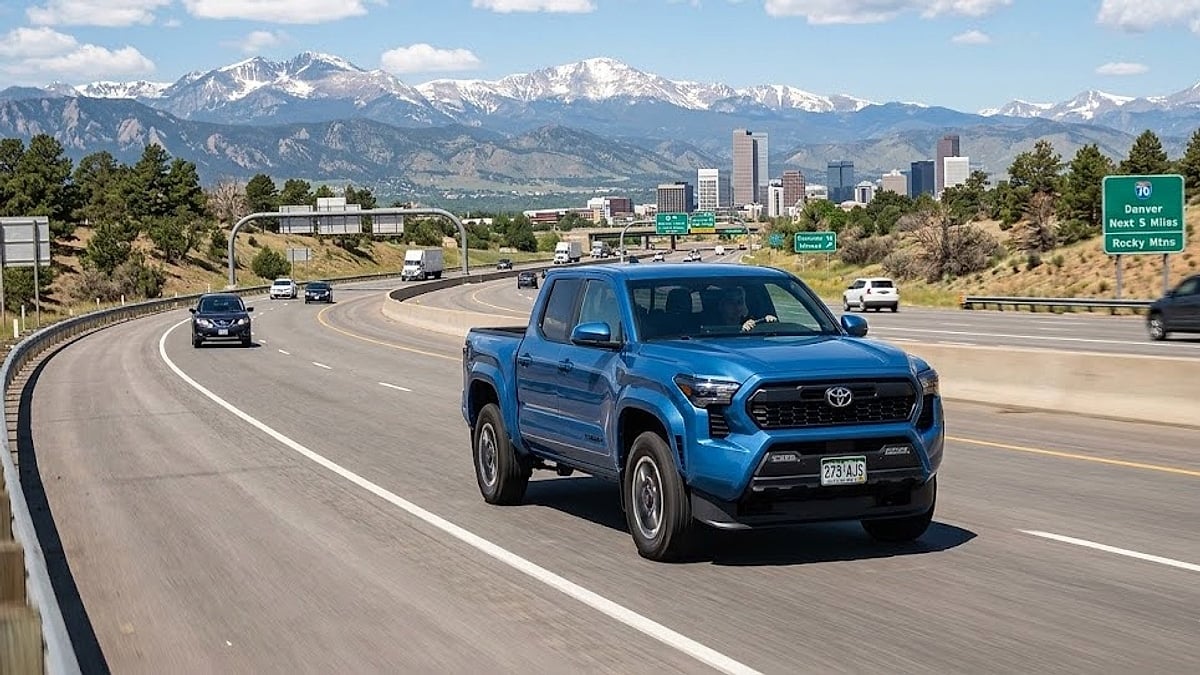
Toyota didn't program this map to give you a smooth ride; they did it to squeeze every last drop of fuel economy out of the truck to satisfy federal regulatory tests. When the transmission fluid is cold, or you are pulling a heavy load, this hyper-early upshifting starves the clutch packs of vital hydraulic line pressure, causing the exact internal component damage we are seeing nationwide.
According to a comprehensive consumer defect investigation published by automotive data specialists at Lemberg Law, "the primary issue involves harsh transmission shifting, with owners describing hard, delayed, or bumpy gear changes, slipping, and gear hunting." When those micro-solenoids try to execute a shifting command while the software starves them of adequate line pressure, they physically stick or fail entirely.
This hidden engineering conflict is precisely why early-production 4th-Gen models are dropping like flies. In fact, national consumer legal filings tracked by The Lemon Law Experts confirm that "alarmingly, some of these issues have appeared in vehicles with fewer than 1,000 miles on the odometer."
High-Altitude Stress and The Rocky Mountain Reality
If you live and drive out here in Colorado as I do, this software issue isn't just a minor annoyance; it's a major safety hazard. I routinely test trucks under the most brutal conditions imaginable, pulling long, steep grades up the Georgetown Hill and pushing through the thin air at the Eisenhower Tunnel.
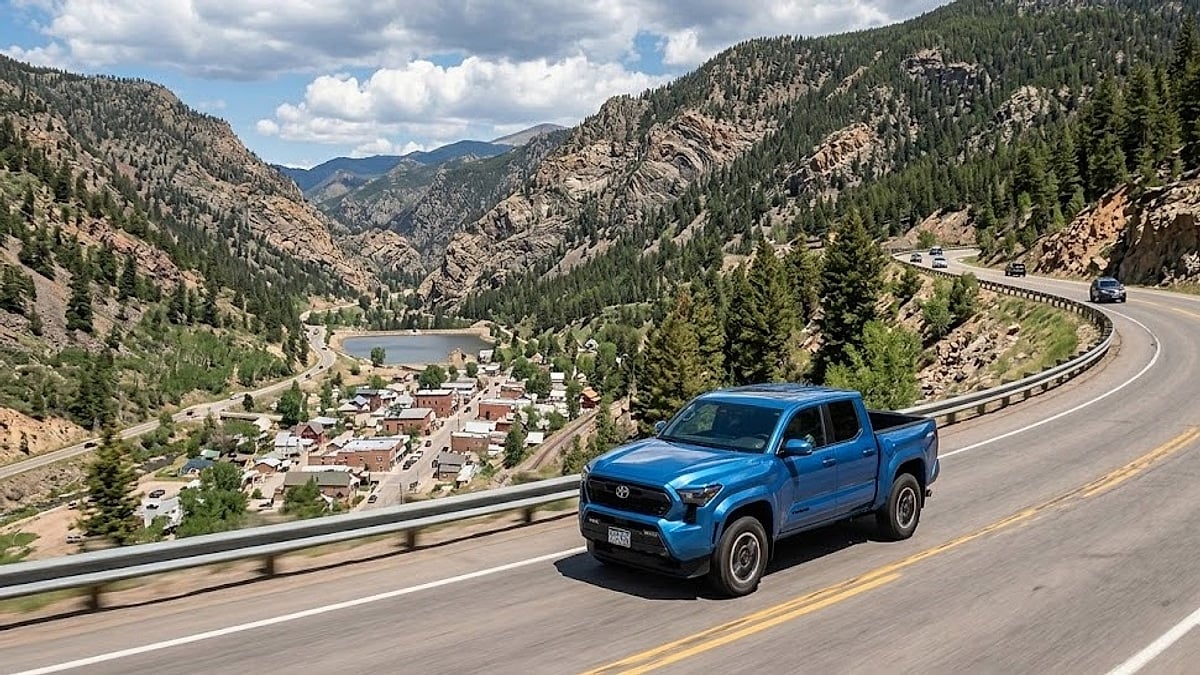
Out here, the high altitude forces a small-displacement turbocharged engine to work twice as hard to maintain momentum under load. When you combine that extreme thin-air stress with a factory software map that desperately tries to force an early upshift into 7th or 8th gear at 50 MPH, the transmission gets caught in a violent loop of gear hunting.
The software realizes the engine is lagging, slams the transmission down two gears, builds massive heat, and then immediately tries to upshift again the moment you lift your foot even a fraction of an inch. Operating your truck under these heavy load conditions while the TCM software limits hydraulic pressure creates a recipe for a catastrophic roadside failure.
Decoding The Factory Calibration Logic
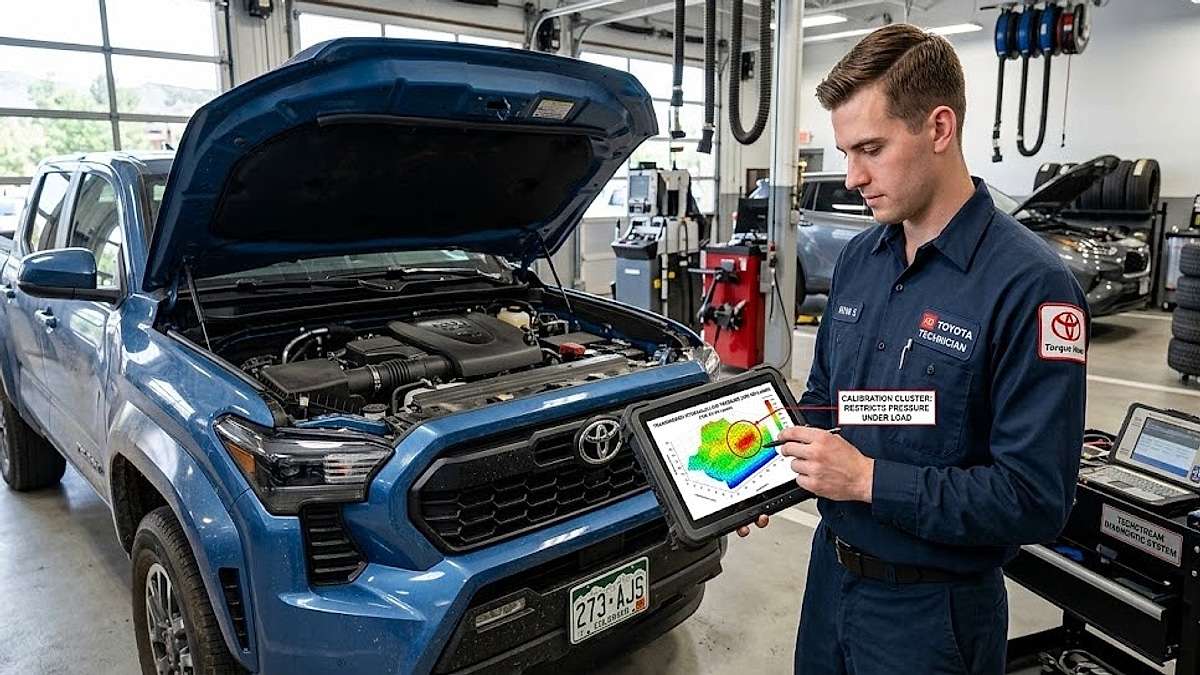
My field research into the 4th-Gen Tacoma’s electronic architecture reveals that the early factory Transmission Control Module (TCM) firmware operates on a hyper-lean line-pressure map.
Specifically, during cold-start cycles or under heavy torque demands, the initial software calibration limits the application of line pressure to the internal clutches to minimize mechanical drag and artificially lower emissions. However, when the 2.4-liter engine encounters significant resistance, this restricted hydraulic pressure prevents the clutches from locking securely. This causes fluid temperatures inside the transmission casing to spike past 230°F within minutes, accelerating mechanical fatigue.
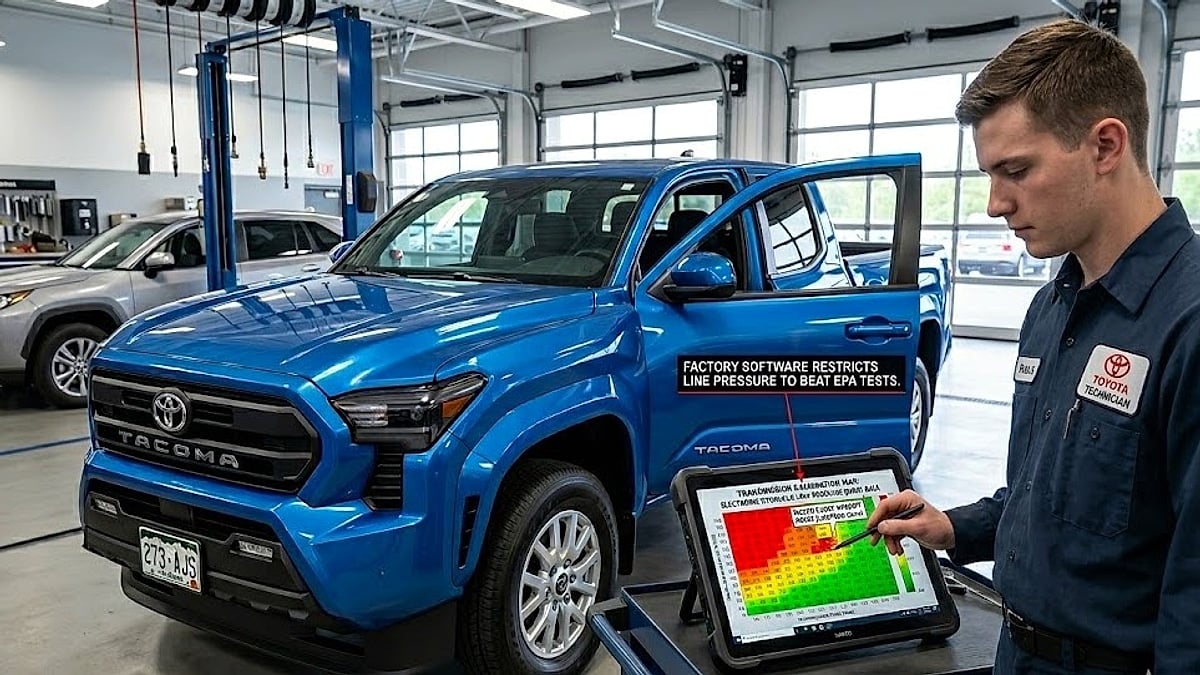
The latest dealer-level Technical Service Bulletin (TSB) calibrations aim to address this behavior by raising baseline shift-point pressures. However, if your truck has spent months performing harsh gear hunts under these early firmware parameters, the internal clutch friction has likely already suffered irreversible thermal degradation. Proactive diagnostic monitoring of fluid color and temperature remains the only way to catch this silent software wear before it turns into a total mechanical failure on the highway.
My Take
From my view, Toyota's real mistake wasn't just a bad batch of mechanical components from a supplier; it was trying to calibrate an off-road truck to behave like a hybrid compact car on an emissions dyno. You cannot map a multi-speed truck transmission to run at 1,200 RPM under load without causing severe kinetic stress throughout the driveline.
I’ve spent three decades looking at manufacturing defects, and this looks exactly like a scenario where the software engineers won the battle for fuel economy numbers, but the mechanical components lost the war in the real world. Forcing early upshifts when the transmission fluid is cold and viscous causes the internal clutch packs to slip before they can lock securely.
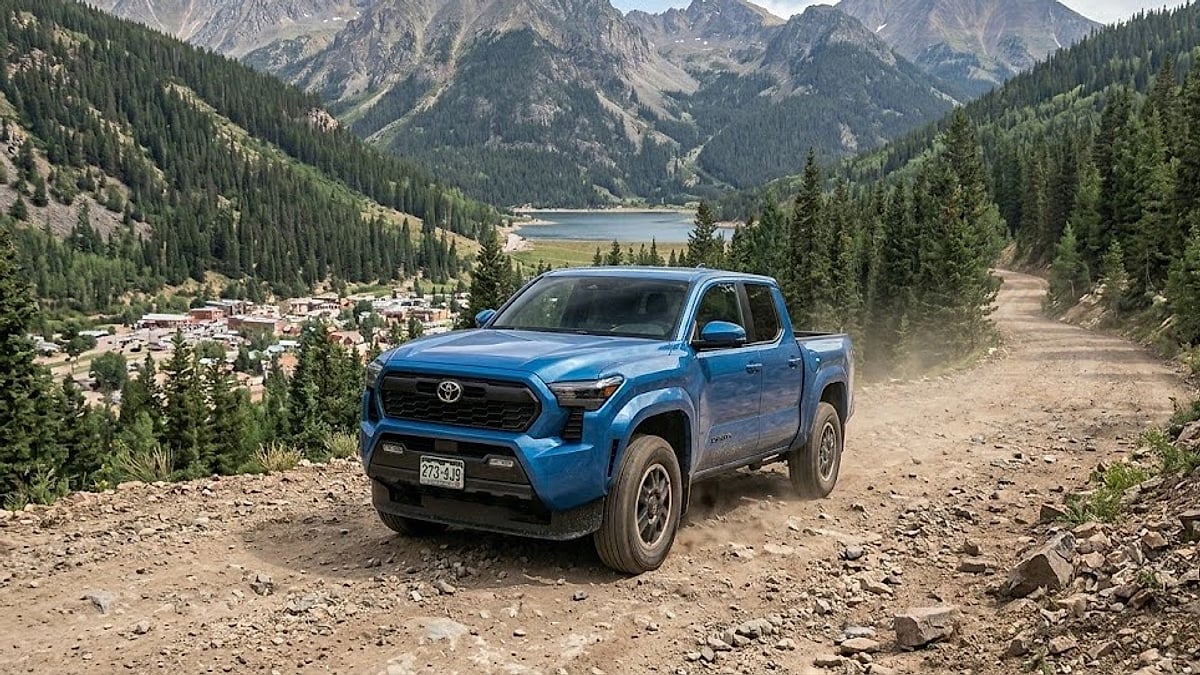
In The End: If you are currently driving a new Tacoma, my best advice is to take the shifting logic out of the computer's hands when you are tackling steep mountain roads or towing. Drop the truck into "Sport" mode or use the manual sequential shifter to force the TCM to hold lower gears longer, keeping your engine RPMs up and keeping your hydraulic line pressure exactly where it needs to be to protect those fragile clutch packs.
How About You? Have you noticed your new Tacoma aggressively hunting for gears or slamming into place on cold mornings? Tell us what you think in the comments section below. Just click the "Add new comment" link right down there to join the conversation and share your real-world experience.
Come back tomorrow, or check my Torque News Home Page for more of my informative automotive news articles.
About The Author
Denis Flierl is a 14-year Senior Reporter at Torque News and a member of the Rocky Mountain Automotive Press (RMAP) with 30+ years of industry experience. Explore his full investigative reporting archives and technical guides at DenisFlierl.com. Based in Parker, Colorado, Denis leverages the Rockies' high-altitude terrain as a rigorous testing ground to provide "boots-on-the-ground" analysis for readers across the Rocky Mountain region, California EV corridors, the Northeast, Texas truck markets, and Midwest agricultural zones. A former professional test driver and consultant for Ford, GM, Ram, Toyota, and Tesla, he delivers data-backed insights on reliability and market shifts. Denis cuts through the noise to provide national audiences with the real-world reporting today’s landscape demands. Connect with Denis: Find him on LinkedIn, X @DenisFlierl, @WorldsCoolestRides, Facebook, and Instagram.
Photo credit: Denis Flierl
Set Torque News as Preferred Source on Google
Follow us today...