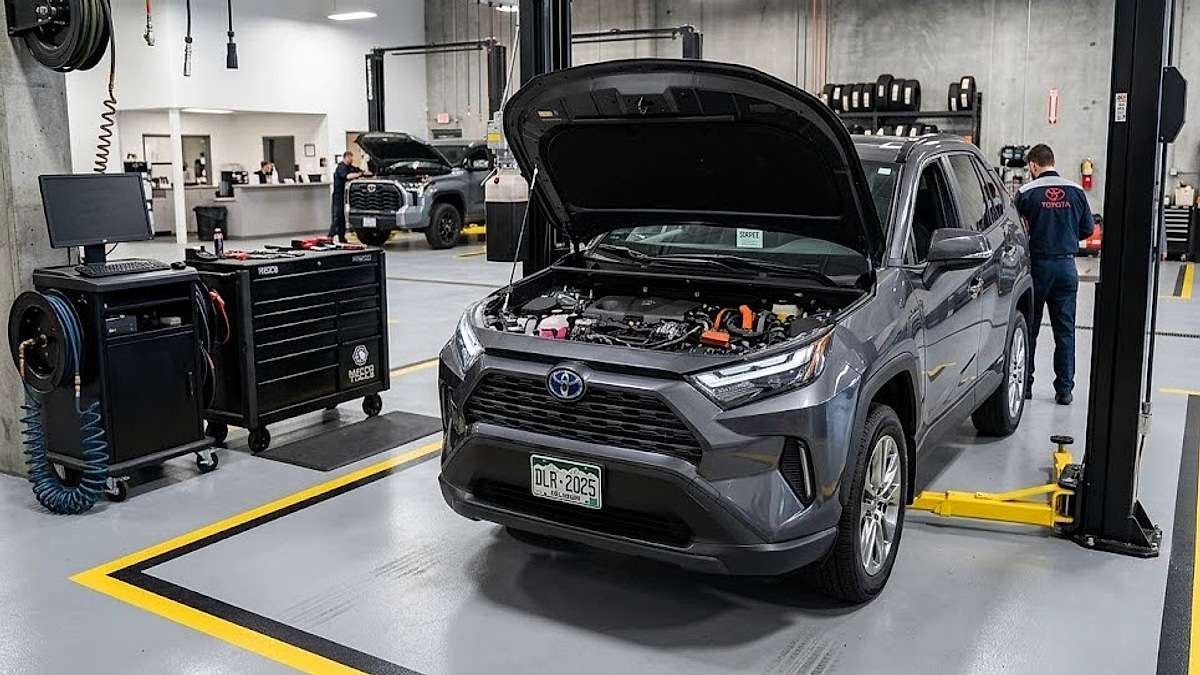

In my previous reporting, I detailed how “Early 2026 Toyota RAV4 Buyers Are Paying Premium Dealer Markups For Industrial Interiors That Mainstream Reviewers Label As Too Functional” to acquire durable, utility-focused cabins, yet they simultaneously face brutal logistical bottlenecks explored in “2025 Toyota RAV4 First Service Baseline Shows 4-Hour Wait Times At Dealership Service Centers.”
I want to pull back the curtain even further today on why these modern crossovers are overwhelming our local service bays and what you can do about it.
The Hidden Drain Behind The Service Bay Backlog
I have spent more than 30 years diagnosing mechanical failures and electrical anomalies, and I can tell you that the modern service crisis isn't just about simple oil changes. The actual root cause behind the massive wait times at dealership service centers is a structural conflict between Toyota’s extended 10,000-mile service intervals and the high-draw digital electrical architectures found in modern hybrid and electrified vehicles. Because vehicles are staying away from professional diagnostic bays for longer periods, low-voltage electrical systems are silently degrading in the background.
When a modern RAV4 finally rolls into a service bay after nearly a year on the road, technicians aren't just changing filters; they are fighting a mountain of "ghost codes" intermittent software faults triggered by a dropping 12V auxiliary battery. Data compiled across major diagnostic networks shows that the highest concentration of modern hybrid electrical issues stems directly from 12V auxiliary battery degradation rather than the high-voltage traction pack itself.
Real-World Data
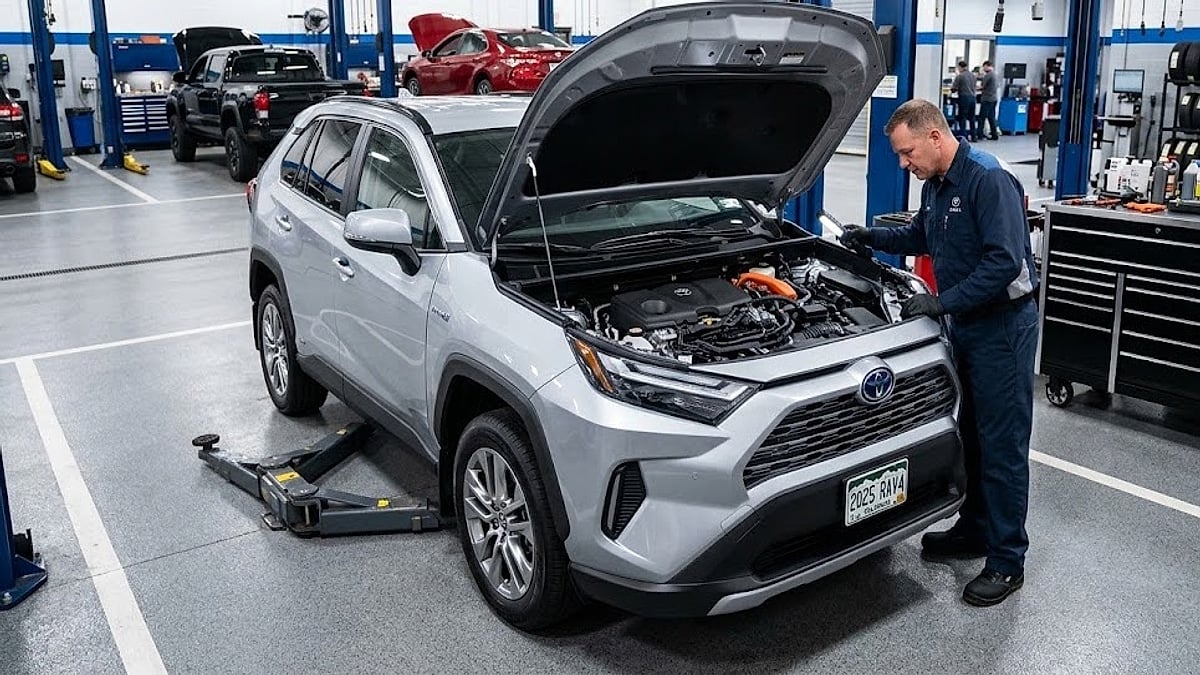
According to real-world vehicle data compiled by the automotive analysts at The Weekly Driver, the standard 2.5L hybrid platform shows a disproportionate number of accessory complaints directly tied to 12V Auxiliary Battery failures that compromise the vehicle's electronic infrastructure.
This low-voltage drain occurs because modern security modules, telematics systems, and over-the-air update receivers draw a continuous, tiny current while the car sits parked. Over a 10,000-mile stretch, a vehicle that primarily runs short commuter trips will never fully saturate its 12V battery via the DC-DC converter.
As a result, the owner arrives at the service center with an aggregate system voltage below 12.1 volts, which triggers error codes in the electronic power steering, safety pre-collision radar, and braking modules. Technicians then have to spend hours checking individual modules instead of completing a routine fluid service.
High-Altitude Stresses and Ghost Diagnostics
Living and working here in Colorado, I see this mechanical strain amplified dramatically by our harsh, high-altitude operating conditions. When local drivers commute from Parker up through the severe temperature swings of Vail Pass or park their vehicles overnight in deep-freeze mountain valleys, the cold-cranking capacity of that small 12V battery drops by up to 50 percent. This environmental stress accelerates the arrival of phantom warning lights on your dashboard.
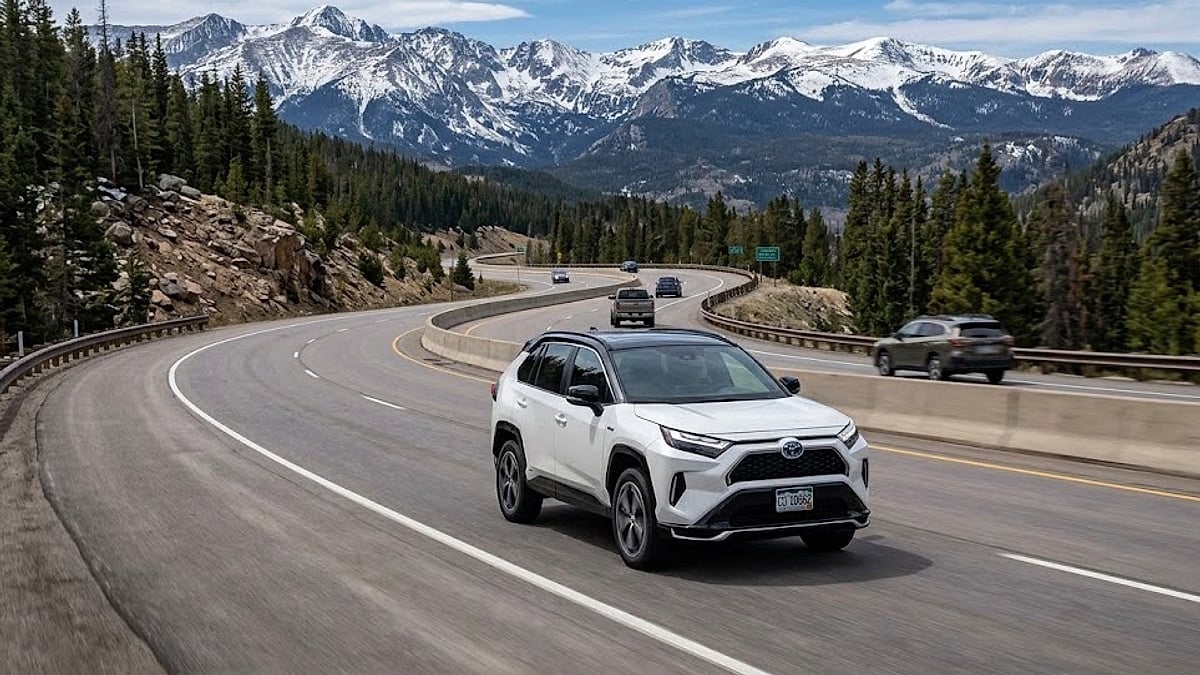
The primary problem is that standard dealership express-lane diagnostic equipment often completely misses this early-stage, low-voltage cell degradation. A quick surface-charge test might show a green light, but the moment the vehicle is subjected to an alpine cold-start, the voltage drops low enough to scramble the computer logic.
As a veteran automotive investigator, I know that when a vehicle's computers lack clean, consistent voltage, they begin generating false diagnostic trouble codes that require advanced, multi-hour troubleshooting to isolate.
This reality aligns perfectly with what I uncovered in my analysis of early 2026 Toyota RAV4 buyers paying premium dealer markups for industrial interiors, where I noted that choosing simple, hardwired analog climate controls over touchscreens helps drivers bypass these fragile digital loops.
Furthermore, this systemic electrical diagnostic overhead is exactly why we are seeing the severe bottlenecking outlined in my investigation of Toyota RAV4 first-service baseline wait times at service centers: a standard oil change bay quickly becomes gridlocked when a car requires complex electrical health verification.
My Take
From where I sit, Toyota’s push toward longer service intervals is a double-edged sword for the consumer. It looks great in a marketing brochure, but it ignores how modern drivers actually use their cars every day. If you are just driving three miles to the local grocery store and back in freezing weather, you are slowly starving your car's electrical brain.
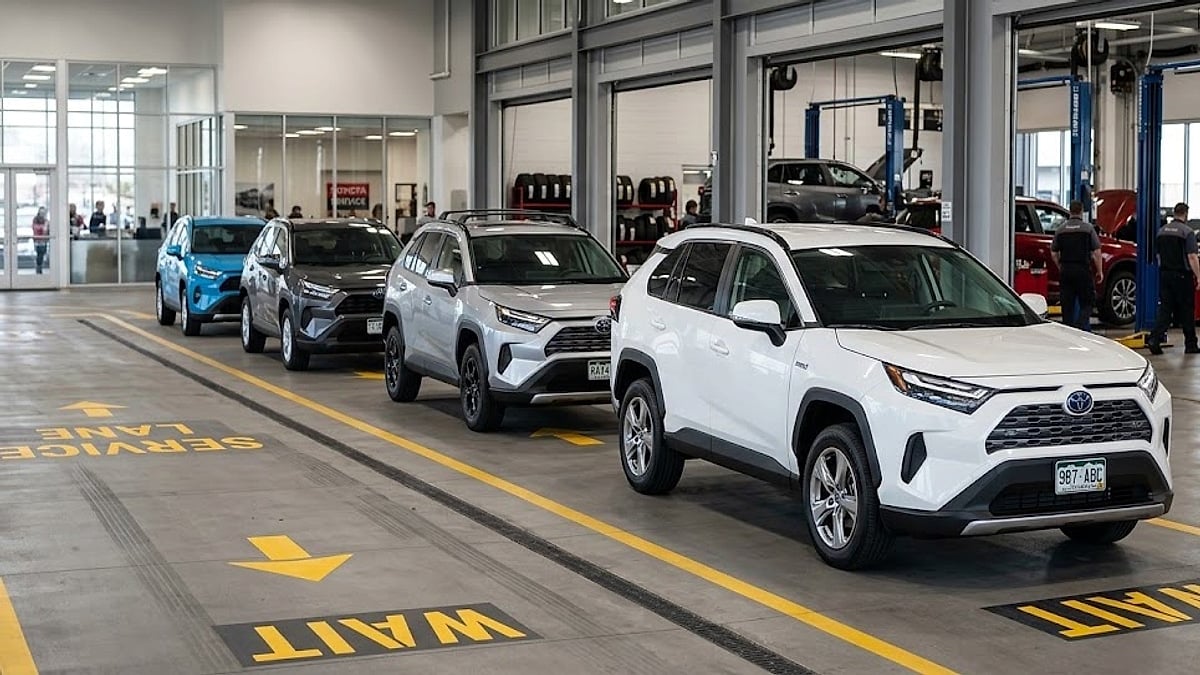
To avoid getting stuck in a four-hour dealership waiting line due to an unexpected electrical issue, you need to adjust your maintenance strategy. Do not wait for the 10,000-mile dashboard reminder to have your vehicle’s electrical health evaluated. I highly recommend buying a simple, inexpensive digital battery monitor that plugs into your accessory port so you can watch your resting voltage at home. If you consistently see a reading below 12.2 volts before starting the vehicle in the morning, your system is crying for help.
Furthermore, you should explicitly request a dedicated load test of the 12V auxiliary battery at a local, independent shop every 5,000 miles. Taking this proactive approach ensures that weak cells are caught and replaced under warranty long before they leave you stranded with a non-responsive vehicle or a dashboard lit up like a Christmas tree.
What Would You Do? Have you noticed strange phantom warnings or struggled with long service wait times with your hybrid? Drop your thoughts in the comments section below, and let's get a conversation started. Please leave a comment in the red Add new comment link below.
Come back tomorrow… or check my Torque News Home Page for more of my informative Toyota RAV4 automotive news articles.
About The Author
Denis Flierl is a 14-year Senior Reporter at Torque News and a member of the Rocky Mountain Automotive Press (RMAP) with 30+ years of industry experience. Explore his full investigative reporting archives and technical guides at DenisFlierl.com. Based in Parker, Colorado, Denis leverages the Rockies' high-altitude terrain as a rigorous testing ground to provide "boots-on-the-ground" analysis for readers across the Rocky Mountain region, California EV corridors, the Northeast, Texas truck markets, and Midwest agricultural zones. A former professional test driver and consultant for Ford, GM, Ram, Toyota, and Tesla, he delivers data-backed insights on reliability and market shifts. Denis cuts through the noise to provide national audiences with the real-world reporting today’s landscape demands. Connect with Denis: Find him on LinkedIn, X @DenisFlierl, @WorldsCoolestRides, Facebook, and Instagram.
Photo credit: Denis Flierl
Set Torque News as Preferred Source on Google
Follow us today...