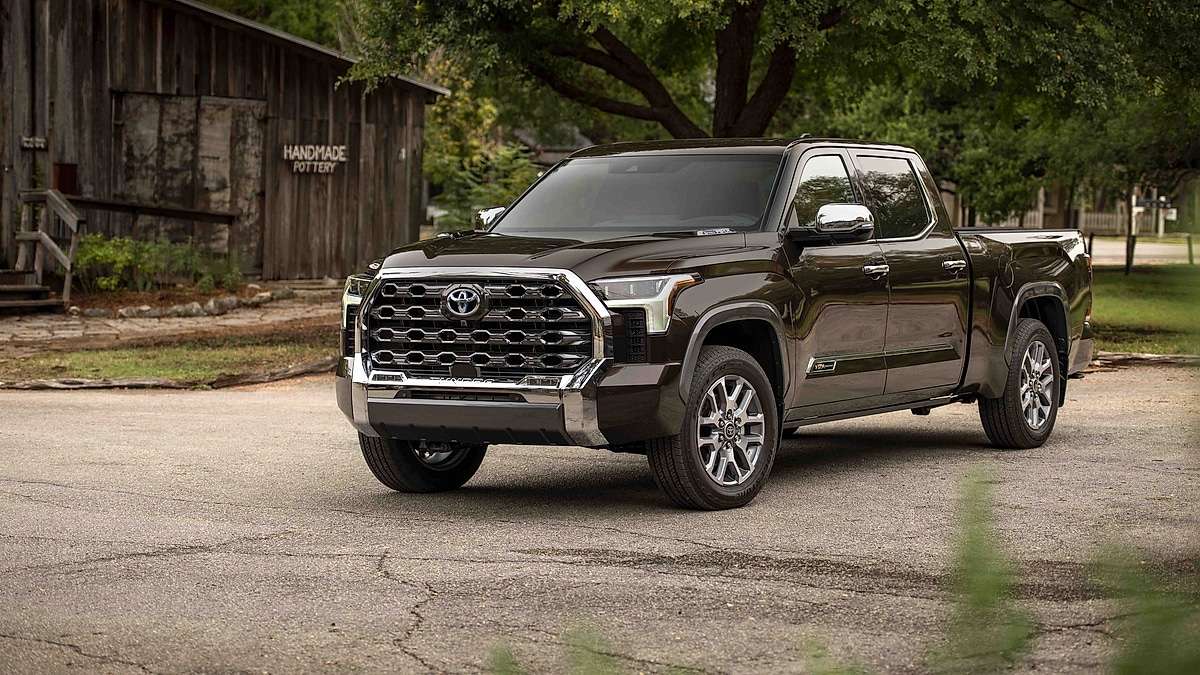

The Toyota Tundra nearly died in a conference room.
That is where most vehicles die. No fire. No catastrophic durability failure. No customer revolt outside headquarters. A product planner advances a slide, the forecast looks weak, and a perfectly good machine begins disappearing beneath a spreadsheet.
- The decision hinged on reallocating investment risk across a shared platform, rather than forcing Tundra to justify its costs alone.
- Sweers’ argument reframed Tundra as a strategic asset for brand credibility and dealer strength, not just a volume play.
- The shift to TNGA-F allowed Toyota to future-proof multiple vehicles at once, reducing long-term development cycles and costs.
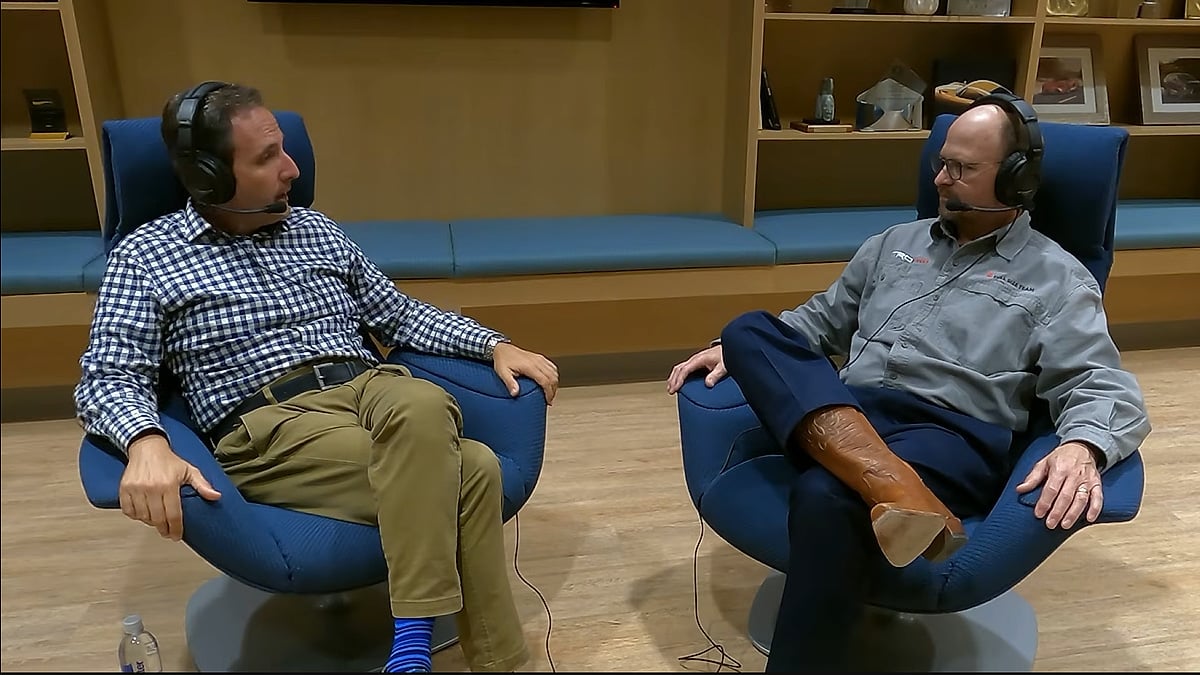
Mike Sweers recalled the moment with remarkable bluntness during a MotoMan interview.
“They’re going to cancel Tundra,” he said.
Sweers and Toyota’s North American team answered with a business strategy explaining why the truck should survive. The accompanying episode description says Sequoia faced the same danger, with leadership in Japan ready to pull the plug.
The public account leaves the exact planning cycle unnamed. That missing date deserves follow-up. The larger story is already visible in every new Toyota body-on-frame vehicle.
Tundra survived because Toyota stopped forcing one niche full-size truck to justify an expensive industrial kingdom by itself.
Sweers helped change the kingdom.
Toyota Had A Niche Truck In A Brutal Segment
Toyota has never enjoyed Detroit-scale volume in full-size pickups.
Ford, Chevrolet, GMC, and Ram live in a segment built around loyalty, fleet sales, commercial customers, enormous option sheets, and generations of Americans who inherited their preferred badge with the family socket set. Tundra could be excellent and still remain a distant player.
Toyota said the quiet part publicly years ago. In a 2016 profile of Sweers, the company described Tacoma as the segment leader and Tundra as a niche truck.
Tacoma volume can carry investment. A niche Tundra has to defend its frame, powertrain, factory tooling, engineering labor, certification, suppliers, and future replacements against trucks selling in far greater numbers.
Sweers understood that a chief engineer at Toyota carries more than technical responsibility. The role owns the vehicle from concept through the end of its life cycle. Customer research, investment, product positioning, business case, board approval, engineering, manufacturing, and the final judgment all gather around the same desk.
He had to defend the Tundra as a business before anybody could engineer the next one.
Enthusiasts tend to imagine product battles as arguments about horsepower, styling, and whether the truck deserves a V8. The real fight begins earlier and smells more like accounting.
GM Had Already Shown Sweers Both Ways To Get It Wrong
Sweers arrived at Toyota with useful scar tissue.
Early in his career, he worked at Oldsmobile during one of General Motors’ great convulsions. GM’s divisions had operated like separate car companies. Chevrolet, Oldsmobile, Buick, Pontiac, and Cadillac maintained their own engineering groups, engines, identities, and internal empires.
The duplication became absurd. GM could have several different 350-cubic-inch V8s doing similar jobs while separate groups designed overlapping components and defended their own budgets.
Efficiency had to come.
Then the pendulum broke through the wall.
GM reorganized engineering around broader corporate groups and pursued aggressive commonization. Sweers remembered the result clearly: Cadillacs began looking like Chevrolets, brand lines blurred, and the Cadillac Cimarron appeared.
The Cimarron made money, according to Sweers.
It still damaged Cadillac because buyers could see the shortcut.
That lesson is larger than one mediocre luxury compact. Platform sharing becomes dangerous when the customer can smell the accountant before opening the door. A premium badge cannot rescue a vehicle whose proportions, character, and execution reveal its cheaper sibling too loudly.
GM began with too much independence and ended with too little identity.
Sweers had lived through both mistakes before Toyota faced its own platform decision.
Three Platforms Became One Industrial Argument
MotoMan titled the relevant chapter “The Chess Move: Three Platforms Into One.”
The public material does not identify the three legacy architectures by name. The finished strategy provides a clear view of the direction.
Toyota’s F1, now broadly understood within the TNGA-F body-on-frame family, became the foundation for a remarkable collection of vehicles: Tundra, Sequoia, Land Cruiser, Lexus LX, Tacoma, 4Runner, and Lexus GX.
Those products once lived on far more separate architectures. Toyota gathered the expensive invisible work into a common system, then adjusted the structure for radically different assignments.
A full-size Tundra needs towing stability, payload capacity, a wide stance, and the road manners expected by American pickup buyers.
A Tacoma needs midsize proportions, trail credibility, maneuverability, and enough separation among trims to support everything from basic work duty to desert-running theater.
Land Cruiser carries a global durability religion.
The Lexus LX and GX require isolation, cabin refinement, and luxury behavior without losing the strength underneath.
The 4Runner needs to feel like a recreational truck built around North American tastes, even while sitting near a Land Cruiser with similar dimensions and related hardware.
The platform can be shared.
The promise cannot.
Toyota’s genius lies in placing commonality where the owner rarely looks, then spending engineering effort on the areas the owner feels. Frame dimensions, material thickness, reinforcement, suspension calibration, powertrain tuning, body mounting, packaging, steering, interior, styling, and capability can pull related vehicles toward different personalities.
That is a more disciplined form of commonization than the Cimarron approach.
The Tundra Stopped Carrying The Whole Bill
A standalone Tundra program had to compete against full-size trucks with enormous volume while funding architecture that served a relatively small slice of the market.
A shared global truck platform changes the arithmetic.
Frame engineering can support multiple programs. Powertrains can spread across related models. Suppliers gain scale. Manufacturing knowledge transfers. Crash development, electronics, steering systems, suspension concepts, and other expensive work can serve more than one badge.
The business case stopped asking Tundra to beat Ford by itself.
One architecture could support an empire of pickups and SUVs.
That gave lower-volume vehicles a stronger reason to exist. Land Cruiser, Lexus LX, GX, Sequoia, and Tundra no longer had to carry every engineering burden as isolated kingdoms. Tacoma and 4Runner volume strengthened the family further.
This is the deeper reason the cancellation story has value. Toyota did not save Tundra through sentimentality or by pretending its sales would suddenly rival F-Series. The company changed the denominator.
I think that was the smarter argument.
Tundra brought Toyota credibility in America’s most culturally important vehicle segment. It supported the Texas plant, dealers, loyal owners, Sequoia, and a broader truck identity. Its contribution extended beyond a simple annual sales total.
Platform volume turned those softer benefits into something finance could defend.
Toyota Still Has To Guard Against The Cimarron Ghost
TNGA-F creates its own risks.
The new Land Cruiser and 4Runner overlap heavily in size, hardware, and customer use. Lexus GX shares obvious family ties. Sequoia and Tundra carry related interiors, powertrains, and chassis thinking. A shared architecture can tempt a company to let marketing perform work engineering should have done.
Toyota has avoided the worst version of that problem so far.
The vehicles carry distinct enough missions, styling, tuning, interiors, and customer expectations to support separate identities. Nobody confuses a Tacoma TRD Pro with a Lexus LX after driving both, regardless of the shared architectural family.
That distinction must remain expensive.
When a company begins viewing differentiation as unnecessary cost, the Cimarron waits at the end of the hallway. Different badges and software themes cannot replace differences in seating position, body control, steering, visibility, packaging, capability, materials, and purpose.
Toyota should remember that the platform saved these vehicles because it gave engineers room to make them better. Turning the platform into an excuse for sameness would squander the whole strategy.
Sweers Knew The Difference Between Sharing And Surrender
The shape of Sweers’ career makes this story unusually satisfying.
He grew up in Michigan, restored an AMC Marlin with his father, studied engineering in Detroit, worked on the floor at Oldsmobile, survived GM’s institutional upheaval, passed through Chrysler during its own chaos, and eventually became one of Toyota’s most influential truck engineers.
He saw factories from underneath.
He saw duplicated engineering waste money.
He saw commonization erase identity.
He learned that manufacturing, customer research, platform strategy, and product character cannot be separated cleanly. A truck begins as a business argument, becomes an engineering program, passes through a factory, and ends up carrying somebody’s family or trailer through weather the boardroom never sees.
That history gave him the right instincts when Tundra reached the executioner’s desk.
Toyota needed common bones without common personalities. Scale had to support character rather than replace it.
The strategy worked well enough that Toyota refreshed nearly its entire body-on-frame portfolio within a few years. Tundra, Sequoia, Lexus LX, Tacoma, Lexus GX, Land Cruiser, and 4Runner now form one of the broadest related truck families in the industry.
The Tundra in a modern Toyota showroom owes its life to an architecture most buyers will never see.
It also owes something to the Cadillac Cimarron.
Sweers remembered what happened when GM shared too little, then shared too much. Toyota found the narrow road between those failures.
It saved the Tundra by sharing its bones and protecting its character.
Detroit had already shown him how expensive the opposite could be.
What Do You Think Toyota Got Right, And What Still Feels Too Close To GM’s Mistake?
Toyota found a way to share platforms without flattening its lineup, but the margins are tighter than they look. Some of these trucks feel distinct because Toyota spent the money to make them that way. The question is whether that discipline holds over time. I want to hear where you land on it.
Do you think Toyota struck the right balance, or are we already seeing the early signs of everything starting to blur together?
Tell me what you’d actually do differently on this trip in the comment section below.
Screenshot from MotoMan’s interview with Toyota engineer Mike Sweers, used for news reporting and commentary. Full video linked/embedded in the article.
About The Author
Noah Washington is an automotive journalist based in Atlanta, Georgia, covering sports cars, luxury vehicles, and performance culture. His reporting focuses on explaining the engineering, design philosophy, and real-world ownership experience behind modern vehicles.
Noah has been immersed in the automotive world since his early teens, attending industry events and following the enthusiast communities that shape how cars are built and driven today. His work blends industry insight with enthusiastic storytelling, helping readers understand not just what a car is, but why it matters.
Noah is also a member of the Southeast Automotive Media Association (SAMA), a professional organization for automotive journalists and industry media in the Southeast.
His coverage regularly explores sports cars, luxury vehicles, and performance-driven segments of the automotive industry, including the evolving culture surrounding Formula Drift and enthusiast builds.
Read more of Noah's work on his author profile page.
You can also follow Noah here:
Set Torque News as Preferred Source on Google
Follow us today...