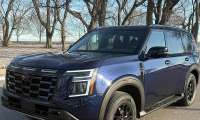
A Toyota Tundra engine failure is bad enough when the truck has only 30,000 miles. The part owners should pay attention to is what can happen after the tow, the loaner, and the repair order. I reviewed the owner’s account, Toyota’s engine-debris recall filings, NHTSA documents, Kelley Blue Book trade-in language, and CARFAX value guidance. The hidden issue is not just whether Toyota fixes the damaged engines. It is whether the repaired truck carries a value penalty when the owner tries to move on.
That is the uncomfortable part of Tiffany Rodgers’ post in the 2023-2027 Toyota Tundra Owners group.
Rodgers says her 2024 Toyota Tundra 1794 suffered a blown engine at about 30,000 miles. She says Toyota put her in a bad loaner with no ETA, and that instead of replacing the engine, she was told the truck would be rebuilt with “anything oil touched” replaced. That phrase would not make me feel great either. It sounds broad enough to be expensive and vague enough to be stressful.

Then came the part that turns a mechanical story into a money story.
Rodgers says she went to discuss trading the truck once it is repaired. She says Kelley Blue Book trade value was around $54,500, but the dealer offered $45,000. When she asked about the gap, she says she was told that once the engine repair hit CARFAX, the value would drop near the dealer’s offer.
That is a reported $9,500 spread before the truck was even back to normal.
I am not treating that single offer as a universal market value. Trade offers vary by region, dealer appetite, condition, timing, auction expectations, and whether the store actually wants the vehicle. But the owner’s situation exposes a real fear for 2022-2024 Tundra owners: a warranty or recall repair may solve the mechanical failure while leaving a resale question behind.
What Torque News Checked
- Owner account: The posted claim that a 2024 Tundra 1794 with about 30,000 miles had an engine failure, no repair ETA, a reported rebuild plan, a $54,500 KBB reference, and a $45,000 dealer trade offer.
- Official recall record: Toyota and NHTSA documents for the V35A engine machining-debris recalls, including NHTSA campaign 24V381 and expanded campaign 25V767 covering certain 2022-2024 gas Tundras.
- Value-record context: Kelley Blue Book’s trade-in value language and CARFAX guidance showing that service history, open recalls, and vehicle history can affect VIN-specific value.
The Recall Context Makes This More Complicated
Toyota’s Tundra engine problem is not internet folklore. It is in the recall record.
In May 2024, Toyota filed recall 24V381 for certain 2022-2023 Tundra and Lexus LX600 vehicles equipped with the V35A engine. The issue was machining debris that may not have been cleared from the engine during production. Toyota and NHTSA said debris could contaminate the engine, cause main bearing failure, and lead to engine stall or loss of drive power. Toyota’s later remedy notice for that campaign said dealers would replace the engine assembly free of charge.
Then Toyota expanded the story.
On November 6, 2025, Toyota announced another safety recall involving certain 2022-2024 Toyota Tundra, 2022-2024 Lexus LX, and 2024 Lexus GX vehicles in North America. Toyota said about 127,000 Toyota- and Lexus-branded vehicles in the U.S. were involved, conventional gas models only. NHTSA campaign 25V767 lists 126,691 potentially affected units and says the recall expands 24V381.
That matters for a 2024 Tundra owner because the 2024 model year was pulled into the later recall universe. It does not automatically prove Rodgers’ specific VIN is included. It also does not prove her dealer’s repair plan is the final recall remedy. VIN status decides that, and Toyota’s own recall lookup is the place owners need to check.

Here is the detail that would make me push for written answers: NHTSA’s 25V767 acknowledgement letter said the remedy was “currently under development” and that additional letters would be sent once the final remedy became available. Toyota’s press release said the same thing in plain terms: Toyota was developing the remedy.
So if a 2024 owner hears “rebuild,” “replace anything oil touched,” “no ETA,” or “this will hurt your CARFAX,” the right response is not panic. It is documentation.
Get the campaign number. Get the repair operation. Get the written repair plan. Ask whether the VIN is covered by 25V767, a separate warranty claim, or another internal procedure. Ask whether Toyota corporate, not just the dealer, has authorized the repair path. Ask what warranty applies to the completed engine work.
That is not being difficult. That is being awake.
The Carfax Fear Is Not Irrational
One commenter under Rodgers’ post said a recalled engine should not hit CARFAX because it is not an accident. I understand the instinct, but the vehicle-history world is messier than that.
CARFAX says its reports can include service and repair information, recall information, ownership history, title information, damage indicators, and more, depending on what is reported to it. CARFAX also says its History-Based Value uses information like service history, prior accidents, title brands, ownership, open recalls, and other VIN-specific history to determine a vehicle-specific price.
That does not mean every engine repair automatically creates a $9,500 value hit. It also does not mean every dealer is right when it waves the word CARFAX at a customer.
But it does mean the owner’s fear is grounded in how used-car appraisal works. A nearly new truck with a documented major engine repair can become harder to explain to the next buyer, even if the repair was done by Toyota, under warranty, with factory parts, and at no charge to the owner. Buyers do not always separate “bad engine replaced correctly” from “this truck had a bad engine.”
Dealers know that.
The dealer may be thinking about wholesale risk. It may be thinking about what a used-car manager sees at auction. It may be thinking about the next customer asking why a 30,000-mile Tundra needed engine work. It may also be using the situation to buy the truck cheaply because the owner is frustrated and emotionally done.
Both can be true. That is why owners need competing offers before believing one appraisal.
The $9,500 Gap Is the Story, Not the Exact Number
Rodgers’ reported numbers are simple: about $54,500 from KBB, $45,000 from the dealer. That is a $9,500 difference, or roughly 17.4% below the KBB number she cited.
That calculation is useful, but it is not a verdict.
Kelley Blue Book says its Trade-In Range is an estimate of what a consumer can reasonably expect from a dealer based on the vehicle’s style, condition, mileage, options, and location. KBB also says every dealer is different and values are not guaranteed. In other words, a dealer can offer less than KBB without automatically being dishonest.
The problem is the explanation.
If the dealer says the value will fall because the engine repair will appear on CARFAX, the owner should ask for the appraisal in writing. Not a lecture at the desk. A written trade sheet showing the exact adjustment: base value, mileage, condition, open recall or repair-history deduction, reconditioning estimate, auction-risk adjustment, and final offer.
Then take that sheet to another Toyota store, CarMax, Carvana, a local independent dealer, and a private-party comparison. If every offer lands near $45,000, the market is speaking. If one store is dramatically lower, the first offer may be a convenience penalty dressed up as appraisal science.
I would not trade the Tundra back to the same store without at least two outside bids.
Rebuild Versus Replace: Is the Trust Question
The part that bothers owners is not only the engine failure. There is uncertainty about what “fixed” means.
For the earlier 24V381 campaign, Toyota’s remedy notice said dealers would replace the engine assembly free of charge. That is clean language. Owners may still be upset, but “engine assembly replacement” is easy to understand.
Rodgers says she was told her engine would be rebuilt and that anything oil touched would be replaced. Without the repair order and VIN-specific campaign status, Torque News cannot verify that instruction. But the phrase matters because it changes how an owner thinks about the truck.
A new engine assembly sounds like a reset. A rebuild sounds like surgery.
That does not mean a rebuild is automatically bad. A properly executed engine repair can be technically sound. But for resale, the wording matters. Future buyers, appraisers, and service advisors may react differently to “factory engine replacement under safety recall” versus “engine rebuilt after failure at 30,000 miles.”
That is why Toyota and its dealers should be painfully clear with affected owners. If the engine is being replaced, say replaced. If a short block, long block, or full assembly is being installed, name it. If the repair is not part of the open recall but handled as a warranty claim, say that too. Owners should not have to decode the most expensive repair their truck may ever receive.
Why This Matters
This is where the Tundra story stops being about one frustrated owner.
A full-size truck is not a disposable appliance. A 2024 Toyota Tundra 1794 is an expensive, high-trust purchase. Many buyers chose Toyota because they expected the brand to protect them from exactly this kind of headache. If an owner loses confidence after an engine failure, then gets a trade offer thousands below the guide number because of that same failure, the brand problem doubles.
Toyota can repair engines. The harder job is repairing confidence.
That is why owners should separate the three questions that dealers may blur together: Is my VIN covered by a safety recall? What exact repair is Toyota authorizing? How will the completed repair be documented in vehicle-history and trade-in systems?
Those are different questions. Treat them that way.
Practical Consequences
If your 2022-2024 gas Tundra is involved in the engine-debris recall, check the VIN through Toyota and NHTSA, then keep every repair document. If the engine fails, ask in writing whether Toyota is replacing the engine assembly, rebuilding part of it, or handling the claim outside the recall. Before trading the truck, get at least three independent offers and ask each appraiser to identify any value deduction tied to the engine repair or vehicle-history record.
Do not negotiate from frustration. The most expensive moment to trade a truck is when the dealer knows you already hate it.
If your 2022-2024 Tundra had engine work under recall or warranty, did it show up on CARFAX or affect your trade-in offer? Share the model year, mileage, repair type, and appraisal result.
About The Author
Noah Washington is an automotive journalist based in Atlanta, Georgia, covering sports cars, luxury vehicles, and performance culture. His reporting focuses on explaining the engineering, design philosophy, and real-world ownership experience behind modern vehicles.
Noah has been immersed in the automotive world since his early teens, attending industry events and following the enthusiast communities that shape how cars are built and driven today. His work blends industry insight with enthusiastic storytelling, helping readers understand not just what a car is, but why it matters.
Noah is also a member of the Southeast Automotive Media Association (SAMA), a professional organization for automotive journalists and industry media in the Southeast.
His coverage regularly explores sports cars, luxury vehicles, and performance-driven segments of the automotive industry, including the evolving culture surrounding Formula Drift and enthusiast builds.
Read more of Noah's work on his author profile page.
You can also follow Noah here:
Set Torque News as Preferred Source on Google
Follow us today...