
Lexi Thomson’s 2026 Hyundai Ioniq 9 screenshot looks ugly until you put it next to Goreham’s test notes.
The car was sitting at 100% battery and showing 274 miles of estimated range. For a big family EV that can show nearly 400 miles in the right use, that number lands like bad news. It looks like battery degradation, a software problem, or the beginning of a very expensive ownership headache.
That brings John Goreham’s recent Ioniq 9 test back into the conversation. Goreham is a Torque News senior reporter, Vice President of the New England Motor Press Association, and longtime vehicle tester whose engineering background gives his EV reviews a different kind of weight.
What We Learned From Testing
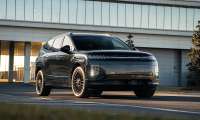
Goreham drove the Ioniq 9 AWD Performance Calligraphy, the 311-mile EPA-rated version, and came away with the kind of result Hyundai would put on a billboard if it had any sense of theater. The SUV exceeded its EPA range every time he added power, and he observed roughly 25 percent more range than the official estimate in ideal temperatures. He also made the point that the Ioniq 9 is quiet, quick, comfortable, easy to charge, and unusually convincing as a three-row EV. Goreham’s test gives us the control sample. The vehicle can overdeliver. Thomson’s screenshot shows what happens when the use case changes.
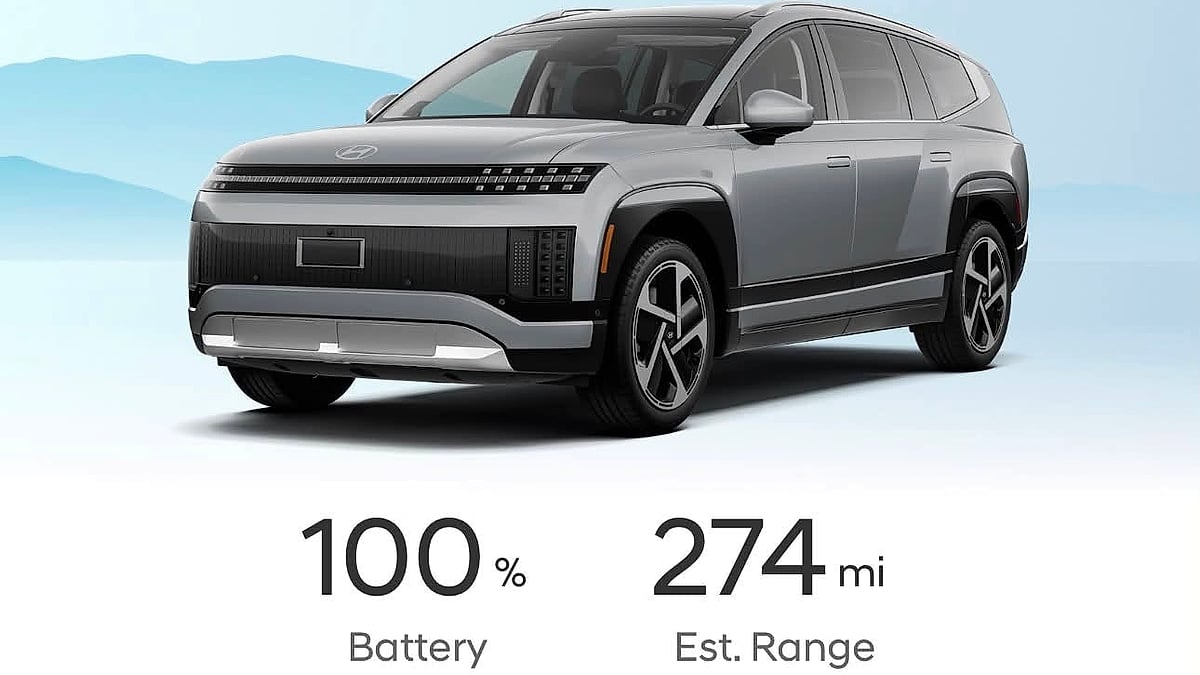
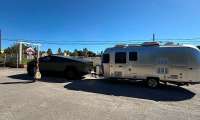
Thomson posted in The Ioniq Guy Facebook group that she was taking her first long trip in the Ioniq 9, traveling from Utah to Texas and back. At home in Utah, she said the vehicle had been consistently showing 385-plus miles from a full charge. On the trip, she was suddenly seeing more than 100 miles less on a charge, and the day took much longer than expected, with three more charging stops than planned.
That is the EV road-trip trap in one paragraph.
Thomson’s mistake was not buying the wrong SUV. It was using a friendly local range estimate as though it were a Texas interstate contract. The Ioniq 9 had been living in one world, then it was asked to run in another. Utah driving, mixed speeds, familiar roads, moderate use, and some regeneration can make the dashboard look generous. An 80-to-85-mph highway run across Texas can make the same SUV look like it suddenly developed a drinking problem.
What They Realized
To her credit, Thomson came back with the missing clue after other owners asked about speed. Texas speed limits were running 80 to 85 mph, and she said she had not realized how much speed eats battery.
That was the answer. The screen was a receipt.
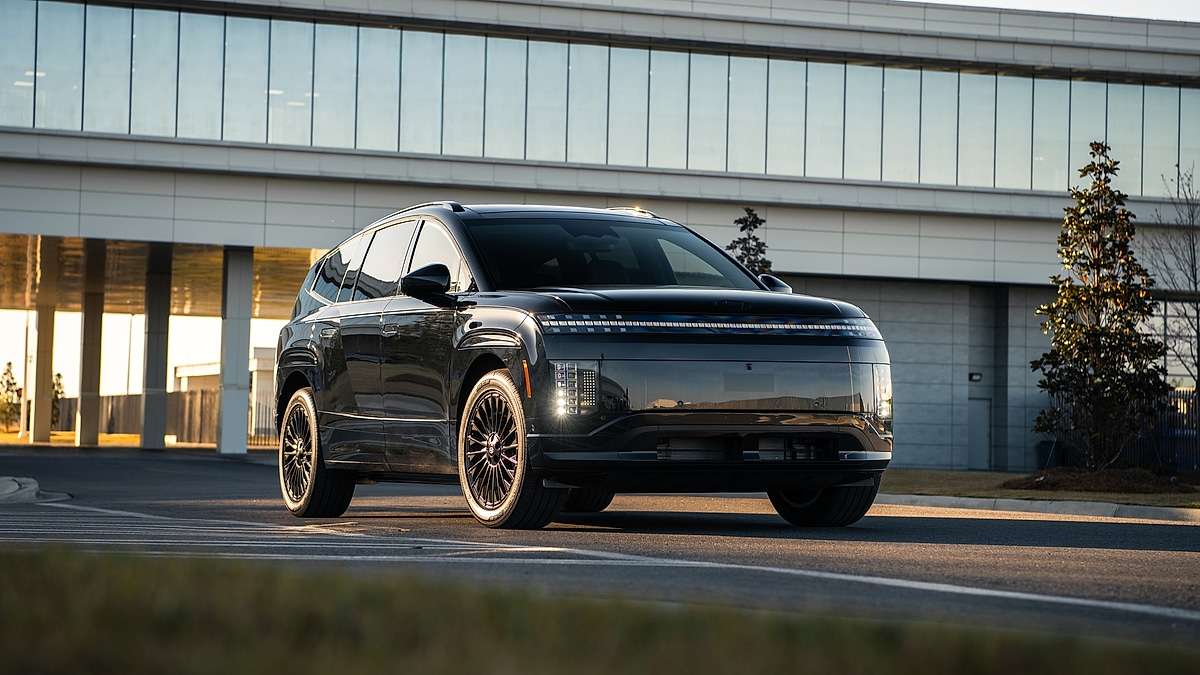
Hyundai gave the Ioniq 9 serious hardware. The 2026 model uses a 110.3-kWh battery, with EPA-estimated range listed at 335 miles for the S trim, 320 miles for SE and SEL, and 311 miles for Limited, Calligraphy, and Calligraphy Design. Hyundai also lists a 10-to-80% charging time of about 24 minutes on a 350-kW DC fast charger. The Ioniq 9 is not short on battery, engineering, or charging capability. But the highway has no sympathy for spec sheets.
The Department of Energy says aggressive driving can reduce fuel economy by roughly 15% to 30% at highway speeds, and fuel economy usually drops quickly above 50 mph. That applies to gas cars, too, but EVs put the penalty on the screen immediately. There is no engine noise, no transmission hunting, no fuel needle slowly creeping down while the driver ignores it. The range estimate simply tightens the leash.
Why The Numbers Look Brutal
The rough math explains why Thomson’s number looked so brutal. A 274-mile estimate from a 110.3-kWh pack works out to about 2.5 miles per kWh. A 385-mile estimate from the same pack works out closer to 3.5 miles per kWh. That is a massive swing, but it is believable when a large three-row EV is running fast highway speeds, possibly into wind, with a family load and long charger gaps.
Wind can make the hit even worse. A driver sees 80 mph on the speedometer, but the car feels airspeed. An 80-mph run into a meaningful headwind is not the same as an 80-mph run through calm air. The Ioniq 9 has a clean shape for a vehicle this large, but it still has to move a three-row cabin through the atmosphere. At those speeds, the atmosphere starts charging rent.
The extra layer is usable highway range, which is the number new EV owners need before a long trip.
A full-charge estimate is not the same as the distance you should plan between chargers. On road trips, most drivers are living in a narrower window. They may start at 100% from home, but once the trip is underway, they often charge from roughly 10% or 15% up to 80% because DC fast charging slows at higher states of charge, and arriving with no buffer is a bad way to travel. A 385-mile display sounds enormous in the driveway. In a 10-to-80% road-trip window, that is about 270 miles. A 274-mile display in the same window is closer to 190 miles.
That is how a trip quietly falls apart. The driver does not lose 100 miles once. The driver loses the comfortable spacing between chargers over and over again.
This is also why driving 85 mph can be slower than driving 72 mph in an EV. The speedometer makes the faster pace feel obvious. The charging plan may prove the opposite. Burn enough extra energy at 85, and the reward can be another charging stop, another walk into a convenience store, another family delay, and another chance for a charger to be occupied, slow, or broken. The old gas-car habit says speed saves time. A large EV on a long route sometimes says discipline saves time.
That does not make the Ioniq 9 weak. It makes it honest.
Goreham’s result still stands. In the right conditions, Hyundai’s big electric SUV can beat its EPA number and feel like a real answer for families ready to leave gas behind. Thomson’s trip adds the missing ownership lesson. Capability is conditional. The same battery that looks heroic around town can look ordinary when the driver asks it to do 80-plus across open interstate country.
The Ioniq 9 Road-Trip Plan
The better Ioniq 9 road-trip plan is simple. Start full when the charger gap is long. Use the vehicle’s route planning and battery preconditioning. Watch miles per kWh more closely than the big range number. Treat 80-to-85-mph driving as an expensive choice. Build the route around the range the vehicle is delivering today, not the best number it showed last week.
Thomson’s post is useful because it shows the mistake clearly. She trusted the happy number, then Texas corrected it. The Ioniq 9 did not need defending as much as the trip plan needed recalculating.
That is the difference between a bad EV and bad range math. Goreham showed what the Ioniq 9 can do when conditions cooperate. Thomson showed how quickly speed can be spent to take advantage.
For anyone buying a three-row EV, this is the lesson to keep taped to the inside of the glovebox: range is not a fixed possession. It is something the driver earns mile by mile. In the Ioniq 9, Hyundai gives owners a very good starting hand. At 85 mph, the house starts taking chips back.
What are you averaging in your Hyundai Ioniq 9? Drop your real-world miles-per-kWh in the comments below, especially if you’ve taken it on a longer highway trip.
One image by Lexi Thomson
About The Author
Noah Washington is an automotive journalist based in Atlanta, Georgia, covering sports cars, luxury vehicles, and performance culture. His reporting focuses on explaining the engineering, design philosophy, and real-world ownership experience behind modern vehicles.
Noah has been immersed in the automotive world since his early teens, attending industry events and following the enthusiast communities that shape how cars are built and driven today. His work blends industry insight with enthusiastic storytelling, helping readers understand not just what a car is, but why it matters.
Noah is also a member of the Southeast Automotive Media Association (SAMA), a professional organization for automotive journalists and industry media in the Southeast.
His coverage regularly explores sports cars, luxury vehicles, and performance-driven segments of the automotive industry, including the evolving culture surrounding Formula Drift and enthusiast builds.
Read more of Noah's work on his author profile page.
You can also follow Noah here:
Set Torque News as Preferred Source on Google
Follow us today...