
The electric vehicle transition isn't just about swapping a gas tank for a battery pack; it is a fundamental reimagining of how energy is stored, managed, and deployed at scale. Right now, the global automotive industry is effectively bifurcated into two distinct camps: companies merely trying to survive the EV transition, and companies proactively weaponizing it. If you examine the roadmap unveiled at the recent Kia CEO Investor Day, it becomes glaringly obvious that the South Korean automaker belongs entirely to the latter group.
At a time when traditional Western automakers are violently scaling back their electrification targets due to sluggish consumer demand, high interest rates, and severe margin compression, Kia is pushing the accelerator firmly to the floor. President and CEO Ho Sung Song laid out a meticulously phased mid-to-long-term strategy that does not just target incremental growth but aims for comprehensive global electric dominance. Central to this vision is a massive expansion of Kia's electrified lineup to 15 EV models by 2030, deeply integrated software-defined vehicle (SDV) capabilities, and crucially, a hard pivot toward 800-volt high-voltage architecture for the mainstream market.
In the technology sector, we often see companies win not by being the first to invent a disruptive technology, but by being the first to successfully commercialize it at mass scale and make it frictionless for the user. Kia is applying this exact playbook to the automotive sector. They understand that while early tech adopters will tolerate the inconveniences of first-generation EV infrastructure, the mainstream retail buyer will not. To capture the mass market, an automaker must eliminate range anxiety, match the rapid refueling speed of internal combustion engines, and reach true price parity. Kia’s 800V expansion is the technological tip of the spear in this campaign to win over the pragmatists.
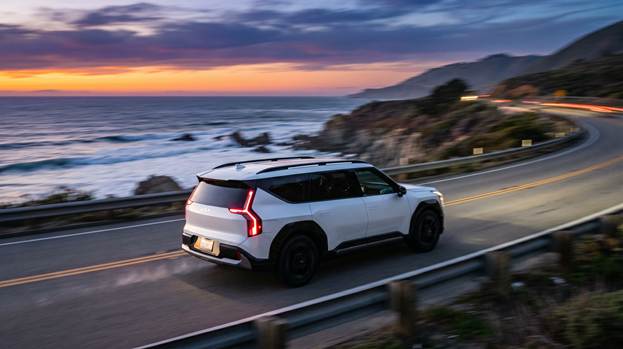
The Strategic Imperative Behind Kia's 800V Push
To truly understand why Kia is betting its future on 800-volt architecture, you have to look closely at the underlying electrical physics and market dynamics of the electric vehicle industry. For the better part of the last decade, the global standard for EV platforms has been the 400-volt system. It was perfectly adequate for early, lower-range vehicles with smaller batteries, but it rapidly hits a hard physical ceiling as consumers demand longer driving ranges and faster charging speeds.
When automotive engineers try to force immense amounts of electrical power into a 400V system to achieve ultra-fast charging, they are forced to drastically increase the electrical current (amperage). High electrical current generates extreme heat. As Power-Sonic highlights in their engineering analysis, to mitigate this thermal load, automakers using 400V must install incredibly thick, heavy copper cabling and robust liquid cooling systems, which in turn add significant physical weight to the vehicle. More weight translates directly to reduced efficiency, meaning you need an even larger battery to go the same distance—creating a vicious, self-defeating cycle of diminishing returns.
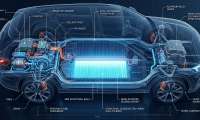
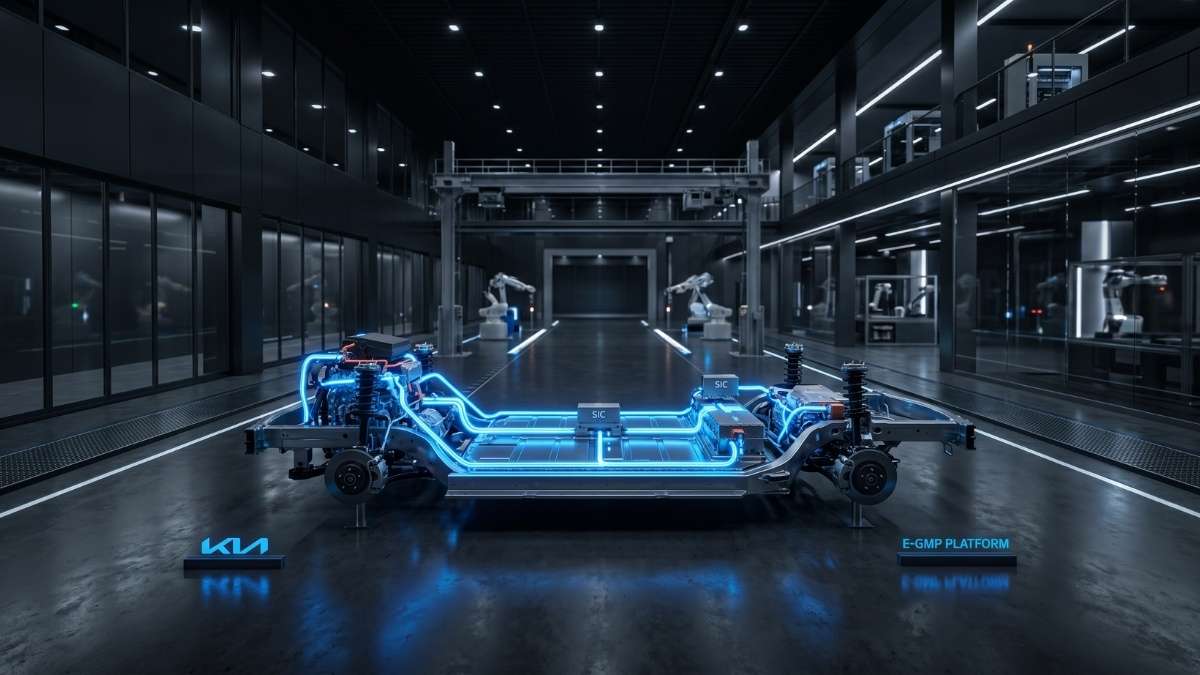
Kia’s push into 800V architecture fundamentally shatters this cycle. By doubling the operating voltage, the vehicle's electrical system requires half the current to deliver the exact same amount of charging power. This allows Kia engineers to utilize substantially thinner and lighter wiring harnesses, effectively stripping unnecessary mass out of the vehicle and saving on raw material costs. More importantly, the 800V system operates with vastly superior thermal efficiency. When paired with advanced silicon carbide (SiC) inverters, energy losses within the drivetrain are minimized, meaning more power makes it directly from the battery to the wheels.
The market trajectory heavily supports this technical pivot. According to comprehensive market forecasting from Fortune Business Insights, the global 800V electric vehicle architecture market is projected to explode from under $5 billion in 2025 to a staggering $52.80 billion by 2034, registering a compound annual growth rate of 28.5%.
For the average consumer, the 800V advantage is immediately tangible at the DC fast charging station. A system capable of handling 350kW DC fast charging can replenish a large EV's battery from 10% to 80% in roughly 18 minutes. This closely bridges the psychological gap between the traditional gas station experience and the modern EV charging experience. Kia recognizes that in the coming decade, the automakers who can offer the fastest charging speeds without degrading long-term battery health will undeniably dominate market share.
How Kia is Performing Overall in the EV Market
Stepping back to look at Kia's overall execution, the company is operating with a level of strategic discipline that should deeply concern its legacy competitors in Detroit, Munich, and Tokyo. While the broader media narrative has recently focused on an "EV slowdown," Kia is moving forward with calculated, measured aggression. Their stated goal is to achieve total global sales of 4.3 million units annually by 2030, with 1.6 million of those units being pure electric vehicles.
What sets Kia apart from brands like Ford or General Motors is their refusal to put all their operational eggs in a single, high-risk basket. They are executing a highly diversified strategy that they refer to as "Plan S." Recognizing that the transition to pure electric mobility will happen at drastically different speeds across different global regions, Kia is heavily leveraging hybrid electric vehicles (HEVs) and plug-in hybrids (PHEVs) to bridge the transition. By expanding their hybrid lineup, they expect to sell over 1.1 million HEVs annually by the end of the decade.
This is a masterstroke in capital allocation. The robust profit margins generated by the internal combustion and hybrid divisions are actively subsidizing the massive R&D and manufacturing investments required to build out their 800V dedicated EV platforms. Furthermore, Kia’s product portfolio is expanding exactly where the market is hungriest. They are systematically filling every white space in the automotive sector, ensuring that when a consumer is ready to transition to electric, there is a Kia vehicle tailored to their exact demographic, utility needs, and price bracket.
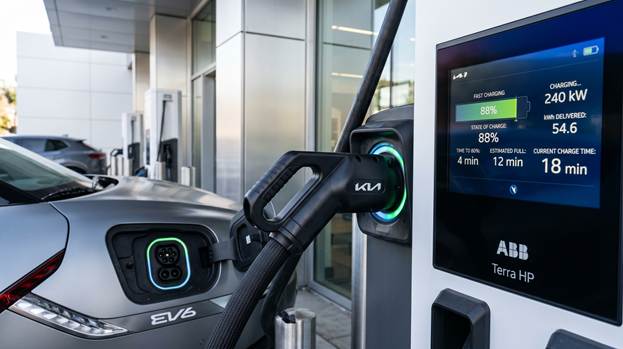
The First Movers: Which Kia EVs are Getting 800V Architecture
When introducing disruptive, high-cost technology to a consumer market, the optimal deployment strategy is to launch it at the premium tier and allow economies of scale to push the technology down-market over time. Kia is executing this hardware rollout flawlessly via their widely lauded Electric-Global Modular Platform (E-GMP).
The flagship bearers for Kia’s 800V revolution are currently the EV6 crossover and the critically acclaimed EV9 three-row family SUV. For the EV6, particularly in its high-performance GT trim, the 800V system serves as a pure performance enabler. It allows the vehicle's electrical infrastructure to instantaneously dump massive amounts of power into the dual electric motors, enabling supercar-level acceleration while still allowing the battery to recover energy rapidly during high-speed regenerative braking.
For the massive Kia EV9, the 800V architecture is not a luxury; it is an absolute functional necessity. The EV9 utilizes a massive 99.8 kWh battery pack to move its substantial curb weight while still offering excellent driving range. If this heavy vehicle were restricted to a standard 400V charging system, replenishing that massive battery on a family road trip would take an unacceptably long time, destroying the vehicle's viability as a long-distance family hauler. Thanks to the 800V infrastructure, an EV9 driver can plug into a compatible ultra-fast DC charger and add roughly 100 miles of driving range in just over ten minutes.
However, Kia is also incredibly pragmatic regarding supply chain economics and vehicle pricing. The advanced components required for an 800V system—specifically the silicon carbide semiconductors and high-voltage power electronics - are still relatively expensive compared to traditional 400V components. Consequently, Kia’s mass-market, volume-focused models, such as the widely praised new Kia EV3, continue to utilize highly optimized 400V architecture. This deliberate segregation allows Kia to price these entry-level vehicles aggressively around the $35,000 to $40,000 mark, keeping them accessible to budget-conscious buyers while still offering segment-leading range. As the core technology matures, manufacturing yields improve, and global component production capacity expands, it is an absolute certainty that the 800V architecture will systematically trickle down to replace the 400V systems entirely across Kia's entire lineup.
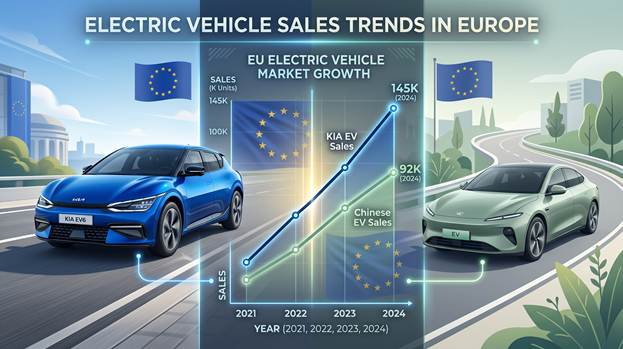
Facing the Onslaught: Kia vs. Western and Chinese EV Makers
The true test of Kia's strategic roadmap lies in how well it holds up against the fiercest competitive environment the global automotive industry has seen in a century. The market is currently being squeezed in a brutal vice. On one side, you have the traditional Western legacy automakers fighting to protect their turf; on the other, a tidal wave of hyper-aggressive Chinese EV manufacturers like BYD, Nio, and Geely.
Against their Western counterparts—such as Ford, Stellantis, and the Volkswagen Group—Kia is largely winning on speed, execution, and software reliability. Many Western automakers are currently paralyzed by internal corporate turmoil. They are struggling with crippling legacy costs, heavily disjointed software architectures that lead to frustrating user interfaces, and a general cultural reluctance to fully abandon internal combustion chassis designs. By committing early to the dedicated E-GMP skateboard platform, Kia avoided the "Frankenstein" approach of cramming battery packs into legacy ICE platforms. As a result, Kia is delivering vehicles that offer vastly better interior packaging, superior charging metrics, and higher reliability than many of their direct Western competitors.
The threat from China, however, is a vastly different beast. Chinese automakers have spent the last decade building deeply vertically integrated supply chains, locking down the raw materials for batteries, and scaling manufacturing to an unprecedented degree. Supported by robust state subsidies, brands like BYD are flooding European and emerging markets with EVs priced at levels that Western and South Korean automakers simply cannot match profitably on a pure hardware basis alone.
Kia’s leadership is fully aware of this existential threat and is not sitting idle. Rather than engaging in a suicidal race to the bottom on price, Kia is deploying a highly intelligent strategy of regulatory arbitrage and technological superiority. Kia recognizes that the geopolitical winds are shifting rapidly. The European Union and the United States, terrified of losing their domestic auto industries, are aggressively implementing protectionist policies, including steep tariffs on Chinese-made electric vehicles.
By aggressively expanding their European and North American production footprints—such as their massive investments in Georgia—and forging strategic alliances with compliant battery giants, Kia is positioning itself firmly on the right side of the regulatory moat. They anticipate that these trade barriers will effectively neutralize the artificial cost advantages currently enjoyed by Chinese imports in the West.
Furthermore, the underlying economics of battery production are finally swinging in Kia's favor. Recent data from BloombergNEF's comprehensive market analysis confirms that average global EV battery pack prices have plummeted to $99/kWh for BEVs, dropping well below the crucial $100/kWh tipping point. Through localized manufacturing, improved power electronics, and capitalizing on these collapsing battery costs, Kia is driving relentlessly toward true price parity with internal combustion vehicles. Kia doesn't need to be the absolute cheapest option on the market; they just need to be close enough in price that mainstream consumers will gladly pay a slight premium for the vastly superior 800V charging experience, an established and trusted dealer support network, and superior build quality that the Chinese upstarts have yet to fully prove.
Wrapping Up
The automotive industry is currently littered with the remnants of historically significant companies that underestimated the speed and severity of technological transitions. What we are witnessing from Kia is a masterclass in corporate risk mitigation and aggressive market expansion. They are not waiting for the consumer market to dictate the terms of the EV revolution; they are proactively writing the rules.
By pivoting hard into 800V architectures for their flagship and high-performance models, Kia is securing the crucial technological high ground of ultra-fast charging and thermal efficiency. Simultaneously, by leveraging robust hybrid vehicle sales and utilizing highly refined, cost-effective 400V systems for their entry-level vehicles like the EV3, they are ensuring the immediate financial stability required to fund this long-term war of attrition.
While Western automakers stumble over software integration and scale, and Chinese manufacturers face mounting, insurmountable geopolitical tariffs in key global markets, Kia is quietly and effectively threading the needle. If they can execute on their ambitious 2030 production targets and bring high-voltage 800V architecture to the true mass market, Kia will not just survive the transition to electric mobility—they are structurally and technologically poised to dominate it.
Disclosure: Images rendered by Artlist.io
Rob Enderle is a technology analyst at Torque News who covers automotive technology and battery developments. You can learn more about Rob on Wikipedia and follow his articles on TechNewsWord, TGDaily, and TechSpective.
Set Torque News as Preferred Source on Google
Follow us today...