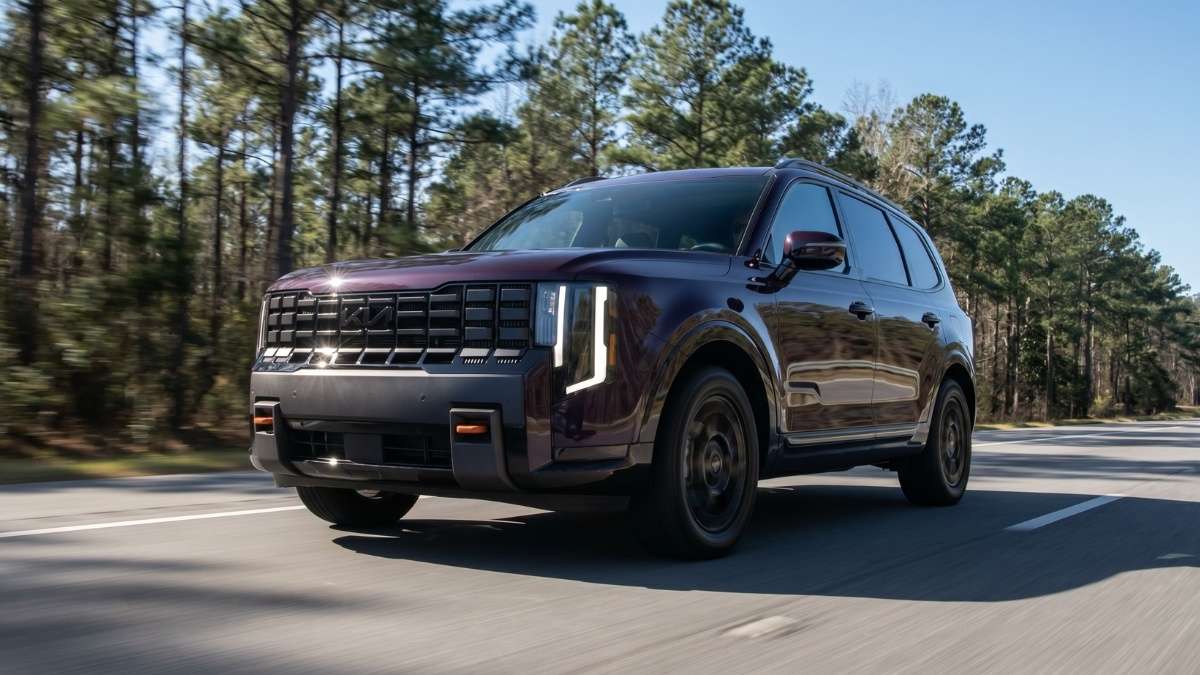

There is a distinct rhythm to the drive from Savannah to Atlanta. The four-hour stretch up I-16 and I-75 provides a perfect laboratory for testing a vehicle's touring capabilities, blending long, monotonous straightaways with the sudden, aggressive traffic patterns of the Atlanta metro area. I recently made this exact trek to spend some quality time with the new 2026 Kia Telluride, a vehicle that continues to disrupt the three-row SUV market.
This road trip felt like a natural continuation of my ongoing analysis of Kia’s aggressive North American expansion. Recently, I explored the company's impressive manufacturing capabilities in a piece detailing how advanced robotics and smart politics propel the Kia Sportage hybrid in Georgia. Seeing the final product out on the asphalt, fully assembled and eating up highway miles, provides the necessary context to evaluate whether those factory-floor innovations translate to the consumer experience.
After four continuous hours behind the wheel, navigating both the coastal humidity and the urban sprawl, the 2026 Telluride proved to be a highly capable machine with a distinct, polarizing personality and a few frustrating ergonomic quirks.
An Exterior Out of Mega-City One
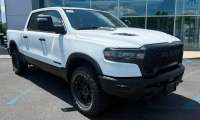
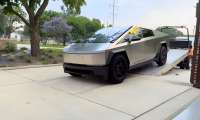
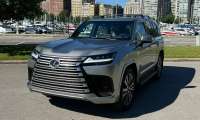
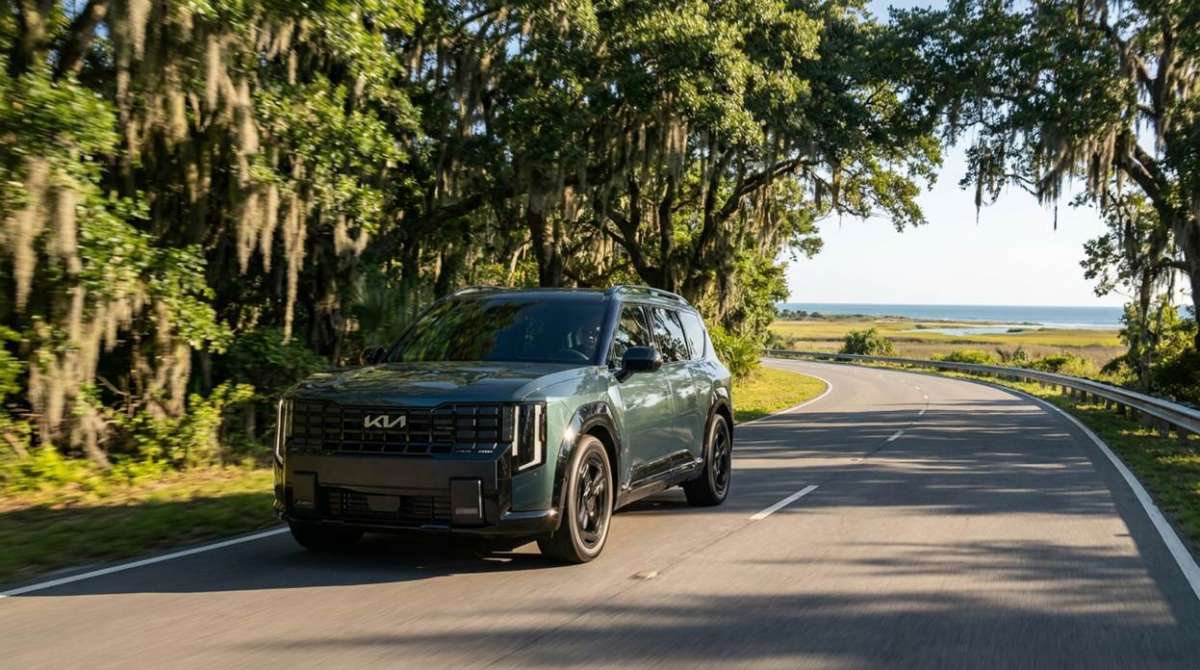
In an era where many automakers are designing SUVs that look like smoothed-out river stones in a wind tunnel, Kia has leaned hard into angular aggression. Approaching the Telluride in the Savannah staging lot, the first thing that struck me was its imposing silhouette. The exterior design looks less like a traditional family hauler and more like a tactical vehicle straight out of a Judge Dredd movie.
I genuinely like how it looks both advanced and a bit scary. The front fascia, anchored by an upright, widened interpretation of Kia’s "tiger-nose" grille and flanked by vertical, piercing LED headlamps, commands presence. It is a bold, blocky aesthetic that communicates durability and strength. When this vehicle appears in your rearview mirror, it looks authoritative. The squared-off roofline and muscular wheel arches give it a planted, wide stance that suggests it could handle off-road trails just as easily as the suburban carpool lane. While aerodynamic efficiency is often the enemy of a boxy design, Kia has managed to implement subtle air curtains and underbody paneling to keep the drag coefficient reasonable without compromising its intimidating, sci-fi law enforcement aesthetic.
Scandinavian Minimalism in a Korean SUV
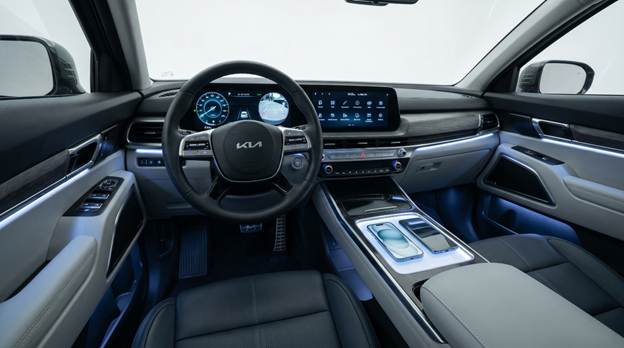
Opening the heavy doors and stepping into the cabin presents a fascinating contrast to the aggressive exterior. When I slide into the driver's seat, the layout immediately reminds me of the elegant, simple interiors that define the modern Volvo lineup. The minimalist approach feels highly refined, echoing the serene design language of the 2026 EX60 I recently specified for my own garage back in Bend.
Kia has eschewed the chaotic, button-heavy dashboards of the past in favor of clean horizontal lines and an uncluttered dashboard. The expansive dual-screen display—integrating the digital gauge cluster and the infotainment system under a single pane of glass—sits atop a dashboard trimmed in premium-feeling materials. There is a sense of airiness and calm inside the Telluride that counterbalances the menacing exterior perfectly. The cabin acoustics are exceptional; at 75 mph on the Georgia interstate, wind and tire noise were heavily muted, allowing for easy conversation across all three rows.
High-Value Features and Premium Execution
As the miles accumulated toward Macon, several standout features elevated the driving experience. The standout safety integration is the Blind-Spot View Monitor. When you activate the turn signal, the digital instrument cluster temporarily replaces the speedometer or tachometer dial with a live, high-definition camera feed of your blind spot. It is a brilliantly executed safety feature that drastically reduces the cognitive load of changing lanes in heavy Atlanta traffic, virtually eliminating blind spots.
Another highly practical addition is the inclusion of twin inductive phone chargers on the center console. In a fully connected family vehicle, fighting over a single wireless charging pad is a common frustration. Providing two dedicated, high-speed charging surfaces side-by-side is a simple but incredibly effective design choice that shows Kia understands modern device usage.
What remains most impressive, however, is the sheer value proposition. Despite the low relative price compared to luxury European competitors, the quality of the fit and finish, along with the interior materials, is outstanding. The open-pore wood trim, the soft-touch plastics on the upper door panels, and the precision of the switchgear all punch significantly above the Telluride's price class.
Ergonomic Misfires: Slippery Seats and Quirky Shifting
No vehicle is perfect, and spending four uninterrupted hours in the Telluride exposed a few notable flaws. The primary issue for me was the seating material and bolstering. While the seats look luxurious and are well-padded, the leather surfaces weren’t grippy enough, and my butt hurt well before we got to Atlanta. During highway off-ramp maneuvers or quick lane changes, I found myself sliding slightly in the seat, lacking the lateral support necessary to feel fully planted.
Furthermore, the massaging function on the driver’s seat was a significant disappointment. Unlike higher-end mechanical massage systems, Kia relies on inflating and deflating air bladders. The result feels less like a therapeutic massage and more like someone randomly poking you in the lower back with a blunt object. It was largely ineffective at reducing driver fatigue and I turned it off after twenty minutes.
The most baffling design choice, however, is the transmission shifter. At first glance, it looks like a traditional mechanical stalk or T-bar shifter protruding from the steering column. You instinctively want to pull it down to shift into Drive. Instead, it operates via an unconventional twisting mechanism. You have to rotate the top of the physical shifter left or right to select gears. It is a frustrating subversion of muscle memory. If an automaker wants to use a rotary dial, they should install a flush rotary dial. Disguising a twist-to-shift electronic actuator as a traditional mechanical lever is unnecessarily confusing.
Drivetrain, Performance, and Market Position
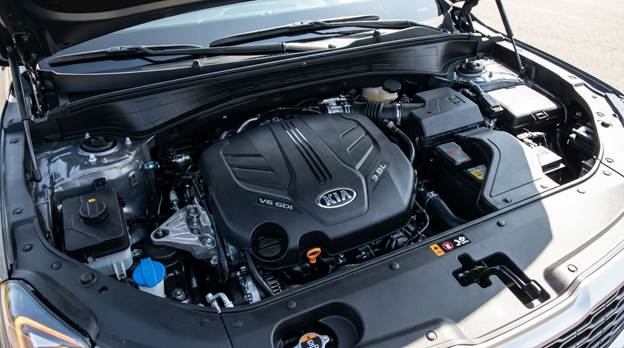
Under the hood, the 2026 Telluride remains committed to reliable, traditional displacement, utilizing a naturally aspirated 3.8-liter V6 engine. Pumping out roughly 291 horsepower and 262 lb-ft of torque, the engine is paired with an incredibly smooth 8-speed automatic transmission.
The performance stats are solid, if not class-leading. It will do 0-60 mph in about 6.8 seconds (this was disappointing given all my cars are considerably quicker). While a naturally aspirated V6 doesn't deliver the neck-snapping instant torque you get from an 800-volt electric vehicle architecture, the power delivery here is linear, predictable, and robust. It provides plenty of passing power on the highway and never feels strained, even when loaded with passengers and cargo.
The vehicle manages lane-keeping and adaptive cruise control via an execution-layer automation system that is highly competent, but not as good as those found on the latest Chinese or GM cars. As I frequently point out in my tech columns, there is a distinct difference between standard execution-layer automation and true cognitive-layer agentic AI. The Telluride isn’t "thinking" for you, but its automated driving aids execute their programmed tasks flawlessly, keeping the heavy SUV centered and pacing traffic perfectly through the heavy congestion south of Atlanta.
When compared to other trucks in its size and price range, the Telluride holds a dominant position. The Honda Pilot offers slightly better interior packaging but lacks the Telluride's aggressive curb appeal. The Ford Explorer provides punchier turbocharged engine options, but its interior materials feel decidedly cheaper. The Toyota Grand Highlander offers superior hybrid fuel economy, but it commands a higher premium and lacks the bold, Judge Dredd-esque styling that makes the Kia stand out in a crowded parking lot. The Telluride strikes a near-perfect balance between aggressive design, premium feel, and undeniable value.
Wrapping Up
My four-hour journey from the coastal plains of Savannah into the heart of Atlanta proved that the 2026 Kia Telluride deserves its status as a market leader. It manages to successfully blend an intimidating, sci-fi exterior with an interior that borrows the best minimalist, elegant traits from premium European brands.
While Kia needs to address the lack of grip in their seat materials, rethink their quirky twisting gear selector, and upgrade their subpar bladder-based massage seats, these are relatively minor blemishes on an otherwise stellar platform. The naturally aspirated V6 provides reliable, smooth power, and the integration of smart technology like the dual inductive chargers and the blind-spot camera monitor makes daily driving significantly easier. For families looking for a three-row SUV that makes a bold statement without requiring a luxury car mortgage, the Telluride remains one of the smartest buys on the road today.
Disclosure: Images rendered by Artlist.io
Rob Enderle is a technology analyst at Torque News who covers automotive technology and battery developments. You can learn more about Rob on Wikipedia and follow his articles on TechNewsWord, TGDaily, and TechSpective.
Set Torque News as Preferred Source on Google
Follow us today...