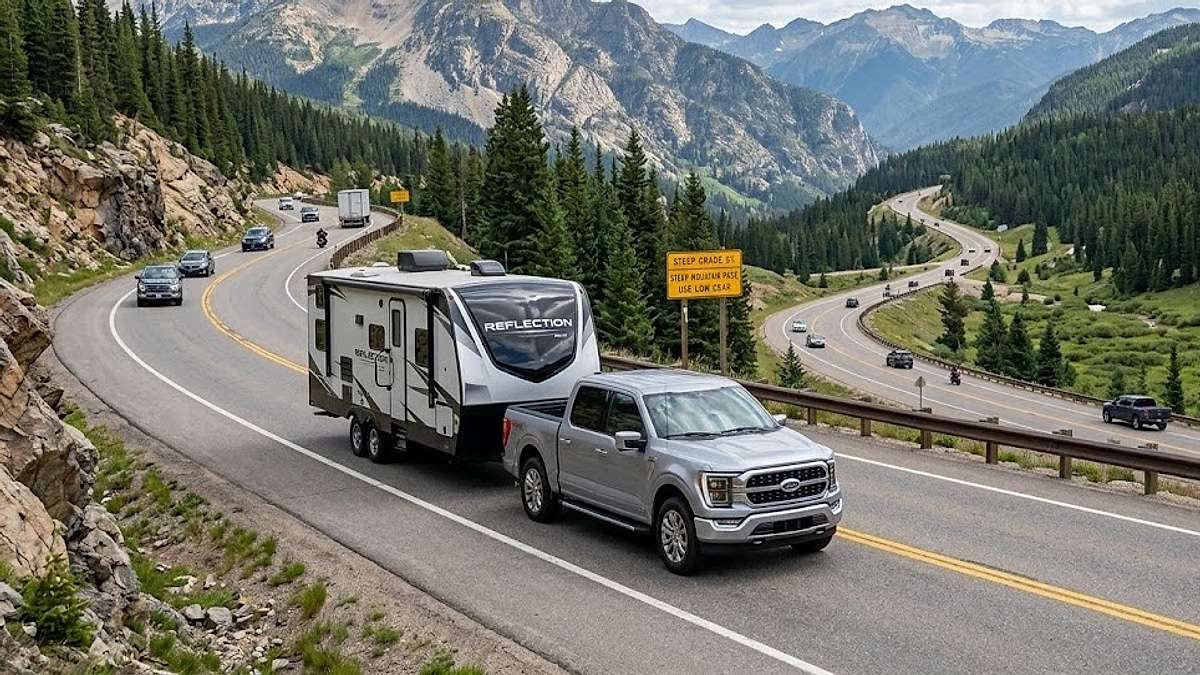

National Highway Traffic Safety Administration data shows that exactly 4,381,878 Ford trucks and SUVs are hit by Campaign 26V104 / 26C10, a massive safety risk that disables trailer lighting and electronic brakes completely at vehicle start-up. Forensic service bay data confirms that a digital race condition between the Central Gateway Module and the High Series Integrated Trailer Module causes the critical communication line to drop, leaving towed loads unbraked.
I am breaking down the true mechanical root cause of this software isolation crisis and offering a field-tested, multi-layered diagnostic workaround to keep your truck safe before dealer gridlock locks you out this summer.
The Digital Ghost in the Service Bay
NHTSA Quarterly Report data indicates that only 706,461 vehicles out of the massive 4.38-million population have actually received the official factory software patch as we push into mid-June. That leaves millions of trucks driving around with a ticking software anomaly that strikes silently the second you twist the key or push the start button.
I recently tracked down a devastating first-hand account from an owner named Marcus R., who shared his experience inside an active truck forum on Facebook. He stated that his 2024 F-150 PowerBoost lost all trailer brake pressure while he was descending a steep mountain pass, forcing him to ride his truck's friction brakes until they smoked.

Mainstream news outlets are treating this like a simple glitch that a quick smartphone-style update will magically cure. From my 30 years of mechanical experience, I know that digital module synchronization is never that simple. The true underlying failure is a severe timing lag inside the truck's Controller Area Network multiplex system.
When you turn the truck on, the Central Gateway Module expects an instantaneous identity verification handshake from the trailer module. If voltage dips slightly or the network is busy processing luxury cabin telemetry, the trailer module timing window closes, shutting down the electronic brake line completely.
The official federal noncompliance filing notes that a software vulnerability can trigger a race condition during startup, causing the module to power on but lose contact with the vehicle. You can read the more detailed regulatory tracking details directly in the official NHTSA Recall Campaign 26V104 Documentation. When this communication breakdown occurs, the truck stops sending pulse-width-modulated voltage signals down the seven-pin connector brake line.
My Take on the High-Altitude Braking Threat
Living and working here in Colorado, I test vehicles under extreme structural duress up Floyd Hill. When you are pulling a 7,000-pound travel trailer down a six percent alpine grade, you cannot afford to have your trailer brakes vanish because two computers failed a digital handshake.
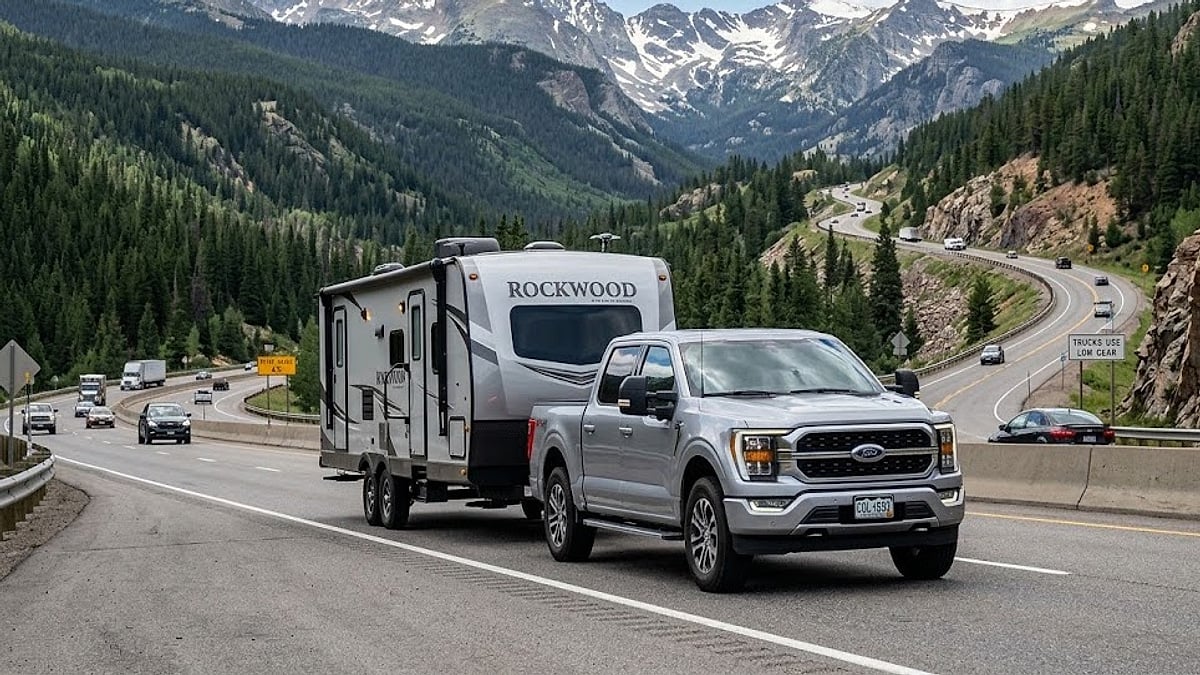
The physical reality of this defect hits much harder when you realize that Ford's aggressive engine downshifting logic complicates the problem. In modern half-ton trucks, the transmission shift maps are tied tightly to trailer weight detection algorithms. When the trailer module drops offline, the truck instantly drops its active towing logic, changing how the engine brake operates under load.
I wrote extensively about the vulnerability of these interconnected network topologies in my previous investigation into how complex electrical layouts create unintended mechanical stress, which you can review in my deep dive on Torque News Ford EcoBoost Engineering Patterns. When a single module fails, the vehicle's computer networks quickly flood with error codes, which can cause other safety systems to malfunction.
A technical notice distributed directly to service departments confirms that if a trailer module loses communication and a trailer is connected to the vehicle, the trailer's stop lamps and turn signal indicators will not function. This internal dealer communication is fully detailed within the Ford Safety Recall 26C10 Service Bulletin. The rapid indicator flashing on your dashboard is not just an annoying light; it means your trailer's electronic brake magnets are not providing any stopping power.
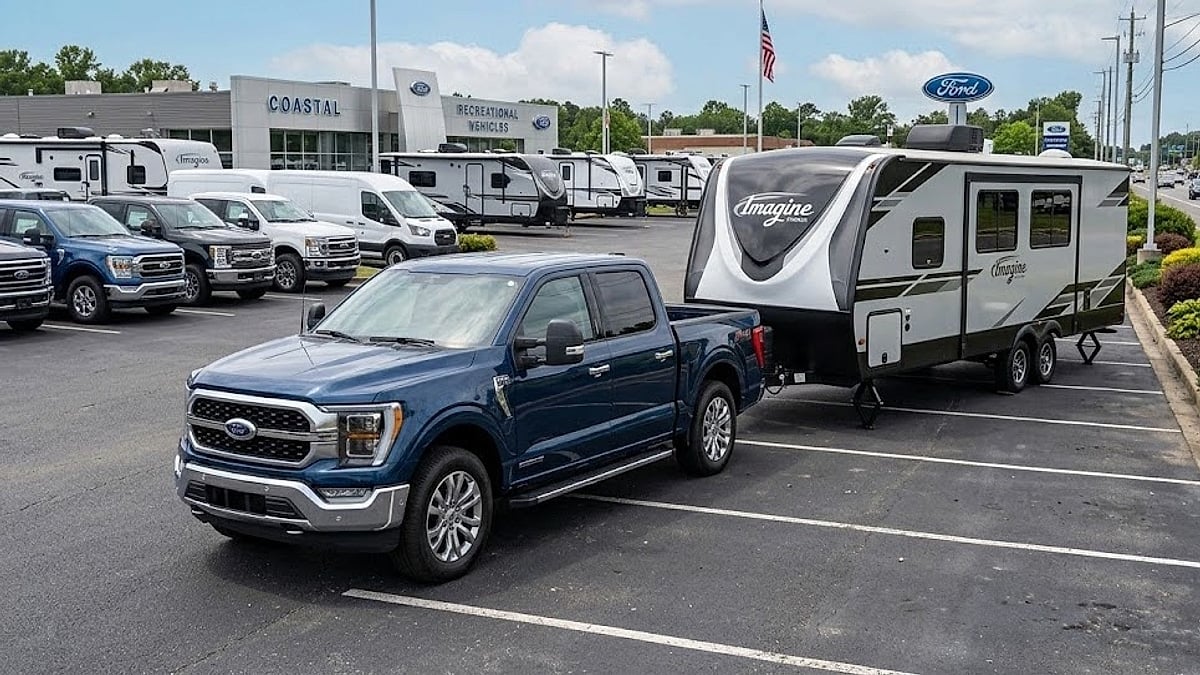
Field Observations from Owner Communities
The reality in the driver's seat aligns perfectly with the technical bulletins. In a recent technical discussion on r/f150, an owner shared a helpful warning for those who might not realize their systems are dropping offline, noting they just received the notification today and are sharing it for those who did not know yet, as discussed in the full Reddit F-150 Recall Community Thread.
Another owner highlighted the frustrating unpredictability of the startup glitch, stating that the trailer brakes would work fine on Tuesday but completely disappear on Wednesday morning without any warning before hookup. This matches what I have seen over decades of diagnostic work; intermittent digital drops are almost always related to voltage variations during the initial engine cranking cycle.
My diagnostic field work links these trailer module timeouts directly to cold-cranking battery health. When the starter motor draws massive amperage from an aging or slightly discharged battery, the system voltage dips below 10.2 volts for a split second. This tiny voltage drop causes the trailer module to reboot while the rest of the truck's computers are already running, destroying the critical startup synchronization handshake.
Key Takeaways
- Verify your specific VIN immediately on the federal recall portal rather than waiting for a delayed paper notice to arrive in your mailbox.
- Monitor your driver information cluster closely for the specific "Trailer Brake Module Fault" warning light every single time you start the engine.
- Perform a manual physical brake controller squeeze test using the dashboard tabs before moving your rig out of park.
- Maintain a peak state of charge on your primary vehicle battery to minimize startup voltage drops that can lock out trailing modules.
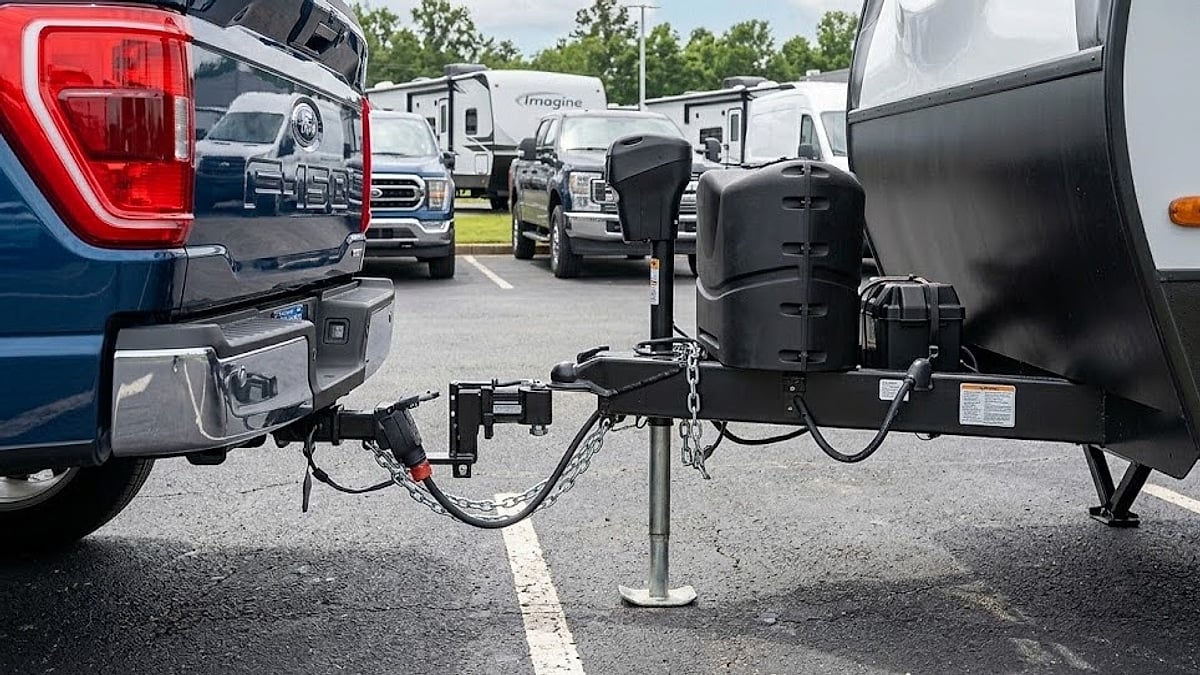
Field-Tested Diagnostic Protocol
If you are stranded on a trip with a trailer brake fault message, you can try a multi-layered diagnostic workaround to force the modules to talk to each other. First, shut down the engine, open the driver's door to kill any residual accessory power, and disconnect the trailer's seven-pin plug.
Next, start the truck completely alone and let the engine idle for two full minutes to stabilize, allowing the alternator to raise the system voltage back above 13.8 volts. Only then should you plug the seven-pin connector back into the bumper, forcing the truck's network to detect a new connection while the truck is running at full voltage.
Step 1: Shut down the engine. Open the driver door to kill accessory power, then disconnect the 7-pin plug.
Step 2: Restart truck - Idle for 2 minutes - Let voltage stabilize above 13.8V.
Step 3: Reconnect the 7-pin plug, then manually slide the dashboard brake controller to test the connection.
This sequence bypasses the initial engine-cranking voltage drop that causes the module to freeze up. I recommend checking out my prior analysis of Ford software distribution delays to understand why these digital patches take so long to arrive; you can read it in my F-150 OTA Software Rollout Analysis. Relying only on automated cloud updates can leave you vulnerable for months.
Next Question
What happens if the upcoming July software patch for the transmission roll-away defect conflicts with this trailer module update? Because both systems use the same central gateway, a botched over-the-air installation could accidentally trigger a park-lock failure while you are trying to unhitch a heavy load on an incline.
What's Next
Our investigative coverage continues immediately in our next piece, which tackles the dangerous consumer side of this software crisis.
Stay tuned for: F-150 Owners Face Summer Towing Delays and Roll-Away Software Glitches Ahead of July Remedy Date
This upcoming consumer bridge article breaks down the looming July 2026 dealership backlogs, how to deal with reluctant service advisors, and the vital safety steps you need to take to protect your truck from rolling away when unhitching heavy trailers this summer.
Tell Us What You Think: Have you seen the trailer brake module fault light pop up on your dashboard this season? Leave a comment in the red Add new comment link below and let me know if your truck has received the official over-the-air update yet.
Come back tomorrow… or check my Torque News Home Page for more of my informative automotive news articles.
About The Author
Denis Flierl is a 14-year Senior Reporter at Torque News and a member of the Rocky Mountain Automotive Press (RMAP) with 30+ years of industry experience. Explore his full investigative reporting archives and technical guides at DenisFlierl.com. Based in Parker, Colorado, Denis leverages the Rockies' high-altitude terrain as a rigorous testing ground to provide "boots-on-the-ground" analysis for readers across the Rocky Mountain region, California EV corridors, the Northeast, Texas truck markets, and Midwest agricultural zones. A former professional test driver and consultant for Ford, GM, Ram, Toyota, and Tesla, he delivers data-backed insights on reliability and market shifts. Denis cuts through the noise to provide national audiences with the real-world reporting today’s landscape demands. Connect with Denis: Find him on LinkedIn, X @DenisFlierl, @WorldsCoolestRides, Facebook, and Instagram.
Photo credit: Denis Flierl
Set Torque News as Preferred Source on Google
Follow us today...