
Jim Farley did a very un-CEO thing.
He told the truth in public.
In a March 2026 interview with T. Rowe Price, Ford’s CEO Jim Farley said his internal-combustion team had such strong prejudice against Model E that it could never support the EV division with a competitive platform. Read that twice. Then set aside the polite language used by large companies when the carpets are thick, and the lawyers are within earshot.
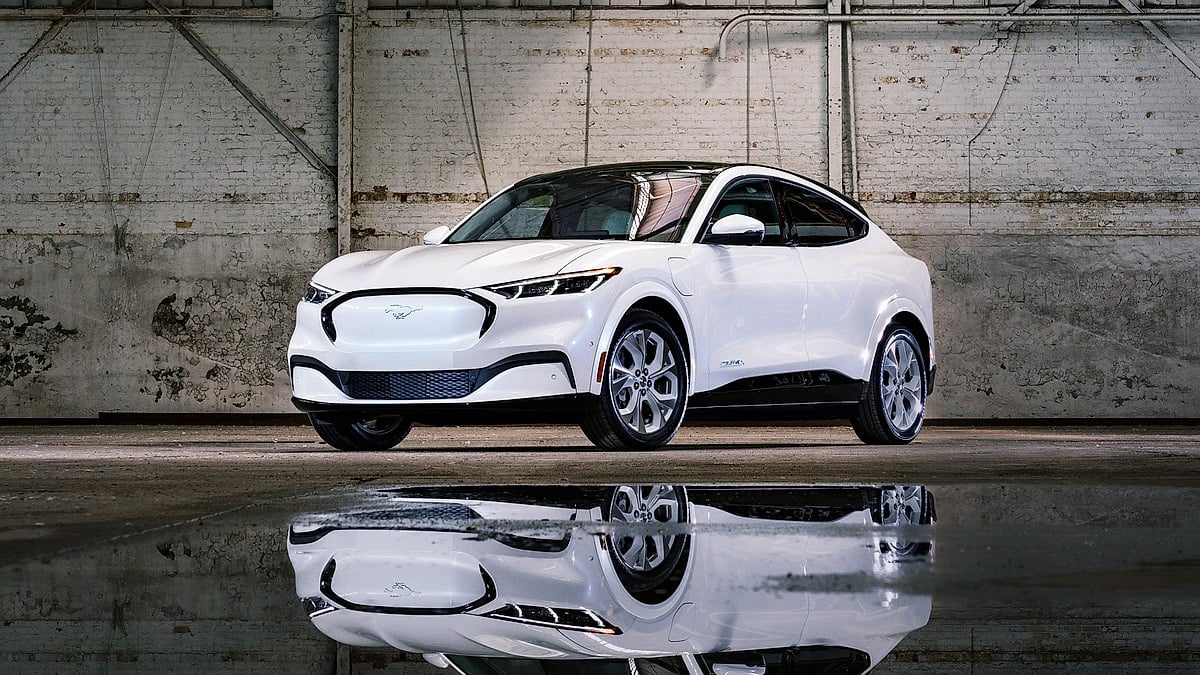
Ford’s EV problem came from inside the house.
The word sabotage is satisfying, and too tidy. Nobody needed to cut wires in the basement. Nobody needed to hide battery cells behind the Rouge plant. A profitable old system can smother a new one by making every fresh idea breathe through old machinery. That is worse, because it looks normal while it happens.
Ford's EV Challenge Goes Beyond Battery Costs
- Ford’s EV retreat exposed how difficult it is for an ICE-profit machine to build battery-first vehicles.
- Battery cost gets the attention, but wiring, software, aero, parts count, labor hours, and platform layout decide whether an EV can hit a real price target.
- Ford still has truck loyalty on its side, but Tesla and BYD have the process advantage Ford now has to catch.
Ford Blue made the money. Ford Pro made the money. Model E burned it.
The people paying the bills were asked to build the thing that might one day threaten their own kingdom.
Expecting that to work cleanly was fantasy.
The Lightning went from revolution to evidence
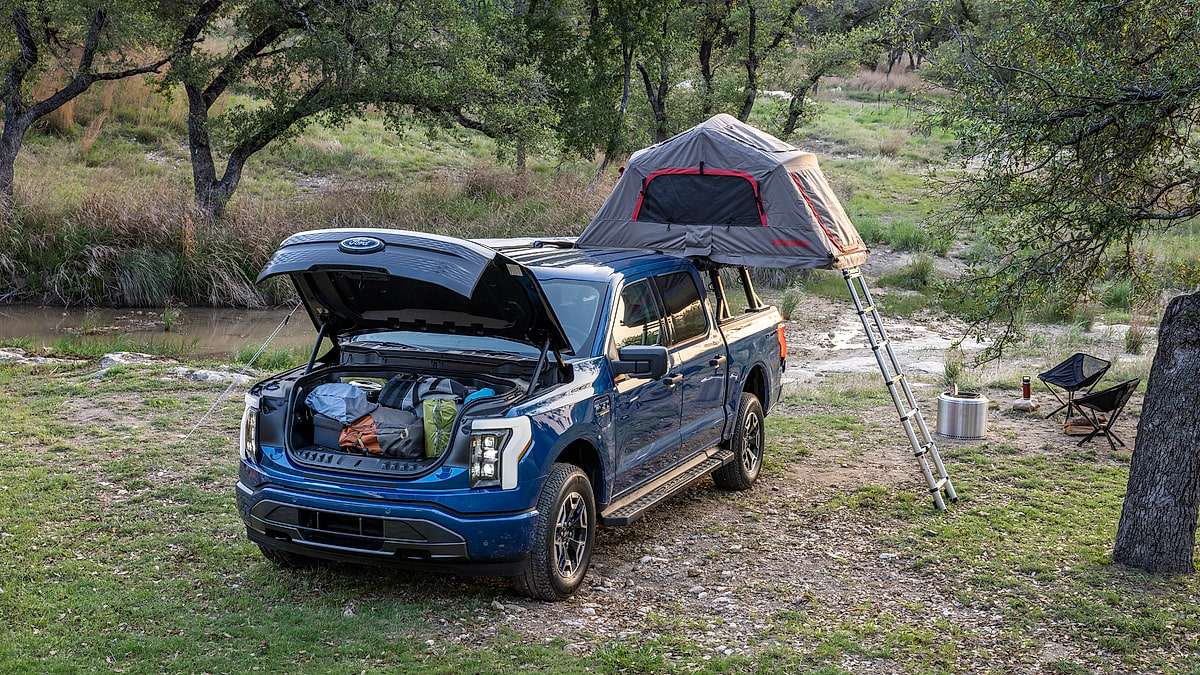
Go back to 2021 and the original F-150 Lightning launch pitch.
Farley was proud. He should have been. Ford was bringing electric torque to the most important nameplate in America. The starting price landed at $39,794 before credits, a cute little marketing dodge under forty grand. Farley talked about the F-150 with the confidence of a man holding a national institution in both hands. Lots of electric pickups could come, he said in spirit, but there was only one F-150.
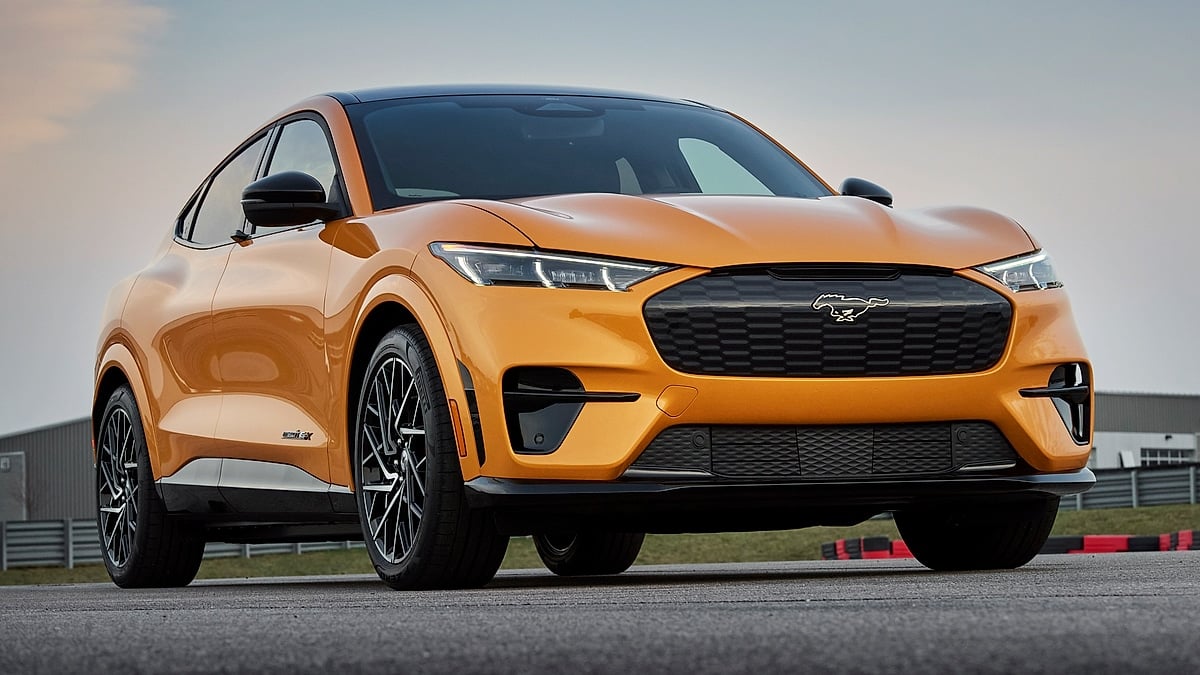
That line worked because it was true.
Then the hard miles arrived.
The Lightning was quick, useful, clever, and packed with classic Ford truck goodness. It also carried the wrong business case into the wrong market at the wrong price. Retail buyers did not flood the gates for expensive electric trucks. Towing range created bad headlines. Charging with trailers remained awkward. Battery costs sat like a piano on the hood. Ford had adapted too much old thinking to a product category that punished adaptation.
By late 2025, Ford took a $19.5 billion charge tied to its EV retreat, cancelled several EV programs, and moved the Lightning name toward an extended-range electric future with a gasoline engine acting as a generator.
The all-electric Lightning did not fail because it was a bad truck.
It failed because Ford tried to electrify an old assumption structure and discovered that batteries do not care about brand mythology.
Doug Field found the rot in the tools
Farley brought in Doug Field from Tesla and Apple in 2021. That hiring decision now looks less like a trophy move and more like a rescue flare.
Field walked Ford’s manufacturing floors. He looked at the IT systems, CAD tools, and parts-release process. His verdict, according to Farley, was brutal: Ford was 25 years behind.
An old automaker can say it wants an EV. Then the body-in-white process, the supplier contracts, the tooling assumptions, the assembly logic, the cost targets, the dealer feedback, the warranty models, and the internal political gravity all pull the product back toward the old world. By the time the car reaches the showroom, the badge says future and the bones say compromise.
Field saw that. Farley eventually said it out loud.
California was for quarantine
Ford put the skunkworks in California for a reason.
The official version sounds tidy: get close to software talent, bring in people from Tesla, Apple, Formula One, and modern tech culture. Fine. That is true enough.
The sharper read is quarantine.
The team needed distance from Detroit’s antibodies. Farley said the group had a blank sheet of paper and no ICE prejudice. That last phrase carries weight. Ford did not merely need new engineers. It needed a place where old Ford could not veto the future through habit.
Every large company has an immune system. It protects what already works. That can be useful when the core business is healthy. It becomes lethal when the company has to build the thing that will disrupt its own profit engine.
Ford’s ICE organization knew how to make money. That knowledge became a liability when translated into affordable EVs. The old tools were built for engines, transmissions, fuel systems, established supplier hierarchies, and model-year rhythms. Tesla and BYD engineered around batteries, software, wiring simplification, low-cost electronics, integrated systems, and speed.
Farley admitted as much. Ford learned from tearing down their Mach E and comparing it to Tesla and Chinese EVs that competitors engineered the entire vehicle around the battery as the cost center. They spent money elsewhere, on aero, wiring, braking systems, motors, and integration, to reduce battery burden.
The customer did speak, but Ford taught him the language
Farley’s line from the 2026 earnings call was clean: the customer has spoken.
Yes.
The customer said expensive EV trucks are a hard sell in America when gas trucks, hybrids, and commercial vehicles still do the job with fewer lifestyle changes. The customer said a $70,000 electric pickup has to be spectacular, convenient, and financially obvious. The Lightning was useful and likable. Financially obvious, it was not.
But Ford should not hide behind the customer.
The customer spoke after Ford gave him the wrong price structure, the wrong manufacturing cost, and the wrong platform inheritance. When a company builds an EV expensive enough that the mass customer shrugs, the customer’s answer is real. It is also partly the company’s fault for asking the question badly.
That is why Farley’s admission lands so hard.
He did not blame only tax credits. He did not blame only Trump policy. He did not blame only China. He did not blame only charging. He named Ford’s own internal prejudice as a reason Model e could not get a competitive platform.
That kind of candor is rare because it creates witnesses.
Investors heard it. Engineers heard it. Dealers heard it. Customers heard it. The ICE team heard it.
Good.
The assembly line becomes personal
The Farley story has a hook that almost feels written for a movie with too much varnish.
His grandfather worked on the line at the Rouge plant. Employee number 389, according to Farley’s telling. Farley grew up as “Jimmy Car Car.” He races because, in his words, going 150 mph clears the mind. He says he wants to restore Ford’s dignity globally and make it the most respected industrial company in America.
Then he says he is dismantling the assembly line his grandfather worked on.
That is the piece I keep returning to.
Ford does not get to keep the old romance without paying the new bill. The moving assembly line made Ford an industrial titan. It also became a mental model so powerful that changing it feels like sacrilege. Farley now has to honor the Ford myth by breaking part of it.
That is the kind of contradiction a real car company has to live through.
The new assembly tree may work. It may fail. It may launch late, cost more than promised, and become another slide in a future earnings call no one wants to give. But at least it attacks the right disease. Ford cannot beat BYD and Tesla with a cheaper press release. It has to build a cheaper car with fewer parts, less labor, cleaner architecture, faster development, and software that does not feel like it came through six committees and a fax machine.
The hard lesson for Ford
Ford’s EV failure was not born from stupidity. It came from success becoming stubborn.
The ICE business made money for so long that its habits felt like wisdom. Model e exposed the cost of those habits. China exposed the speed gap. Field exposed the tool gap. The Lightning exposed the price gap. The write-down exposed the capital damage.
Farley now has one clean chance to prove the company learned the right lesson.
Do not build the next EV like a converted Ford.
Build it like Ford had to earn the right to exist again.
Ford owners and EV shoppers, what would make you believe?
If Ford launches a $30,000 electric pickup in 2027, what would convince you the company finally fixed the Model E problem: price, real-world range, charging speed, software quality, repair costs, towing ability, or proof that it was designed from a clean sheet instead of dragged through the old Ford machine?
About The Author
Noah Washington is an automotive journalist based in Atlanta, Georgia, covering sports cars, luxury vehicles, and performance culture. His reporting focuses on explaining the engineering, design philosophy, and real-world ownership experience behind modern vehicles.
Noah has been immersed in the automotive world since his early teens, attending industry events and following the enthusiast communities that shape how cars are built and driven today. His work blends industry insight with enthusiastic storytelling, helping readers understand not just what a car is, but why it matters.
Noah is also a member of the Southeast Automotive Media Association (SAMA), a professional organization for automotive journalists and industry media in the Southeast.
His coverage regularly explores sports cars, luxury vehicles, and performance-driven segments of the automotive industry, including the evolving culture surrounding Formula Drift and enthusiast builds.
Read more of Noah's work on his author profile page.
You can also follow Noah here:
Set Torque News as Preferred Source on Google
Follow us today...