
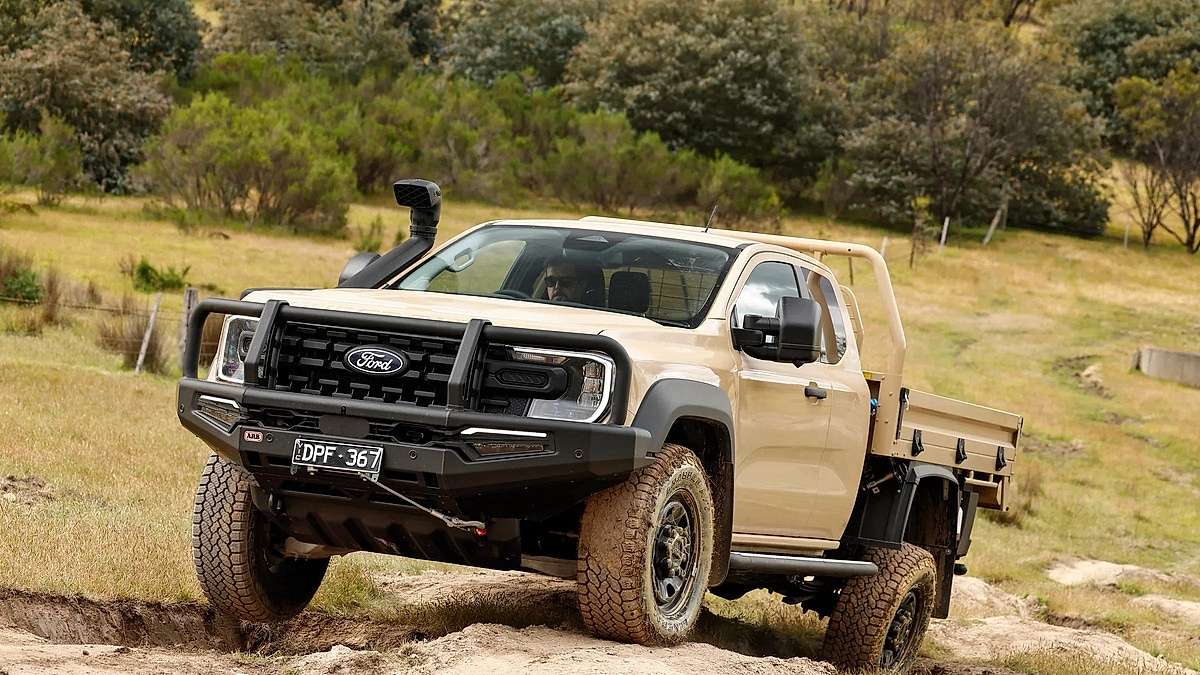

Ford is well known for supplying police vehicles like the Interceptor based on the Ford Explorer as well as the Ford Expedition. Now, it is branching out into the military sector, marketing its best-selling trucks for military use. As I’ve previously reported, the Ford F-Series has been the top selling line of vehicles in North America for nearly five decades. Many of the military’s vehicles haven’t been updated in decades, but recently the federal government has called on the automotive sector to help it modernize some of its fleets.
In mid-April 2026, the Trump administration held high-level discussions with major automotive leaders, including Ford CEO Jim Farley and General Motors CEO Mary Barra. The administration asked the auto industry leaders if the manufacturers could produce more military vehicles, hardware, and perhaps even munitions. The Pentagon asked automakers about using their factory capacity and personnel to help manufacture critical components. The recent actions in Iran have illustrated where the military may need more supplies.
During World War II, the Detroit Three were credited with helping build planes, vehicles and even armaments to help in the war effort.
Answering Government Requests
Ford says, “Beginning last year, several governments in North America and Europe engaged with Ford to discuss how our highly capable commercial vehicles and cutting-edge technologies could support their modern defense needs.”
Ford already has the technology that helps companies monitor and manage their fleets. Some governments already rely on Ford vehicles for security, from military transport in Ford Ranger vehicles to our Police Interceptor solutions. The trucks and SUVs can be easily upfitted with communications systems and special endurance packages that allow them to be run for long periods of time without overheating. Ford also has a special generator system that can turn trucks and vans into power sources. Trying to build vehicles with all of these amenities from the ground up would take years. It would also be incredibly expensive. Automotive manufacturers have the ability to respond much more quickly because much of the technology is already available.
Automakers Have Already Established World-Wide Networks
Ford already sells its popular F-150s and larger commercial trucks around the world. That is their secret weapon. By using commercial, off-the-shelf solutions from Ford, governments can access world-class technology at a fraction of the time and cost.
Ford’s F-Series and Ranger platforms and their respective Super Duty lines are already built for some of the most extreme terrains and jobs on earth. Advancements, like Pro Power Onboard, turn a truck into a mobile power source. Using a vehicle that already has an established service network gives the military the ability to have the equipment repaired anywhere around the world.
Too often, our military is slowed down because parts for the older vehicles have to be specially fabricated. Using trucks that can be monitored for service needs remotely saves valuable time and helps manage manpower needs. Service parts availability is huge! Being able to access parts from commercial dealers will save time and money. The military won’t have to send everything from America, when oil filters and replacement parts can be purchased in most large cities around the globe.
Ford says, “While Ford proudly assembles more vehicles in America than any other manufacturer, our perspective is global. Security is a collaborative effort, and our international operations are central to this vision. The Ford Ranger, for example, is built and sold around the world, making it an ideal candidate for international defense cooperation. As we explore these opportunities, our mission is clear: we are focused on supporting those in uniform with mobility, safety, and transport.”
Ford Trucks Equipped for All Terrain
Ford has invested heavily in off-road technology for its Ranger and F-Series. Ford’s Raptor series is considered one of the leaders in off-roading. That type of capability is perfect for remote terrains in areas like the middle east. Many of the areas where there are military actions no longer have roads or viable infrastructure and require vehicles with extreme capability. The same is true for patrolling borders or mountainous regions. Onboard generators can be used to power base camps and other services in remote locations. Ford says it is ready to help our country and its allies.
“We have always partnered with government customers in times of peace, crisis, and conflict to serve society. During World War II, Ford’s assembly lines produced hundreds of thousands of aircraft, trucks, and engines for the Allied effort.”
Ford also used its global manufacturing expertise to produce millions of pieces of personal protective equipment and ventilators during the COVID-19 pandemic.
Ford is still in the early stages of marketing to the military. It has not yet announced any specific projects. As I have previously reported, General Motors has been creating specific vehicles for the military for several years now. It has created a subsidiary called GM Defense to build several types of vehicles to meet military demands. One truck in particular called the Infantry Squad Vehicle has been very successful. GM has designed a family of troop carriers around the ISV. The carriers are based on the Chevrolet Colorado ZR2 midsize truck and use 90 percent commercial-off-the-shelf parts. I’m sure Ford sees similar opportunities based on the Ford Ranger. The ISVs are based on the smaller trucks because they need to be small enough and light enough to fit inside military helicopters.
Ford sees a real opportunity in growing its business into a new market. Ford already provides more than sixty percent of police vehicles with its Police Interceptor based on the Ford Explorer. Ford is exploring ways to build on its core strengths, are less cyclical, more tech-driven, and align with the company’s values. GM has been successful at it, it makes sense.
“Ford has always been at its best when the world needs us most. By exploring how we can support the men and women of the military with cutting-edge vehicle technology, we are once again showing up to help build a more secure and resilient future.”
Image by Ford
About the Author
Mary Conway is a professional automotive journalist and has decades of experience specializing in automotive news analysis. She covered the Detroit Three for more than twenty years for the ABC affiliate, in Detroit. Her affection for the Motor City comes naturally. Her father ran a gas station while Mary was growing up, in Wisconsin. Follow Mary at @MaryConwayMedia on X and on Facebook, and send her car news tips for future stories. Mary Conway is an esteemed automotive and business reporter who was inducted into the Michigan Journalism Hall of Fame in 2019. Mary is a member of the Automotive Press Association, Rocky Mountain Automotive Press, Society of Professional Journalists, and NATAS.
Set Torque News as Preferred Source on Google
Follow us today...






