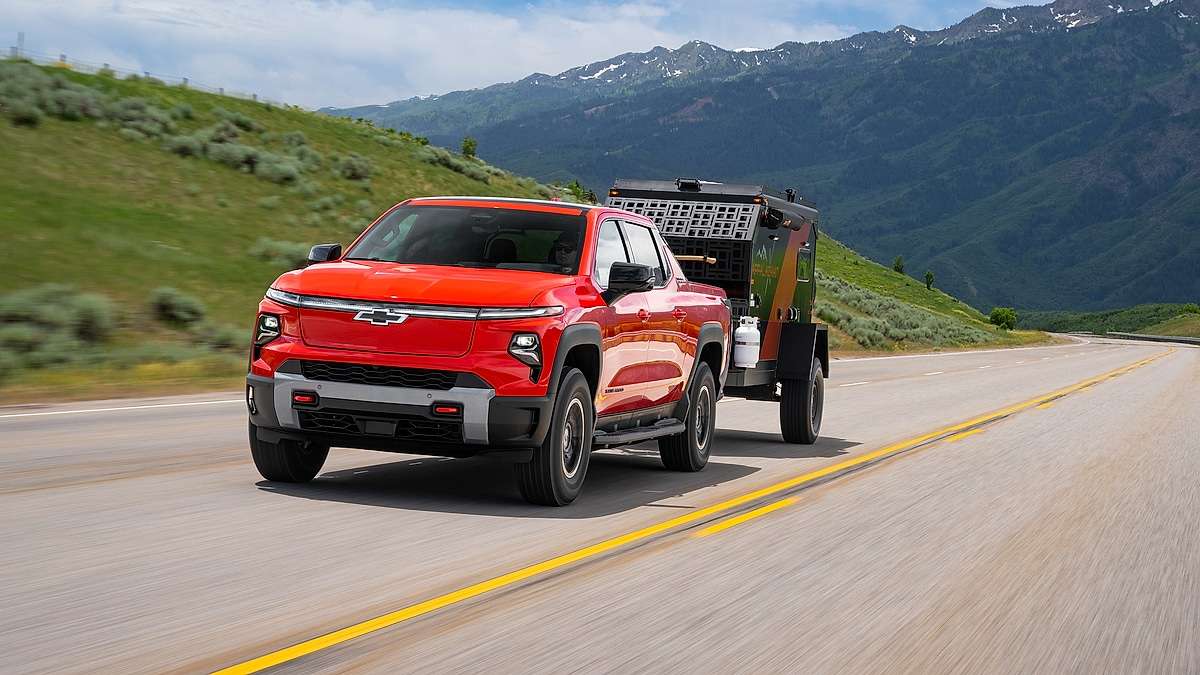

GM has patented a new recovery mode that could help a stuck Silverado EV or other GM vehicle rock itself free instead of leaving the driver to guess when to shift, throttle, and stop. The patent, titled "Method to automatically rock free a stuck vehicle," describes a system that detects when a wheel is stuck in a ditch, enters an automated rocking mode, alternates vehicle motion forward and backward, and watches traction signals such as wheel slip, wheel torque, and acceleration.
That is the surface story.
The more important story is what this says about the future of EV trucks. Electric pickups are usually judged by range, towing numbers, payload, charging speed, and price. GM's patent points to a different battleground: using software and motor control to solve old truck problems more precisely than a human driver can.
What Torque News Checked
I checked GM’s patent US12583459B1, which Justia lists as "Method to automatically rock free a stuck vehicle." The patent describes a vehicle with a wheel, an actuator for controlling wheel rotation, a sensor for detecting a stuck condition, and a processor that performs an automated rocking mode.
The patent says the vehicle can move in one direction, obtain a traction indicator, switch to another gear when the traction indicator meets a threshold, and then move in the other direction. It also describes measuring wheel slip, torque at the wheel, and acceleration. The system can exit the rocking mode when the vehicle speed exceeds a threshold.
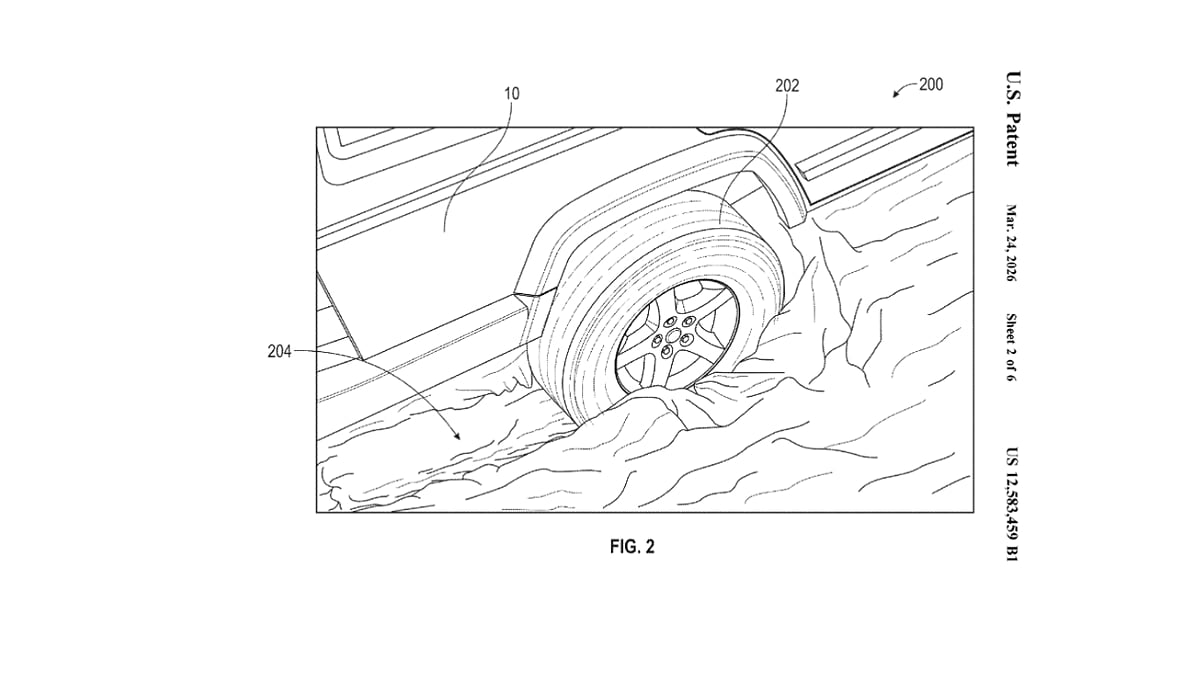
The patent also matters because it does not rely on one trigger. It can enter the mode when a driver appears to be trying to rock the vehicle, when wheel slip is detected for a selected period, when an image indicates a wheel is stuck, or when the driver requests the mode.
The caveat is important: a patent is not a product announcement. GM has not said this exact system is coming to the Silverado EV, Sierra EV, or any specific truck. The patent shows what GM has protected, not what customers can buy today.
The old way to rock a vehicle free is part skill and part feel. A driver shifts between reverse and drive, builds a little motion in one direction, then uses the rebound to move the vehicle the other way. Done well, that motion can help the stuck tire climb out of a rut, mud hole, ditch, or snow pocket. Done poorly, it can dig the vehicle in deeper, overheat components, or create a sudden lunge.
GM's patent turns that driver trick into a measured process.
Instead of asking the driver to guess whether the vehicle has enough grip, the system can watch traction indicators. Instead of asking the driver to time every shift, the controller can alternate motion when the conditions make sense. Instead of continuing indefinitely, the system can stop once the vehicle speed suggests it has escaped.
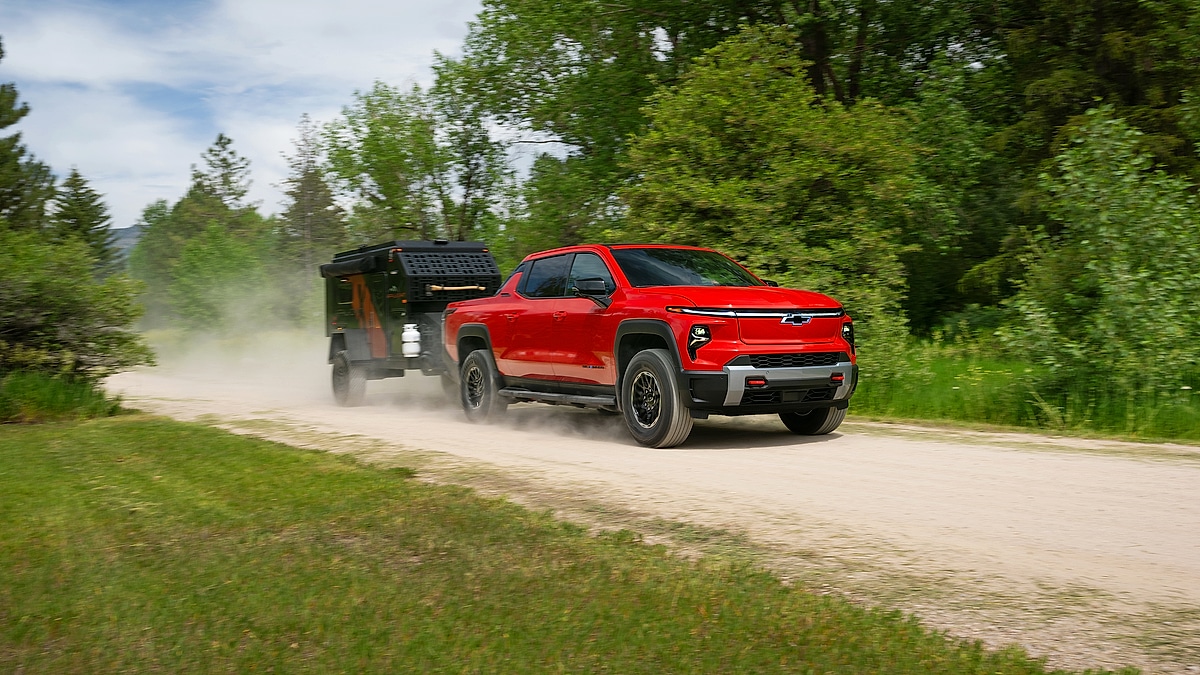
That is why this patent is more interesting for electric trucks than it first appears.
EVs can control torque very quickly. A truck with electric drive units, wheel-speed sensors, cameras, accelerometers, and drive-mode software already has much of the nervous system needed for a smarter recovery mode. The missing step is deciding when the truck is stuck and how to rock it without turning the attempt into wheelspin.
How it may affect the Silverado EV
This also matters for how people actually use trucks. A Silverado EV can end up stuck on a job site, at a muddy campsite, on a farm path, in snow, or on an off-road trail. The driver may know exactly what to do. Or the driver may be new to a heavy electric truck and unsure whether to push harder, stop, reverse, or call for help.
An automated rocking mode would not make judgment irrelevant. It would not replace recovery boards, tow straps, a winch, lower tire pressure, or knowing when to stop. But it could give the truck a smarter first attempt before the situation gets worse.
There is also directly relevant EV prior art. A 2025 Scout Motors patent publication describes “one-pedal rocking to free an electric vehicle from a stuck condition,” using the electric motor’s ability to rapidly switch between forward and reverse torque based on accelerator-pedal position. GM’s patent record on Google Patents lists that Scout publication among the cited references, which is a useful sign that GM’s patent sits within an already active field rather than inaugurating it.
The most important part of the patent is that GM describes a system that can read wheel slip, torque, acceleration, vehicle speed, and even imagery around the stuck wheel. That turns rocking from a feel-based maneuver into a feedback loop.
If this ever reaches production, the best version would be a guided recovery feature that tells the driver what it sees, what it is about to do, and when the driver should stop and use a different recovery method.
That is the practical consequence for Silverado EV shoppers. Range and towing still matter. But the next phase of electric truck capability may be less about brute force and more about whether the truck can use its sensors and motors to make hard situations less dependent on driver guesswork.
Truck owners, have you ever rocked a vehicle out of mud, snow, sand, or a ditch? Would you trust an automated recovery mode to try first, or would you rather keep full control?
Let us know in the comments.
About The Author
Noah Washington is an automotive journalist based in Atlanta, Georgia, covering sports cars, luxury vehicles, and performance culture. His reporting focuses on explaining the engineering, design philosophy, and real-world ownership experience behind modern vehicles.
Noah has been immersed in the automotive world since his early teens, attending industry events and following the enthusiast communities that shape how cars are built and driven today. His work blends industry insight with enthusiastic storytelling, helping readers understand not just what a car is, but why it matters.
Noah is also a member of the Southeast Automotive Media Association (SAMA), a professional organization for automotive journalists and industry media in the Southeast.
His coverage regularly explores sports cars, luxury vehicles, and performance-driven segments of the automotive industry, including the evolving culture surrounding Formula Drift and enthusiast builds.
Read more of Noah's work on his author profile page.
You can also follow Noah here:
Set Torque News as Preferred Source on Google
Follow us today...