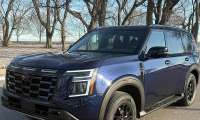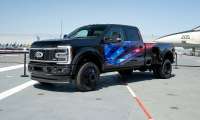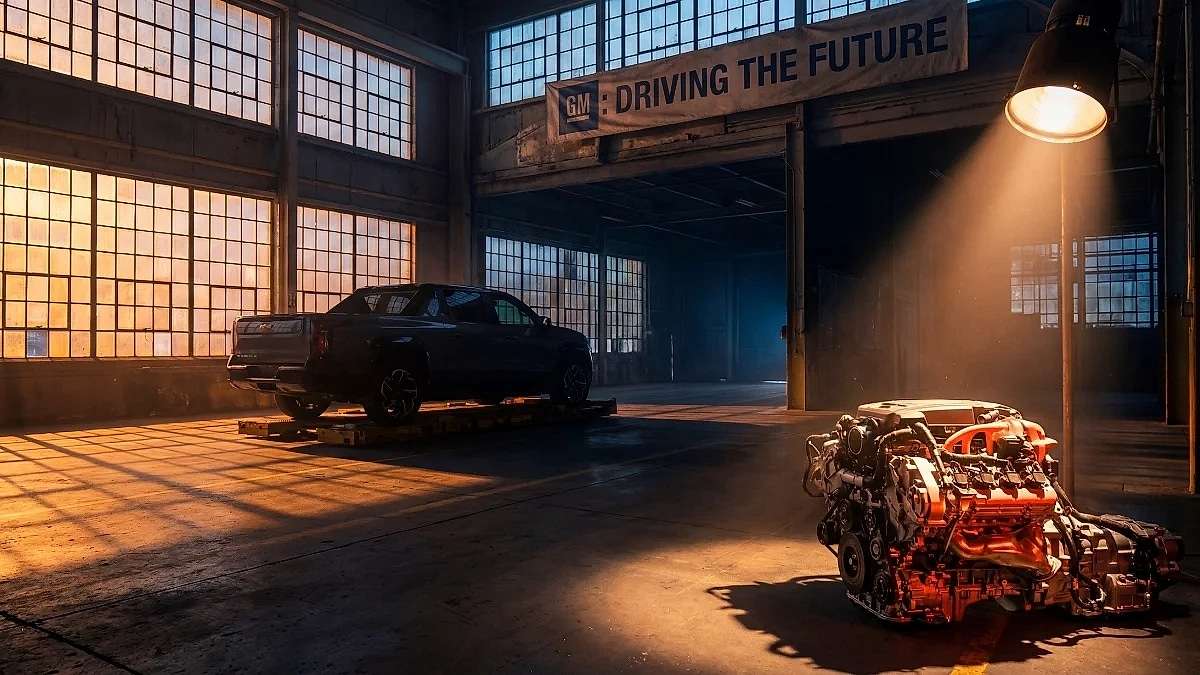

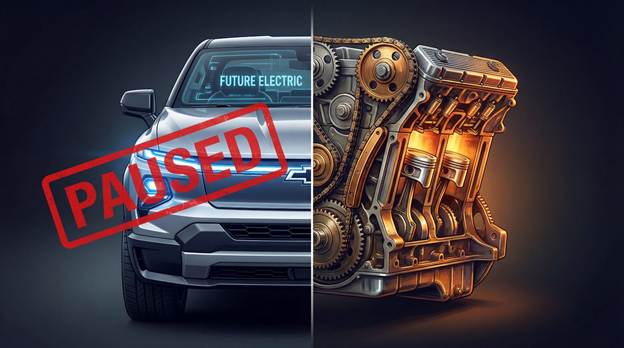
In the world of corporate communications, there is a fine line between a "strategic pause" and a "white flag." General Motors recently found itself walking that line when reports surfaced that the company is indefinitely delaying its next-gen full-size electric trucks. While GM’s official stance avoids the word "cancellation," the message to the market is loud and clear: the pure-EV revolution is taking a backseat to a renewed focus on internal combustion and hybrid platforms.
For a company that once claimed it was on a "path to an all-electric future," this is a jarring U-turn. The Silverado EV and Sierra EV were supposed to be the vanguard of GM’s technological dominance. By pausing the next-gen refresh of these platforms, GM is essentially admitting that the demand curve they projected years ago hasn't materialized, or worse, that their current Ultium architecture isn't yet cost-competitive enough to win a price war with Ford or Tesla.
The Economics of Gas, Batteries, and Bad Timing
Timing is everything in the automotive industry. GM is making this pivot at a moment when gas prices are relatively stable but volatile, and battery costs are finally starting to plummet due to economies of scale and chemistry breakthroughs like LFP (Lithium Iron Phosphate). On the surface, delaying an EV when battery range is increasing and costs are decreasing seems counterintuitive.
However, GM is looking at the "Valley of Death" in EV adoption. The early adopters have their trucks; the mass market is still wary of charging infrastructure reliability and towing degradation. If GM believes that gas will remain affordable for the next five years, doubling down on hybrids makes sense as a margin-protection strategy. But if a geopolitical event spikes oil prices or if solid-state batteries suddenly make current hybrids look like steam engines, GM will be caught with its pants down, selling yesterday’s technology at tomorrow’s prices.
The Hybrid Trap vs. The Range Extender Advantage
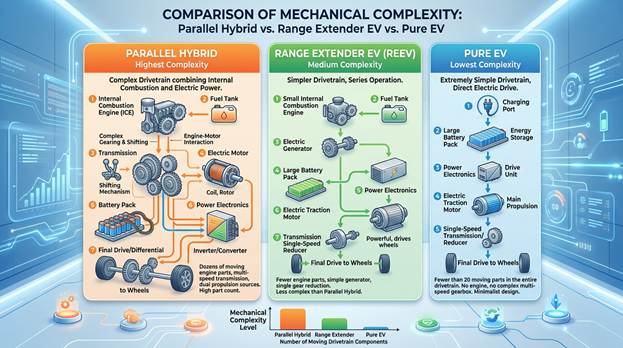
GM’s pivot appears to be leaning toward traditional plug-in hybrids (PHEVs). This is, in my view, a mistake. Traditional hybrids carry the complexity of two full drivetrains - a complex internal combustion engine (ICE) and an electric motor with a transmission that has to marry the two. This increases maintenance costs and weight.
A far more elegant and strategic solution would be the Range Extender (REX) path, similar to what we see with the Ram 1500 Ramcharger. In a REX vehicle, the wheels are always driven by electric motors, providing that instant-torque "EV feel" truck owners love. A small, efficient gasoline generator sits on board only to top up the battery when it runs low.
The REX approach allows GM to use a smaller, cheaper battery while eliminating range anxiety. It simplifies the drivetrain compared to a parallel hybrid and prepares the consumer for a pure EV future. By choosing a standard hybrid instead, GM is sticking with a legacy mechanical philosophy rather than embracing a software-defined power management philosophy.
The Case for Pure EV Persistence
Despite the current cooling of the EV market, there is a strong argument that pure EV is the only strategic move that matters. Tesla’s Cybertruck, for all its polarization, is a tech showcase. Rivian is proving that the adventure segment wants electric. By retreating now, GM risks losing the "mindshare" of the next generation of truck buyers.
If GM had stayed the course, they could have used this period of lower demand to perfect the software bugs that have plagued the Blazer EV and Silverado EV launches. Strategic dominance isn't built by following the current sales chart; it’s built by skating to where the puck is going to be. Right now, GM is skating back to the bench to change its skates while the game is still in play.
Success Factors: When the Pivot Works
For GM’s delay to be viewed as a stroke of genius in five years, several conditions must be met:
- Infrastructure Stagnation: If the US charging grid continues to be unreliable, GM’s hybrids will look like the pragmatic choice for rural America.
- Margin Superiority: GM must use the capital saved from the EV delay to make their hybrid trucks significantly more profitable than their competitors' loss-leading EVs.
- The "Bridge" Strategy: GM must successfully transition hybrid buyers into EVs later this decade. If they fail to innovate on the battery side, they are simply delaying the inevitable.
The Hindsight Nightmare: When the Pivot Fails
Conversely, this will look like a "Kodak moment" - a failure to adapt—if:
- Market Infiltration: If competitors like BYD bring cheap, long-range electric trucks to the global market, GM’s hybrids will look like overpriced relics.
- Regulatory Crushing: If EPA emissions standards tighten faster than GM expects, the fines for selling ICE-based hybrids could eat all the projected profits.
- Battery Breakthroughs: If a competitor announces a 600-mile range battery that charges in 10 minutes, GM’s "strategic delay" will be remembered as the moment they gave up the lead.
The Optimal Path: A Software-Defined Modular Approach
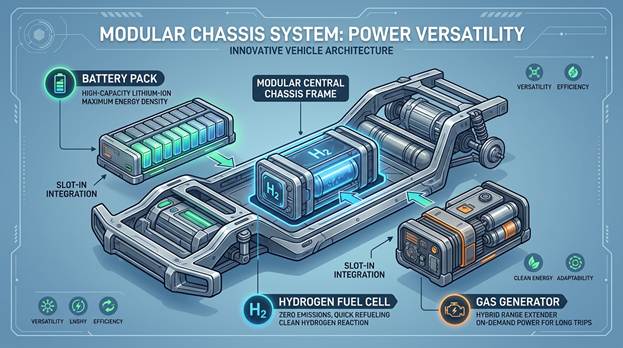
GM’s most successful path forward isn't choosing between Gas and Electric; it’s mastering the Software-Defined Vehicle (SDV). The hardware—whether it’s a battery or a range extender—should be modular.
GM should be building a single truck platform where the power source is swappable at the factory level. Want a 200kWh battery? Here is the Silverado EV. Want a 50kWh battery and a turbogenerator? Here is the Silverado REX. By abandoning the "next-gen" EV platform specifically, they risk losing the architectural integration that makes EVs efficient. They should instead be unifying their platforms so they can pivot production based on real-time market demand.
Wrapping Up
General Motors is at a crossroads. The decision to delay next-gen EV trucks is a defensive maneuver designed to protect the balance sheet in an uncertain economy. While hybrids offer a safety net for the "range-anxious" consumer, they represent a technological compromise that could leave GM vulnerable to more agile, tech-focused competitors.
The "winner" in the truck wars won't be the company that makes the best hybrid; it will be the company that makes the truck the consumer doesn't have to think about. If GM uses this pause to perfect a Range Extender solution or to fix its troubled software stack, it might survive. If this is truly just a retreat to the comfort of the internal combustion engine, then Mary Barra may have just signed over the future of the American truck to the competition.
Disclosure: Images rendered by Artlist.io
Rob Enderle is a technology analyst at Torque News who covers automotive technology and battery developments. You can learn more about Rob on Wikipedia and follow his articles on TechNewsWord, TGDaily, and TechSpective.
Set Torque News as Preferred Source on Google
Follow us today...