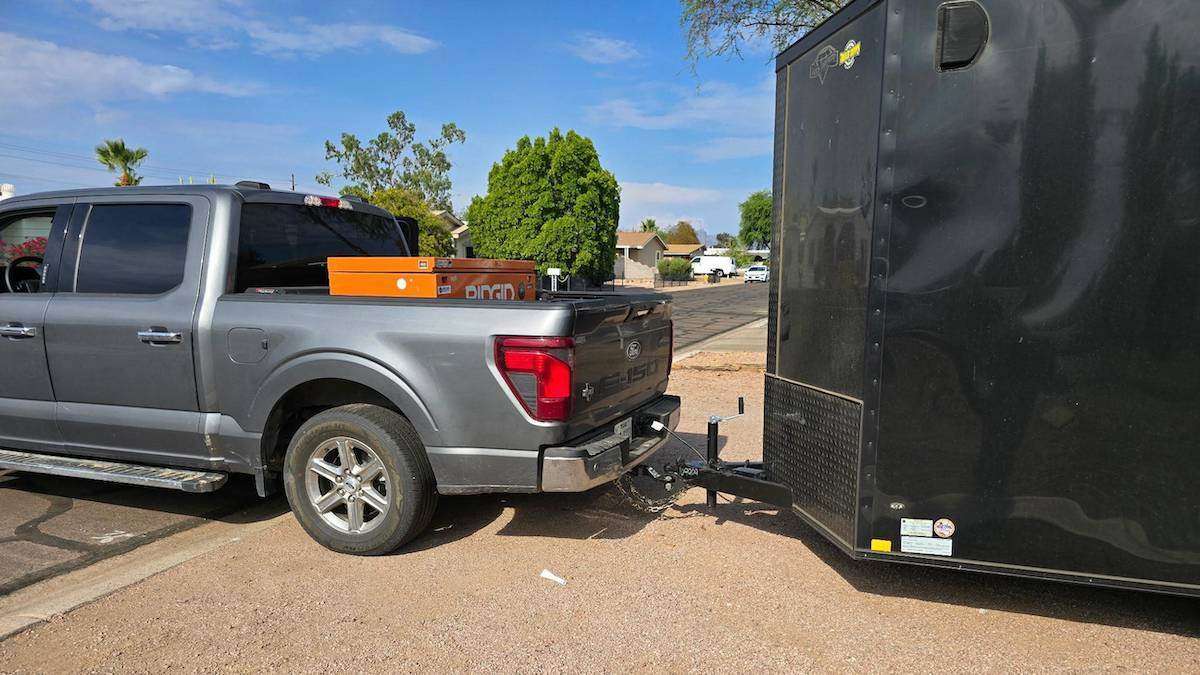

Stop gambling with your F-150 10-speed's life and learn the one manual override that keeps your Ford V8 from melting down on the long haul.
Imagine you’re halfway through a grueling 1,000-mile haul when the smell of scorched fluid fills the cabin, and your dashboard starts lighting up like a Christmas tree. You’re watching the temp gauge climb into the red, realizing that your dream trip is one gear-shift away from a total mechanical meltdown.
In my deep dive into Ford towing vulnerabilities, I came across a raw and revealing post shared in a Facebook community of Ford truck enthusiasts. Alex Olvera highlighted the growing anxiety surrounding the 2024 Ford F-150’s thermal limits, questioning whether the modern 10-speed transmission can withstand the rigors of a 17-hour haul without a total mechanical meltdown.
As a 30-year automotive industry veteran and Senior Reporter for Torque News, I’ve seen the "Built Ford Tough" badge put to the test more times than I can count. But right now, a specific kind of panic is rippling through the 2024 Ford F-150 community, centered on one of the most stressful scenarios a truck owner can face: the 1,000-mile haul.
Alex Olvera recently voiced this exact fear on the Ford F-150 Owners Facebook page, asking the community a question that kept me up thinking:
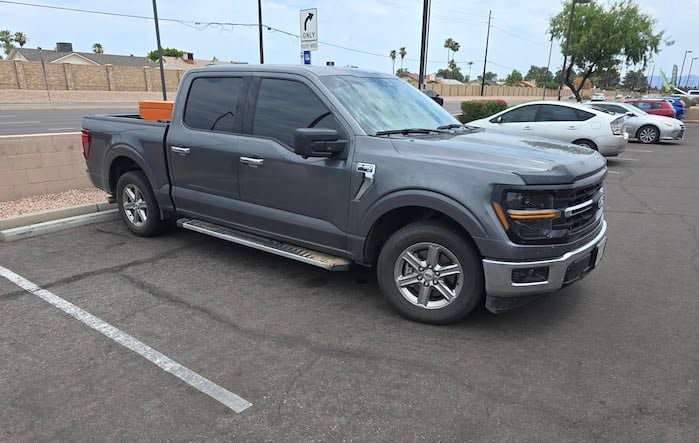
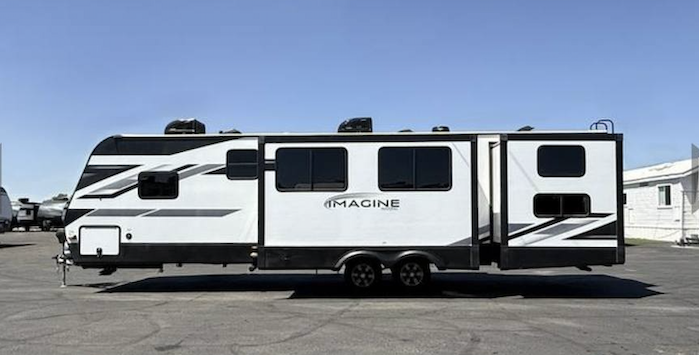
“Do you think my 2024 Ford F-150 can tow this trailer? She’s a 5.0L not a 4x4... I wanna do a 17-hour drive, what do y’all think? Will my tranny be screaming and overheating?”
From My View: The Towing Anxiety is Real
Alex’s concern isn’t just typical "new truck jitters," it is grounded in a decade of documented 10-speed struggles. In my research on Ford transmission issues, I found a recent report from transmission experts at Sonnax warning that overheating and venting have become "blazing hot" with the latest Ford 10-speed transmissions, particularly when fluid levels are even slightly off.
I’ve spent years tracking these mechanical gremlins, and as I noted in my recent investigation, the clunk and PowerBoost failures are back for 2024 and 2025 models, suggesting that Ford’s "fixes" haven't fully exorcised the ghost of the 10R80.
My Take: Why 17 Hours is the Ultimate Test
When you’re pulling a trailer for 17 hours, you aren't just driving; you are subjecting your transmission to a marathon of heat cycles that most daily commuters never experience. Industry analysts at Rohnert Park Transmission note that transmission overheating remains a "high severity" issue for 2015-2024 models, often requiring auxiliary cooling or thermostat replacement to prevent limp mode.
I’ve sat in the driver’s seat of every F-Series iteration, and I can tell you that many drivers find the 10-speed exhibits skipping and slamming between gears, which only intensifies under the weight of a heavy trailer.
The Thermal Bypass Trap
The "industry secret" that Ford doesn't highlight in the brochure is the Thermal Bypass Valve. This component acts as a gatekeeper, allowing transmission fluid to reach the cooler only when it reaches a set temperature, typically 200 to 210. For a 17-hour tow, this is often too little, too late.
In my thirty years in the auto world, I’ve learned that the 10R80 transmission in your 2024 F-150 is designed to run "hot" for fuel efficiency, but "hot" for a computer is "terrifying" for an owner. If you are towing in a 2WD, you lack the extra cooling capacity often included with 4x4 off-road packages, so your transmission fluid is working harder.
The Secret: Manual Gear Lock-Out & The 205°F Myth
Most owners see their transmission temperature climb to 200 or 210 degrees F and panic. The industry secret is twofold:
The "Hunting" Heat Spike: The 10R80 10-speed transmission is designed to maximize fuel economy by constantly upshifting. When towing a heavy trailer for 17 hours, the transmission "hunts" between 8th, 9th, and 10th gears. Every shift generates friction and significant heat. The secret is to manually lock out 9th and 10th gears using the buttons on the shifter.
By keeping the truck in 8th gear, you slightly increase RPM, which keeps the mechanical water pump and transmission fluid flowing faster, lowering the temperature by 10 to 15 degrees.
The MERCON ULV Reality: Ford uses "Ultra Low Viscosity" fluid (MERCON ULV). While traditional wisdom holds that 220°F is "engine death," the 2024 thermal management system prefers to run hot for efficiency. The secret is that the transmission has a synthetic heater (a heat exchanger) that uses engine coolant to bring the transmission up to temperature quickly.
On a 17-hour tow, the "pro" move is to monitor the cylinder head temperature (CHT) rather than just the transmission gauge; if the CHT stays stable, the "screaming" transmission is actually operating within its high-efficiency window.
The "Insider" Fix
For an owner like Alex who is truly worried, the solution is the bypass valve modification. Many Ford experts recommend an aftermarket thermal bypass valve that allows transmission fluid to flow to the external cooler immediately, rather than waiting for the internal thermostat to open at 190°F. This keeps the "tranny" from ever reaching that "screaming" point in the first place.
What F-150 Owners Are Saying
The community feedback on this is polarized, but the "horror stories" are hard to ignore. One user on Reddit noted the severity of the situation: "Replace radiator or end up replacing tranny like me... had a small leak. Unnoticed. Then boom tranny went out on highway," as noted in the full discussion here.
Another owner highlighted the vulnerability of the new design, noting, "The radiator on these models has an isolated portion for cooling automatic transmission fluid... if it's not cooling it, bad things happen," as reported in this Reddit thread.
Key Takeaways for the 17-Hour Haul
- Lock Out Overdrive: Use the buttons to lock out 9th and 10th gears. This reduces "gear hunting" and keeps your fluid circulating faster.
- Monitor the Numeric Temp: Don't trust the "idiot light" needle. If you see temps sustained above 235 degrees, it's time to pull over.
- Aftermarket Insurance: Consider a full-flow thermal bypass kit. It allows fluid to hit the cooler immediately, keeping temps significantly lower.
- Fresh Fluid Is Cheap Insurance: If you plan to do multiple 17-hour tows a year, forget the "lifetime fluid" claim and change it every 30,000 miles.
Keep Your Truck On the Road
Your 2024 F-150 5.0L is a powerhouse, but the transmission is its Achilles' heel during a marathon tow. By understanding the thermal limits and manually managing your gears, you can prevent that "screaming" meltdown and keep your truck on the road for the long haul.
What Would You Do? Would you trust the factory cooling system for a 17-hour trip, or are you considering aftermarket coolers to sleep better at night? Leave a comment in the red Add new comment link below.
Next Up: I recently went deep into why some owners are walking away from the brand entirely; read more in “Built Ford Tough” No More? F-150 Transmission Failures Drive Owner to Chevy.
Denis Flierl is a 14-year Senior Reporter at Torque News and a member of the Rocky Mountain Automotive Press (RMAP) with 30+ years of industry experience. Based in Parker, Colorado, Denis leverages the Rockies' high-altitude terrain as a rigorous testing ground to provide "boots-on-the-ground" analysis for readers across the Rocky Mountain region, California EV corridors, the Northeast, Texas truck markets, and Midwest agricultural zones.
A former professional test driver and consultant for Ford, GM, Ram, Toyota, and Tesla, he delivers data-backed insights on reliability and market shifts. Denis cuts through the noise to provide national audiences with the real-world reporting today’s landscape demands.
Connect with Denis: Find him on LinkedIn, X @DenisFlierl, @WorldsCoolestRides, Facebook, and Instagram.
Photo credit: Denis Flierl via Alex Olvera
Set Torque News as Preferred Source on Google
Follow us today...