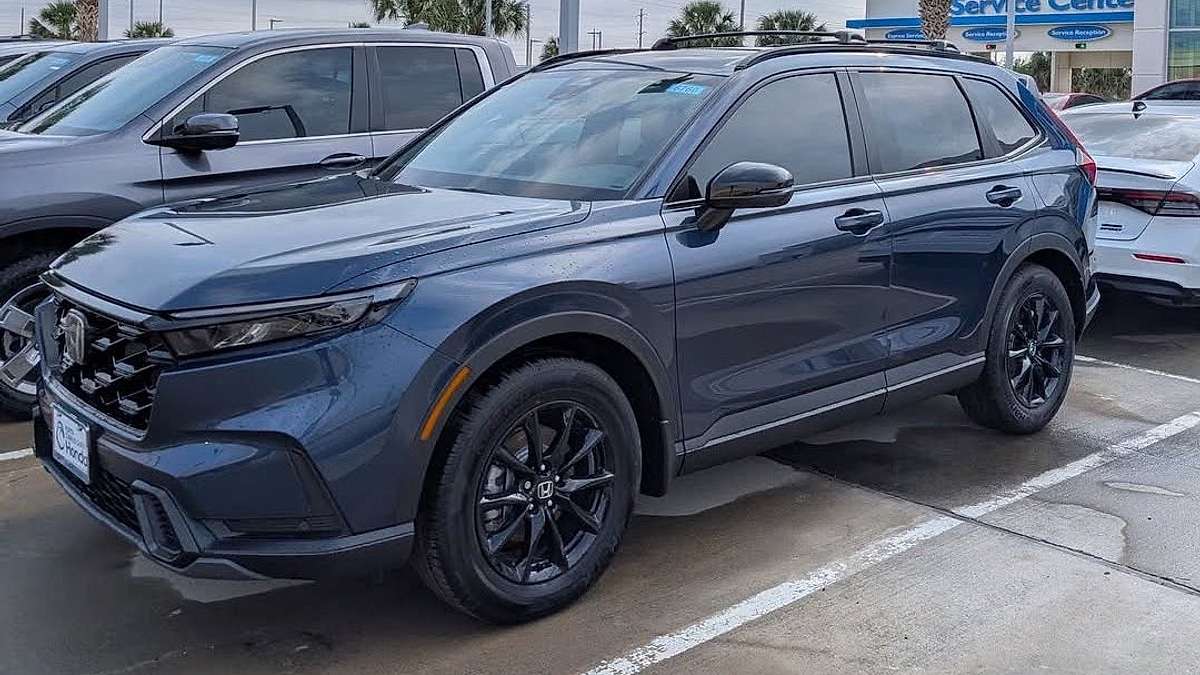

This investigation uncovers a systemic, low-mileage dual-component failure pattern developing in sixth-generation 2023–2026 Honda CR-V Hybrid models. Torque News tracking reveals that these crossovers are experiencing concurrent, early breakdowns of both the high-pressure fuel injection system and the Electronic Power Steering (EPS) gearbox assembly, often before the vehicle's second routine oil change.
Synthesizing vehicle forensic data, technical service bulletins, and federal safety filings, this report identifies the root causes of why these critical assemblies are fracturing long before their engineered lifespans. Compounding the mechanical failures, a severe bottleneck caused by parts-availability logjams and a lack of dealership loaner-vehicle infrastructure has exposed a stark gap between factory quality assurances and real-world durability, leaving owners stranded and compromising vehicle safety.
The reality of this dual-system vulnerability recently crystallized for a consumer in Corpus Christi, Texas. Val Garza posted a detailed account on the Honda CR-V 2023-2026 Discussion Club - 6th Generation Facebook page about an ongoing mechanical issue with a one-year-old 2025 Honda CR-V Hybrid AWD.
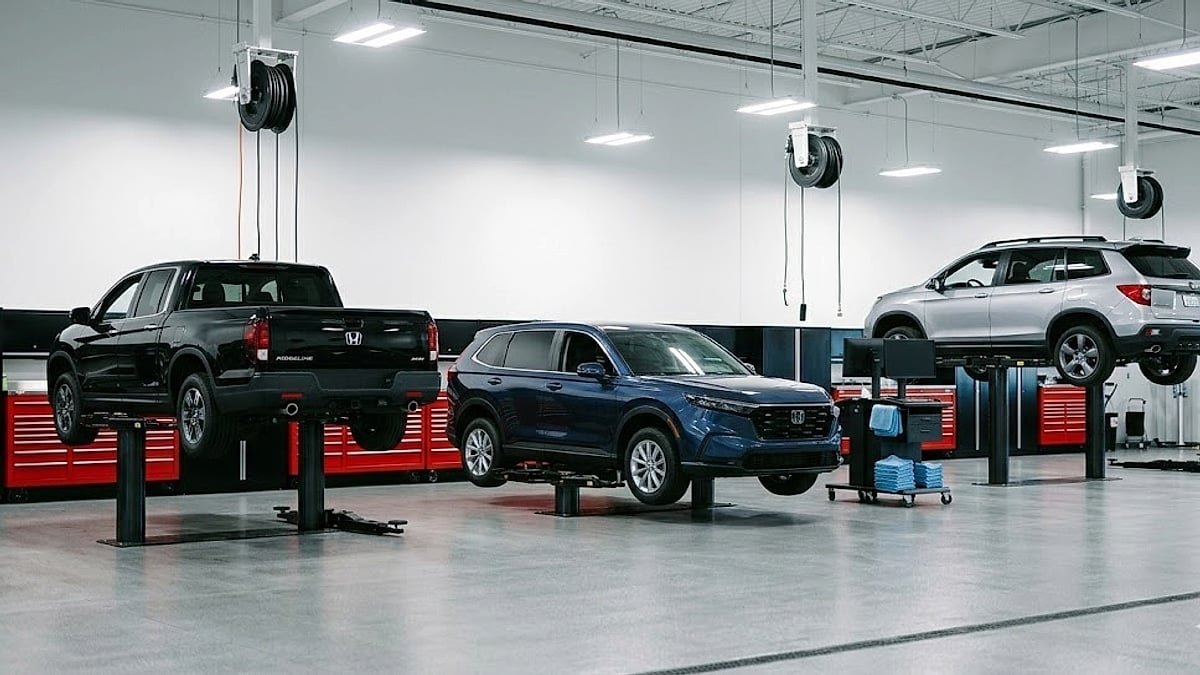
With less than 23,000 miles on the odometer, the vehicle required a complete power steering rack replacement. This major repair came shortly after the crossover had its entire set of fuel injectors replaced under warranty.
The vehicle has sat immobile at the local dealership for over two weeks due to an indefinite backorder on replacement parts, and the dealer has refused to provide a loaner vehicle. Garza expressed deep frustration with the situation, stating that the vehicle felt like a lemon and questioning why anyone should be expected to drive under such unsafe conditions.
Decoupling the Root Causes of Early Component Failures
To understand why a nearly new 2025 model-year vehicle suffers two separate, costly component breakdowns, we must examine specific supplier-level engineering flaws uncovered by Torque News in North American quality control.
1. Electronic Power Steering (EPS) Gearbox Failure
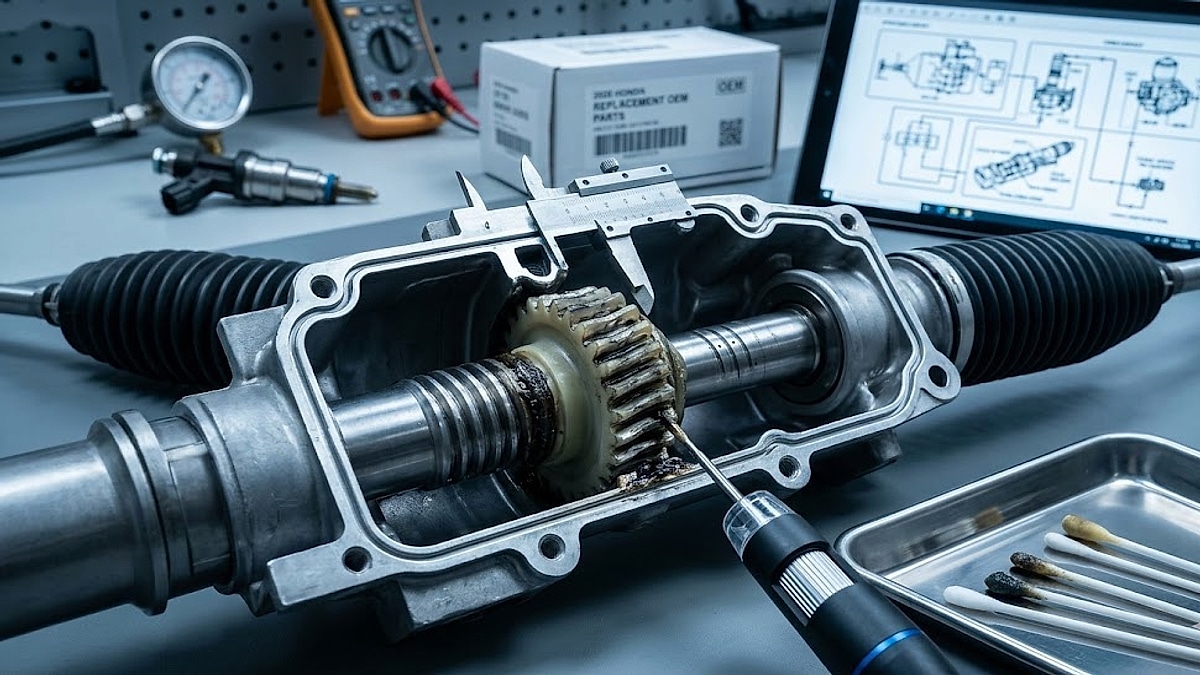
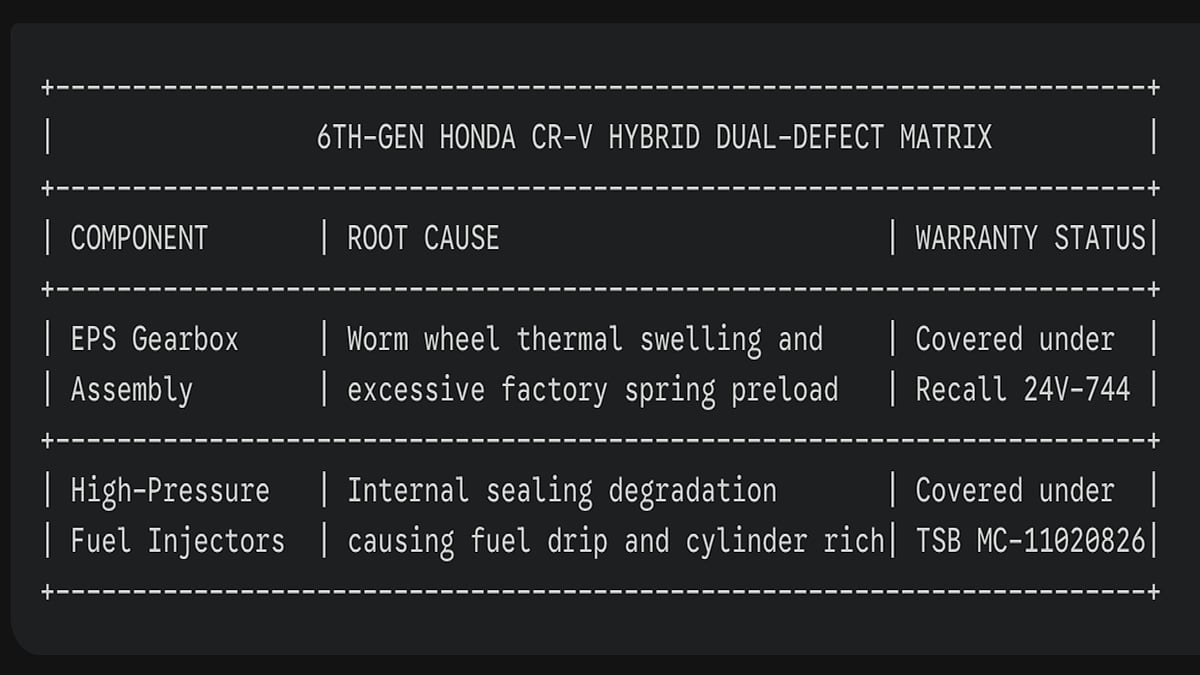
The Root Cause: Manufactured by Hitachi Astemo Americas, the internal worm-wheel mechanism in the steering gear contains a critical manufacturing defect.
The Mechanism: Normal environmental heat and moisture cause the improperly produced gear to swell. This expansion thins the vital grease film between the worm wheel and worm gear, generating intense friction.
The Result: Compounding this, the supplier calibrated the factory spring preload on the worm gear too high. These combined high sliding forces cause the steering to feel notched, stiff, or physically stuck at highway speeds.
2. Direct-Injection Fuel System Failure
The Root Cause: Operating under extreme pressures exceeding 3,000 PSI, certain production batches of these fuel injectors suffer premature internal seal failures and electrical coil degradation.
The Mechanism: Formally confirmed in NHTSA Service Bulletin MC-11020826-0001, leaking injectors drip fuel into the cylinder after shutdown. This dilutes protective motor oil on the cylinder walls and creates an excessively rich air-fuel mixture that rapidly fouls spark plugs.
The Result: The Powertrain Control Module (PCM) misreads exhaust data, triggers diagnostic trouble codes like P0172, and illuminates all dashboard warning lights simultaneously.
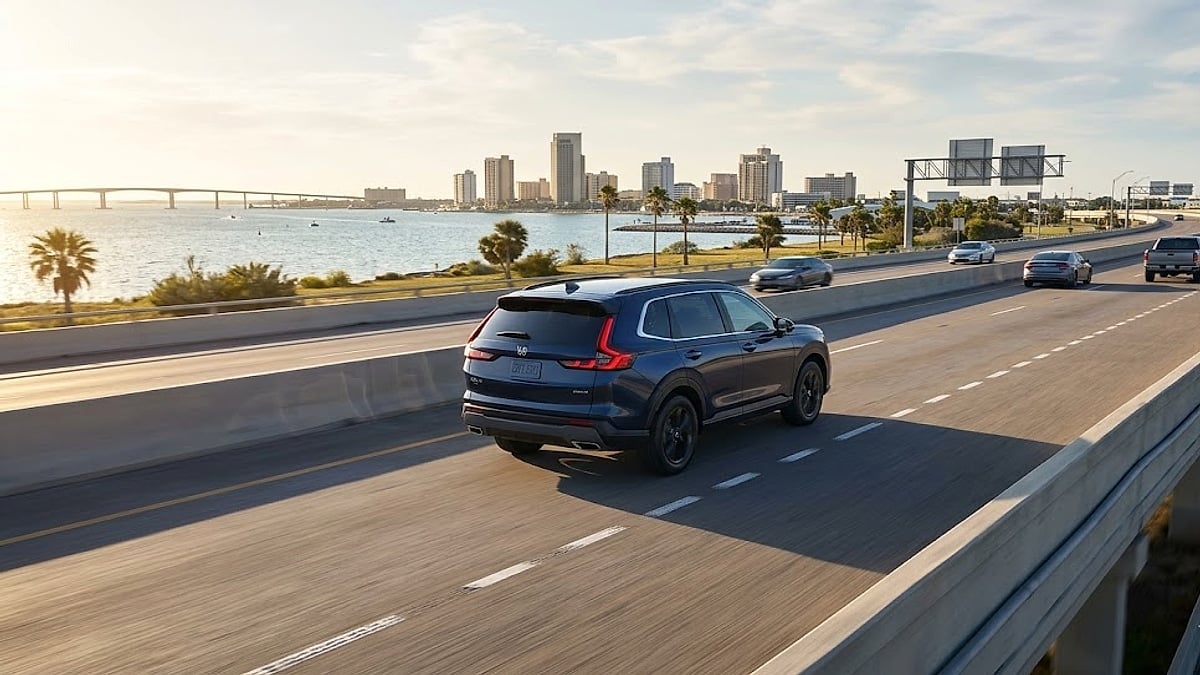
National Safety Documentation and Investigative Data
Industry data and legal analysts document a widespread dual-failure pattern in these vehicles. The steering defect, caused by a faulty worm wheel mechanism in the steering gearbox assembly that swells, causes the steering to stick and can lead to dangerous overcorrection or unintended lane drift.
According to technical analysis by Auto Law Firm PC, this mechanical vulnerability triggered NHTSA Campaign 24V-744. This sweeping recall covers over 1.6 million 2023–2025 Honda and Acura vehicles (including CR-V and CR-V Hybrid models), proving failures like Garza's are systemic rather than isolated.
Simultaneously, the direct-injection fuel system faces intense scrutiny. Lemberg Law’s vehicle defect index notes a surge in fuel system complaints during the first 12 months of ownership. Data shows the issue frequently recurs despite multiple injector replacements, pointing to a systemic design or calibration flaw in the hybrid powertrain's fuel delivery system. Together, these data confirm a frustrating, well-documented cycle of back-to-back failures in two critical vehicle systems.
Connecting Factory Defects with Owner Field Reports
The shift toward online enthusiast clubs and community automotive forums has given vehicle owners a powerful way to spot manufacturing defects long before traditional corporate communications acknowledge them. By tracking these real-world owner experiences, Torque News can cross-reference corporate service bulletins with the actual issues drivers encounter on the road.
For instance, my past reporting for Torque News highlighted how sudden fuel system failures hurt long-term owner satisfaction. In that initial assessment, it was observed that the injectors are slowly dripping fuel, causing a fuel-rich condition when the car is started, which triggers the emission system's fault.
This early reporting matches the current issues facing sixth-generation hybrid owners. It shows that fuel system durability has been an ongoing struggle for the model line across multiple production cycles.
This structural breakdown pattern creates a difficult situation for owners who rely on their vehicles for daily transportation. When a single vehicle suffers from both a fuel delivery defect and a sticking power steering rack, the owner loses confidence in the vehicle's basic safety. This loss of trust is made worse by parts shortages that leave vehicles stranded at dealerships for weeks at a time.
Field Observations from Owner Communities
Looking closely at dedicated automotive forums reveals that these failures are a frequent topic of technical discussion among everyday drivers. In a detailed Reddit thread on the popular r/crv forum, an owner shared their frustration with the direct-injection system, noting that the injectors are faulty and need to be replaced. You can read the full discussion here.
Based on my 30 years of experience in the automotive industry, this persistent direct-injection failure stems from the high duty cycles and extreme pressures required to meet modern emission targets. This leaves very little room for manufacturing errors in the internal seals.
Another owner highlighted the steering defect in a separate discussion, stating that the steering wheel gets caught in one spot and requires extra force to break it loose, as shown in this Hitachi EPS system review video.
My analysis indicates this notchiness is a direct result of the worm gear teeth binding within the steering rack housing. When the internal components swell from heat and moisture, the physical clearance inside the gearbox disappears. This creates a dangerous mechanical drag that the driver must physically overcome while steering.
How Parts Shortages Impact the Ownership Experience
Massive safety recalls strain supply chains, causing severe backorders at dealerships for steering gearboxes and fuel injectors. This logjam creates a secondary shortage of loaner vehicles, leaving owners like Garza immobilized. Holding vehicles for weeks without alternative transportation forces consumers to either pay out of pocket for rentals or drive unsafe cars. This breakdown in customer support damages brand loyalty far more than the initial mechanical failure.
What Is the Next Step for Affected Vehicle Owners?
When facing persistent failures, owners should check if their vehicle qualifies as a "lemon." Under most state laws, a vehicle under factory warranty may qualify for a legal buyback if it is out of service for 30 or more cumulative days, or if a serious safety defect persists after a reasonable number of repair attempts.
Affected owners must meticulously document all dealership interactions and keep copies of every repair order. Crucially, days a vehicle sits untouched waiting for backordered parts still count toward the out-of-service threshold. Finally, opening a formal case with corporate customer service can expedite parts shipping and establish a vital legal paper trail.
Key Takeaways
- Identify the primary warning signs of EPS gearbox failure, which typically appear as a distinct notchiness or sticky sensation when making minor steering corrections at highway speeds.
- Monitor the vehicle's fuel economy metrics, as a sudden drop in miles per gallon often indicates a leaking fuel injector dripping raw fuel into the combustion chamber.
- Verify your vehicle's identification number against federal recall databases to confirm if your crossover contains the recalled Hitachi steering gearbox assembly.
- Demand detailed written documentation from your dealership service advisor regarding backordered components to help expedite your case with corporate consumer managers.
Summary of the Investigation
This dual-system failure pattern on low-mileage CR-V hybrid crossovers reveals a clear vulnerability in modern component sourcing and quality control. When advanced high-pressure direct injection systems and precision electronic steering gearboxes suffer from manufacturing defects simultaneously, the everyday driving experience suffers.
These cases underscore the need for stronger factory testing and more transparent dealership support systems. Until the supply chain can keep pace with the demand for updated replacement components, owners will continue to bear the burden of these manufacturing oversights.
It’s Your Turn
Have you experienced a sticky steering wheel or a sudden dashboard warning light on your sixth-generation crossover? Let us know about your experience with dealership parts availability and loaner cars by leaving a comment using the red "Add new comment" link below.
What’s Next
In the second part of this technical report, we will look closely at the step-by-step repair process that technicians use to fix the Hitachi steering gearbox. We will analyze whether the current factory repair guidelines provide a permanent fix or merely a temporary patch for long-term mechanical wear. Check out the full report here.
About The Author
Denis Flierl is a 14-year Senior Reporter at Torque News and a member of the Rocky Mountain Automotive Press (RMAP) with 30+ years of industry experience. Explore his full investigative reporting archives and technical guides at DenisFlierl.com. Based in Parker, Colorado, Denis leverages the Rockies' high-altitude terrain as a rigorous testing ground to provide "boots-on-the-ground" analysis for readers across the Rocky Mountain region, California EV corridors, the Northeast, Texas truck markets, and Midwest agricultural zones. A former professional test driver and consultant for Ford, GM, Ram, Toyota, and Tesla, he delivers data-backed insights on reliability and market shifts. Denis cuts through the noise to provide national audiences with the real-world reporting today’s landscape demands. Connect with Denis: Find him on LinkedIn, X @DenisFlierl, @WorldsCoolestRides, Facebook, and Instagram.
Photo credit: Denis Flierl via Val Garza
Set Torque News as Preferred Source on Google
Follow us today...