
This consumer advocacy report serves as the strategic action plan for sixth-generation Honda CR-V Hybrid owners navigating critical dual-component failures. Building upon the engineering root causes identified in our initial investigative reporting, this guide shifts the focus toward practical legal, financial, and mechanical remediation.
According to ongoing Torque News tracking of manufacturing defects, early-production variants of these crossovers require immediate consumer intervention. This analysis outlines the precise criteria required to trigger state lemon law protections, specifically, tracking out-of-service thresholds resulting from parts logjams. It details manufacturer-level escalation pathways and regional complications, equipping drivers with the exact steps necessary to protect their financial investment and personal safety when local dealership support networks break down.
The sudden realization that a nearly new crossover suffers from simultaneous high-pressure fuel-delivery and electronic steering-gearbox breakdowns can leave a consumer feeling completely powerless. As documented in our primary technical investigation, “Honda CR-V Hybrid Power Steering Rack and Fuel Injector Failure Under 23K Miles Sparks Owner Safety Fears,” these combined mechanical failures are not merely minor inconveniences. They are severe system compromises that directly impact vehicle safety and operation.
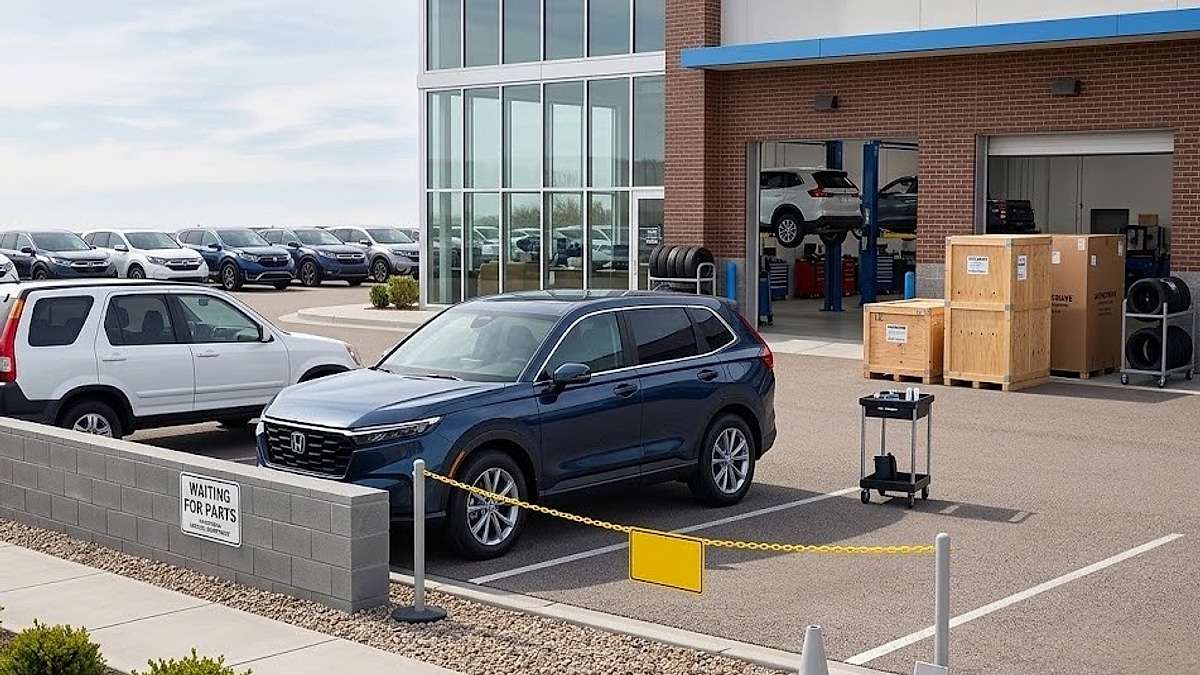
Torque News technical analysis identifies a critical gap between factory maintenance schedules and real-world component longevity. When a dealership service department fails to provide alternative transportation and indefinitely estimates a parts backorder of two weeks or more, the situation transforms from a mechanical headache into a consumer protection dispute. Affected vehicle owners must pivot from passive waiting to an active, documented strategy designed to force manufacturer accountability.
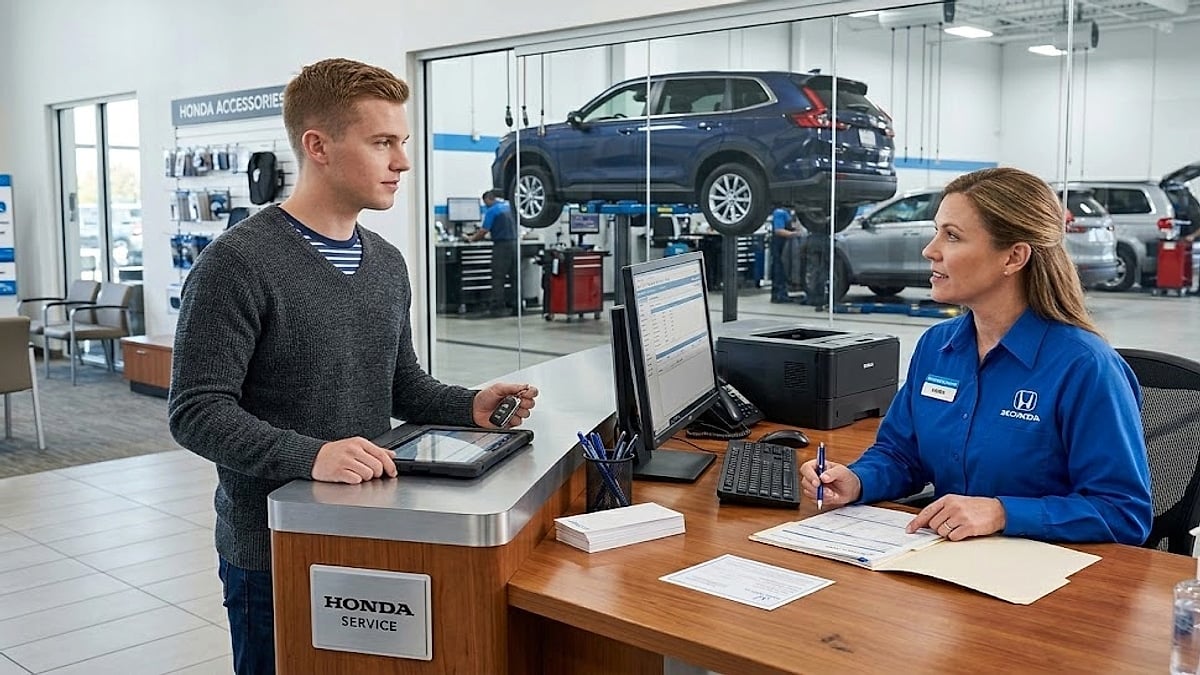
The first step in taking control of this ownership crisis is transforming the way you interact with dealership service personnel. Front-line dealership employees are facing a wave of owners affected by the massive National Highway Traffic Safety Administration Campaign 24V-744, which covers over 1.6 million vehicles containing the defective Hitachi steering gearbox. Because components are in short supply globally, verbal promises regarding shipping schedules or loaner car availability carry zero legal weight.
Owners must establish an ironclad paper trail by demanding a formal, line-item repair order the moment the vehicle is left at the dealership. This document must explicitly state the exact date, time, and mileage upon arrival, as well as your specific complaints about sticky steering or engine hesitation.
Activating State Lemon Law Protections and the 30-Day Threshold
Many drivers mistakenly believe that a vehicle must experience a catastrophic on-road failure multiple times before it can qualify for lemon law remediation. In reality, state-level consumer protection statutes contain a vital statutory provision known as the out-of-service clause. This legal trigger is an owner's strongest asset when facing extensive manufacturer backorders.
If a vehicle is sitting on a dealer lot or in a service bay awaiting backordered parts for a cumulative total of 30 days or more, it typically satisfies the legal definition of a lemon in a majority of jurisdictions. This holds true regardless of whether the technician has even turned a wrench on the car.
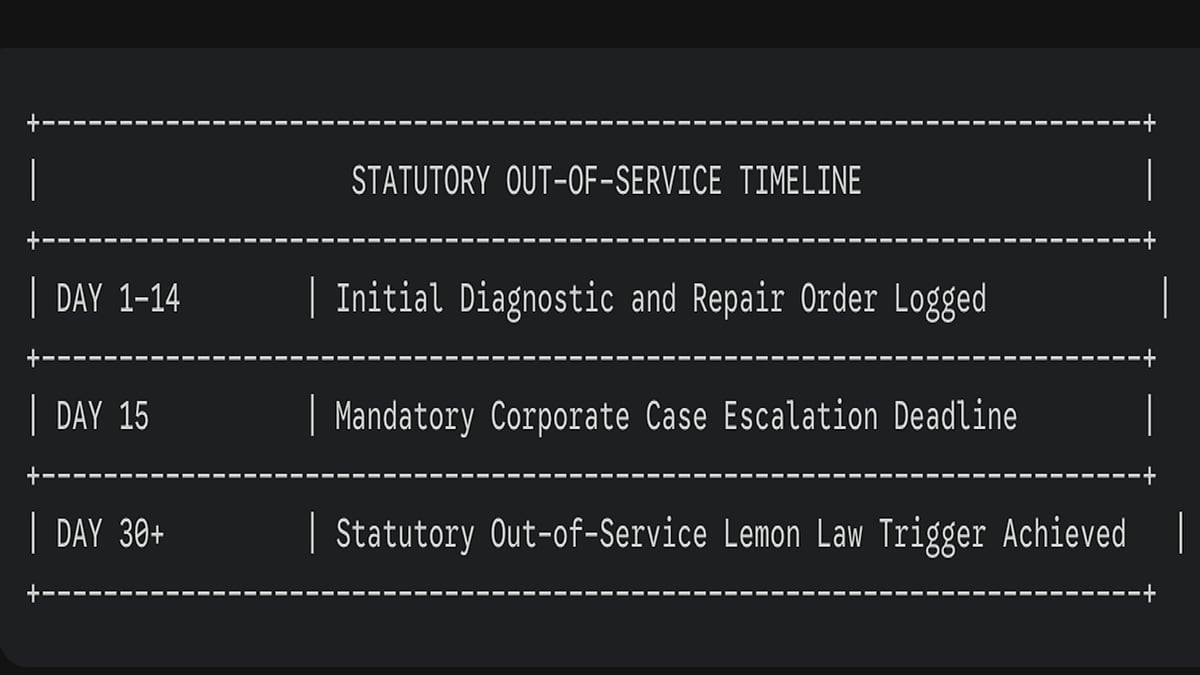
Every single day your 2025 Honda CR-V Hybrid spends parked at the dealership counts directly toward this statutory clock. To ensure this time is tracked accurately, you must refuse any dealership requests to open and close multiple repair orders during a single continuous visit.
The entire stay must be treated as a single, uninterrupted service event. If the dealer claims the car is safe to drive while waiting for a backordered part, you should push back firmly. Ask the service manager to state in writing on the official repair order that the vehicle is completely safe to operate with a known steering rack or fuel injector defect. Most corporate-backed dealers will refuse to sign such a statement due to liability risks, effectively forcing them to keep the vehicle and log the days toward your out-of-service total.
Navigating Corporate Escalation and Regional Challenges
Once a vehicle has been grounded for 14 consecutive days without a clear repair timeline, owners should immediately escalate the matter beyond the local dealership level. Contacting the manufacturer’s national customer support line initiates a formal case review and assigns a corporate case manager to your file.
When opening this case, you should explicitly request two actions: the immediate expediting of the backordered components under an internal critical part restriction release, and full corporate financial reimbursement for a temporary rental vehicle. If the corporate representative denies direct rental coverage, remind them that third-party legal reports from specialized consumer advocacy firms like Lemberg Law confirm that repeated fuel injector breakdowns and loss of power steering assist are under intensive legal scrutiny for buyback eligibility.
These dual-component failures become even more problematic in regions with demanding driving environments, such as high-altitude mountain passes. In our ongoing coverage of Honda reliability, we uncovered an unresolved dispute over factory-tuning calibrations under extreme environmental stress.
Our past investigations by Torque News uncovered localized safety alerts indicating that throttle and electronic control modules experienced severe operational errors under specific load profiles. For instance, driving up steep mountain grades puts immense stress on the Atkinson-cycle hybrid engine. If a fuel injector begins to leak or fail under these high-load scenarios, the sudden loss of powertrain efficiency can create a hazardous drop in speed while climbing.

Similarly, the binding sensation of a swollen Hitachi steering worm gear is amplified on winding mountain switchbacks in Colorado, where I test vehicles, where precision handling is essential for safety. Regional data indicates that atmospheric shifts and rapid temperature changes can accelerate mechanical binding within the steering gearbox, making real-world advocacy efforts even more critical for drivers in these environments.
Owner Steps for Securing a Manufacturer Buyback
If your vehicle approaches or exceeds the 30-day out-of-service mark without a permanent repair, you should focus on securing a manufacturer buyback or cash settlement. This process requires a methodical approach to compiling evidence and presenting your claim.
- Assemble a complete history of all transaction paperwork, including your original vehicle purchase agreement, monthly financing statements, and every service invoice issued by the dealership.
- Draft a formal notification letter to the manufacturer's corporate consumer affairs office, clearly stating that the vehicle has been out of service for longer than the legally allowed threshold and requesting a full refund or a comparable vehicle replacement.
- Log every phone call, email, and text message exchange with dealership employees and corporate case managers, noting the dates, times, and specific details of what was discussed.
- Consult with a certified consumer protection attorney who specializes in automotive product liability to evaluate your case and ensure the manufacturer covers all applicable legal fees.
What Are the Long-Term Financial Implications?
The immediate logistical struggle of managing a down vehicle often overshadows a critical long-term question: How do back-to-back component replacements under warranty affect the vehicle’s residual value and future resale potential?
While repairs performed under a factory warranty or as part of a national recall do not cost the owner out of pocket, they are permanently recorded on vehicle history reports such as Carfax and AutoCheck. A history that shows major fuel injection service and a full power steering gearbox replacement before the 23,000-mile mark can raise flags for future private buyers or dealership appraisers.
To offset this hidden depreciation, owners who choose to keep their vehicles rather than pursue a full lemon law buyback should negotiate for additional compensation. You can leverage the time spent at the dealer lot to request a zero-cost Honda Care extended service contract directly from the manufacturer. Securing an extended warranty that covers the electronic steering gear and high-pressure fuel delivery systems out to 100,000 miles helps protect your investment. It provides essential financial reassurance to future buyers, ensuring you do not take a financial hit for factory quality control issues.
Summary of Consumer Next Steps
Navigating major component failures on a new 2025 Honda CR-V Hybrid requires an active consumer advocacy strategy. By understanding the power of statutory out-of-service limits, establishing clear written documentation, and escalating cases to corporate managers, owners can protect both their safety and their financial investment. You do not have to accept indefinite delays or inadequate support from a dealership network when factory defects disrupt your daily life.
How About You?
Have you faced long backorders or been denied a loaner vehicle while your new vehicle was undergoing warranty repairs? Let us know how your local dealership handled the situation by sharing your story in the comments through the red Add new comment link below.
About The Author
Denis Flierl is a 14-year Senior Reporter at Torque News and a member of the Rocky Mountain Automotive Press (RMAP) with 30+ years of industry experience. Explore his full investigative reporting archives and technical guides at DenisFlierl.com. Based in Parker, Colorado, Denis leverages the Rockies' high-altitude terrain as a rigorous testing ground to provide "boots-on-the-ground" analysis for readers across the Rocky Mountain region, California EV corridors, the Northeast, Texas truck markets, and Midwest agricultural zones. A former professional test driver and consultant for Ford, GM, Ram, Toyota, and Tesla, he delivers data-backed insights on reliability and market shifts. Denis cuts through the noise to provide national audiences with the real-world reporting today’s landscape demands. Connect with Denis: Find him on LinkedIn, X @DenisFlierl, @WorldsCoolestRides, Facebook, and Instagram.
Photo credit: Denis Flierl
Set Torque News as Preferred Source on Google
Follow us today...