
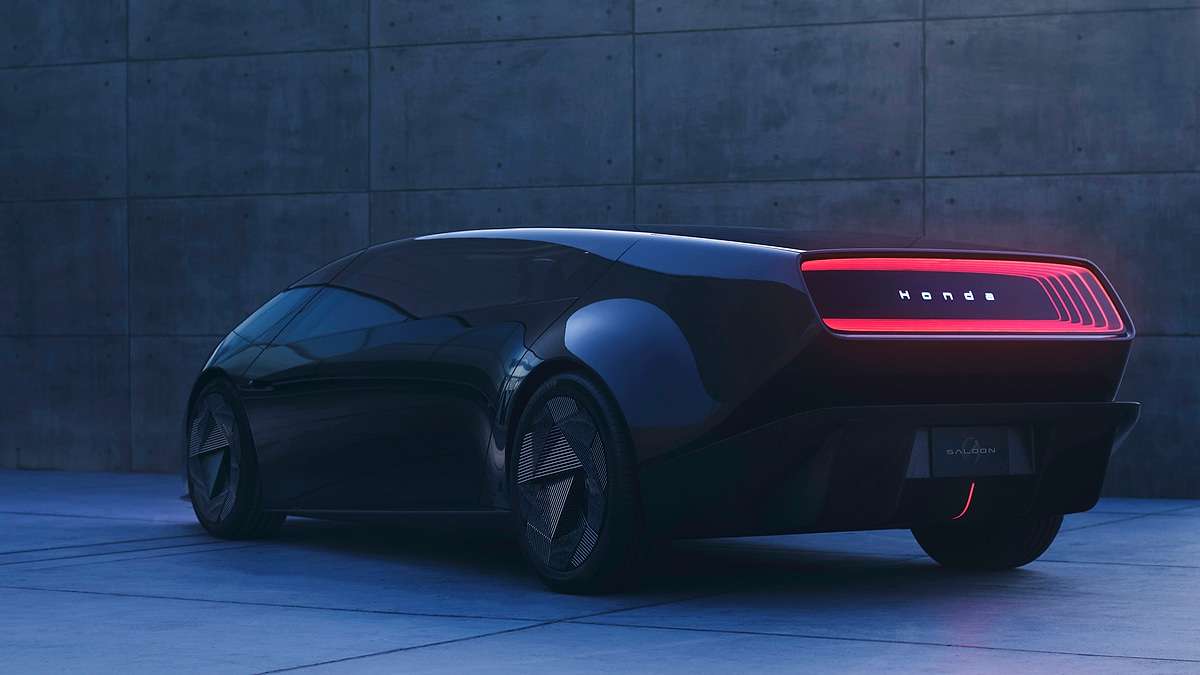

Honda spent 2024 selling the 0 Series as the spear point of its electric future, then canceled the 0 SUV, 0 Saloon, and Acura RSX in March 2026 and said the broader hit from that reversal could reach 2.5 trillion yen. Mazda protected the Miata by refusing to let current battery tech ruin its weight and balance, then turned around and admitted that the Mazda 6e and EZ-6 were built on Changan's electrification and software foundation.
Toyota still moves hybrids by the shipload, but its bZ4X remains a weak entry in a fast-moving class, and U.S. sales were down in the first half of 2025. Nissan understood the battery era early, but it now sits on a 0.6 percent operating margin. Subaru's EV, even after improvement, is still being called bland. Porsche says the electric 718 is alive, yet even Porsche has not shown the world a truly light, intimate battery sports car. Hyundai and Kia, meanwhile, have treated electrification as a whole-company rewrite and laid down large, specific targets for the decade ahead.
That is the story. Everything else is detail.
The detail matters because it shows that Japan and the United States are making different mistakes for the same underlying reason. Both built world-class auto industries around habits that rewarded incremental refinement, long product cycles, and mastery of mechanical systems. EVs ask for a different pecking order. Battery strategy, software speed, thermal management, charging performance, packaging, and supply-chain agility now sit closer to the center of the table. South Korea grasped that faster than either country did. Hyundai and Kia kept the factory discipline, but they did not keep the old assumptions. Hyundai says electrified vehicles will reach 3.3 million units by 2030. Kia says 2.33 million electrified vehicles, including 1.26 million EVs, by the same year. Those are not vague gestures. Those are industrial marching orders.
The American version of the problem is easier to see than to admit. The factories are not the issue. The engineering talent is not the issue. The issue is that Detroit still tends to treat EVs as a new powertrain bolted into an old strategic worldview. The clearest clue came from Ford CEO Jim Farley, who admitted he had been driving a Xiaomi SU7 for six months and "doesn't want to give it up." That line tells the story perfectly because it came from a man who knows exactly what his own industry is up against. Farley was not talking about trim fit or paint finish. He was reacting to the speed with which Chinese manufacturers had turned consumer-electronics logic into a car business.
That is why the denied Ford-Xiaomi joint-venture chatter mattered even after both companies rejected it. The report itself may have gone nowhere, but the instinct behind it says plenty. A leading Detroit executive, daily driving a Chinese EV and praising Chinese software competence, is not trivial. It is a flare. America's car business still knows how to make desirable vehicles, but it has been slower to accept that the center of gravity has shifted away from engines, transmissions, and trim walks, and toward software architecture, in-car experience, and cost discipline at battery-vehicle scale.
Japan's problem has a different accent. It sounds less like swagger and more like hesitation.
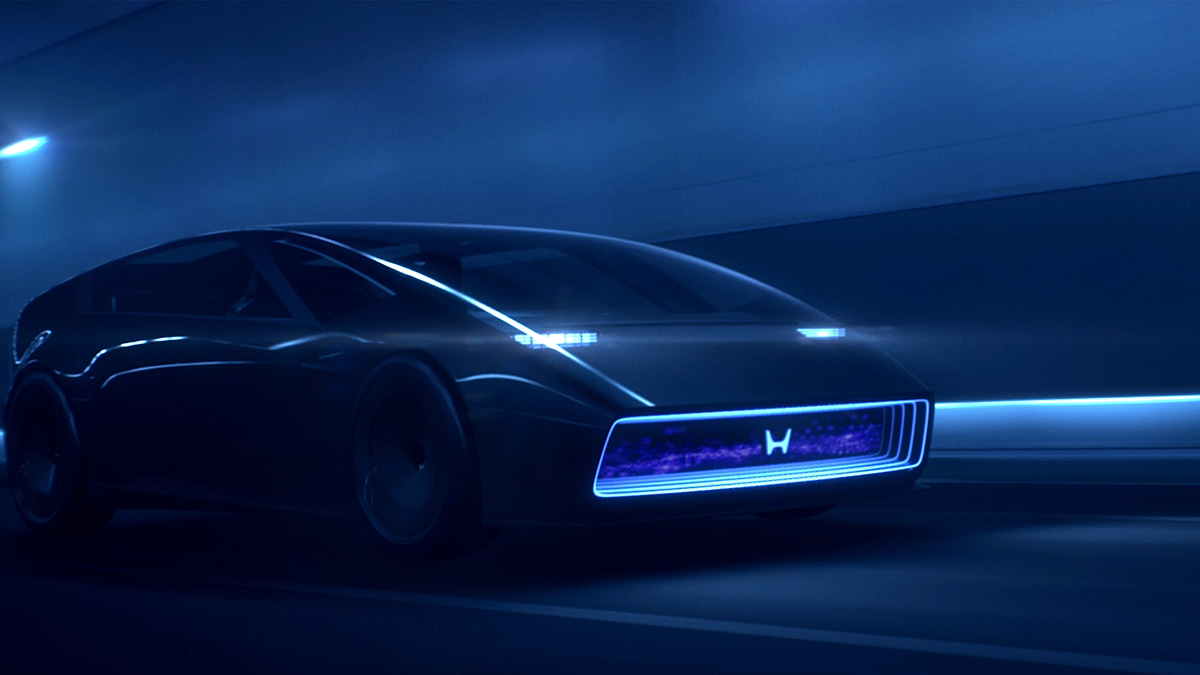
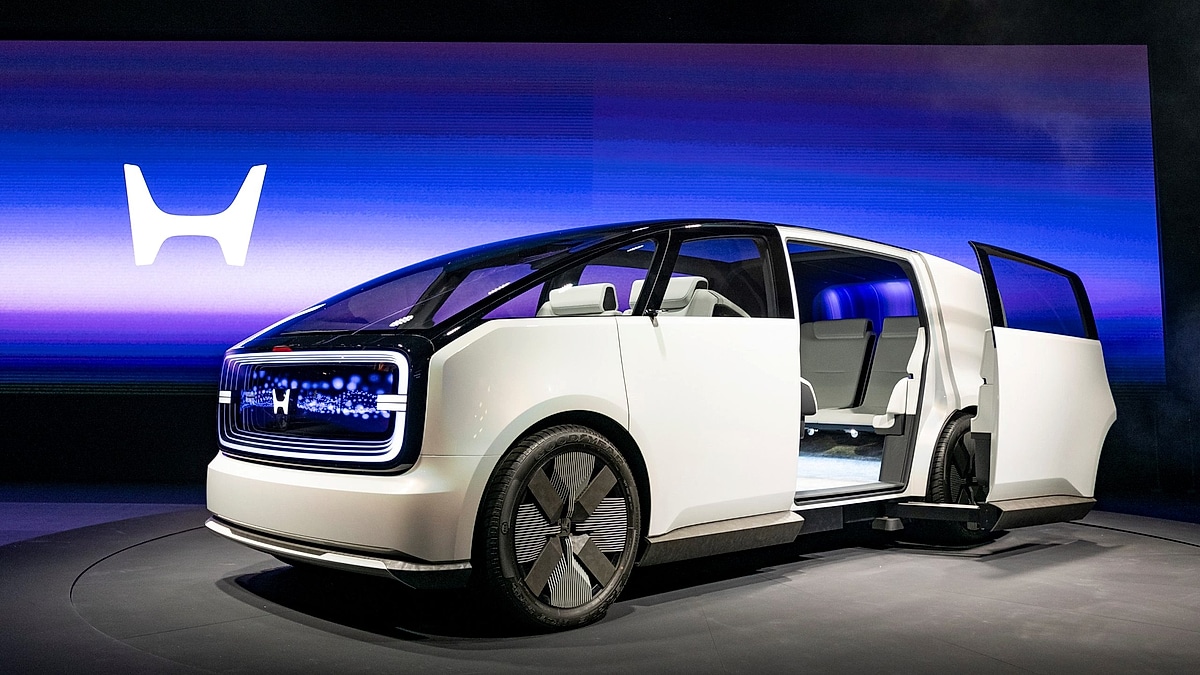
Honda is the cleanest case because the company put its thinking in writing. When it launched the 0 Series at CES 2024, Honda described the program with the phrase "Thin, Light, and Wise," promised a dedicated EV architecture, and said the series would begin global introduction in 2026, starting in North America. Honda was presenting a coherent electric philosophy, one rooted in efficiency, software-defined capability, and an attempt to escape the usual "thick and heavy" EV compromises.
Then, fourteen months later, Honda tore it up. On March 12, 2026, the company said it would cancel those three North American EVs and tied the move to a reassessment of its electrification strategy. Honda said the business environment had changed, that profitability in its auto business was deteriorating, and that the total losses tied to this reassessment could hit 2.5 trillion yen. The official language was dry, but the wound was deep. Honda had gone from presenting a clean-sheet EV future to retreating toward hybrids before the first big wave of its in-house EV program ever reached the street.
A March 12, 2026, WardsAuto report put the reversal more bluntly, saying Honda had "fallen into an extremely challenging earnings situation" and, more telling still, had been unable to offer "value for money better than that of newer EV manufacturers." That is not a battery problem. That is a conviction problem. Honda understood where the market was going. It simply did not get there with enough speed or enough risk appetite.
Toyota is a different sort of case. It is not hesitant in the same way. It is stubborn.
The company still has enormous industrial confidence, and the confidence is not baseless. Toyota sells a mountain of hybrids, builds strong cars, and remains one of the great manufacturing institutions on Earth. But on battery EVs, it has behaved like a company that would rather let the market come to it. In 2024, Electrek reported Toyota CEO Ted Ogawa saying he would rather buy credits than "waste" money on BEVs if demand did not justify the investment. Even allowing for the framing of a secondary source, the remark fit Toyota's posture perfectly. Toyota would do EVs, but on Toyota terms, and only when the economics looked comfortably familiar.
The product evidence has been thin. In its review of the 2025 bZ4X, Edmunds concluded that the update was "not enough to lift this EV to the top of the class," adding that "there's no area where the bZ4X really stands out." That also tells the story perfectly. Through the first half of 2025, Toyota sold 9,249 bZ4Xs in the U.S., down from roughly 9,500 a year earlier, according to Electrek. This was not a case of a pioneer tripping on launch. This was a case of the world's most disciplined carmaker arriving late, then arriving with something ordinary.
The contrast with South Korea has been embarrassing for anyone who still thinks old reputations carry over automatically.
InsideEVs, comparing a Genesis Electrified GV70 with a Lexus RZ450e, quoted Genesis product boss Andre Ravinowich saying there had been a "significant amount of rework" to make the GV70 "a good EV" without compromising the vehicle. The article then detailed suspension changes, extra aluminum use, and structural revisions that made the electrified model about 24 percent more rigid than the gas version. That is what adaptation looks like. Toyota had the name. Hyundai's premium arm did the homework.
Mazda's problem is even more revealing because it cuts to the core of what the company sells.
A Miata is not a spreadsheet car. It lives on lightness, reflex, and the sense that the driver is sitting in the very middle of the machine. Mazda knows that better than anybody. In an April 15, 2025, Car and Driver report, Mazda design chief Masashi Nakayama made the company's position unmistakable: "We think of Miata like a motorcycle. The weight shouldn't change."
"What defines MX-5 is first lightweight, and second, lightweight." - Mazda CTO Ryuichi Umeshita
The line tells the story perfectly. Mazda is not treating weight as a specification. It is treating weight as the car's moral center.
The same Car and Driver report also quoted Mazda CTO Ryuichi Umeshita in language that leaves no room for compromise: "What defines MX-5 is first lightweight, and second, lightweight."
Mazda is studying both a battery-electric Miata and an ICE-based Miata, but Umeshita said the combustion version is lighter, and that the company has no plans to make the next Miata electric unless it has no other choice. He even said, rather sadly, "If all ICE engines are banned, then we have no choice." The remark is honest. It is also damning. It means one of the world's most coherent sports-car brands still does not see current EV technology as compatible with the thing it does best.
Porsche sits in the same trap, just at a higher price point. The company says the electric 718 is still coming, and Motor1 reported CEO Michael Leiters calling it a "great car." Reuters, however, also reported that Porsche's broader EV rollout has been delayed and rethought amid weaker demand and higher costs. That does not mean the electric Boxster and Cayman are dead. It does mean the world's sharpest sports-car company still has not put a battery-powered junior sports car on sale while preserving the old 718 brief. No one has solved that properly yet. Not Stuttgart, not Hiroshima.
Mazda's bigger corporate problem sits one bay over from the Miata. The company is trying to protect its soul while leasing its future. Mazda's own 2025 Integrated Report says the EZ-6 in China and Mazda6e in Europe and other markets "use Changan's electrification and software technologies as the foundation" into which Mazda adds design, craftsmanship, and driving feel. That sentence is unusually revealing. Mazda was admitting, in corporate language, that it could still tune the car in its own accent while relying on somebody else's electric foundation.
To be fair, Mazda is honest about why. The same report says small-scale forces the company to respond "swiftly and flexibly, and with minimal investment," especially as battery technologies and procurement risks move quickly. That is sensible. It is also proof that small, proud carmakers can be cornered by the capital demands of EV development. The same brand that is fiercely unwilling to let the Miata get heavy is willing, in its mainstream EV program, to accept an imported platform logic from China. That is the identity crisis in one clean picture.
Nissan deserves a paragraph because it was early enough to know better. The Leaf gave Nissan a real head start in the modern EV era. That head start bought understanding, but not permanent safety. Nissan's fiscal 2024 results showed 12.6 trillion yen in revenue, just 69.8 billion yen in operating profit, and a 0.6 percent operating margin. That is the sort of margin that turns every missed model cycle into a boardroom event. Nissan still feels like the Japanese company that "gets" EVs in spirit.
Spirit does not pay for batteries, software teams, or second chances.
Subaru has the opposite problem. It has an EV, but little EV identity. Edmunds' latest drive of the refreshed Solterra said the car was still a "bland electric SUV" and added, "those cars are also significantly better," referring to key rivals. Subaru can make the Solterra quicker, cheaper, and a bit more polished. That still leaves the larger issue untouched. In a market where identity matters, the Solterra feels like a placeholder.
This is why South Korea matters so much in this discussion. Hyundai and Kia did not throw away factory discipline. They changed what that discipline served. Hyundai's 2025 investor-day presentation talks about region-specific EVs, next-generation battery technology, cloud-based battery management, software-defined vehicles, and production localization. Kia's 2025 investor-day materials say much the same in a different accent: 15 EV models by 2030, optimized flexible production, charging partnerships, and 1.26 million EV sales. The old manufacturing rigor is still there. The difference is that Korea stopped asking the old organization to defend the past and started asking it to build the next stack.
So the uncomfortable truth stands.
Legacy automakers are stuck because they are trying to adapt old frameworks to a different kind of product. America's side of the problem looks like strategic inertia and admiration arriving after the Chinese have already moved. Japan's side looks like hesitation, identity conflict, and an institutional preference for refinement over reinvention. South Korea has looked better because it treated EVs as a company-wide reset, not a new chapter added to the back of the old manual. Collaboration is no longer a sign of weakness. It is the price of staying in the race. Mazda has already accepted that. Ford's curiosity about Chinese EV competence says Detroit knows it too. The companies that dig out of this hole will be the ones willing to rethink the car before they refine it.
Image Sources: Honda Media Center
About The Author
Noah Washington is an automotive journalist based in Atlanta, Georgia, covering sports cars, luxury vehicles, and performance culture. His reporting focuses on explaining the engineering, design philosophy, and real-world ownership experience behind modern vehicles.
Noah has been immersed in the automotive world since his early teens, attending industry events and following the enthusiast communities that shape how cars are built and driven today. His work blends industry insight with enthusiastic storytelling, helping readers understand not just what a car is, but why it matters.
Noah is also a member of the Southeast Automotive Media Association (SAMA), a professional organization for automotive journalists and industry media in the Southeast.
His coverage regularly explores sports cars, luxury vehicles, and performance-driven segments of the automotive industry, including the evolving culture surrounding Formula Drift and enthusiast builds.
Read more of Noah's work on his author profile page or on his personal website.
You can also follow Noah here:
Set Torque News as Preferred Source on Google
Follow us today...







Comments
My belief is that it is a…
Permalink
My belief is that it is a procurement REE issue. Korea feeds itself for its production needs. Japan refuses to buy from its rival, China.
China’s control over rare…
Permalink
In reply to My belief is that it is a… by David Segal (not verified)
China’s control over rare earths and permanent magnets is a real strategic problem for any automaker trying to scale EVs.