
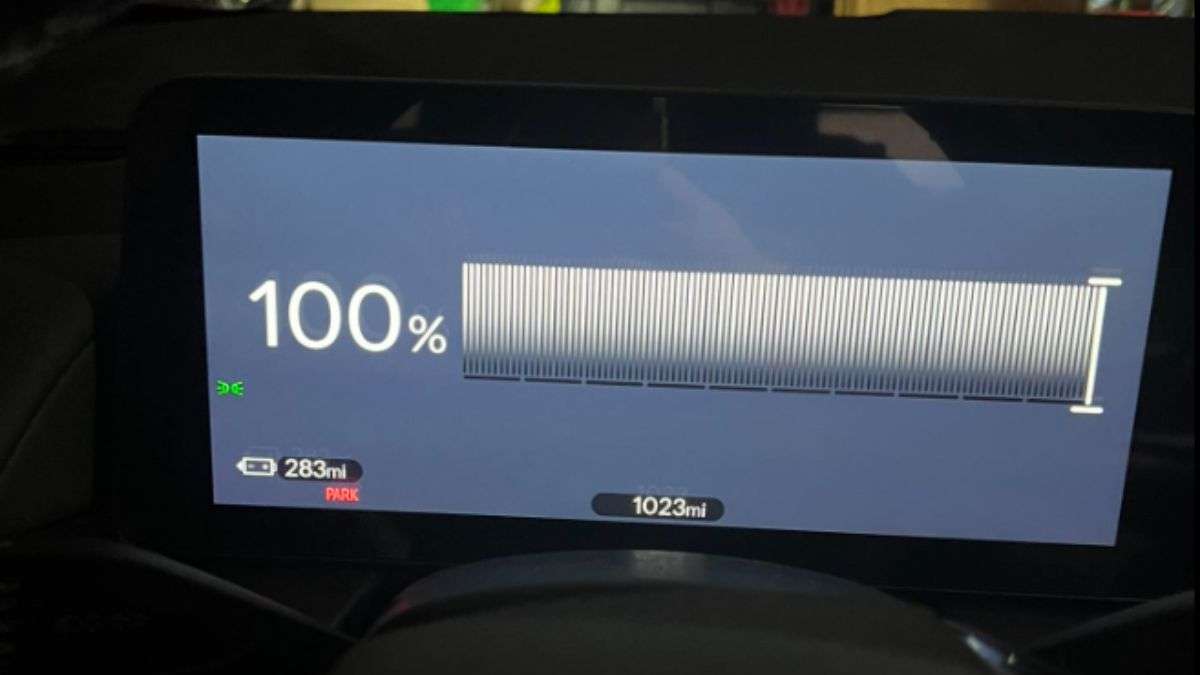

It's satisfying to see your EV charge all the way to 100% for the first time. That little green battery icon glowing proudly is a promise of a long road ahead. But for some new owners, that moment can also bring a hint of disappointment. That’s exactly what happened to Honda Prologue owner Marielle Herelle, who shared an honest post that quickly sparked a discussion among fellow EV drivers. Marielle had fully charged her new Honda Prologue for the first time to 100% and expected to see more range on the screen. Instead, the number fell short which left her wondering if something was wrong with the vehicle or if this was simply the reality of EV ownership.
Here's how she put it: “It’s my first time charging to 100% and I’m honestly disappointed. Not even 300 miles.”
The Post That Sparked a Conversation
Marielle’s experience resonated with plenty of other Honda Prologue owners, many of whom rushed in to share advice and perspective. Jonathan Waychoff was quick to explain the reasoning behind it: “That’s based on your driving habits. Look at it as your average MPG on your gas engine vehicles. It won’t be your actual range (if you’re driving on the highway, I’ll bet you’ll get about half of that).”
Jonathan’s analogy makes sense. The displayed range is dynamic, much like how fuel economy readings fluctuate depending on how you drive. Aggressive acceleration, higher highway speeds, or heavy loads can all shave miles off what you see on screen.
Another owner, Derick Patterson, added, “That’s the range I get when I charge to 80%.”
His comment put things into perspective. If Marielle’s 100% charge shows a similar number to what others see at 80%, it’s a clear sign that driving history and usage patterns play a massive role in what the vehicle predicts. It is worth noting though that in real world Honda Prologue range results, it outperformed even higher end EVs, so results can differ dramatically.
As the conversation evolved, Dennis McWilliams chimed in with a detailed breakdown of how external factors affect range too: “How many miles do you have on it? Also, if you have non-OEM tires, that’ll affect range too. A big factor is driving style, so maybe slow down. Weather also has some effects here, and this affects gas cars in much of the same way, but we just notice it more with an EV. Rain has an effect, but temperature is a bigger factor here.”
Dennis brings up a point that many new EV owners don’t realize. Cold weather, wind, and even tire type can drastically impact efficiency. If you’re running all-terrain tires or driving in cooler temperatures, your Prologue’s estimated range will reflect those real-world challenges. It’s part of what makes EV ownership such a learning experience.
Still, not everyone in the thread offered sympathy. LS Williams Sr. wrote, “Y’all already knew this before signing the papers, so why come on here like it's a big surprise? I get 294-300 miles and it all depends on the temperature.”
While it might be blunt, Williams has a point too. Range ratings are benchmarks, and they’re achieved under specific and controlled conditions that don’t reflect the variety of situations most owners encounter daily. A little bit of wind resistance, a steep hill, or a few extra pounds in cargo can make a noticeable difference to those numbers.
A Deeper Look at Real-World Efficiency
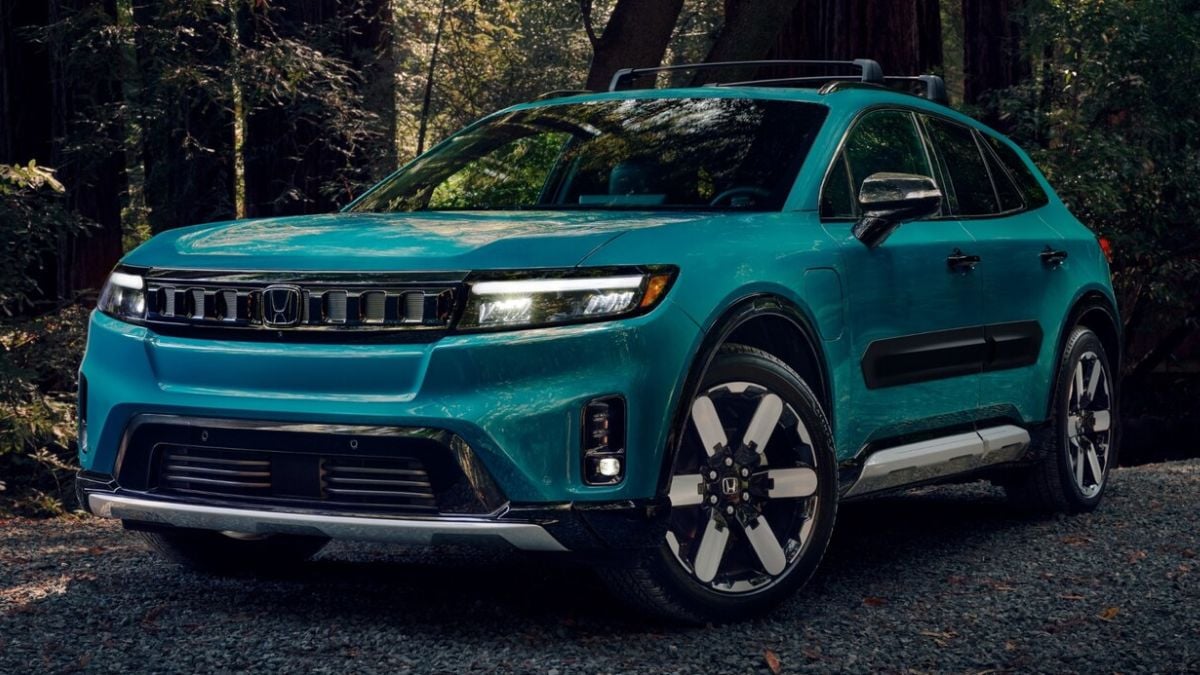
This whole discussion opens up a bigger topic of the difference between what the lab says your EV should do and what actually happens out on the road. It’s one of those things you only start to understand after driving electric for a while. The Honda Prologue is EPA-rated for around 296 to 300 miles depending on trim, but the reality can vary widely. Like we see from other owners’ experiences, driving speed, temperature, terrain, and even cabin temperature settings all play a role.
It's also worth mentioning the voiced frustration over build quality and reliability with the Honda Prologue beyond just range, with some owners explaining that they’re starting to get really frustrated due to issues that make it feel more like a GMC product than a Honda. Others have even dealt with long service downtimes as well, like a Prologue owner who said their SUV has been in the shop for five months since it was brand new.
How the Prologue Compares to Other EVs
In conversations like these, comparisons naturally come up. Some Prologue owners point out that vehicles like the Hyundai Ioniq 5, Ford Mustang Mach-E, and even the Chevrolet Blazer EV show similar real-world deviations from their rated range. That consistency across brands shows that this isn’t a Honda-specific flaw, as it’s the nature of how electric range is measured and reported. Like I said earlier, it's still quite interesting how some owners report more confidence and smoother long-distance performance compared to other EVs they’ve owned, even when the range display seems conservative.
In addition, it’s important to remember that EVs with newer battery software often undergo firmware updates that recalibrate how range is estimated. This means that what Marielle experienced on her first full charge might look different after a few months as the system learns her driving behavior.
I think Marielle’s story highlights a valuable truth about owning an EV: it’s not just about charging but about understanding. Electric vehicles are essentially computers on wheels, and they reflect how we drive, where we drive, and how often. If anything, they teach us patience and precision. I’ve seen time and time again that range anxiety often fades once drivers start paying attention to how they drive rather than just how far they can go. The Honda Prologue’s system is doing exactly what it should by showing honest data and not just marketing promises.
Key Lessons for EV Owners
- Range is an evolving estimate, not a fixed promise. It adjusts with every drive, temperature change, and habit shift.
- Your driving habits shape your results. Smooth acceleration and moderate speeds can stretch range further than expected.
- Environmental factors play a big role. Cold weather, wind, and even tire pressure can reduce range noticeably.
- Software updates and calibration matter. Over time, your EV will learn your driving style and make its range predictions more accurate.
- Patience leads to accuracy. After several full charge cycles, your EV’s predictions will stabilize and often become more optimistic.
Your Turn to Share
Have you ever seen your EV’s range drop lower than expected after a full charge?
And what tricks or habits have helped you squeeze the most miles out of your battery?
I'd love to hear your thoughts in our comments below.
Aram Krajekian is a young automotive journalist bringing a fresh perspective to his coverage of the evolving automotive landscape. Follow Aram on X and LinkedIn for daily news coverage about cars.
Image Sources: The “Honda Prologue Owners Group” public Facebook group and Honda’s gallery, respectively.
Set Torque News as Preferred Source on Google
Follow us today...


Comments
This is not much different…
Permalink
This is not much different than an ICE or hybrid.