
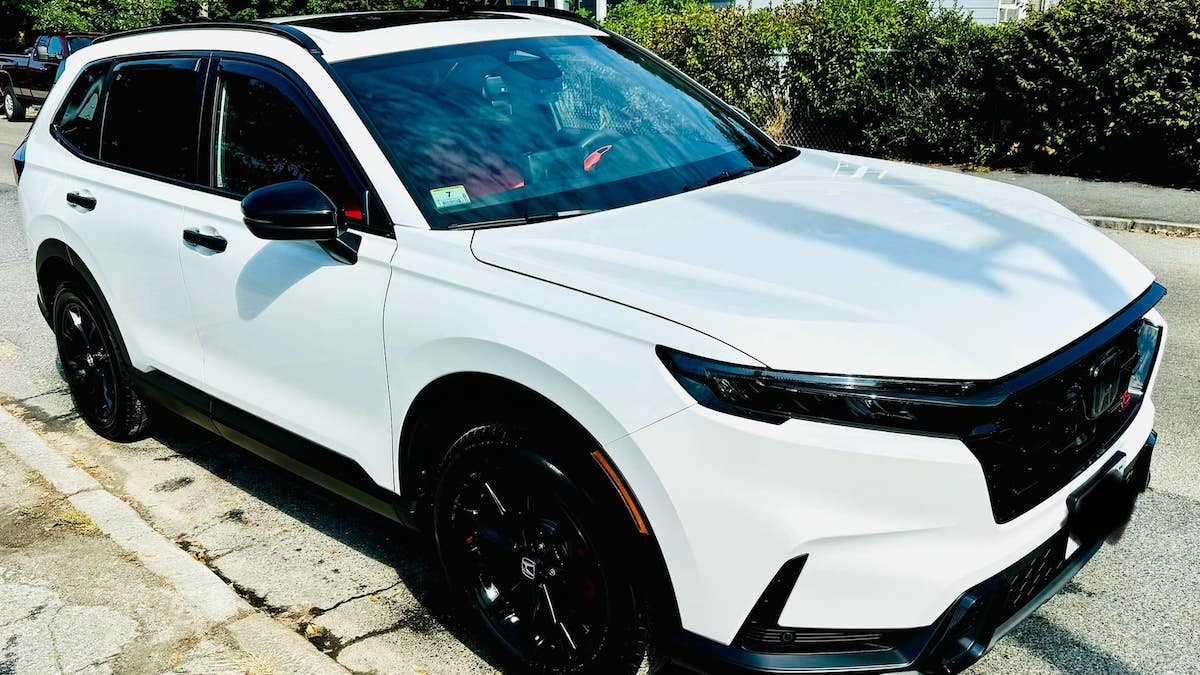

Brand new and already breaking down: Why this 2025 Honda CR-V owner is ready to dump his hybrid after just 4,200 miles.
Imagine walking into your garage to start your brand-new, fuel-efficient 2025 Honda CR-V Sport Hybrid, only to be greeted by a violent shuddering and a glowing check engine light on a vehicle that hasn't even hit its first service interval. This is exactly the nightmare one owner faced after discovering a massive oil leak and a dangerously low oil level with just 4,200 miles on the odometer.
In a recent post on a Facebook community for 6th-generation Honda owners, Alex Bello raised concerns about the 2025 CR-V Sport Hybrid’s reliability after his new SUV suffered a major failure. At just 4,200 miles, the vehicle developed a massive oil leak and severe vibrations, leading Bello to question the long-term durability of Honda’s modern hybrid powertrain. He says,
“Today, when I went to start my 2025 Honda CR-V Sport Hybrid, I was surprised by a check engine light and a weird vibration. Upon further inspection, I found my oil to be very low. I quickly added two quarts of oil, and the vibration stopped, but the check engine light stayed on. I’ve always gotten my oil changed at the 20% mark, and I’ve never experienced anything like this. While I was adding the oil, I noticed a big oil leak coming from the engine bay. This car only has 4,200 miles, and I’m already disappointed. An oil leak this big is something you would see on a car with probably over 200k miles. I no longer have much faith that this car will make it past 100k miles without a major repair. I’m considering trading it in already.”
A One-Off, or A More Serious Problem?
In my 30 years of covering the automotive industry, I have rarely seen a modern powertrain from a reputable brand like Honda show signs of such a catastrophic failure so early in its life cycle. It is deeply concerning when a 2.0L hybrid engine, a unit I typically recommend over the smaller 1.5L turbo for its simplicity, starts losing two quarts of oil before the owner even reaches their first factory-recommended oil change. Verified automotive experts at RepairPal have noted that a worn or damaged engine gasket or a faulty oil pressure sensor can lead to significant oil leaks, resulting in engine overheating or a total loss of lubrication.
I have personally tracked these emerging 6th-generation issues closely, and, as I reported recently, reports of major mechanical failures on the 2.0L hybrid powertrain are surfacing, challenging Honda’s reputation for bulletproof reliability. When an engine is two quarts low, the internal components are no longer properly lubricated, which explains the "weird vibration" the owner experienced. This lack of oil can cause permanent damage to the cylinder walls and bearings, leading to the "limp mode" or check engine lights that many are now seeing.
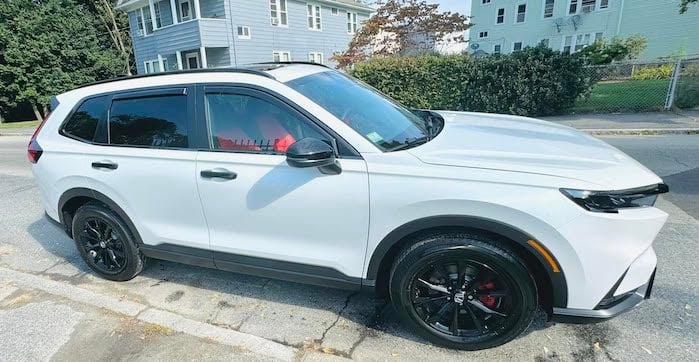
Our Personal Take on 2025 Honda CR-V Hybrid Problems
I have always maintained that the hybrid model is the smarter buy for long-term ownership, but this specific case highlights a potential manufacturing defect in the seals or gaskets that could affect thousands of units. While many owners love the fuel economy, specialized legal experts at The Lemon Law Experts have documented that 2025 Honda CR-V engine issues now include vehicle shuddering, power loss, and even stuck cylinders, which can be seriously dangerous.
When I look at the data, I see a pattern where high-pressure seals are failing under the stress of the hybrid's frequent stop-start cycles. I previously highlighted how a veteran Honda Master Technician is now warning that this reliability nightmare is becoming a reality for too many owners who are seeing their engines fail long before the 100,000-mile mark. If the oil is leaking out of the engine bay as visibly as this owner describes, we aren't just talking about "oil dilution"; we are talking about a gasket failure or a cracked housing.
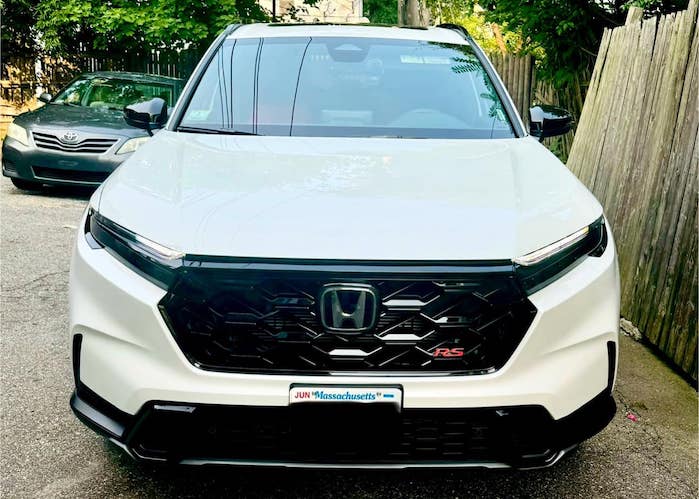
The 2025 Honda CR-V Hybrid Reliability Crisis
What makes this situation shocking is the volume of oil lost. In my three decades of experience, losing two quarts in 4,200 miles on a brand-new engine isn't "consumption", it is a hemorrhage. When a consumer buys a Honda, they are paying a premium for peace of mind. They expect to reach 200,000 miles with nothing more than basic fluid changes. When a 2025 Honda CR-V Sport Hybrid oil leak occurs this early, it shatters that brand promise.
The challenge for owners like Alex is the "ghosting" that often happens at the dealership level. Technicians may top off the oil, clear the code, and tell the owner to "monitor it." I strongly advise against accepting this. A visible leak in the engine bay on a 6th-gen CR-V should trigger an immediate replacement of the failing component, whether it is a valve cover gasket, a rear main seal, or a porous engine block casting.
Furthermore, we must look at the Honda CR-V hybrid engine vibration issues as a symptom of a much larger mechanical struggle. The transition between the electric motor and the gasoline engine places unique torque loads on the engine mounts and seals. If these components were not manufactured to the highest tolerances, the vibration becomes more than an annoyance; it becomes a destructive force.
I’ve seen similar cases where early-stage manufacturing defects led to full engine replacements under warranty, but only after the owner fought tooth and nail with corporate representatives. For those searching for 2025 Honda CR-V hybrid reliability ratings, these real-world accounts are starting to outweigh the initial glowing reviews from the automotive press.
What CR-V Owners Are Saying
The community feedback on these early failures is growing louder. One Reddit user noted the severity of potential engine health issues, stating, "My brand new CR-V Sport has a high-pitched ringing sound... dealer finally threw their hands up because they don't know what it is," which you can read in the full discussion here.
Another owner highlighted the frustration of early engine malfunctions, mentioning, "The check engine flashes almost always when the engine is cold... cylinder 4 is way too tight," as found in this Reddit thread.
Key Takeaways for My Readers
- Check Your Oil Monthly: Do not wait for the Maintenance Minder to reach 20%. New engines can have "break-in" consumption or, as seen here, catastrophic seal failures.
- Vibration is a Red Flag: If your hybrid vibrates abnormally on startup, pull over immediately. It is likely a sign of low oil pressure or a misfire.
- Document Everything: If you see a leak, take photos and video before adding oil so the dealer cannot claim the engine was "abused" by running it dry.
- Consider an Extended Warranty: Given the rising complexity and these early failure reports, a powertrain warranty beyond 60,000 miles is no longer just an option; it is essential insurance.
What CR-V Hybrid Owners Should Do Now
Honda is at a crossroads with the 6th-generation CR-V. While the hybrid technology is advanced, the basics of engine lubrication and seal integrity cannot be compromised. If owners are seeing "200k-mile leaks" at 4k miles, Honda needs to issue a technical service bulletin or a recall before these engines start seizing on the highway. I recommend that all 2025 owners perform a visual inspection of their engine bay today.
It's Your Turn: Have you noticed any oil spots on your garage floor or a strange vibration when your CR-V Hybrid engine kicks on? Click the red link below to write your comment and join the community in sharing experiences.
Next Up: If you think the oil leak is bad, you need to see what happens when the steering locks up. I recently investigated the "sticky steering" nightmare affecting new Honda models, leaving owners terrified at highway speeds. 2023-2025 Honda CR-V "Sticky Steering" Nightmare: Why Owners Are Terrified
Denis Flierl is a Senior Reporter at Torque News with over 30 years of hands-on experience in the automotive industry. Having served as a professional test driver and industry consultant for major automakers such as Chevrolet, Ford, Toyota, Honda, and Tesla, Denis provides a "boots-on-the-ground" perspective that goes beyond standard reporting. Since joining Torque News in 2012, he has specialized in cutting through market noise to deliver data-backed analysis and real-world owner stories. His work focuses on navigating the transition to EVs and the shifting automotive market.
Have a tip or question for Denis? > Engage with him directly on LinkedIn for industry analysis, or follow his latest updates on X @DenisFlierl and @WorldsCoolestRides. You can also find his latest car features on Facebook and Instagram.
Photo credit: Denis Flierl via Alex Bello
Set Torque News as Preferred Source on Google
Follow us today...






Comments
Trade it in because of an…
Permalink
Trade it in because of an oil leak? Who does that, right?