
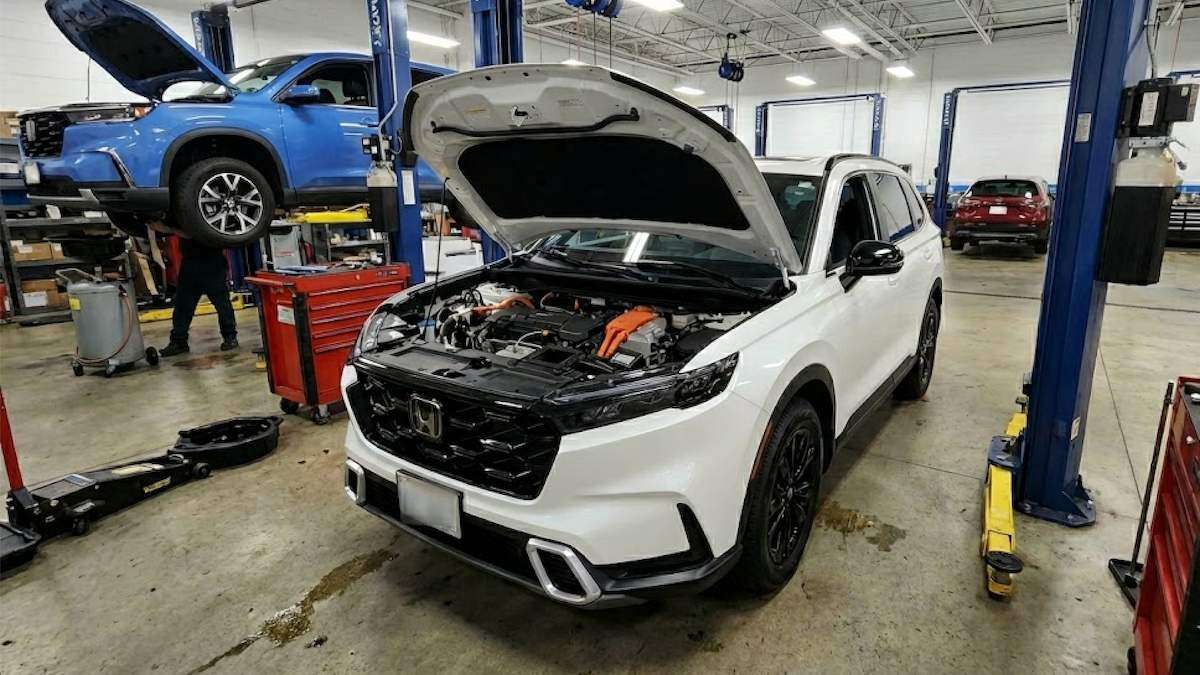

Key Takeaways:
- The "Sticky" Danger: Thousands of 2023-2025 Honda CR-V owners are reporting a terrifying defect where the steering wheel momentarily "locks" or feels like it is sliding on ice at highway speeds.
- Lawsuit & Recall Alert: With a class-action lawsuit claiming Honda knew about the issue for years, our report analyzes why the official "fix" might be a band-aid and what you must do to stay safe.
If you have felt a sudden "notchiness" or resistance in your steering wheel while driving your new CR-V, you are not alone, and ignoring it could cost you thousands or compromise your safety.
In my comprehensive analysis of the 2025 Honda CR-V steering defects, I found that thousands of owners are reporting a terrifying loss of control described as "sticky steering." As a Senior Reporter with Torque News, I have tracked this issue since the initial NHTSA complaints surfaced, and I am providing this report to help you navigate the recall, the lawsuit, and the repair process before your warranty expires.
The "Sticky Steering" Nightmare:
In my 30 years covering the automotive industry, I have rarely seen a defect that causes as much visceral fear among drivers as the current "sticky steering" issue affecting the Honda CR-V. For a brand that built its empire on bulletproof reliability, the flood of complaints regarding 2022-2025 models is alarming.
Owners describe a sensation in which the steering wheel feels as if it momentarily "locks" or "sticks" in the center position while driving at highway speeds. When they apply force to correct it, the wheel snaps free, often causing the vehicle to jerk or overcorrect.
It's not just a minor annoyance; it is a critical safety hazard.
What Owners Need To Know
The root of the problem lies within the electronic power steering (EPS) gearbox. Specifically, the worm gear and worm wheel in the assembly are experiencing excessive internal friction. According to reports I have analyzed, the annealing process (heating and cooling) of the worm wheel was flawed during manufacturing. It causes the gear teeth to deform over time, creating a "catch" point.
When you are driving straight on the highway, the grease is squeezed out from the contact point, and the gear "sticks." It requires extra force to break that friction, leading to the sudden jerkiness drivers feel.
As I highlighted in a previous report, "Highly-Reliable Honda Drops In Consumer Reports Reliability Survey," these types of manufacturing errors are uncharacteristic of Honda. Yet, they are significantly impacting the brand's standing. The current class-action lawsuit alleges that Honda knew about this steering defect years before taking decisive action, leaving many owners to grapple with unsafe vehicles.
"It Feels Like I'm Sliding on Ice"
To understand the severity, we have to look at what CR-V owners are experiencing. One owner on Reddit described the sensation vividly: "When driving in a straight line, it generally feels planted, but frequently it sort of drifts and feels like I'm floating to the left or right. It's really subtle, but it's like zero gravity for a second or that sensation of barely sliding on ice."
Another owner added, "The sticky steering is not the lane assist deformation of teeth on the worm wheel. If you ever try to overpower the lane assist (whatever holds the steering wheel in place), that's the same feeling I get when trying to turn my steering wheel from the straight position."
What CR-V Owners Should Do Now
If you own a 2022, 2023, 2024, or 2025 Honda CR-V, you need to be hyper-vigilant. The 2025 Honda CR-V sticky steering lawsuit is moving forward because many experts view the "fix", replacing the spring and adding grease, as a temporary band-aid rather than a permanent solution.
If you experience any resistance, you should document it immediately. Do not let the dealership tell you it is "normal" or related to the Lane Keep Assist System (LKAS).
The Financial Impact: While many love the fuel economy, the steering feedback is becoming a polarizing "surprise" that no one bargained for.
A $2,000 Bill? For those out of warranty, the cost of the Honda sticky steering fix can be shocking. Replacing the entire steering rack or gearbox out of pocket can run upwards of $2,000 to $3,000. It's why the recall is crucial. However, parts are on backorder in many regions. I have spoken to owners who have been waiting weeks for a replacement rack while driving a car they do not feel safe in.
How To Navigate the Dealer Experience
When you take your CR-V in, you need to use specific language. Describe the issue as "steering binding at highway speeds" or a "ratcheting feel." If you say "it feels weird," a Honda tech might test drive it around the block, fail to replicate the highway-speed issue, and send you home.
Despite these issues, the CR-V remains a strong competitor on paper. I wrote about its strengths in my story 5 Reasons Why New Honda CR-V Should Be At The Top Of Your Shopping List, but I would now add a caveat: ensure the steering recall has been performed before you sign on the dotted line.
Is the 2026 Model Safe?
A major concern for potential buyers is whether the Honda CR-V steering rack recall problems have been resolved for the upcoming 2026 model year. While Honda claims to have updated the manufacturing process for the worm gear, we are seeing isolated reports on forums suggesting that late-2025 builds are still exhibiting "notchiness."
The NHTSA Honda steering investigation update indicates that federal regulators are watching this closely. If the current recall remedy fails to prevent future failures, we could see a second, more comprehensive recall that involves replacing the entire steering rack assembly for all affected vehicles.
Advice for CR-V Owners
- Check Your VIN: Immediately go to the NHTSA website or Honda's recall lookup to see if your vehicle is flagged for the Honda CR-V worm gear spring defect.
- Disable LKAS: To diagnose if the issue is mechanical or software, turn off the Lane Keep Assist. If the "stickiness" persists, it is the physical gear, not the computer.
- File a Report: If your dealer denies the issue, file a complaint with the NHTSA. The more data points they have, the more pressure Honda faces to offer a comprehensive fix.
I have recently tracked similar quality control slips, such as the issue where an owner says, "I opened my Honda CR-V rear hatch, and it peed all over my leg." It is a reminder that even top-tier manufacturers can have lapses in quality control that affect the ownership experience.
Key Takeaways
- The Symptom: A "sticky" or "notchy" feeling in the steering wheel, primarily at speeds over 40 mph.
- The Cause: A manufacturing defect in the worm gear and worm wheel, causing internal friction.
- The Solution: A recall is active; dealers will replace the spring and grease, or the entire gearbox if damage is found.
- The Risk: A Sudden increase in steering effort can lead to overcorrection and accidents.
What CR-V Owners Are Saying
I researched the latest discussions to find out what owners are experiencing with the 2025 Honda CR-V's reliability ratings.
Reddit User (r/CivicSi) - "I have a 2024. I was feeling the sticky steering around 15k miles. Had the techs and service managers drive my car, and they said it drives perfectly, and it was in my head. The whole situation was a nightmare. A couple of days later, the recall came out, thank god, which fixed the steering completely."
"It's really subtle, but it's like zero gravity for a second or that sensation of barely sliding on ice. I am winter driving, but the highway is clear and snow free." Reddit User (r/crv)
"The sticky steering wasn't caused by the steering rack, though. It was the wormwheel in the steering gearbox. That's what the recall fixed." Reddit User (r/CivicSi)
It's Not the End of the Story
The "sticky steering" saga is a significant blemish on the 2024 Honda CR-V's reliability record. While Honda has issued a recall, the problem's persistence suggests we haven't seen the end of this story. As an owner, your best defense is information. Do not ignore the warning signs; have your vehicle serviced under the recall immediately to protect your investment and your family's safety.
Tell Us About Your CR-V
Have you experienced the "sticky steering" sensation in your CR-V, and did the dealership fix it on the first try? Click the red link below to write your comment and join the community in sharing experiences.
Next Up: Toyota RAV4 Hybrid vs. Honda CR-V Hybrid: There's Only One That Will Last 300,000 Miles. The CR-V rides smoother, but can it beat the RAV4 to 300,000 miles? I pit Toyota's planetary gears against Honda's electric drive to find the true long-haul survivor. Does the "Cablegate" scandal crown a new reliability king? I strip down the tech to find the answer.
With over 30 years of industry experience, Denis Flierl brings an insider’s perspective to Torque News, where he has been a Senior Reporter since 2012. Before picking up the pen, Denis consulted for the automotive industry's biggest brands and honed his skills as a test driver. He cuts through the noise to deliver the latest auto news, compelling owner stories, and the expert analysis necessary to navigate today's changing automotive market.
Have a tip or question? Follow me on X @DenisFlierl and @WorldsCoolestRides, or connect with me on Facebook, Instagram, and LinkedIn.
Photo credit: Denis Flierl
Set Torque News as Preferred Source on Google
Follow us today...







Comments
Sounds like drivers are…
Permalink
Sounds like drivers are unfamiliar with the CRV's lane assist keeping feature. They'll get used to it eventually.
I came to the internet…
Permalink
I came to the internet seeking a possible answer why the steering wheel of my 2025 CRV was suddenly sticking. Imagine the shock when I read this article. We were perhaps 200 interstate miles into our trip when I noticed it. My vehicle only has 14,000 miles on it. I was very concerned about the safety issue and now I see my concern is valid. I survived a serious auto accident while driving my previous CRV so I had a great deal of trust in buying another. Even if the issue is “repaired” I no longer feel safe.
I took my 2018 Honda CRV…
Permalink
I took my 2018 Honda CRV Touring (45K mileage) to the local Honda dealership to get serviced because I noticed the steering was feeling sticky at highway speeds. I asked if there were any recalls for this situation. They checked and there were no active recalls. I went ahead and asked them to find out what the problem was and to let me know before proceeding with any repair. The service tech informed me that the Electronic Power Steering Rack was faulty and it needed a total replacement with a new one at a cost of $5K plus. I did not get it repaired and sold the vehicle back to them. Needless to say I have lost all confidence in the reliability of Honda vehicles. Apparently this EPS issue has been known to Honda as the newer '22-'25 models are still having problems.
Mijn Honda CR-V van 12/2024…
Permalink
Mijn Honda CR-V van 12/2024 stuurt zwaar. Soms zwaar en soms redelijk. Dealer, in Heerlen, heeft de terugroepactie voor het stuurhuis uitgevoerd. Huidige dealer, Krimpen aan den IJssel, heeft in maart 2026 sensoren gekalibreerd. Auto lijk soepeler te sturen. Hopelijk blijft het zo. Diverse Honda’s gereden maar ook andere merken. Dit nog nooit meegemaakt. Ben Honda fan maar dat kan zomaar gaan stoppen.
I am currently having this…
Permalink
I am currently having this issue with my 2025 Honda CRV. I leased my car in 2025 and the issue began at end of May 2026. Because I am out of warranty due to being over the mileage, Honda will no longer help repair the steering column issue. They won’t even look at the car again to tell me in detail why the car would be having this issue being under 2 years old. They have quoted me $5000 to fix it. I have Honda’s over 20 years old that have never given me this issue. So I am stuck. I spoke with Honda, they denied my claim, I’m not part of the recall and over the warranty. So I’m stuck with a car that can’t be driven anymore or a $5000 service bill