
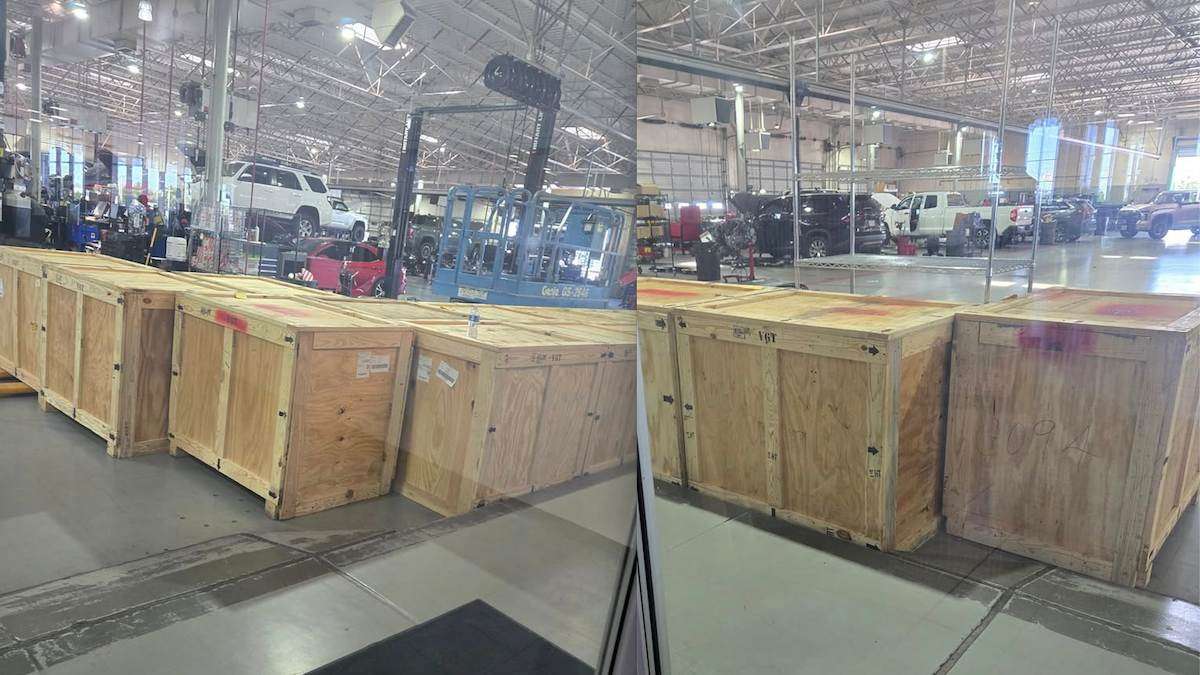

A routine oil change revealed a shocking scene inside the service bay, raising serious questions about whether Toyota can truly handle the massive scale of the Tundra engine recall.
Imagine pulling into your local Toyota dealership for a routine oil change on your shiny 2025 Tundra. You expect a quick turnaround and a quiet wait in the lobby. But as you glance into the service bay, the reality of the massive recall hits you. You don't just see technicians working on lifts; you see a warehouse of wooden crates.
Dozens of brand-new engines are stacked in corners and lining the walls, waiting to be swapped into trucks that have already failed. It’s a stark, physical reminder that for Toyota, this isn't just a paperwork problem; it is a logistical nightmare unfolding right before your eyes.
Check the Service Bay Before You Buy
As an automotive journalist who has extensively covered the Toyota Tundra’s launch and subsequent mechanical challenges, I always advise potential buyers to look beyond the shiny showroom floor and peek into the service bay for the real story. Reliability truths are often found in what mechanics are actively repairing, not just in what salespeople are promoting.
A 2025 Toyota Tundra owner recently shared a startling observation from his local dealership that highlights the massive scale of the current engine generation's struggles. Chung Khuong noticed a significant backlog of replacement engines sitting in crates, suggesting the recall work is in full swing and perhaps overwhelming service departments.
Chung Khuong on the 2023-2026 Toyota Tundra Owners Facebook page says,
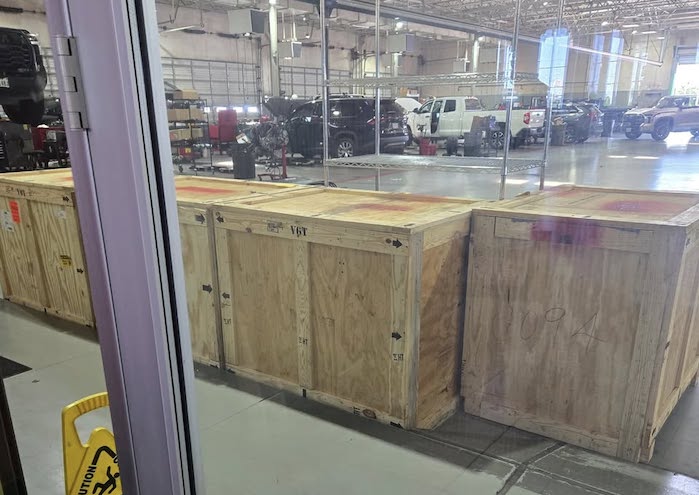
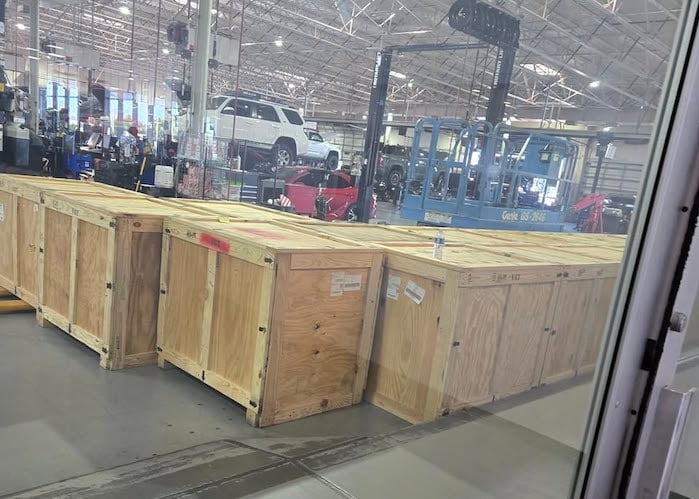
“I’m at the Toyota dealership getting an oil change on my 2025 Tundra. But look at all the engines waiting. There are dozens in crates all over the service department. I don’t think Toyota can swap out these bad engines fast enough.”
It’s Shocking To See
The visual evidence of "dozens in crates" described by Khuong is a powerful testament to the logistical magnitude of Toyota's massive engine recall. While the automaker has officially acknowledged the issue affecting the V35A-FTS twin-turbo V6 engine, seeing crates piled up in a service department drives home the severity of the situation. It indicates that dealerships are likely working through a substantial queue of affected trucks, a process that is both labor-intensive and technically complex.
The repair often involves lifting the cab off the chassis to access the engine block, a major procedure that leaves owners without their trucks for extended periods. The sheer volume of engines suggests that while the remedy is available, the pipeline for installing them is becoming a bottleneck.
Owners in the same Facebook thread are echoing similar concerns, validating Khuong's observation and adding their own anxieties about the process. Many are questioning whether the replacement engines will truly address long-term durability concerns or if they are simply a stopgap.
The anxiety is particularly high among owners of 2024 and 2025 models who, despite being told their trucks might be safe, are seeing failures that mirror those of the recalled 2022 and 2023 units. My 2024 Toyota Tundra 27K In Is Getting a Short Block and New Turbos, But the Strange Thing Is, They Removed the Cab To Do It. The situation described in that report highlights the extreme measures technicians must take, reinforcing why seeing crates of engines would be unsettling for any owner dropping their truck off for simple maintenance.
Why The Swap Was Made
- Machining Debris Contamination: During manufacturing at the Huntsville, Alabama, plant, metal machining debris was not correctly removed from the engine blocks, contaminating the assembly.
- Main Bearing Failure: Metal shavings circulate through the oil system and eventually become trapped in the crankshaft main bearings, leading to severe scoring and seizure.
- Knocking and Power Loss: As the bearings fail, the engine develops a distinct knocking sound, runs roughly, and can eventually seize completely, leading to a total loss of motive power.
- Safety Risks: A sudden engine seizure while driving at highway speeds poses a significant safety hazard, prompting the National Highway Traffic Safety Administration (NHTSA) and Toyota to issue the safety recall.
Toyota's Service Network Is On Overload
The backlog of engines signifies a critical moment for Toyota's service network. Dealerships are not just swapping parts; they are performing heart transplants on thousands of vehicles. The "crates" Khuong mentions likely contain short blocks of the engine's lower section, containing the crankshaft and pistons, which is the primary fix for the debris issue.
However, the labor required to transfer heads, turbos, and accessories from the old engine to the new short block is immense. In the same discussion thread, another member, Donald, noted his own apprehension, stating that seeing such a volume of repairs makes him question the future reliability of his own purchase.
I recently wrote this report of a 2025 Tundra owner who had catastrophic engine failure: So, I Just Bought a 2025 Toyota Tundra TRD PRO Hybrid, Headed Out to Maryland, made it 400 Miles, and the Engine Locked Up With Only 1,528 miles On My Truck. The fear is that if a 2025 model, which was supposed to be past these manufacturing defects, is already sitting in a service bay, the scope of the problem may be broader than the official recall dates suggest.
Step Back and Look At the Broader Picture
The situation Chung Khuong is dealing with at his dealership is a microcosm of a nationwide challenge facing Toyota. The automaker has built its entire brand identity on the concept of "QDR": Quality, Durability, and Reliability. The Tundra, specifically, was legendary for reaching high mileage with basic maintenance.
However, the transition to the V35A-FTS twin-turbo V6 has been fraught with teething issues that are proving to be more than just minor inconveniences. The recall campaign, designated 24TA07, covers roughly 100,000 vehicles. Still, the presence of so many engines at a single dealership suggests that the failure rate, or at least the precautionary replacement rate, is keeping technicians working at maximum capacity.
The crates represent not just parts, but also the high financial and reputational costs that Toyota is currently paying to make things right for its customers. I Took My '25 Toyota Tundra For Its First Oil Change at 1,500 Miles, and the Dealer Tried Hard to Convince Me to Do Them at 10K, for an Engine Known to Have Problems Early On.
For owners like Khuong, the sight of these crates is a double-edged sword. On one hand, it is reassuring to see that Toyota is actively supplying parts and honoring the warranty claims. It shows a commitment to the remedy rather than a denial of the problem. On the other hand, it destroys the illusion of invincibility that Tundra owners once enjoyed. When you buy a full-size truck, you expect it to work without hesitation.
Seeing "dozens" of engines waiting for installation implies that a Tundra in the shop is becoming a common sight rather than a rare anomaly. The disparity between the 2022-2023 recalled models and the newer 2024-2025 trucks is blurring, as evidenced by reports of newer trucks suffering similar failures. Owners are left wondering whether the "clean" manufacturing dates are truly clean or whether the debris issue persisted longer than initially thought.
Ultimately, the recall's transparency is positive, but its execution is painful. The backlog could mean wait times for repairs extend, leaving owners in loaner vehicles or rental cars for weeks. It places immense pressure on dealership service writers and master technicians who must ensure every swap is done perfectly to avoid repeat failures. 2024 Tundra Owner Says, “Toyota Should Be Scared Someone Will Sue For an Accident Due to Them Knowing the 2022-2025 Have a High Chance of Motor Failure”.
As the crates empty and the new blocks are installed, the true test will be the longevity of these replacement units. Until the piles of crates disappear from service bays, the Tundra community will remain on high alert, watching their oil pressure gauges and listening for that dreaded knock.
It’s Your Turn
Share your Toyota Tundra story by clicking on the red Add New Comment link below and let us know.
I'm Denis Flierl, a Senior Torque News Reporter since 2012, bringing over 30 years of automotive expertise to every story. My career began with a consulting role with every major car brand, followed by years as a freelance journalist, test-driving new vehicles, which equipped me with a wealth of insider knowledge. I specialize in delivering the latest auto news, sharing compelling owner stories, and providing expert, up-to-date analysis to keep you fully informed.
Follow me on X @DenisFlierl, @WorldsCoolestRides, Facebook, Instagram and LinkedIn
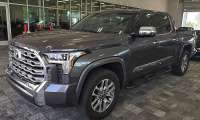
Photo credit: Denis Flierl via Chung Khuong
Set Torque News as Preferred Source on Google
Follow us today...





Comments
The stack of engines doesn't…
Permalink
The stack of engines doesn't mean the dealers want to do the work. They probably get a fixed labor price for these swaps and it probably pays a lot less than random work rolling through the door, so they're very likely to stall owners and insist they don't have the parts and can't estimate when they will have them, etc, and various other statements to avoid having to tie up technicians doing nothing but flat rate engine swaps. So just because you can literally see a pile of crate engines, it does not mean they are actually in existence and ready to install. They're probably still on severe back order stuck on a ship from Alabama that might arrive in 2026. Well, the dealers will say that, at least.
I was going to buy a new…
Permalink
I was going to buy a new Toyota Tundra but when I found out they no longer offered it with the 5.7 V8 which was a Rock Solid Very Reliable Engine I backed away from the purchase. Toyota in my opinion made a big mistake by discontinuing this engine in their trucks and now bot them and their customers are paying the price.
I bought a 2025 Toyota…
Permalink
I bought a 2025 Toyota Tundra TRD Off Road SR5 on May 31st, 2025 with 7 miles on it. It is just the V6 motor, not the hybrid. I now have 11,558 miles on it as of December 1st. I have pulled my travel trailer to Yellowstone national park for vacation, driven countless hours on logging roads for both deer and elk season this fall, and taken several short road trips for weekends in the travel trailer. I love this truck. It is big, comfortable, and tows like a champ. The only thing I wish it were better at was turning radius. I traded my 2022 Tacoma for this Tundra. That little truck could turn around on a small logging road. I have had no issues with this truck, so far.
I have a 2020 V-8. I wouldn…
Permalink
I have a 2020 V-8. I wouldn't trade it in for a free Tundra made after 2021. I don't care about your twin turbo's, your ten speed transmission, technology, or anything else about the new body/motor style. Its garbage. I know that mine will start up and run long after heat from the turbo's and all the extra moving parts cause failure, and they will. Toyota missed the QAULITY mark, that Toyota was famous for, and tarnished their reputation moving forward.
They're pro-actively…
Permalink
They're pro-actively replacing engines before most people would see problems.
Were this GM instead of Toyota they'd just keep their mouths shut & you'd have to fight with them on a case-by-case basis once your engine failed.