
It is no secret that new cars are creeping up in price year after year. Vehicle cost has become an alarming issue, thanks to a phenomenon called “trimflation”. The term was coined by a writer and editor from The Autopian, talking about the slow but steady increase in the starting price of brand-new models. Carmakers achieve this by building many fewer base trims of a certain model, compared to more “loaded” trims. Honda is no exception, despite the brand still offering value-packed models in the Civic and Accord.
The exact ratio varies between manufacturers, but ask yourself, how often have you seen a base model of any car in a showroom or at a dealership lot? Personally, I have seen way more higher-trims vehiles than base models, and I used to work at a dealership.
That said, Honda has decided to counter this in a very simple way. While the Japanese company wants to cover more ground, the method raises a few questions regarding Honda and Acura’s EV models and their ability to compete with the stern competition from Toyota, Hyundai, and other companies.
The first step to a more affordable lineup
Honda plans to boost production of lower-cost models, and it will use the full power of its 12 US-based production facilities to do that. This will reportedly include cars and SUVs alike, meaning models like the Civic and CR-V will continue to have non-hybrid models on offer. The company already builds a lot of its models in the US, and this will allow it to negate the steep import taxes mandated by the Trump administration.
Currently, the 2026 Honda Civic starts at $25,890, which is $1,770 more expensive than the base-model 2026 Toyota Corolla, and $2,020 more than the base-model 2026 Hyundai Elantra.
That said, the Civic is still one of the best-selling cars in the US, so the incentive to lower the model’s starting price isn’t really there, unless Honda wants to overtake the Corolla in terms of sales. Even so, according to Car Figures, the difference between the two Japanese models isn’t decisive.
Honda’s EV situation is a bit complex
Honda is playing catch-up on the BEV front, and while plans for a fully electric model are still in question, hybrids are another matter entirely. The Civic e:HEV has already proven to be a slightly more engaging and capable alternative to the hybrid Corolla and the Honda Accord. While lacking its most exciting engine (the turbocharged K20), it is one of the most frugal hybrids available.
Related story: Honda's New V-6 Hybrid Platform Packs Some Unconventional Engineering
But EV models are still coming, and Honda’s approach is… a bit concerning
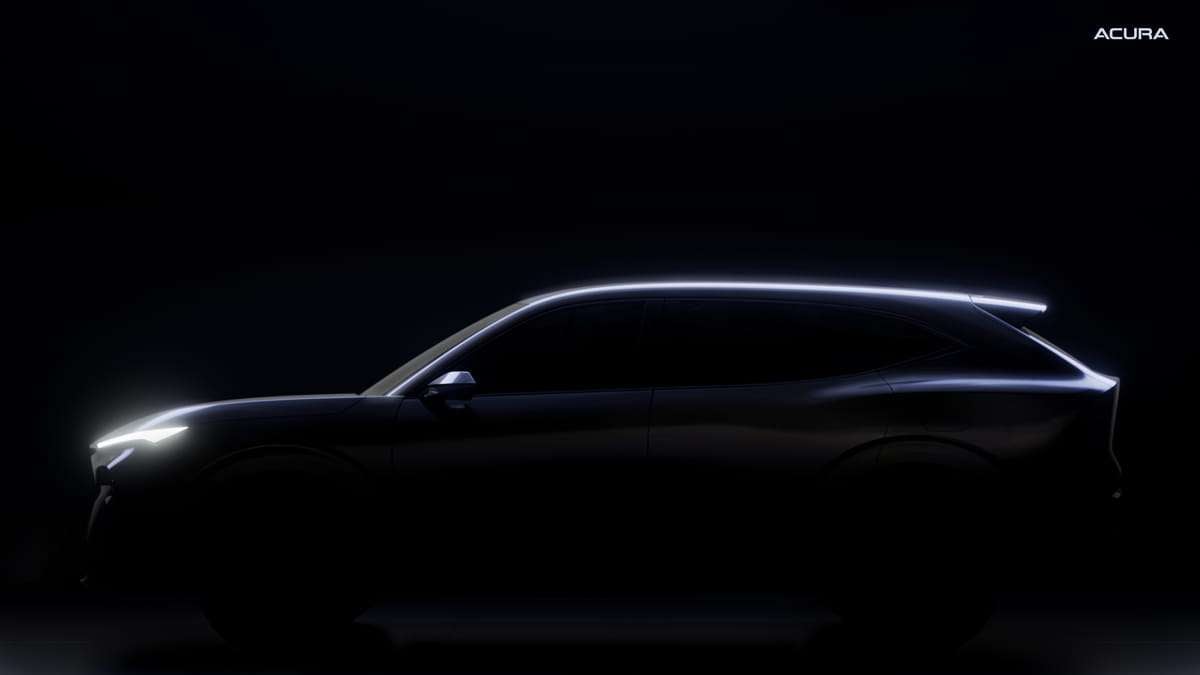
Honda’s recent delays in fully-electrified models have shifted focus to hybrid vehicles. A recent press release by Honda announced that the next-generation Acura RDX will go hybrid while hinting at a 2027 debut. But I am more curious about the revival of another iconic nameplate.
The Acura RSX is also making a return as a fully-electric crossover, said to have handling comparable to a Civic Type-R. After what happened with the Prelude, I think it is a risky move, and on a personal note, a grave misuse of the name. Still, a Japanese competitor to the Ford Mustang Mach-E GT, I tested a while back, would be a welcome addition to the segment.
Last year, Honda unveiled the 0 Series Concept models, featuring technology that will be featured on production models, said to come out in 2026 and 2027. With this, the company aims to offer EV models, priced under $35,000. The low-cost models will be developed completely in-house and will feature lighter materials and thinner batteries. Hopefully, this will not be at the cost of electric range, which is still one of the main concerns with EVs, especially in extreme temperatures.
Next car stories:
Nissan Is Taking An Unconventional Approach To Performance With The New Aura Nismo RS Concept
These Are The 5 Carmakers With The Most Recalls In 2025
Should The 2027 Toyota GR86 Be Over 300 Horsepower?
Dimitar Angelov's automotive interests made him an expert in a wide variety of vehicles. Japanese brands like Toyota and Nissan are closest to his heart, although performance cars in general are his favorite segment, which is why he is constantly on the lookout for the best deals on the market. Dimitar Angelov's car passion and knack for the written word led him to complete a Master of Arts in Media and Communications, and classic car restoration. Dim is happy to get behind the wheel of any car and share his impressions. You can follow Dimitar on X, Linked-in, Instagram, and Facebook.
Image source: Honda press, Acura RDX goes hybrid
Not all is well, however. The Honda Prelude revival was highly-anticipated, but the performance and price left fans deeply disappointed. Honda also scrapped plans for a sub-$30,000 EV, co-developed with GM, and I am glad it didn’t happen, as it would have been a blow to the Japanese company’s image, which stands for reliability and driver engagement.
Set Torque News as Preferred Source on Google
Follow us today...